If it’s snowing at the top of the Alps it’s likely to be raining in the Italian lakes.
Sure enough, the heavens opened and the rain poured immediately after we’d crossed the Gotthard Pass on that idyllic sunny day. A blizzard closed the pass for a week.
Feeling very lucky, we holed up in Verbania on Lake Maggiore watching the rain bounce off the cobblestones. It was a perfect opportunity to catch up on laundry, write a blog post and, of course, to start eating pasta and drinking wine.
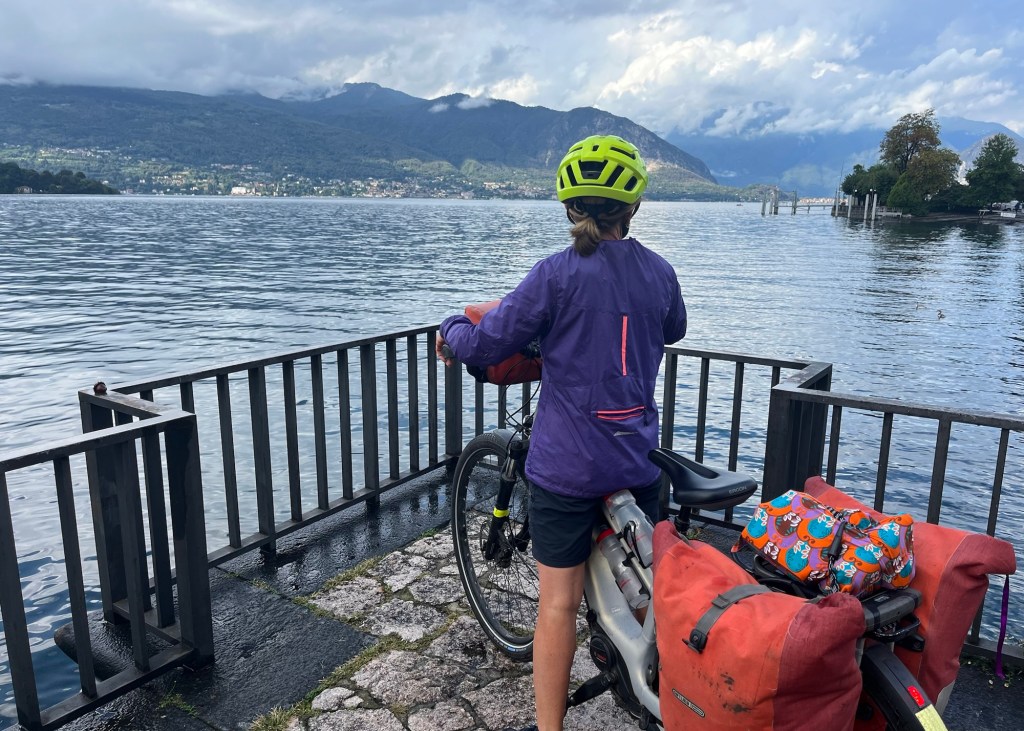
Then we moved the short distance to Lake Orta for another couple of days, a much smaller lake, less visited and a great tip from our friends Neil and Claire. They were right, it’s a beautiful and peaceful place made all the more mysterious and atmospheric by the rain clouds rolling down the mountains.

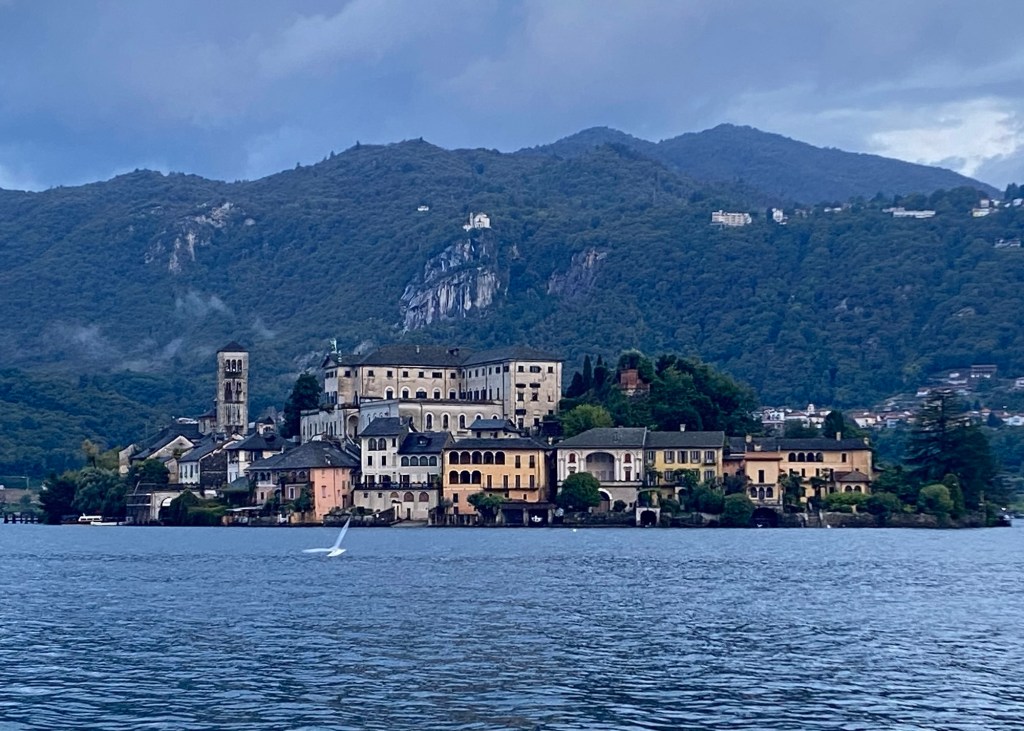
If Lake Orta is a hidden gem amongst the Italian lakes, then Orta San Guilio is its crown jewel. Built on a small promontory jutting out into the lake it’s considered to be one of Italy’s prettiest villages. Sitting in the main square whilst gazing across to the tiny island of Isola San Guilo felt like being part of a classic Italian movie set.
But we didn’t just sit in the square, watching the world go by.
We took the five minute boat ride across to the island.
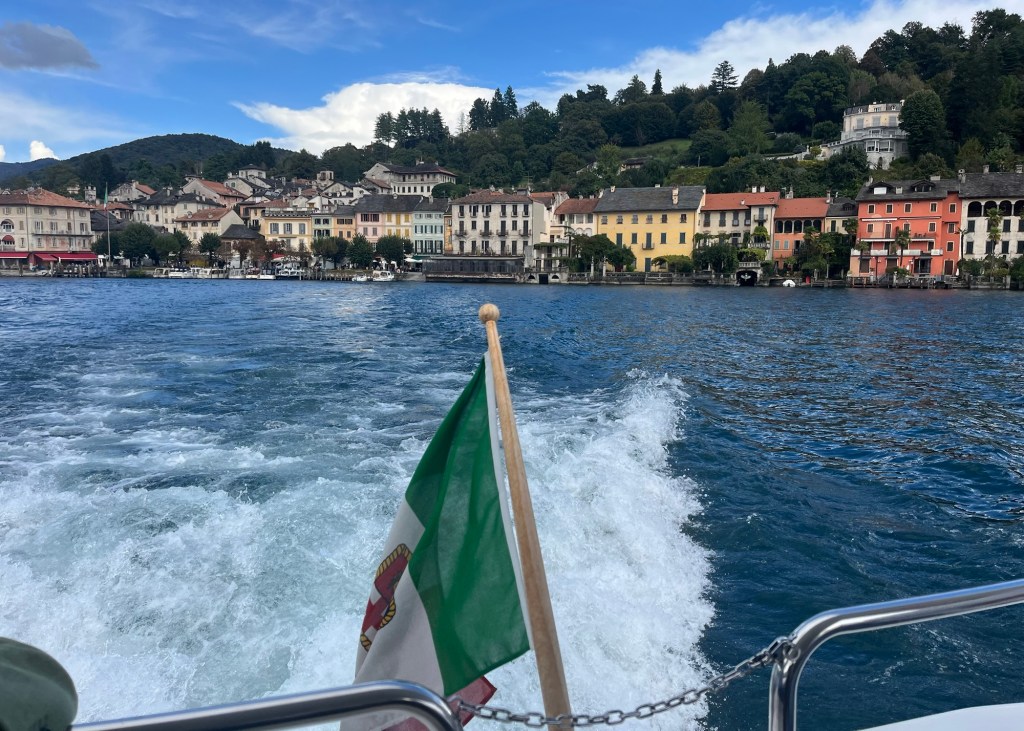
We had a pleasant evening stroll around the promontory until it was interrupted by a thunderstorm of almost biblical proportions.

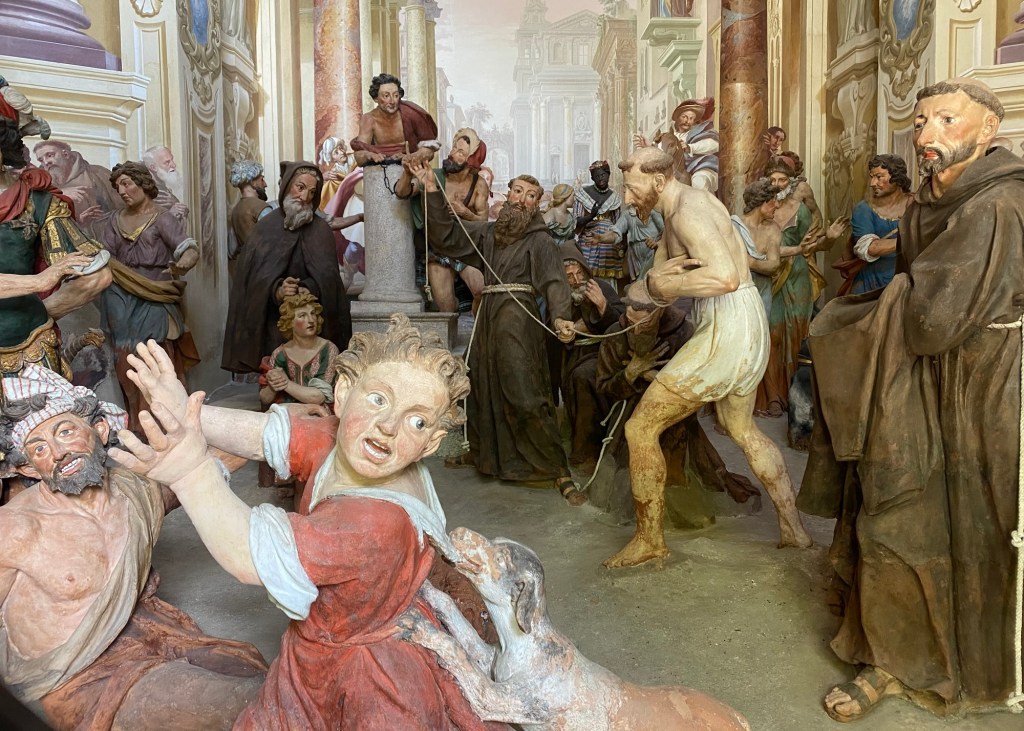
And we walked up the hill to wander around the Sacro Monte di Orta, a series of 20 (twenty!) chapels that tell the life story of St. Francis of Assisi. The first chapel was built in the late 1500’s but the complex was not completed for another 300 years, each one becoming bigger and more flamboyant over time, as if the benefactors were trying to outdo their predecessors in the eyes of God.
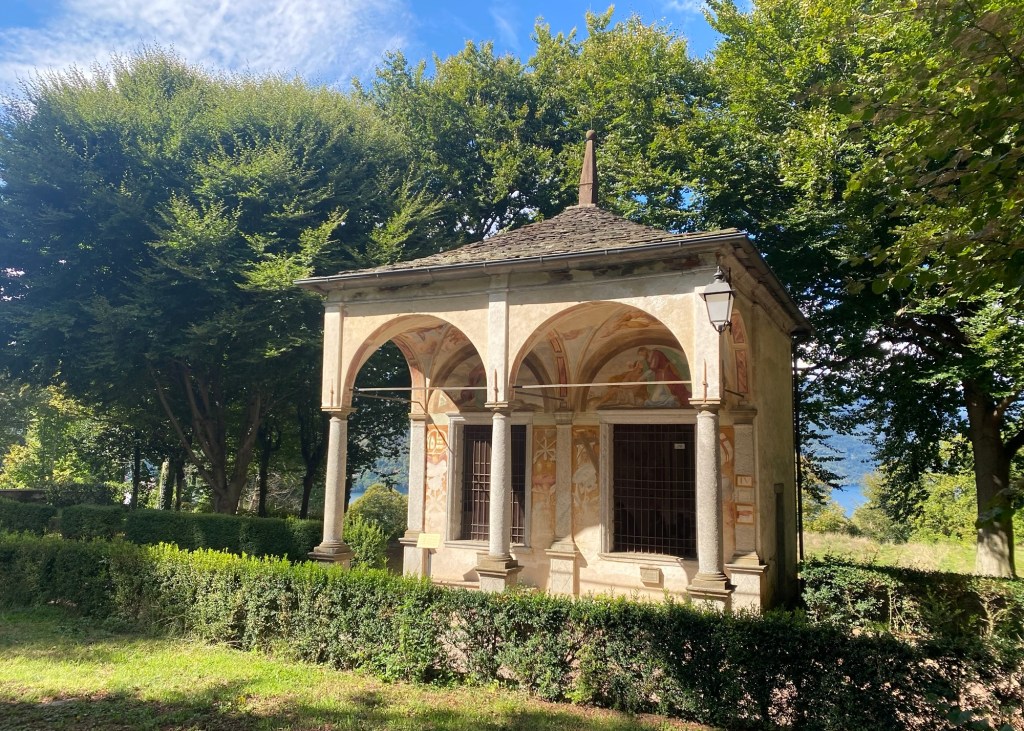
A guide in one of the many churches we’ve since visited in Italy explained the importance of art for religious propaganda in the Middle Ages. Sermons were preached in Latin (effectively a foreign language) and as most people couldn’t read, they learnt about the bible and the Holy Catholic message through art instead.
It was very easy to see how that happened at Sacro Monte di Orta. Frescoes on every wall surface set the background for life size figures acting out the story, each tableau created by an artistic master. It held our attention, so it must have been incredibly compelling in a world before magazines, cinema, television and the internet.
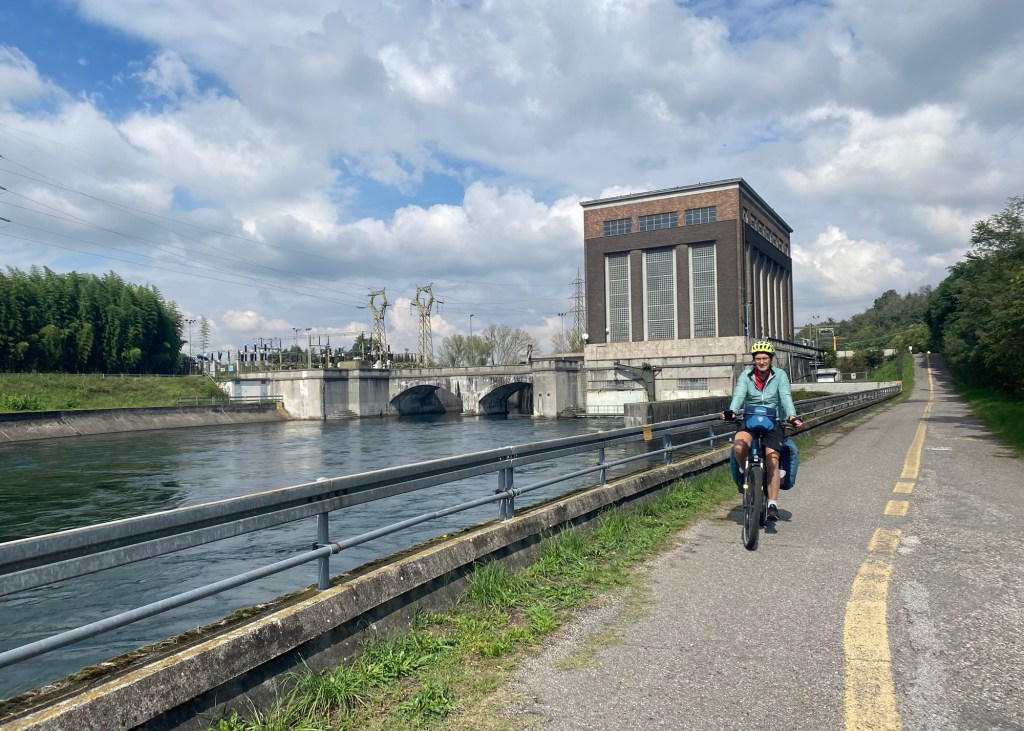
A break in the weather presented the opportunity to ride the 100 kilometres from the lakes down to Milan, following the Naviglio Grande (the Big Canal) for much of the way. You might think we were a bit fed up of canals but this was a particularly impressive one, some of the locks designed by no less an architect than Leonardo de Vinci.
Initially dug by hand as far back as the 12th century, it was enlarged from the 14th century in order to carry huge blocks of pinkish white marble needed to build the massive new Duomo di Milan (Cathedral). The marble travelled roughly the same route as us, all the way from a quarry near Lake Maggiore.
Nobody would describe Milan as being on a path less travelled, especially during Milan fashion week. The city was jam packed with fashionistas as well as tourists.
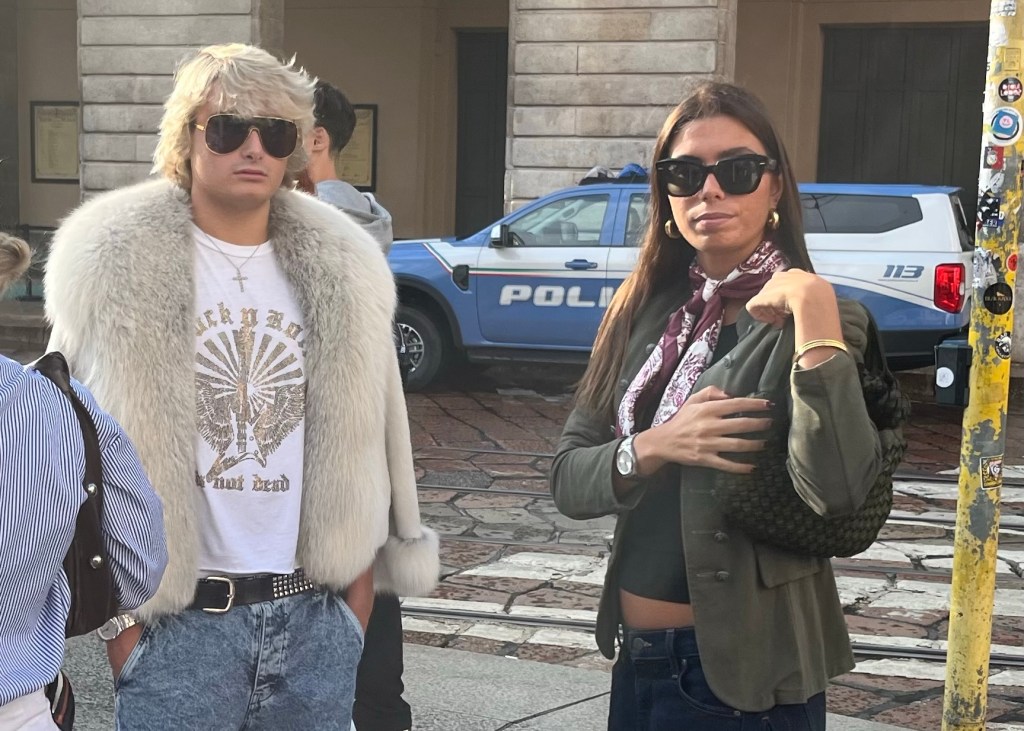
We were even treated to an impromptu fashion show right outside the Duomo.

There’s no doubt that the Duomo is immensely impressive. Built over five centuries and not officially completed until 1965, it’s the 5th largest cathedral in the world with a capacity for 40,000 people and a world record number of statues … a staggering 3400 of them gaze down at all the visitors.
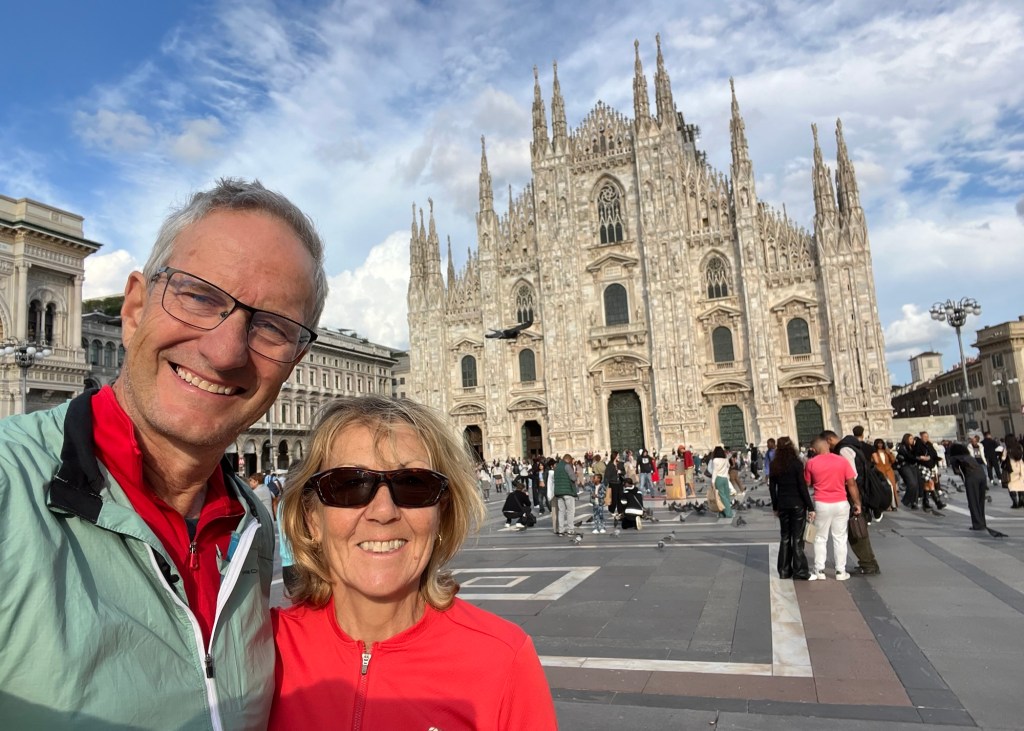
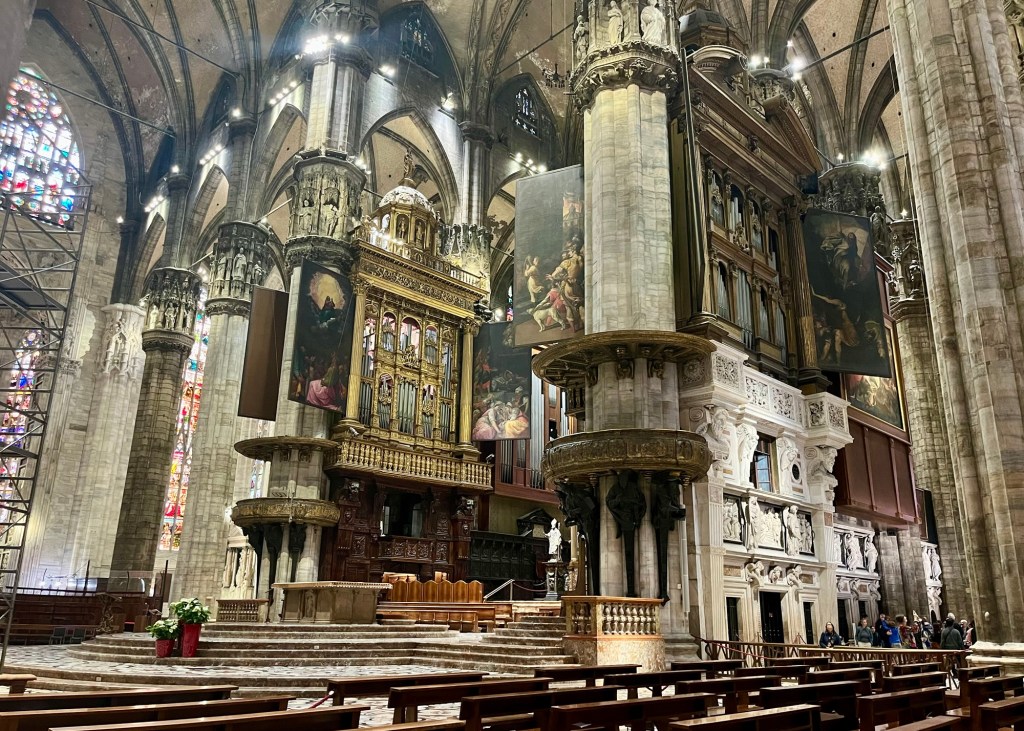
The Duomo is flanked by the other great cathedral in Milan … the Galleria Vittorio Emanuele II, a cathedral of fashion packed with luxury brand boutiques.
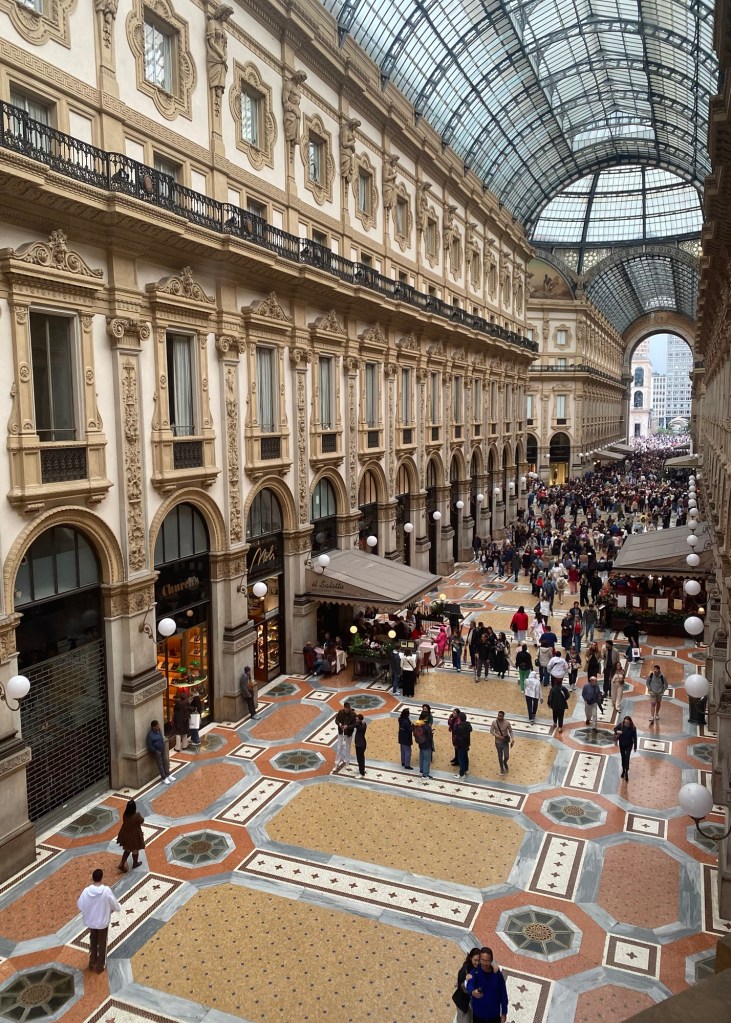
Sadly, we couldn’t squeeze any luxury items into our panniers, so we had to keep our credit cards in our pockets.
As we left Milan, the sun briefly came out again. Turning to look back, there was a thick ribbon of white snow covering the Alps, yet another reminder of our good fortune.
For a couple of days we pedalled gently across the Po Valley, a huge fertile plain that runs across Italy from the Western Alps to the Adriatic Sea and is home to a third of the Italian population.

We paused in the delightful town of Piacenza where we spent a lovely evening with Erica from Nuremberg, a fellow touring cyclist who is also heading to Rome. It was great fun to talk bicycle touring for a bit, comparing notes on the most useful bits of kit and laughing about squeezing everything into two panniers.

The following night we stayed at a small family vineyard just outside the town of Reggio Emilia where they proudly grow Lambrusco. Now we are of a British generation that is forever biased against this wine, considering it a cheap, sickly-sweet drink from a 1970’s party, alongside Babycham or some fizzy beer from a Watney’s Party Seven.
But it seems Lambrusco is much better than that. It’s delicate. It’s dry. It can have a delightful aroma of orange blossom, violets or watermelon. It pairs particularly well with beef and lamb or with spicy Thai and Indian cuisine. And it’s recovering from the tarnished 1970’s legacy … as the Milan fashionistas would say “it’s having a moment”.
Over the next few days there was little else available so we threw ourselves into Lambrusco country with gusto, whatever we were eating.
Were we convinced?
Honestly … it’s pleasant enough but, nah … it’s still a fizzy red … which somehow just seems wrong!

Back in our formative years, when we were both just starting to dream about exploring the world, an inspiration for both of us was the travel writer Eric Newby … A Short Walk in the Hindu Kush (1958), Slowly Down the Ganges (1966), The Big Red Train Ride (1978) amongst others.
Our favourite was Love and War in the Apennines (1971) in which he described escaping from a prisoner-of-war camp near Parma during WWII, then hiding from the Germans in the very same hills we were now cycling through. There he was helped, at huge risk to themselves, by the local mountain people and in particular by Wanda, a young Slovenian lady and her father. Predictably Wanda and Eric fell in love. Less predictably they found each other after the war and remained happily married, travelling together on all their other adventures.
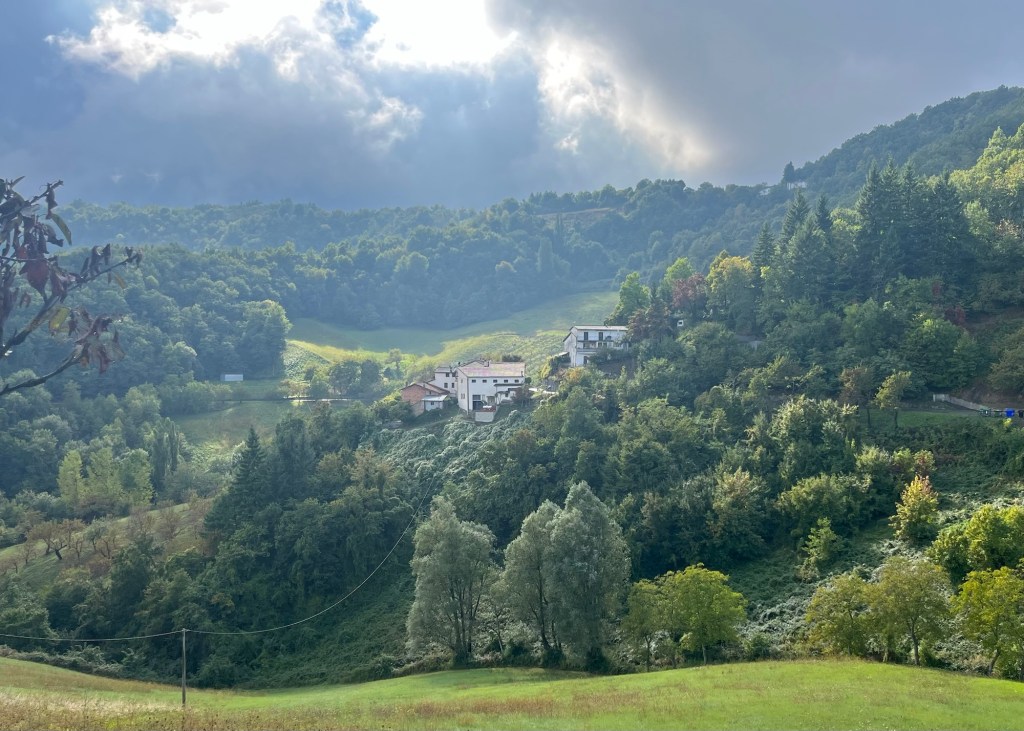
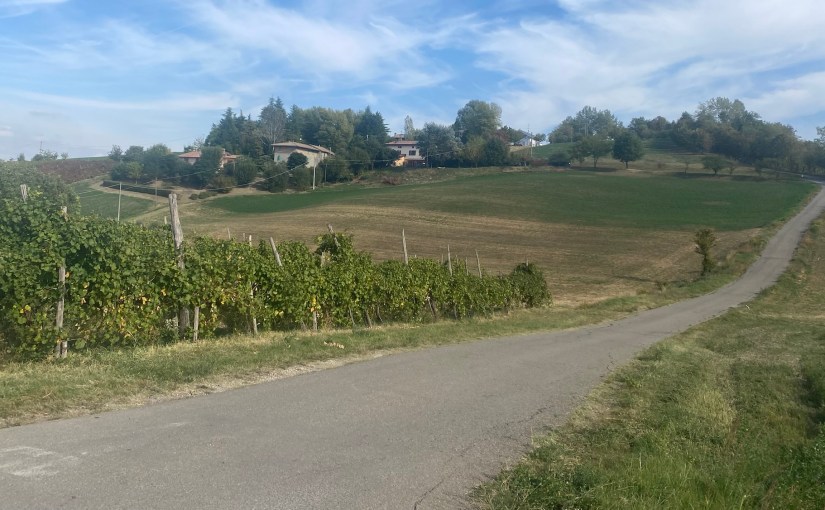
We thought a lot about Eric and Wanda as we pushed our way up through the hills, moody with mist, coated in sweet chestnut trees, remote farmhouses illuminated by a shaft of light from the heavens.

Of all the mountain ranges we’ve now cycled through, the Apennines are the steepest. They’re brutal, steeper than the Alps, steeper than the Pyrenees, steeper than the Andes.
Now we know you’re thinking we have nothing to complain about … we have motors and batteries to help get us up steep hills.
But as you watch your remaining battery percentage collapse before your eyes, there is NO WAY you can accept that riding a heavy e-bike up 15% inclines on rough roads is an easy option.
It’s still brutal!
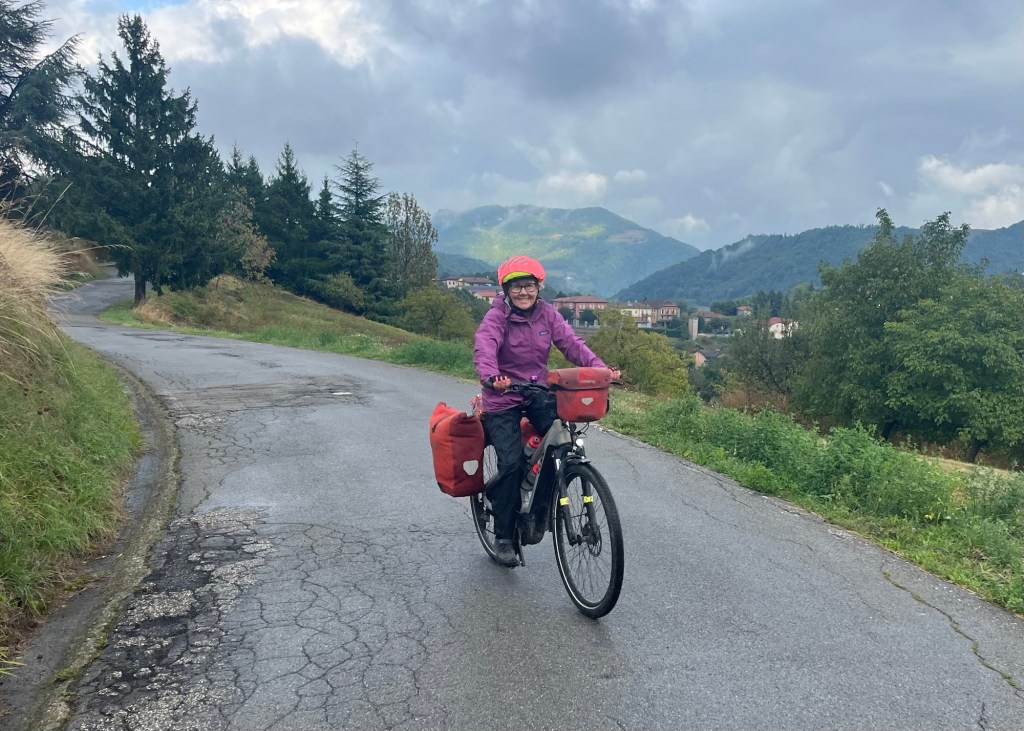
We may not have needed the same life saving protection that was given to Eric Newby, but feeling as exhausted as our batteries, we were very relieved to be welcomed into the warm hospitality of a family run mountain B&B near Zocca. It’s since become firmly established as one of our favourite lodges from this trip, a simple but comfortable room and a cavernous restaurant warmed by a pizza oven and an open barbecue, dripping with large joints of meat.
The family invited in two bedraggled cyclists without a murmur and then encouraged us to stay on in our room until the following afternoon to wait out the last of the rain.

Hearing we were travelling to Zocca, the lady in the Lambrusco vineyard had become very excited. You go on Zocca? she said, it’s the home of my favourite singer. He’s Vasco Rossi. People go to Zocca from all over Italy. They hope to see him. Perhaps you will the be lucky ones!
Vasco Rossi is indeed a big cheese in Italy, with 30 albums to his name and regularly selling out stadium tours. But not everyone is going on a pilgrimage to Zocca, it turns out Italian fans either love him or hate him. As one critic put it …
According to his fans, he’s Bruce Springsteen, Freddie Mercury and Michael Jackson rolled up into one musical genius. According to his detractors, he’s just a sleazy package of average Italian mediocrity.
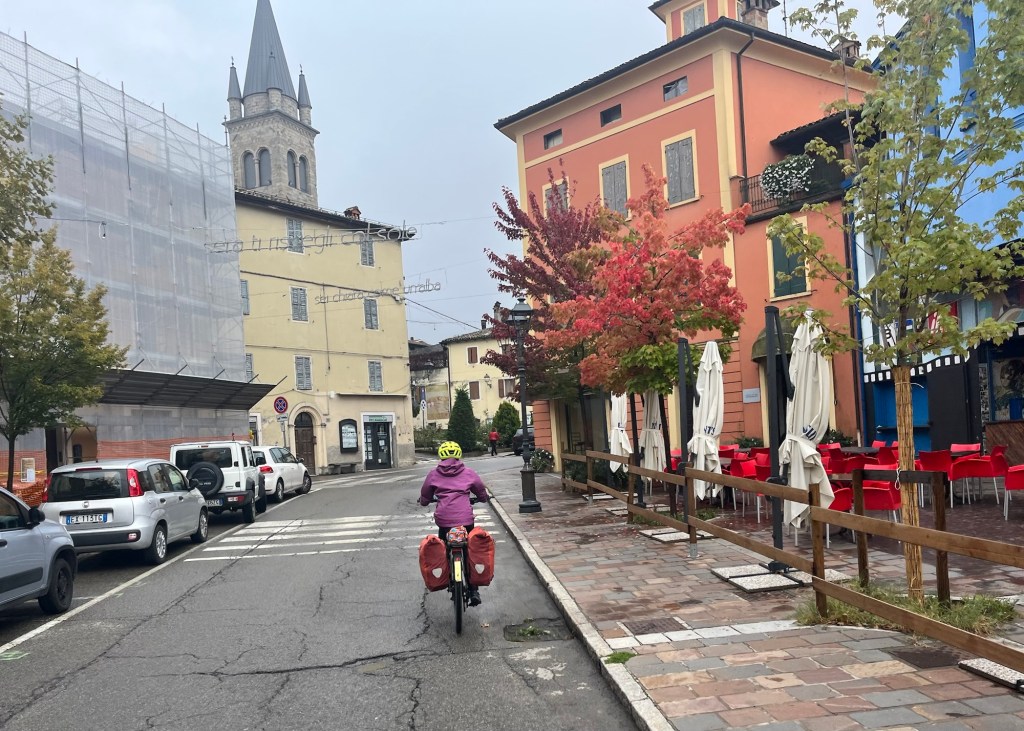
As we’ve been lucky enough to visit Florence several times over the years we decided to take the path less travelled on emerging from the Apennines, and go to Pistoia instead … Florence’s little sister.

There might be a reason why it wasn’t visited very often in the past. For much of its history, Pistoia has been reviled as a dangerous, aggressive place.
The city’s metalsmiths were as famous for their daggers as the Pistoiesi were for stabbing each other.
The city reputedly lent its name to the Pistol.
Michelangelo even called the Pistoiesi the “enemies of heaven.”

The most notorious incident of the Middle Ages happened when a massive feud that turned Florence into a war zone for centuries allegedly started in Pistoia.
Two boys were playing with wooden swords when one of them was inevitably hurt. The father of the perpetrator told his son to visit the family of the injured boy to apologise. But the victims father became so incensed that he took out his dagger and promptly cut off the boy’s hand, shouting that “Iron, not words, is the only remedy for sword wounds!”
Tough judgement.
One thing led to another and before long it had snowballed into a much bigger battle between the Guelphs who supported the Pope in Rome, and the Ghibellines who wanted an independent Florence city-state.
Thousands died … no wonder Pistoia became so notorious.
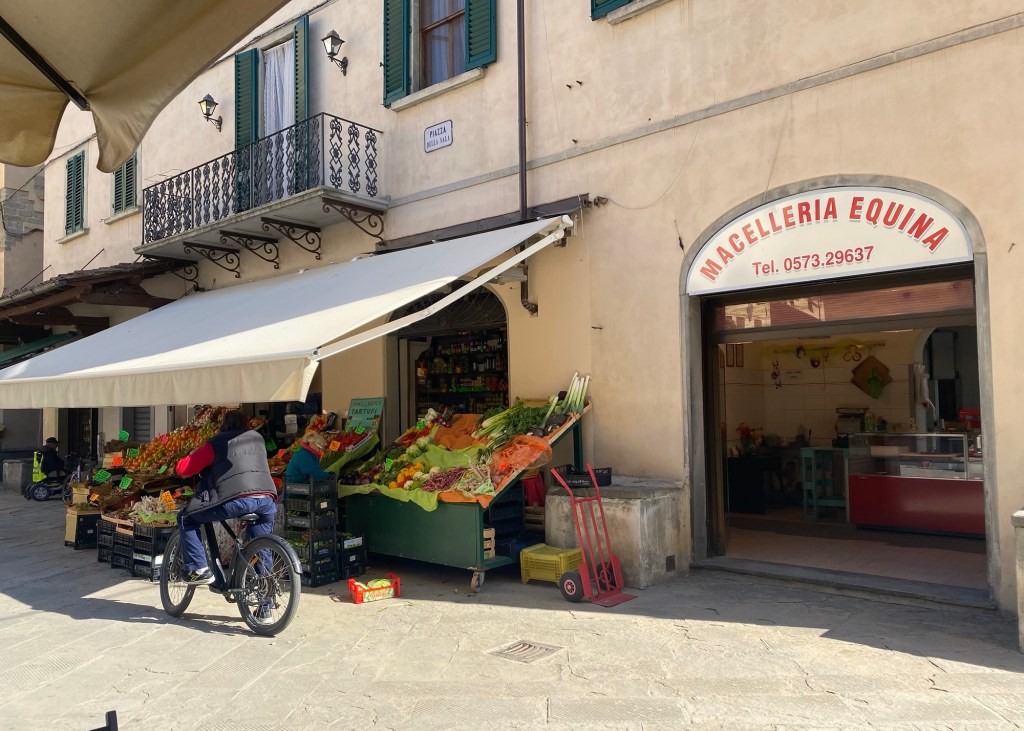
That dangerous history might be responsible for keeping people away as today there are very few tourists in Pistoia and barely any hotels. Which is a shame as it’s a charming typical Tuscan town, full of interesting renaissance buildings, lots of art and the best Gelateria!
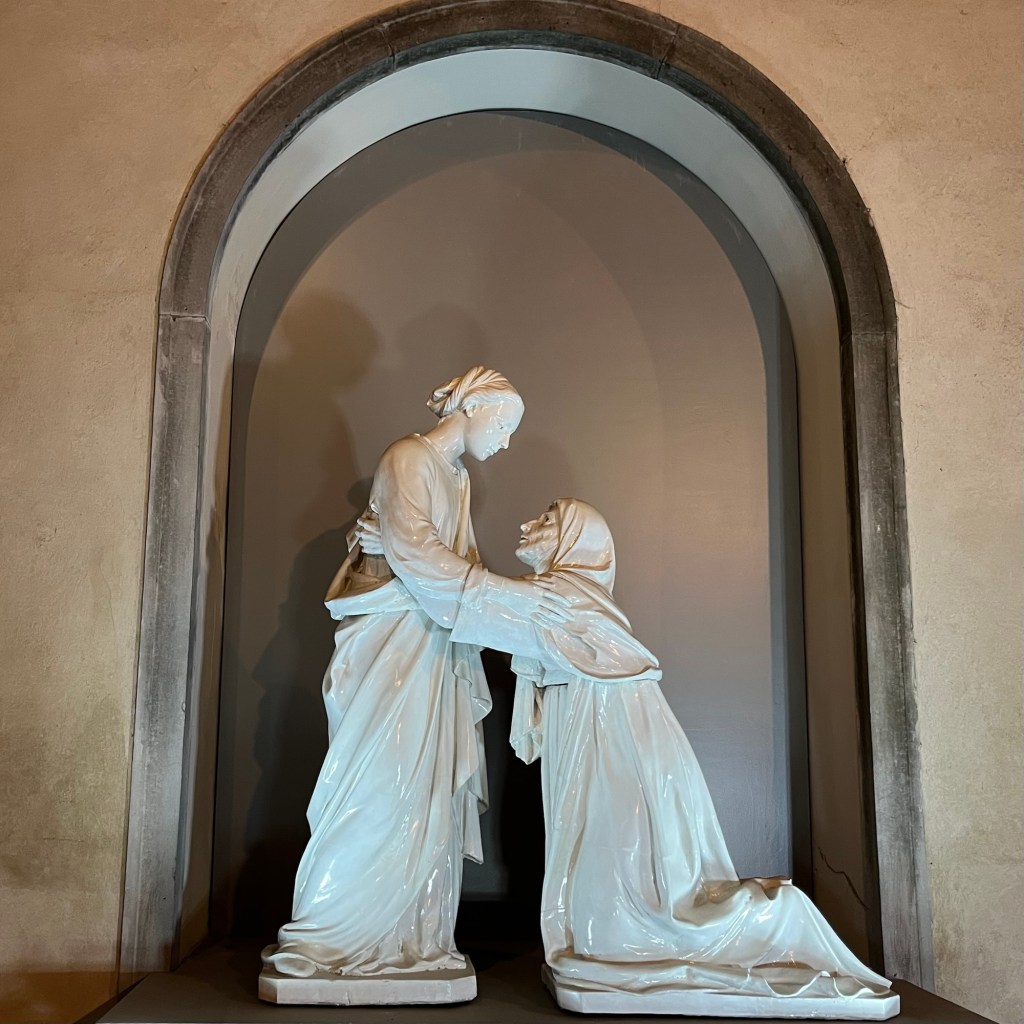
For bicycle tourists seeking the path less travelled, Pistoia was a perfect stopover and introduction to Tuscany.

So, as we enjoyed our gelati in the square, we could start to dream about the path ahead … rolling Tuscan hills punctuated by poplar trees and topped by medieval hilltop villages.
After all that’s the Italy we’d pedalled across half of Europe to explore.
Clare & Andy
Bath to Pistoia
1,991km pedalled
15,471m climbed
105 hours in the saddle

 Avoiding Potholes
inside the Duomo – that looked a spectacle! Rivals the Familier (can’t spell!) in Barcelona. Hanging painting / tapestries. Not seen that before in a cathedral. Superb. Thanks for that picture alone. The ice cream was pretty good to look at too! Enjoying your journey without the hill climbs. Thank you.
LikeLiked by 1 person
You’ll enjoy the pictures of the Duomo di Siena in the next blog Sandy. It was breathtaking!
LikeLike
Another great blog! I envy you Italy in the autumn, it will be so beautiful and hopefully warmer and drier than Blighty as soon as you escape the alpine weather of the North.
Looking forward to the next episode.
Mark Finlayson
LikeLiked by 1 person
Hi Clare & AndyI’m very much enjoying these reflective posts as you crack on across Spain to meet your 90 day deadline. Buon viaje ustedes! Ian xx
Sent from the all-new AOL app for iOS
LikeLiked by 1 person
Great Travelogue, liking the history and pics. Plenty more Italy to see.
LikeLiked by 1 person
Another great blog you too. I particularly enjoyed the photos this time and I am enchanted by the idea of a little village on an island in the middle of a lake. Erica looked like an interesting character. I was trying to discern from the photo with Clare whether or not her bike was electric or a conventional pedal cycle? If the latter then Erica RESPECT ✊
Sent from my iPhone
LikeLiked by 1 person
Yes, Chapeau to Erica, no electric power for her. She’s a great adventurer and a lovely lady.
LikeLike