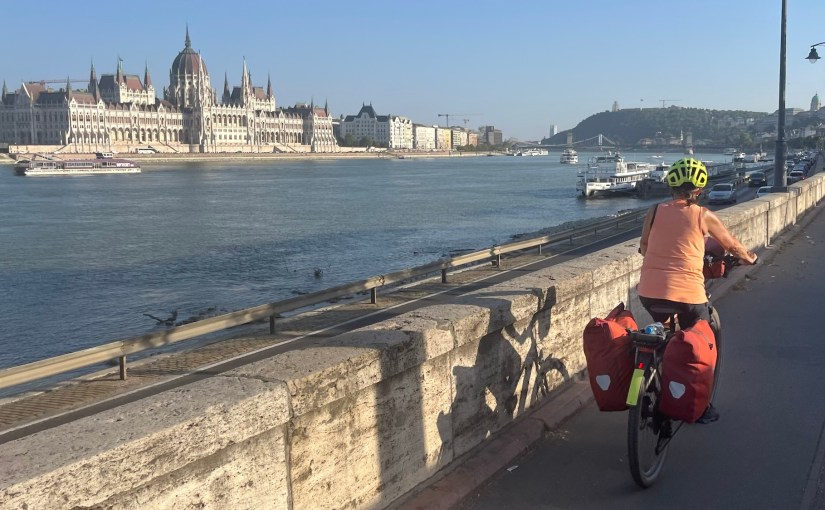
Clare’s face was a picture!
Blocking her path was a man wearing only a pair of sandals and an all-over tan, proudly displaying his not inconsiderable manhood.
Behind him was another, and then another.
Leaving Vienna, we had just rejoined the Danube Cycle Path towards Bratislava. Eyes front, head down, she pedalled on.
Naked people were everywhere. Sunbathing, enjoying a coffee, sauntering down the path ahead of us.
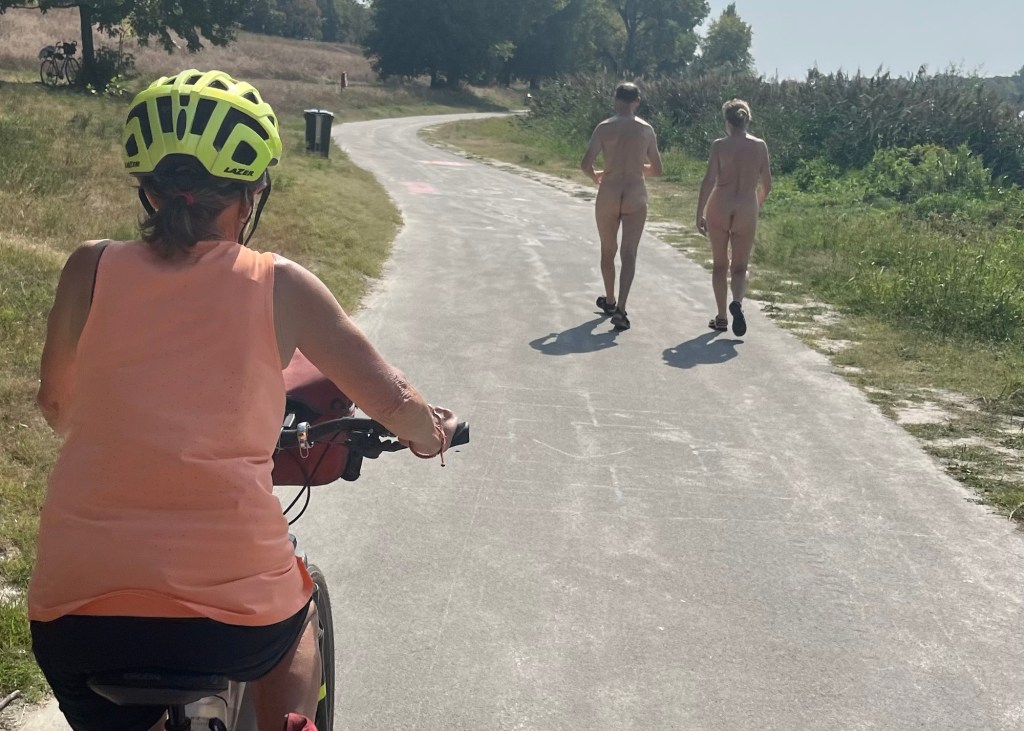
This part of the Danube turned out to be an area for Freikörperkultur or FKK, literally translating as Free Body Culture, a ‘type of naturism that makes maximum use of sun, air and water to restore your physical and mental well being.’
But it was also a family-friendly bicycle path.
And it was certainly one of the more unusual views we’ve ever had from our handlebars!
Since rolling off the ferry in Holland last August we’ve worked out that a remarkable 80% of our journey through Europe has been on dedicated cycle paths. Most of them have been extremely high quality … super-smooth and free of any bumpy tree roots pushing up through the tarmac.
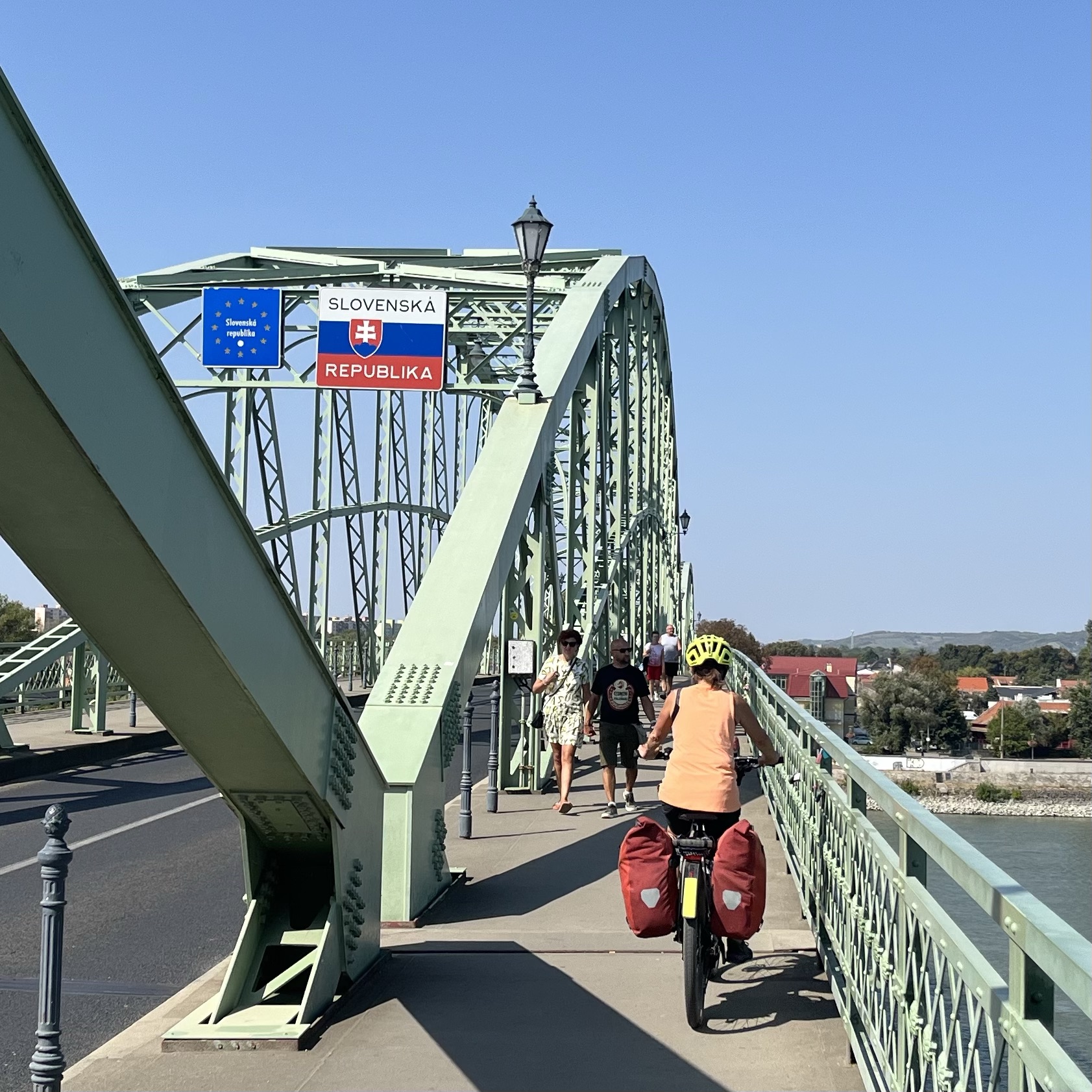
And the prize for the smoothest of all goes to … Slovakia. We spent very little time in the country but all of it was pedalled on raised, smooth, brand new bicycle-dedicated ribbons of asphalt.

So it was a bit of a shock to find ourselves back on the roads in Hungary!
Not that Hungary is not doing its best to introduce a cycling network to rival its northern neighbours.
It is … there are plenty of bike paths.
Some of them are good bike paths, smooth with a fresh coating of asphalt.
But others are bad bike paths, rough, cracked, weed infested and with large tree roots pushing up through the surface, bumpy enough to send our panniers flying.
In the first few days in Hungary, we managed to avoid their roads by crossing the Danube back into Slovakia as often as we could. Being able to criss-cross the borders at will was a reminder of how much things have changed in Europe.
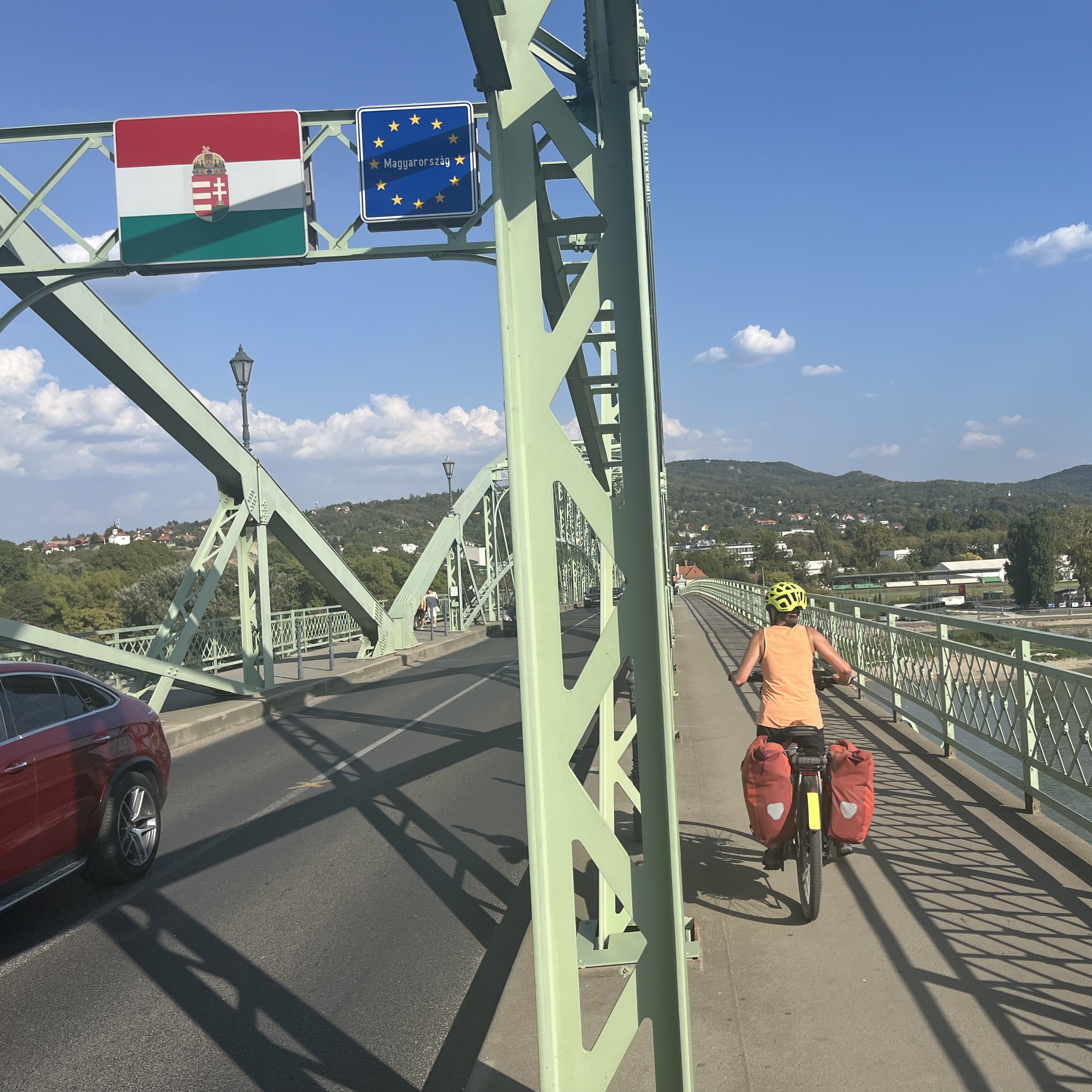
All this border crossing brought us to the beautiful town of Esztergom, the first capital city of Hungary and site of the crowning of St Stephen, their first king.

The magnificent baroque Basilica was built in the 19th century and is still Hungary’s largest church.
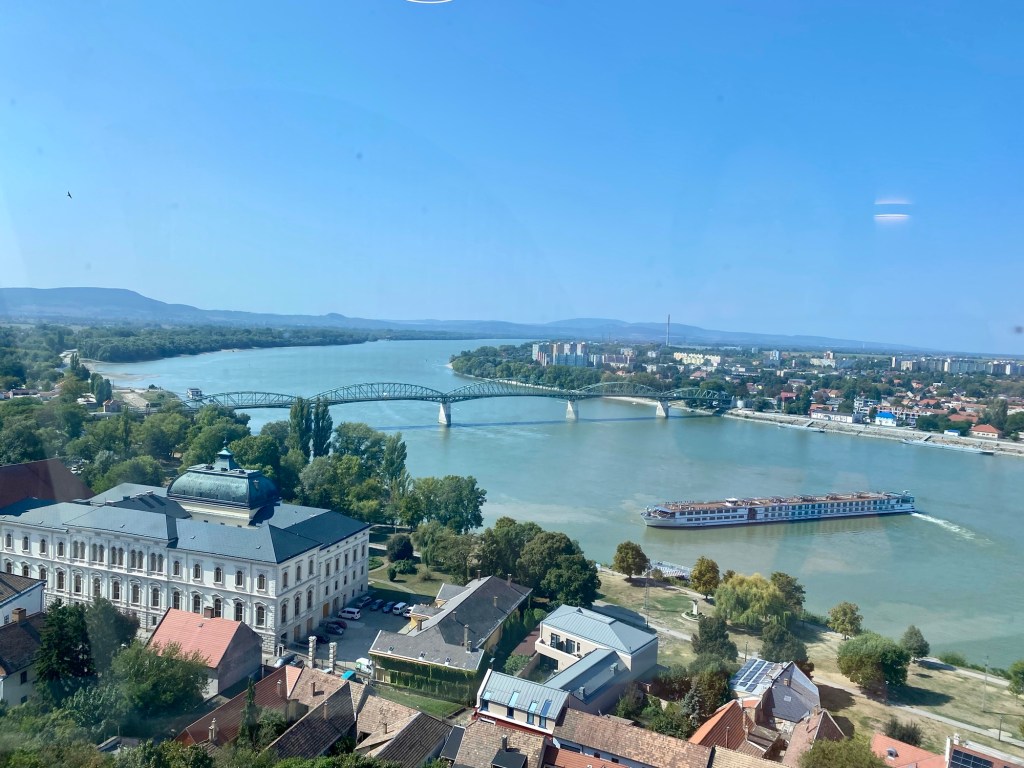
Esztergom lost most of its influence in 1920 after the Treaty of Trianon, imposed by the Allies (UK, USA, France, Russia) at the end of World War I, reduced it to a border town.
We heard quite a lot about this treaty as we passed through Hungary, surprised to find that several young people we met still felt resentful about it, given that it was signed over 100 years ago.
Hungary lost two thirds of its land, 60% of its population, 30% of ethnic Hungarians and many resources including almost all its gold & silver mines and over 80% of iron ore.

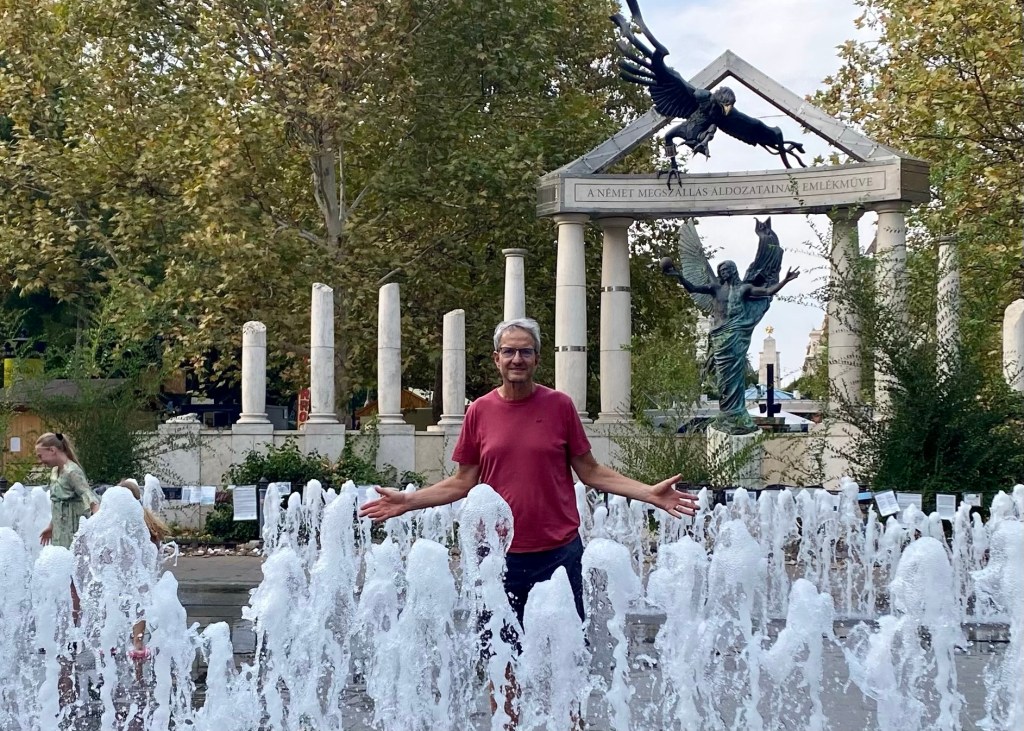
Victor Orbán, the Prime Minister, often keeps the issue alive as part of his nationalist message. In 2020 to mark the 100th anniversary, he unveiled a memorial right outside the Budapest parliament building depicting the names of all the lost towns and villages.
A bit shocked that we’d never heard of this treaty before, considering the impact it had on a major European country, we still don’t fully understand it. But it does feel like rough justice to Hungarians … though no doubt a relief to the many ethnic Romanians, Slovakians etc. who live in those areas.

We ended up staying in Budapest for four days, enjoying another city break. This was not to see the sights but to treat some saddle sores that Clare had developed probably from the extremely hot, dry weather.
Saddle sores are different to being sore from the saddle. They look like angry red spots and get so painful they become all you can think of as you ride along.
Clare has nicknamed them ‘pickels’, German for pimples, and for a while we thought these pickels might bring a premature end to our trip, such was her discomfort on and off the bike.
A four day break from cycling helped a lot. As did new cycling shorts, some Preparation H cream (normally used for haemorrhoids) and a last minute bike fit. Zoltan changed the tilt of her saddle a fraction and made a tiny adjustment to the position of the cleats on her shoes.
Small changes can make a big difference … apparently!
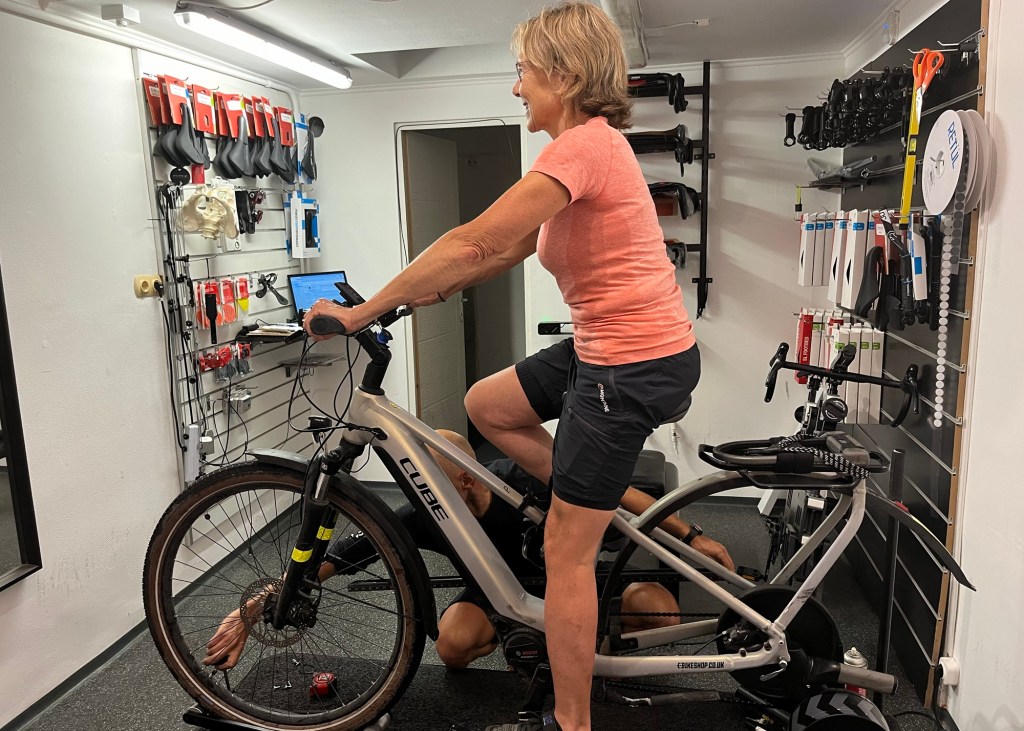
Looks like he was right … since leaving Budapest her pickels are a lot less angry.
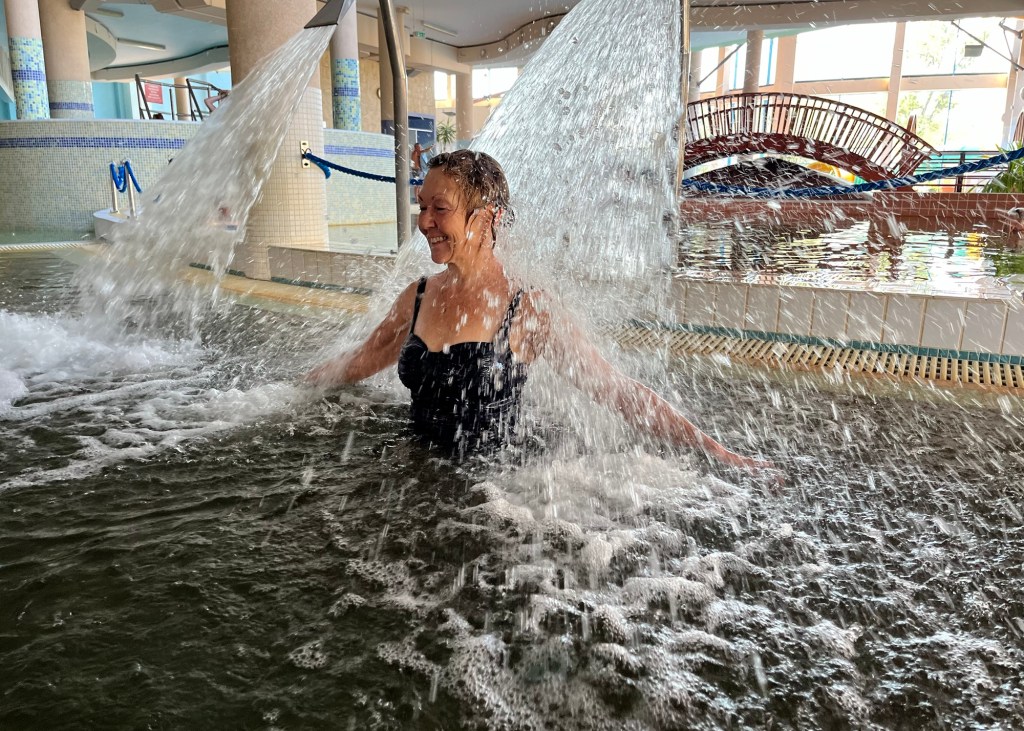
Perhaps the biggest benefit came not from the bike fit or the haemorrhoid cream but from the thermal baths for which Hungary is famous. We went to two in Budapest … the biggest and most popular at Szechenyi (jam packed with tourists) and a smaller more local one called Rudas (better but still very busy).


But it was in the small village of Cserkeszőlő that we stumbled across our best thermal bath experience, completely by chance. It was just an overnight stop on the ride across the Great Hungarian Plain towards Romania.
Discovered in 1938 during a failed oil exploration, the water in these baths emerges at 93°C and comes from a depth of 2000m, containing some of the best mineral content of any spa in the country.
For Cserkeszőlő it’s liquid gold!
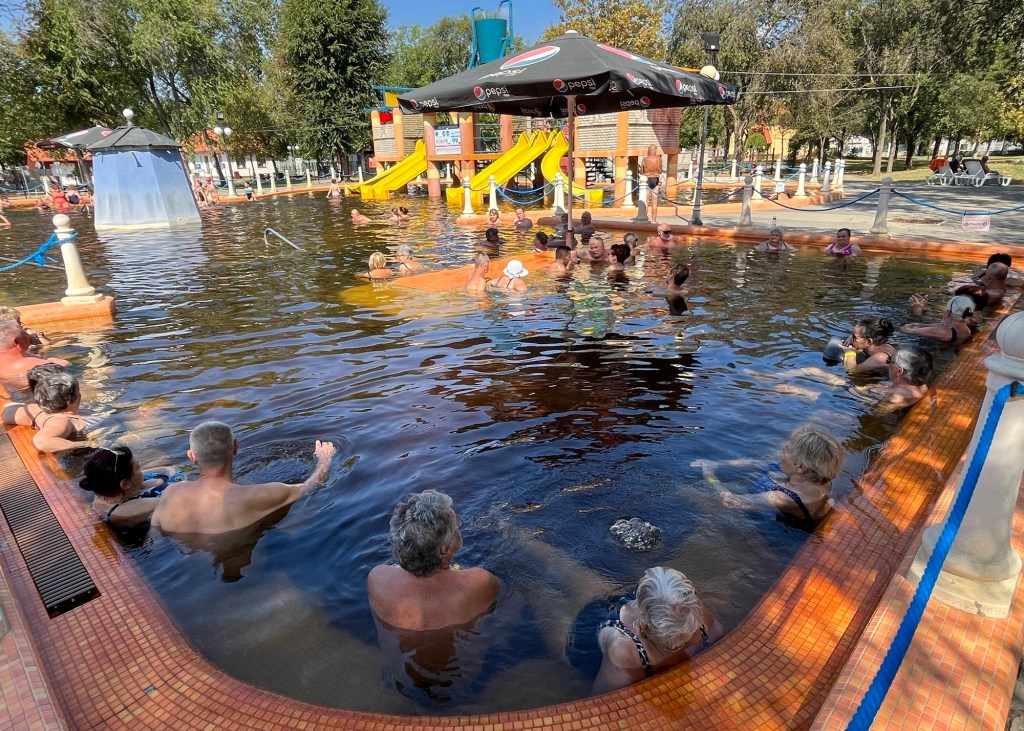
In total, there are more than 1300 thermal baths in Hungary, a country where soaking in warm mineral waters for hours on end is not seen as a decadent indulgence, just a natural part of a well balanced life.
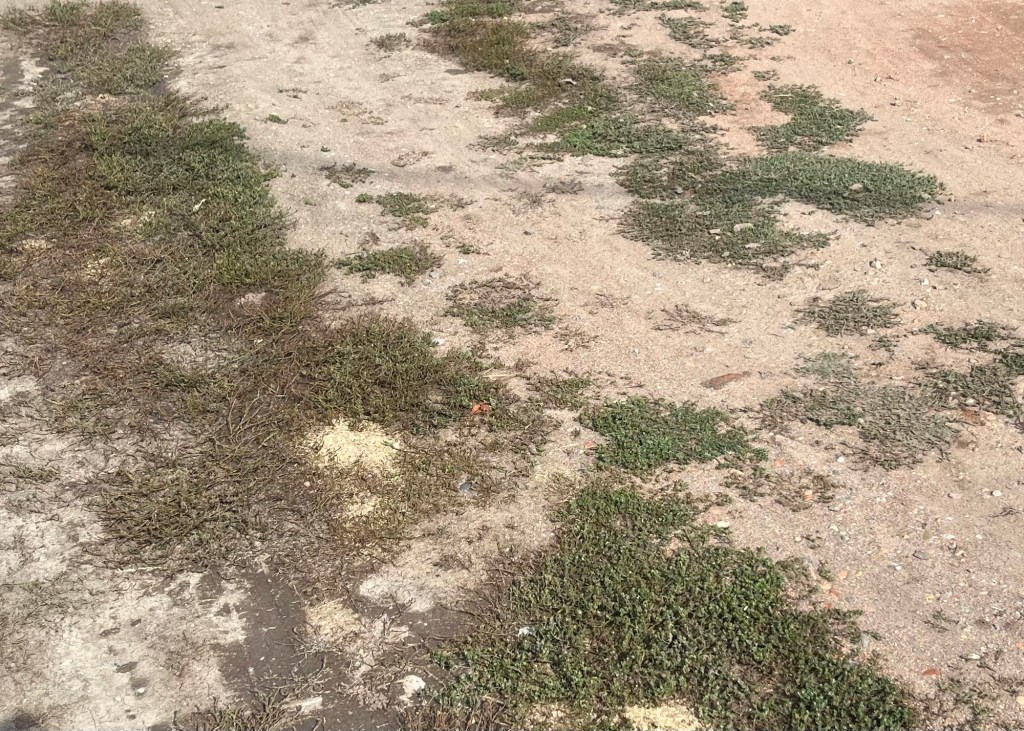
The moment she saw our bikes, the lady at our Panzio (B&B) in Cserkeszőlő rushed out in alarm . “Danger, big danger!” she shrieked as she grabbed a small weed from the centre of the drive and thrust it towards us.
It looked harmless.
“Very bad, very bad …. my bicycle … six, SIX! Big danger!”
She was trying to tell us that she’d suffered six punctures in as many weeks. It was only when we looked more closely at a longer stem that we saw the seed pods and understood … each one was protected by sharp, nasty barbs.
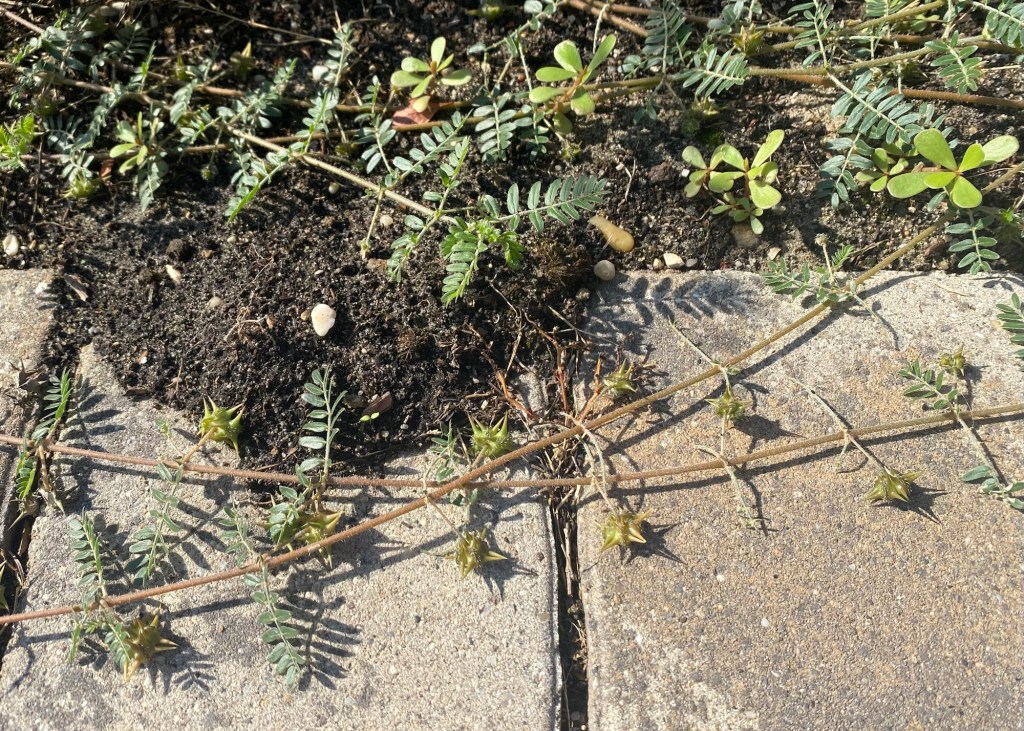
This plant is Tribulus Terrestris, known to cyclists as Puncture Vine but with many other names including Goathead, Devil’s Thorn and Devil’s Eyelashes.
It thrives in loose, dry arid soil which few other plants can survive so is perfectly adapted to the cracks that form on cycle paths. The seed pods are barbed so that they can attach themselves to animals hooves for greater dispersal and are strong enough to penetrate a bicycle tyre, especially as they dry out.
Hence the name!
Instinctively we looked down at our tyres. Sure enough there was a seed pod clinging to the side of Clare’s front tyre … and it was now a very squidgy tyre!
“I told you, big danger!” she said, “Everywhere in Hungary. EVERYWHERE! Very bad.”

This was our first puncture for three years and the first on our new electric bikes with their big fat tyres.
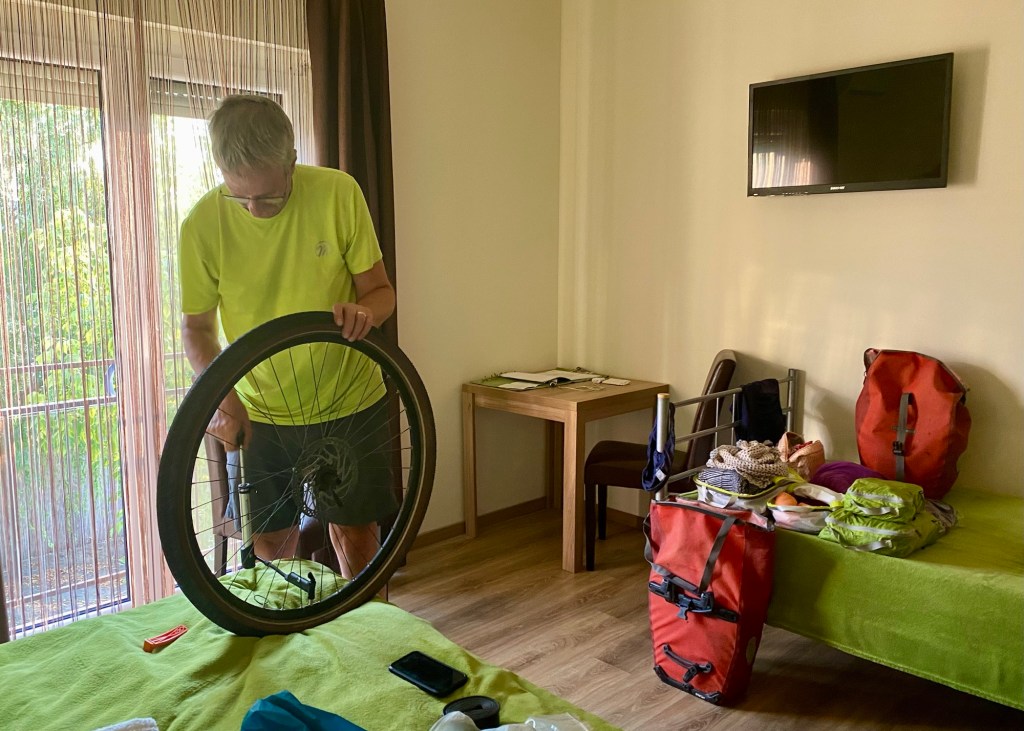
We thought we had become reasonably good at replacing inner tubes but this one was a major struggle. We were rubbish, completely out of practise, just relieved to be doing it in our room rather than by the side of a dusty road.
The next morning we relaxed for a long time in the thermal baths safe in the knowledge that we’d only planned a short, leisurely ride that day. It was pure decadent indulgence.
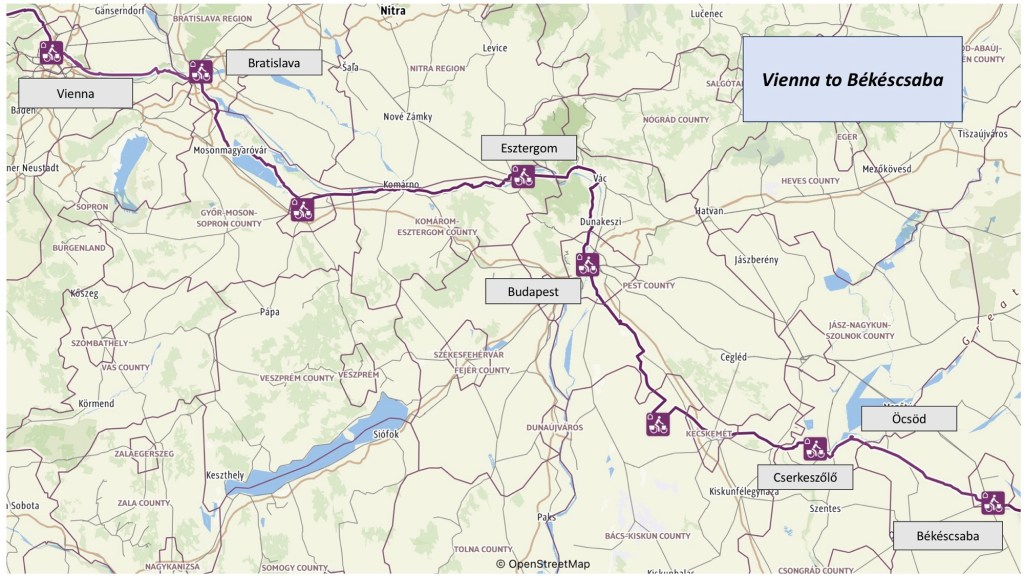
When we’d planned the best way to pedal across the Great Hungarian Plain from Budapest to Békéscsaba, there had been two choices …
One … follow Hungary’s bicycle route 5 as it meanders beside the Körös river. This meant taking an extra day but with shorter rides each day.
Or two … follow the main road and the cycle path that goes alongside it. Fast, but boring. And who knows whether it will be a good or bad Hungarian bike path?
We chose the leisurely river route.
We’ve never noticed puncture vine before. But it’s one of those things that once you know about it, you start seeing it everywhere. EVERYWHERE! … just as the lady said.
Sure enough the cycle path out of Békéscsaba was riddled with it. We gave up and pedalled on the road instead.

Hungarian drivers have generally been very courteous, leaving plenty of room when overtaking and giving way whenever a cycle path crossed the road.
As long as we used the cycle path that is!
If we ever had the audacity to cycle on the road when a (good or bad) bike path was available, a driver would wind down their window and deliver a surprisingly long explanation of what we were doing wrong.
Of course, we didn’t understand a word … but we imagined they were saying something like …
“Even though you shafted us so badly at Trianon, we have saved money to build you beautiful bicycle paths all over our great country … so the least you can do is show a little respect and use the bloody thing!”
We retreated back to the bike path, puncture vine and all.
But the start of the Route 5 river path in the small village of Öcsöd was too much. The path was so stony and so covered in puncture vine that it was difficult to pick a way through … it was not the leisurely ride we’d imagined at all.
Retreating to a kids play area and surrounded by graffiti, we were amazed to find we had 5G.
In just a few minutes, we’d cancelled that night’s Panzio, replanned the route back to the road, checked on Google Earth that it was a good Hungarian bike path and booked a new hotel in Békéscsaba.
Try doing that in a tiny village the middle of Yorkshire!
It was a long, straight ride but it was a surprisingly good Hungarian bike path without a hint of puncture vine. Adopting our heads-down-crack-on-new-ebike-cruising-speed we easily made it before dark.

Which was just as well as Storm Boris was now ravaging Central Europe, causing chaos to the areas we’d just pedalled through … Vienna, Bratislava, Budapest etc. We hunkered down for two days watching the rain fall and then finally braved the conditions for a cold, damp ride crossing the next border into Romania.
A week ago we’d left Vienna in 35-40°C (around 100°F) under sunny skies. Now it was just 9°C (48°F) with a biting headwind and light rain.
Quite a change! Even the naked enthusiasts by the Danube might have had to put some clothes on!
Clare and Andy
Bath to Békéscsaba:
2,534km pedalled (1,574 miles)
11,350m climbed
132 hours in the saddle

 Avoiding Potholes
Ah, Clare & Andy…such joy to read this: fascinating, interesting (that treaty!!) & humorous! Thank you. I have learnt and smiled +++.
Good luck with the next stint – sans naked delights and thorny threats 😄.
Lots of love xxx
LikeLiked by 1 person
Thank you Louise. We are really enjoying riding in Romania so far xxx
LikeLike
Sounds great fun – hope you’re not swamped by the flooding!
LikeLiked by 1 person
To be honest Mark, we feel a bit of a fraud. Apart from a couple of days enforced rest, we’ve barely been affected by Storm Boris. Lovely sunny weather now. We’re just sorry for the places we passed through just a week or so ago.
LikeLike
Lucky, not fraudulent!
LikeLiked by 1 person
yes Hungary love their hot baths.
Having a Hungarian cousin we have spent many good days in Budapest at the Gellert Hotel and down south at lake Baleton sailing and swimming. I hope you indulged in a massage as that is another Hungarian passtime. David
LikeLiked by 1 person
Glad to hear you love a bit of decadent indulgence David. And why not … it’s very nice. No massages for us, looks like we missed out!
LikeLike
Excellent as ever, Bloody puncture vine though eh?
LikeLiked by 1 person
Have you come across it Neil? It’s pretty widespread wherever it’s hot and dry.
LikeLike
No, I don’t think I have, but it sounds like a nightmare. Have managed to pick up punctures from just good old fashioned bramble thorns in the past though!
LikeLiked by 1 person
Andy and Clare. I loved your travel story.
Marie
Sent from my iPhone
LikeLiked by 1 person
Thank you Marie, that’s really nice to hear.
LikeLike
Fabulous!!!!! Made my day / good for the FKK XXX Sent from my iPhone
LikeLiked by 1 person
Indeed, all power to the FKK. It was a wonderful atmosphere. We understand there are several FKK sites in Vienna.
LikeLike
wow you guys! What an amazing run I had cycling along with you , in my imagination of course. 💜
LikeLiked by 1 person
Thank you Parul. Look forward to joining you for the next bit in Romania xx
LikeLike
Another great blog! Thanks for sharing your adventures, even the nudist encounter. Keep safe and keep pedalling.
LikeLiked by 1 person
Thanks Ian. We’re really enjoying Romania – highly recommended for cycling.
LikeLike
Very much rough and smooth. Good to hear your travellers’ tales x
LikeLiked by 1 person
Thanks Ginny. Romania is just smooth so far.
LikeLike
Well done, Andy and Clare! Keep it going… Dave x
LikeLiked by 1 person
Thanks Dave
LikeLike
Soooo love reading your blogs Andy & Claire… always entertaining and educational. Trianon and puncture vine… who knew? 🙂 Enjoy every second! Mark x
LikeLiked by 1 person
So good to hear from you Mark, we really love it that we’re still in touch with you via the blogosphere after so long. Must meet up … we know we keep saying it but we must!
LikeLike
I love it too A&C…. but I’d love to meet up again after all this time even more! Let’s make it happen… I’m almost retired now which, in theory, should make it easier 🙂
LikeLiked by 1 person
Evocative as ever ! Your travels and stories remind me of Patrick Leigh Fermor’s trilogy the first of which I think was called A Time of Gifts. He set off to walk from Holland to Constantinople as a very young man in about 1933 and you can sense the clouds of war gathering from what he writes. Maybe the Treaty of Trianon goes some way to explaining why Hungary is a bit of an outlier within the EU and its ambivalent relationship with Ukraine?
LikeLiked by 1 person
Not sure we can be compared to Patrick Leigh Fermor Bob, he was a lot tougher than us and a much better writer. You might be right about Hungary and its relationship to other countries, Trianon seems to be a deep wound for the people, not just the politicians. It’s very interesting to learn a little about the other side of the coin though, now we’re in Romania.
LikeLike
Another entertaining and informative blog. Puncture vine – who knew?! It sounds like you are thoroughly enjoying your experience and the E-bike adventure continues …
Lots of love
xxx
LikeLiked by 1 person
Thanks Nicola, we’ve safely arrived in Bucharest now. Romania has been lovely.
LikeLike