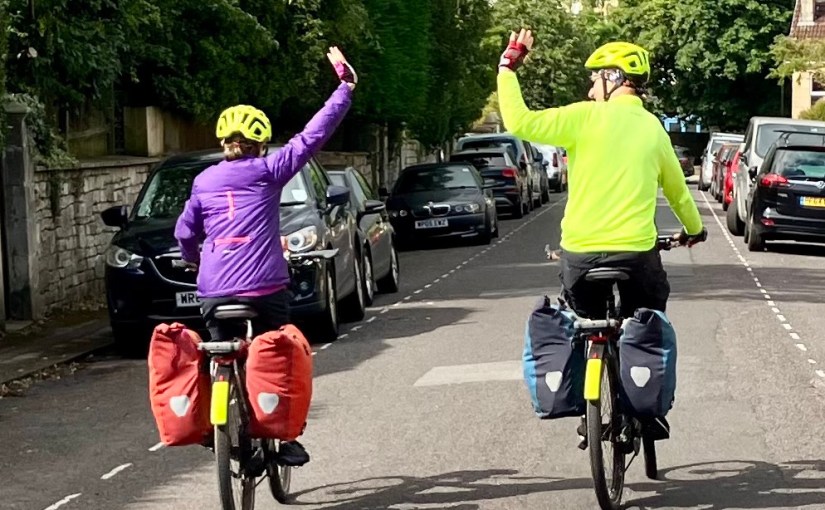
It’s Electrifying


We clearly remember the moment the idea first flashed through our minds … Mallorca, November 2017, on our way back from a ride out to Cap Formentor. 

Struggling up a steep slope, legs burning, sweat dripping into our eyes, lungs gasping for air, we were surprised by an older lady serenely cruising past us, shortly followed by her husband.  She was riding a sit-up bicycle with a wicker basket on the front and looked as if she was pottering down to the local market.

At first we couldn’t believe it and pushed harder, standing up on our pedals. But the older couple simply glided away from us.

Then we realised … they were riding electric bikes!

The idea started to grow. Should we go electric too? Would it make bicycle touring even more enjoyable?

With the passing of the years the physicality of climbing hills on fully loaded bikes gradually became less enjoyable and more challenging. On the toughest days, the thought that we could be doing this on e-bikes got louder  – the Seven Lakes Road in Argentina, the Wilderness Road in Tasmania, through the Badlands of southern Spain. By the time we rode the Blue Ridge Mountains of Virginia last October, it was screaming at us.

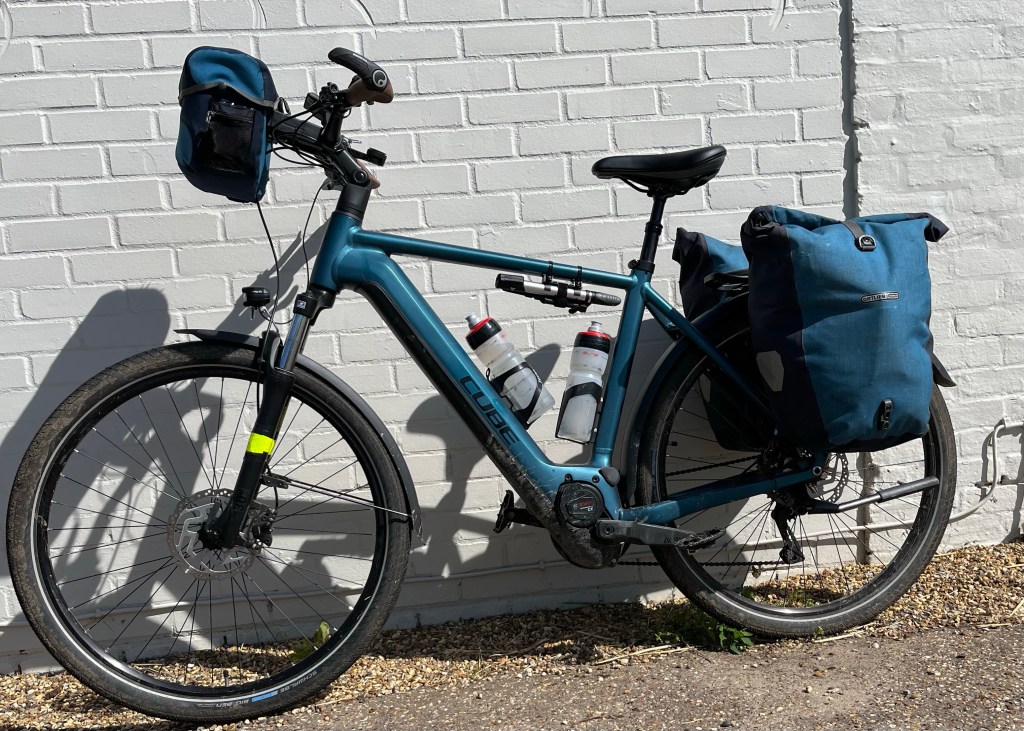
Now we’ve taken the plunge and have just set off for our latest adventure on two Cube e-bikes with Bosch batteries and motors. Our trusty old Ridgebacks are left behind in the garage, trying to console themselves with happy memories from the journeys they’ve taken us on over the last few years, but probably realising their time is up.
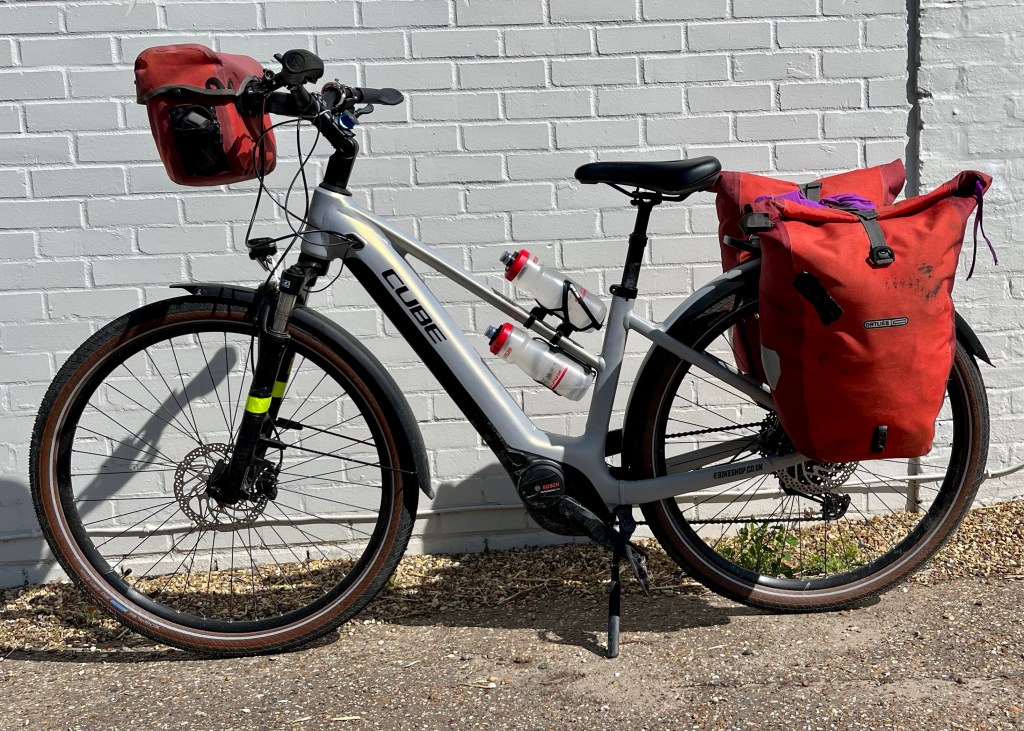
Clare’s Cube Touring Pro

Andy’s Cube Kathmandu One


As many of you know, our dream has always been to cycle across Europe from Bath to Istanbul so we’re heading in that direction and waiting to see how far we get. Our rough route takes us 3800km through Holland, Germany, Austria, Slovakia, Hungary, Romania, Bulgaria and Turkey but we know we might have to turn around at any time.

We’ve always enjoyed keeping our plans flexible but it’s a bit more complicated this year.

Not only is Istanbul much further than we’ve ever pedalled before but Andy was diagnosed with a heart arrhythmia (atrial fibrillation) shortly after we got back from America last year. His AF is not too serious and it’s well controlled with meds but it could get in the way if the episodes become too frequent. The good news is that Andy’s cardiologist has given his blessing to the trip, especially when he realised we would be on e-bikes.

Our route across England

Stage 1 meant four days of cycling through seven counties of undulating English countryside from Bath to Harwich and then boarding a ferry to Holland.

Friends had joked that we would need to be extra vigilant at ‘avoiding potholes’ in the UK, but we found the road surfaces to be pretty good overall, getting better the further East we went.

There were some familiar bike-touring experiences … diving down a muddy track on a dreadful detour, a stand up lunch outside a village convenience store, sheltering from a sharp shower under a tree.

Emerging from a Dreadful Detour

Despite the mixed weather it was lovely to pedal in familiar countryside past fields of golden wheat and barley, through quaint picture postcard villages, up tree-lined lanes to the top of gentle hills.

But we nearly didn’t make it out of England alive!

In Luton there is a ‘Busway’ that crosses the town on dedicated concrete tracks, a bit like a railway for buses. A cycle path runs alongside it. Having never seen this ingenious public transport system before, we mistook the Busway for the cycle path.

Once on there was no way off. Concrete sides blocked our escape and our heavy bikes would take too long to turn around. All we could do was to put our heads down and race to the next station, much to the surprise of the local commuters. Our luck was in, we made it out … just ahead of the number 23!
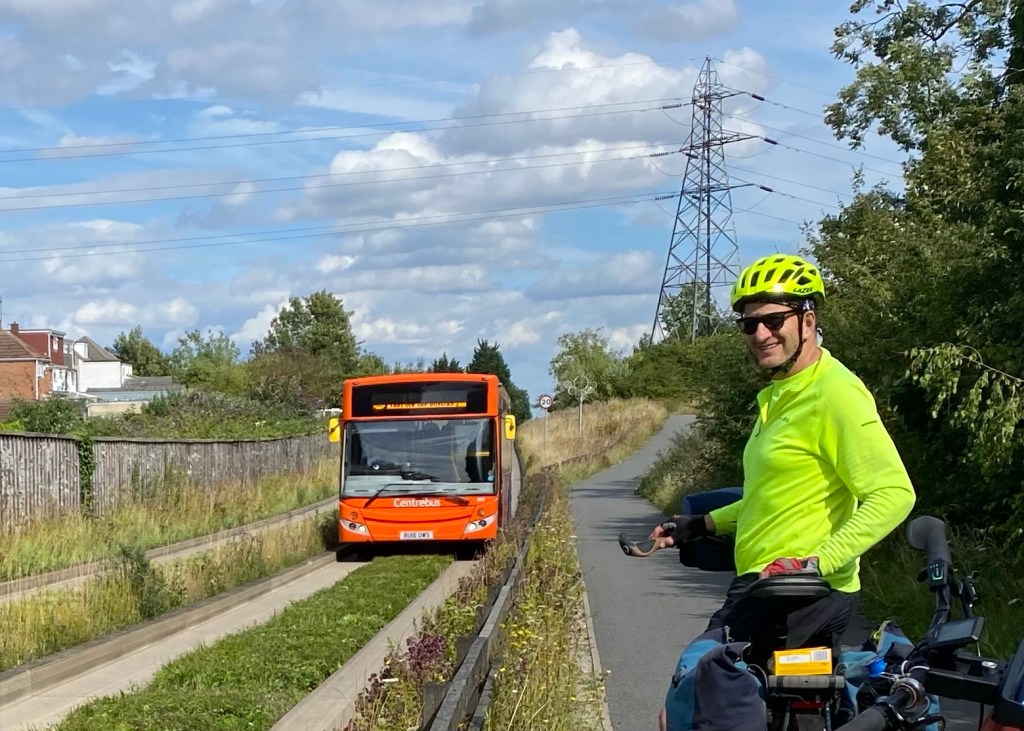
A lucky escape from the Busway in Luton

So how have we found the e-bike bicycle touring experience so far?

It’s early days but the two big differences seem to be speed and effort.

We go faster which means we can go further each day.  Travelling across England we managed three consecutive days of 100km or more, something we would have thought was completely barmy on our old bikes.

And whilst we have to pedal, giving  plenty of exercise, we don’t get the exhaustion that used to come from tackling long or steep hills. We simply flick on a higher power setting and serenely pedal up them … just like that lady in Mallorca!

A perfect surface in Essex

Bosch offers 4 power settings:

  • Eco (Green) – low level support for the longest range
  • Tour (Blue) – consistent, smooth support for long rides
  • eMTB (Purple) – dynamic acceleration for rough tracks and hill starts
  • Turbo (Red) – maximum power for steep ascents

More power means less battery range … and we definitely don’t want to run out of battery, not once, not ever.

But any range anxiety we might have felt has now completely disappeared.

After the first day, Andy’s knee was sore, sore enough to hobble down the stairs. Not a good sign with well over 3000km still ahead! To ease it, he made some micro adjustments to his saddle position and increased his cadence (speed of pedal strokes) to cut down the force he had to press onto the pedals.

But the best medicine came from riding at a much higher power level using blue or purple with gay abandon and even throwing in some extended blasts of red. On that second day we rode for 108km … and at the end of it Andy still had a quarter of his battery left and a knee that was beginning to feel much better.

E-bikes also come with several features that are useful for bicycle tourers such as built in lights and a stand … but there are a few downsides.

They are really, really heavy, weighing in at 28kg or around 46kg fully loaded. This makes them difficult to manoeuvre in tight spaces. Lifting them up stairs is a no-no and even turning them around is hard work … we’re getting used to 3-point turns and wide circles.

They’re more attractive to thieves so we’ve invested in strong locks and insurance. Bosch also offers a phone app that immobilises the motor and sets off an alarm if they’re moved.

They’re banned from aeroplanes because of the size of the batteries. That raises the question of how we’re going to get back from Istanbul if we get that far. A question we don’t have an answer to yet!
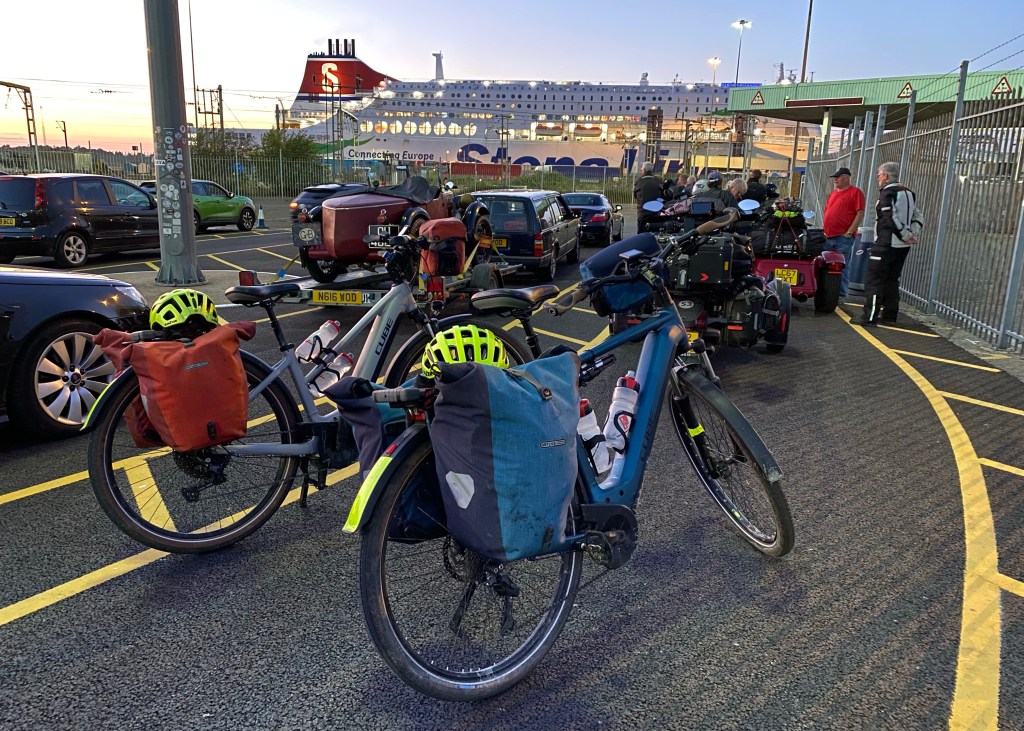
Waiting for then ferry to Holland

It did take us several days to get used to the day-to-day mechanics of an e-bike tour … the way the panniers fit, recharging the batteries, the different pieces of equipment etc. On the second morning Clare rode off without her plastic battery cover which is important to stop rain and mud ruining the electronics.

Fortunately, we had enjoyed a lovely stay near Oxford the night before with our good friends, Neil and Gill. Realising the cover would be difficult to replace, Neil drove out of his way to to reunite her with it before any dampness got inside.

We’re now settling into the rhythm of both our new machines and of being back on the road. The panniers are going on smoothly, the 3-point turns are working well and recharging has become easier. 

Andy’s knee is now fully recovered. However after more long days on our saddles in a row than we’re used to, we can’t say the same about our bums! 

So with apologies to the makers of Grease …

“We’ve got pains, they’re multiplying

And we’re losing control

‘Cause the power Bosch are supplying

It’s electrifying!”

We’d better shape up!

Clare and Andy

Same Same but Different

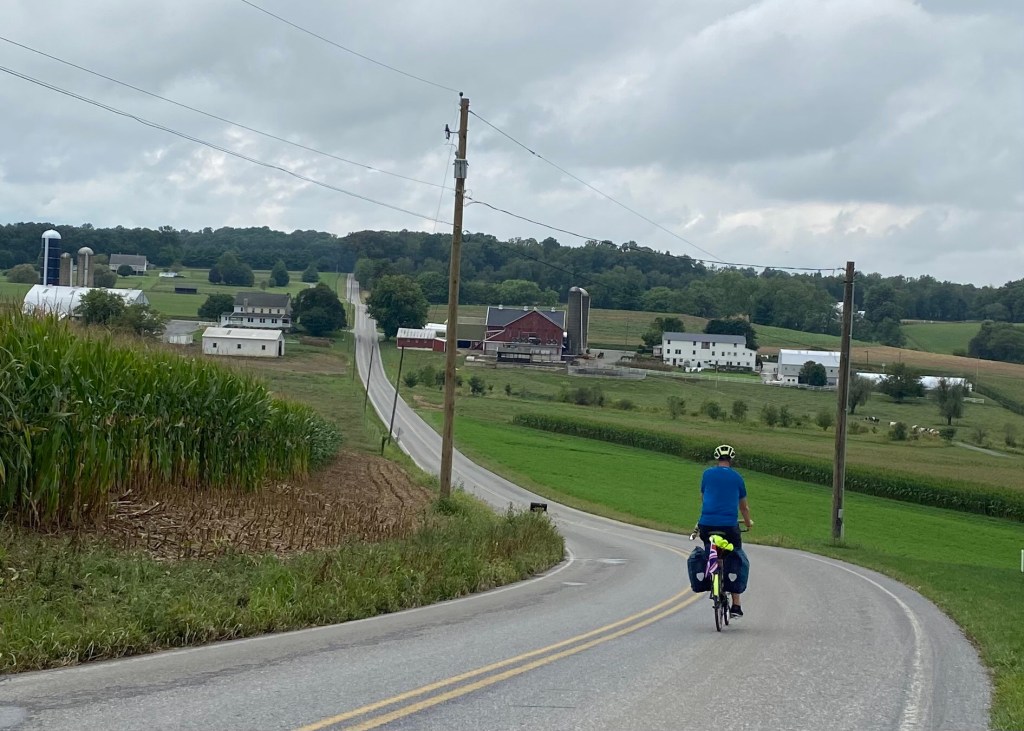
On cresting the top of a small hill, an Amish horse and cart suddenly pulled out right in front us.

Pausing to enjoy this unusual sight, we swept down the hill behind them. It was easy to catch them up, then cruise past with a wave and a polite nod in return. But the road turned sharply upwards and our legs soon became no match for their horsepower.

Once again we overtook them on the next descent, once again they easily passed us on the next climb. Did we see the hint of a smile? Probably not, the self styled plain people don’t believe in gloating!

We were cycling on the backcountry roads of Lancaster county in Pennsylvania, between the small towns of Oxford and Strasburg. This is the beating heart of Amish country with a community of around 43,000 living and farming here, the largest group in America.

Typical family transport

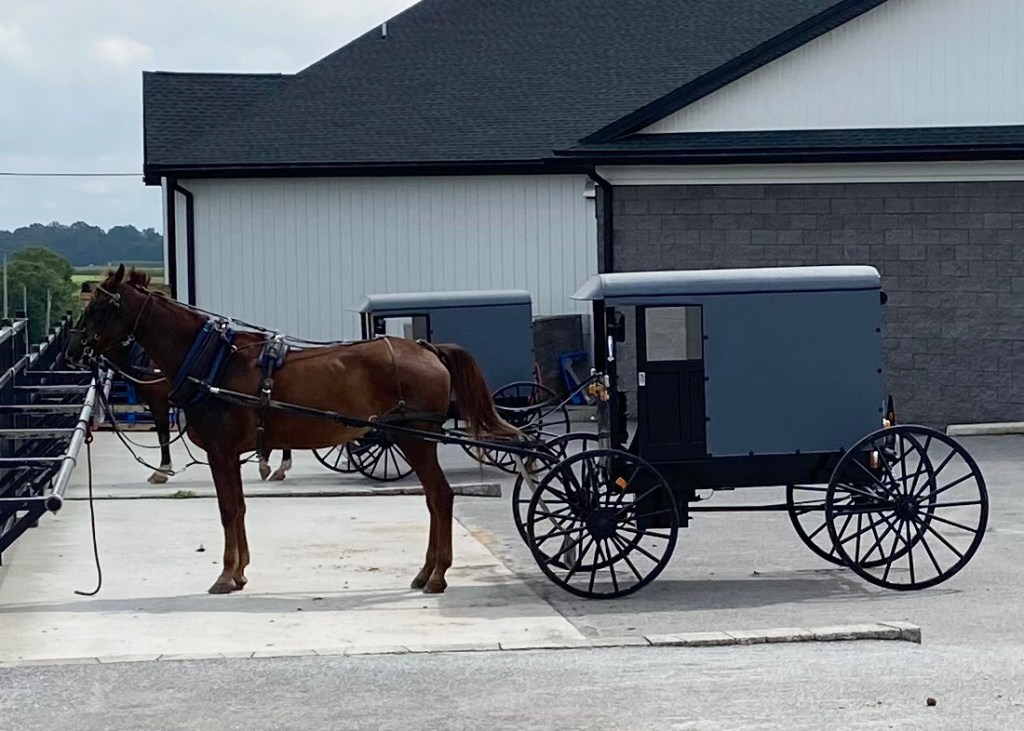
Horse drawn buggies are the family saloon of the Amish world. They are normally enclosed grey boxes with enough space for mum, dad, a few kids and the weekly shop.

Parked outside the local grocery store

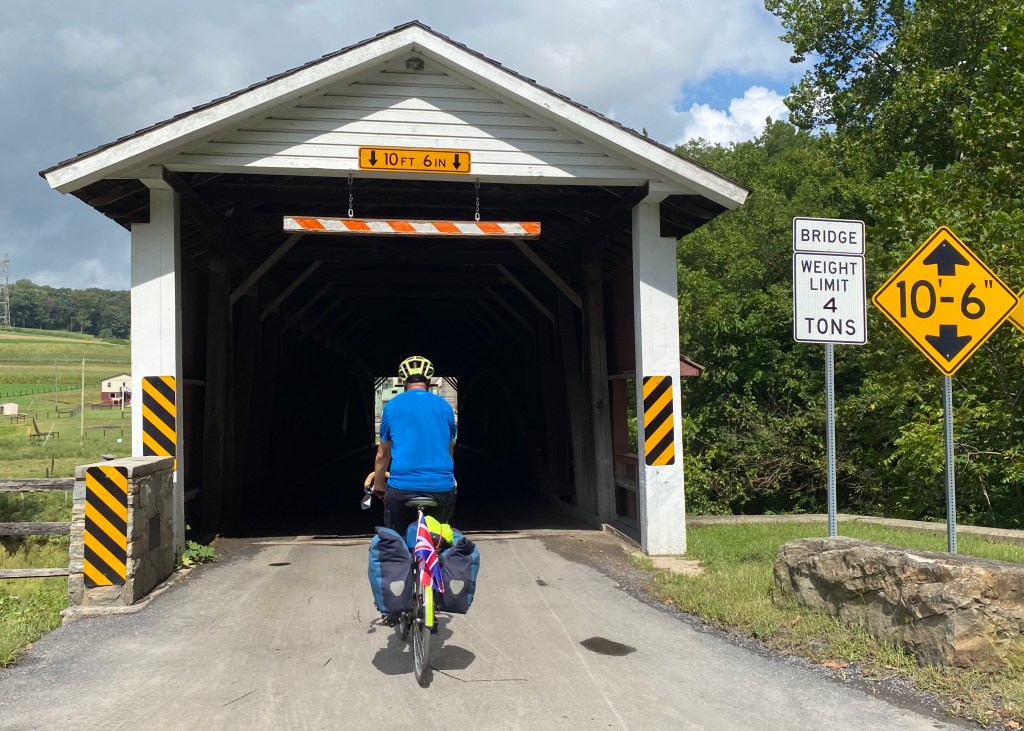
The open cart we tried and failed to race is a traditional 16th birthday present given to a young man to take his sweetheart out for rides through the local covered bridges. Not for nothing are they known as ‘date buggies’ and ‘kissing bridges’.

No chance of a kiss on a bike!

We passed scores of identical farms each with a weatherboard house, a barn, a grain silo or two and a washing line full of simple, old fashioned clothing swaying in the breeze.

Typical Amish farm

No cars, no motorbikes and no other ‘English’ people (all outsiders are known as ‘the English’ to the Amish.)

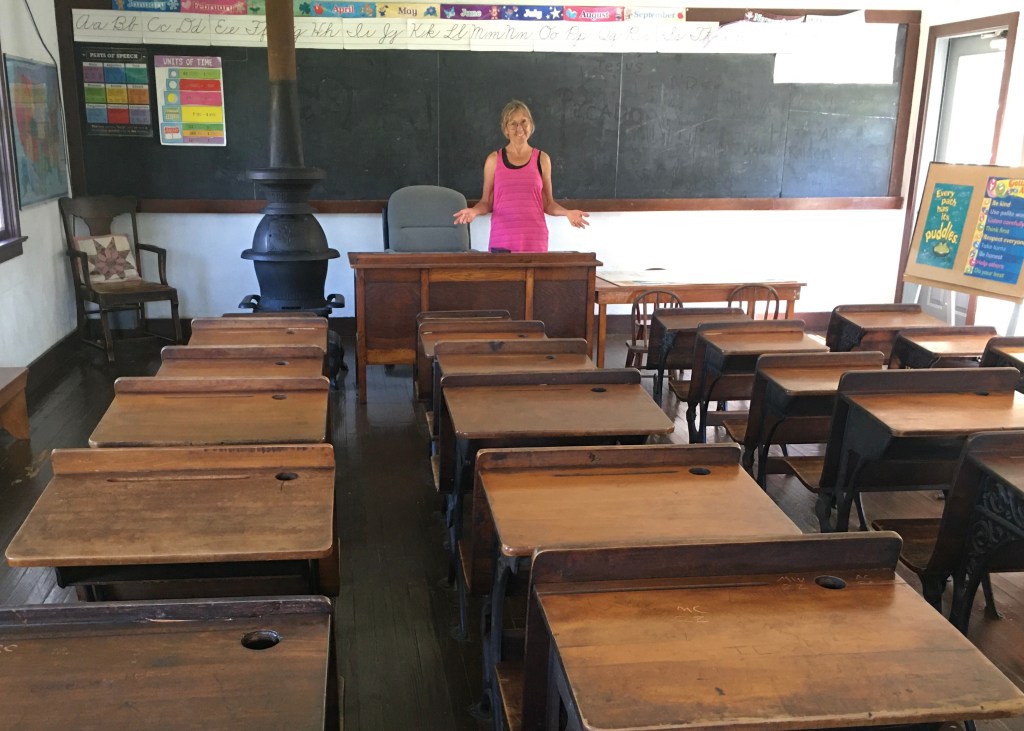
After a while buggies became so common they were unremarkable. More striking were the traditional single room schoolhouses, a young female teacher bravely managing a single class of 6-14 year olds. As were the horses ploughing the fields or carrying away newly cut corn.

Inside a single room schoolhouse

It was a magical experience. A peep into another world.

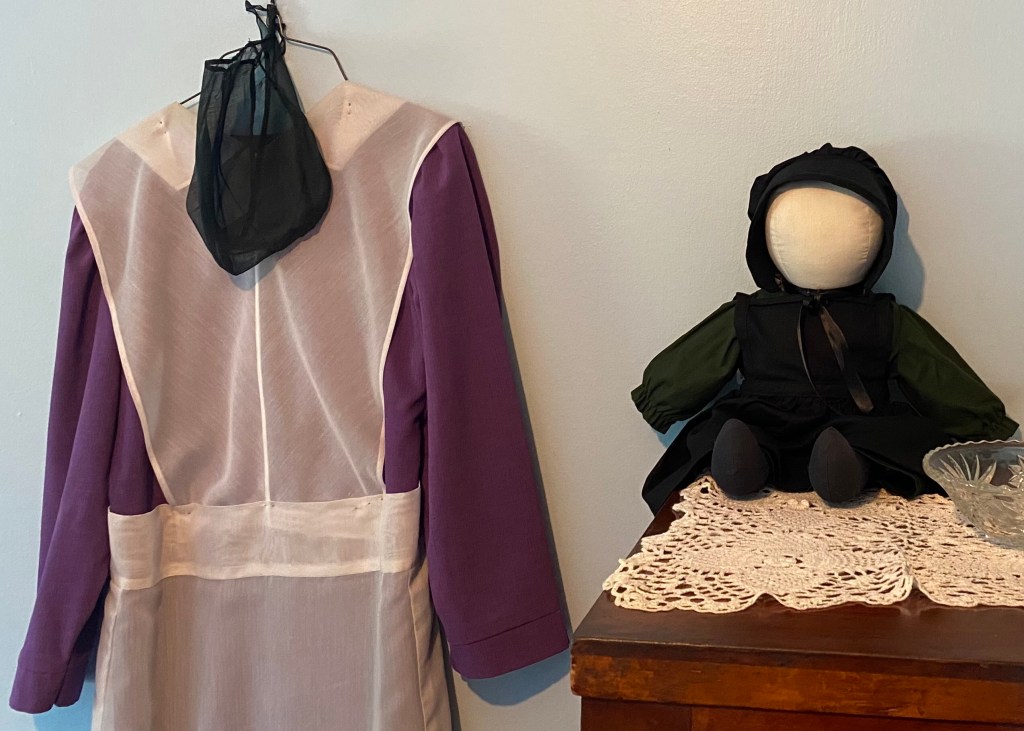
Amish wedding dress and faceless doll

Locals tell us the Amish are a happy community, living at peace with themselves and with their ‘English’ neighbours. Few young people are leaving and the population is increasing quickly.

But they do have many idiosyncrasies.

Take their attitude to bicycles!

The Amish are famous for rejecting most forms of modern technology, although it’s a little more nuanced than that. New technological innovations are carefully considered by the elders of each community, both for the value to their way of life and the potential disruption.

Tractors are generally banned, 1950’s style washing machines are allowed, mobile phones are only permitted for business phone calls.

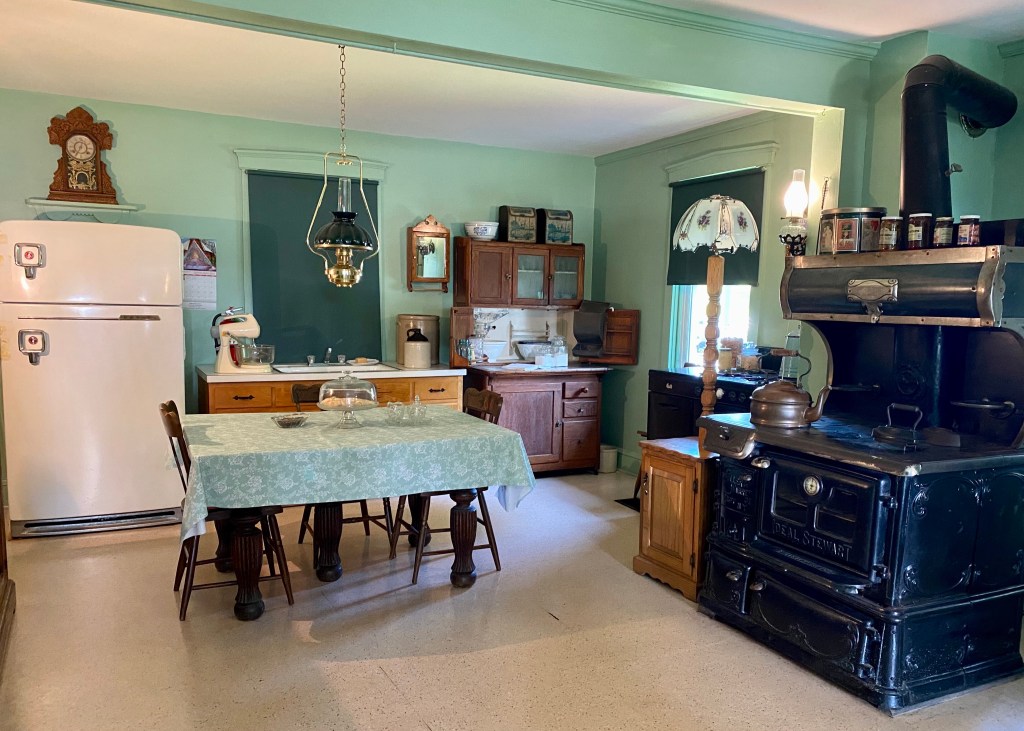
Typical Amish kitchen

On the face of it, bicycles are a perfect low tech mode of transport. Indeed, they are used extensively by Amish communities in Illinois and Indiana. There’s even a group in Ohio who have embraced e-bikes.

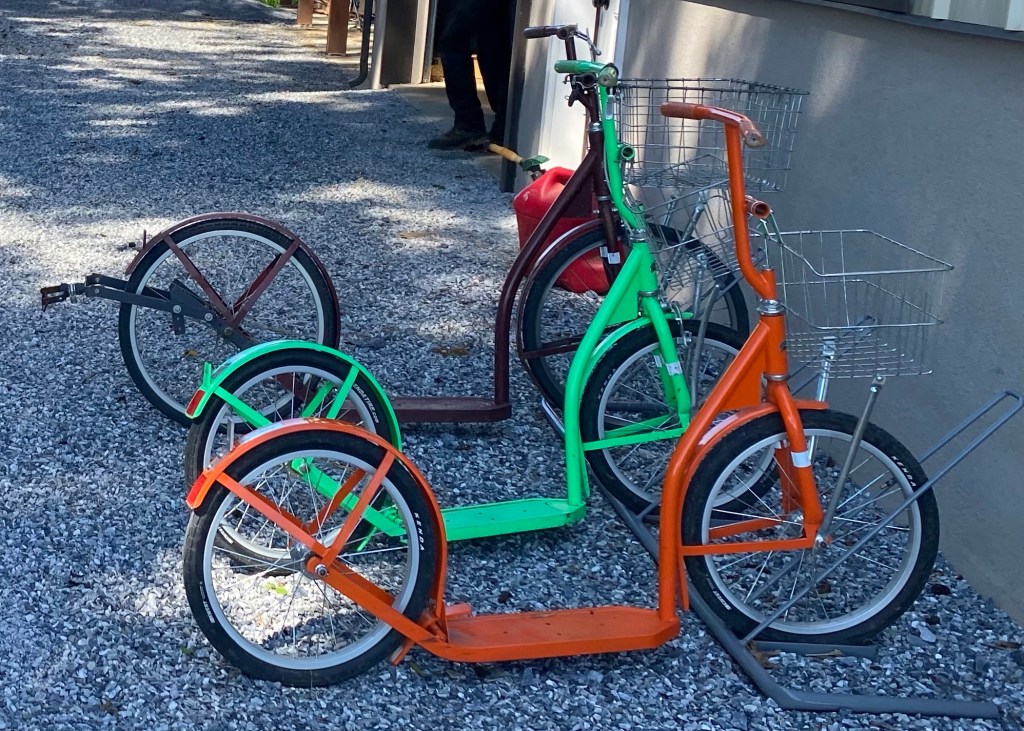
But in Lancaster County, bikes are banned. Instead both children and adults get around on specially designed scooters.

It’s difficult to find out why this is …

Some say the decision was made in the late 1800’s when the bicycle was first invented. At the time they were expensive and impractical for the rough 19th century country roads. Once a decision has been made here, it’s hard to get it overturned. Precedent is a powerful thing!

Others say that the bicycle has the potential to take young people too far away from home.

And others that the humble scooter has now become an enduring symbol of Amish life in Lancaster County, together with beards, buggies and bonnets. It’s much too symbolic to be superseded by bicycles.

We’ve decided to stick with our bikes!

After crossing the estuary from Cape May, we stayed in Rehoboth Beach, home to President Biden’s ‘Summer White House’. We then cycled for three days through the sorghum, sweetcorn and pigeon-pea fields of rural Delaware before heading up to Lancaster. It all felt green and clean, gentle and well organised.

Most of the ride was in delightful early fall weather … sunny days, not too hot, a softness to the air.

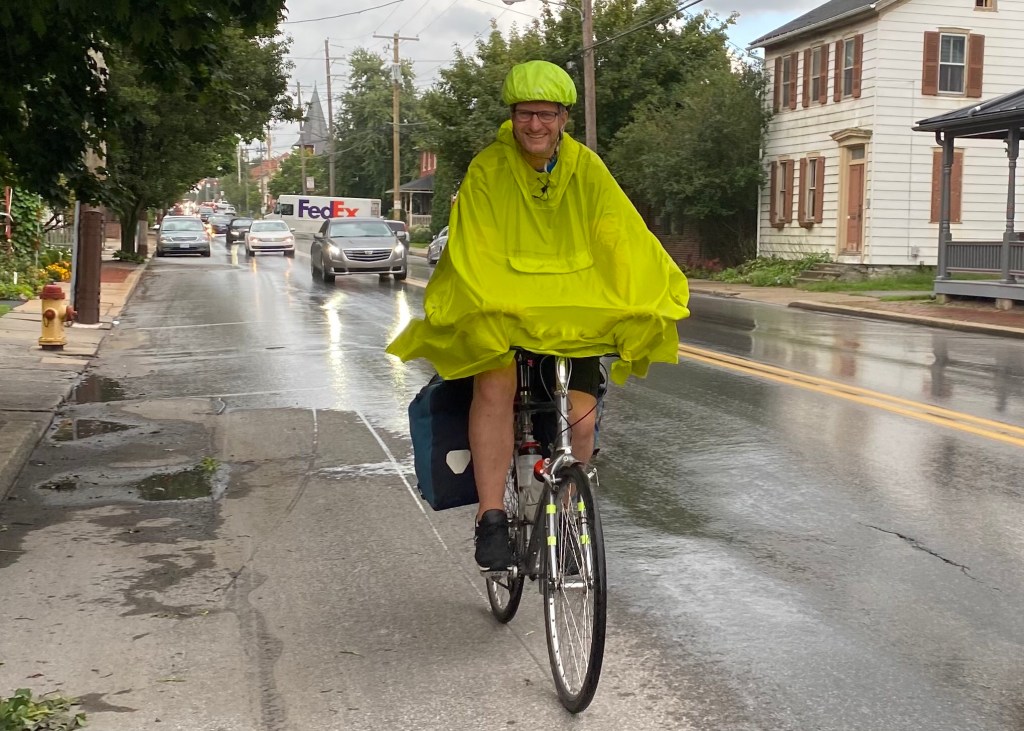
But we did get a complete soaking in northern Delaware and had to take cover in a small copse of trees for an hour or so. This also gave Andy an opportunity to try out his new piece of kit … a bright yellow rain cape, ideal for proper American rain.

Clare says he looks like the worst touring cyclist she’s ever seen, especially as the cape inflates like a balloon from behind.

He might look like an idiot … but at least he’s dry!

Andy has also experimented with a major change to his bike … some trekking or butterfly handlebars.

Over the years, he has cast many an envious glance at the proper adventure touring cyclists who often put these handlebars on their proper adventure touring bikes.

Andy thinks they’re a winner … lot’s of different hand positions, easy gear changes and a more upright riding position to enjoy the view.

Trekking or Butterfly Handlebars

Clare thinks they look like antlers!

She’s decided to stick with her drops … and her rain jacket. Once she finds something that works for her she doesn’t much like change (which Andy secretly thinks is just as well.)

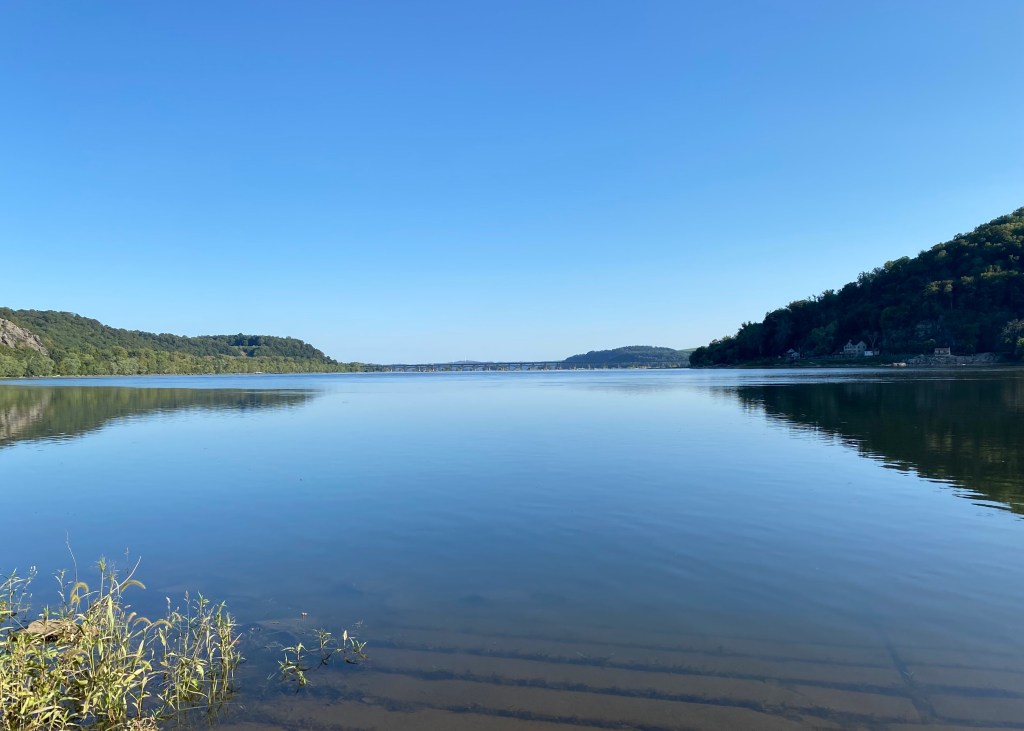
Susquehanna River

We left Lancaster and the Amish to cycle up the Susquehanna River into industrial, upcountry Pennsylvania. Close to Harrisburg, we passed the haunting remains of Three Mile Island, the site of America’s worst nuclear accident in 1979. Now closed, the decommissioning process should be completed by 2079!

Three Mile Island

We popped into McCleary’s pub in Marietta, and ended up staying all evening, talking politics at the bar and then dancing to some classic American tunes from a great live band.

New Friends in Marietta

Pennsylvania is a ‘swing state’ often switching back and forth between Republicans and Democrats. The senate race for the upcoming mid-term elections in November could even decide the overall balance of power.

Perhaps because it’s election time, we’ve found that lots of people here are keen to talk about politics and the divisions they see in American society today. Over the last few days we’ve heard the full range of political opinion … from Trump supporters to mainstream Republicans to Democrats and some Independents.

Whilst there’s little agreement on how things should be done, we’ve noticed that what people want is often much the same. The list of things people reel off usually includes fair rewards for hard work, a safe and peaceful place to live, opportunities for their children etc.

But most people here do seem worried that political differences are increasing and becoming more divisive.

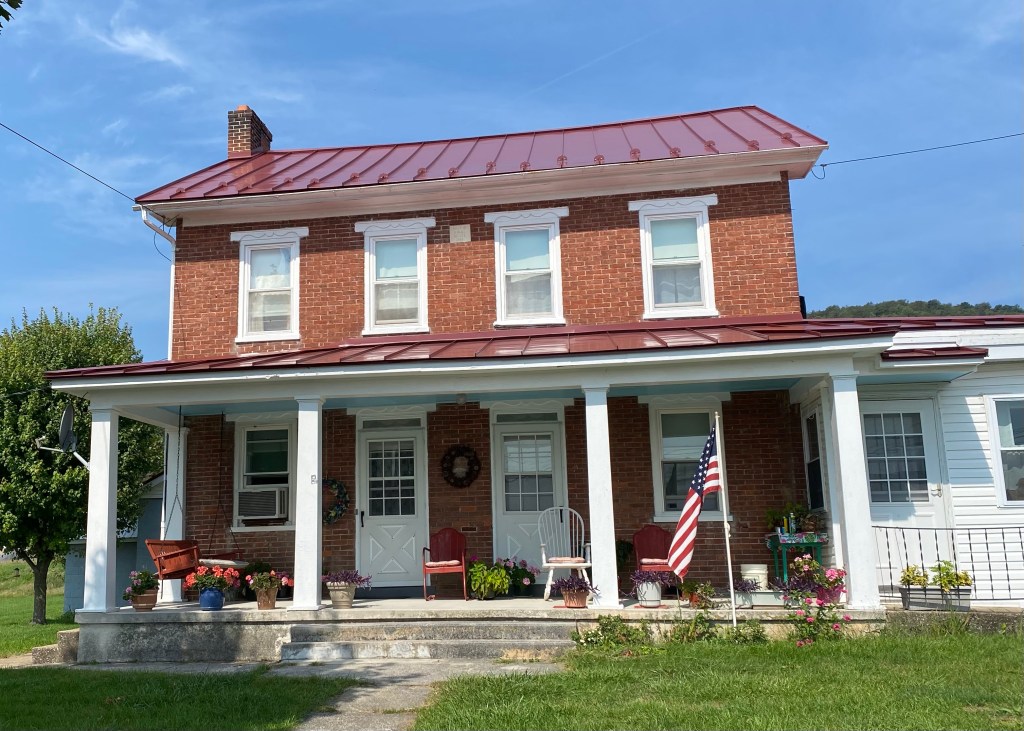
Typical Pennsylvania Home

We’ve now arrived in Gettysburg, one of the most famous symbols of the American Civil War. Sometimes called the ‘Brothers War’ (as friends or even family members found themselves on opposite sides), it was a time when political differences led to a brutal, bloody conflict.

Gettysburg was a humbling place from which to watch Queen Elizabeth’s funeral. Amongst her many other virtues, she was known for listening and trying to understand a range of different opinions.

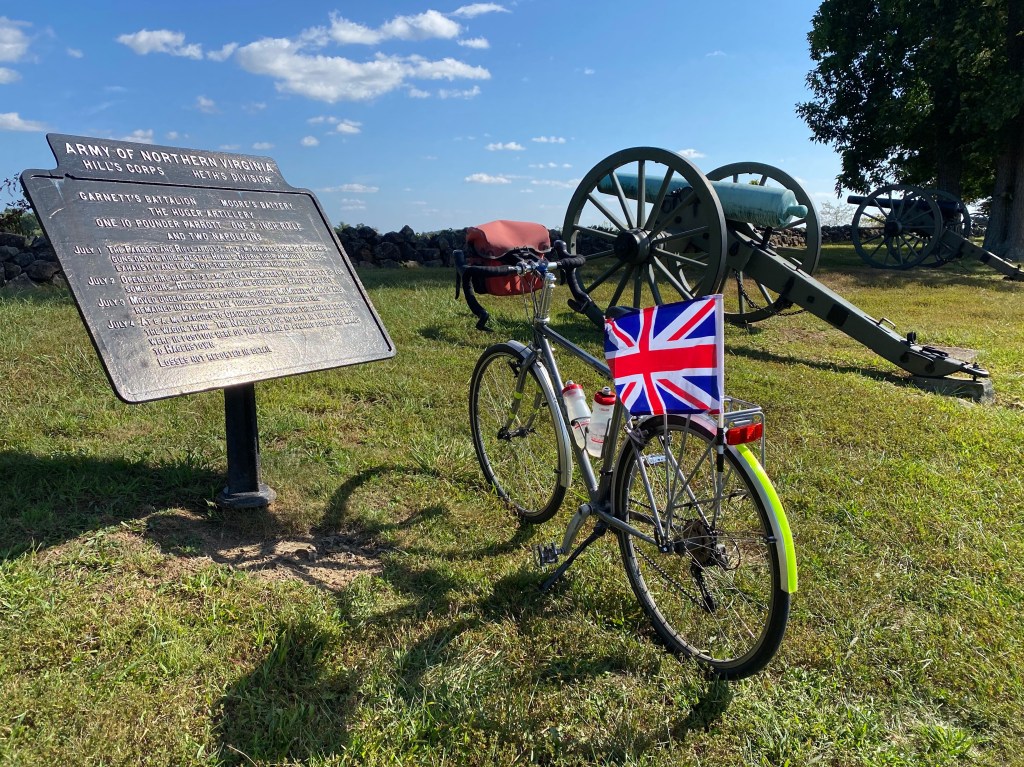
Gettysburg

Perhaps the Amish can also teach us something about resolving conflict.

In 2006 an ‘English’ neighbour killed five little girls at an Amish school just a few kilometres east of the area we cycled through, before turning the gun on himself.

It was the Amish community’s response that astonished everyone. Within hours they reached out to the gunman’s family offering forgiveness and compassion, realising that they were suffering too.

So same same but different can be OK, at least in Lancaster County.

Clare and Andy

725km pedalled (450 miles)

3,501m climbed

29 hours in the saddle

Land of the Free

Riding a bicycle is a great way to explore a battlefield.

And Gettysburg is a wonderful battlefield to explore.

Beautifully preserved as a national treasure, the site is littered with memorials to the men who fought to a standstill there over three brutal days in July 1863, at the height of the American Civil War.

The Pennsylvania Memorial at Gettysburg

Some places that saw the worst of the fighting are legendary … Little Round Top, Pickett’s Charge, the Wheatfield.

The Wheatfield

We stood alone in the Wheatfield at sunset, having cycled around the park after the crowds and tour buses had left for the day.

It’s now a peaceful and beautiful spot but it was impossible not to be moved by the imagined horrors of that day.

This small field changed hands four times in a series of confused attacks and counterattacks. By the time they had finished, over 6000 men lay dead and injured on the ground.

Two days later, we came across an even deadlier crop … the Cornfield at Antietam.

Nine months earlier, in September 1862, twenty five thousand men fought backwards and forwards through this field, firing at point blank range through the thick, high stalks of corn.

The corn is ready to harvest as it was in September 1862

It seems we picked some of the most brutal civil war sites to visit. Gettysburg was the bloodiest battle of the war. Antietam was the bloodiest single day. Both were important as they fended off Confederate invasions of the north.

Antietam had a wider impact as it gave Lincoln the ‘victory’ he needed to issue the Emancipation Proclamation, extending the objectives of the war to free the slaves as well as to preserve the union.

Cycling through Antietam

That proclamation meant that John Browns body was probably spinning in his grave. Spinning with delight that is.

A fireball abolitionist, John Brown led an ill feted raid on the weapons store at Harpers Ferry a few years before the war, hoping to incite a slave rebellion. The raid failed miserably and he was strung up for his trouble but it proved to be one of the catalysts for the war … and for the eventual freedom for the slaves.

The Shenandoah and Potomac rivers meet at Harpers Ferry

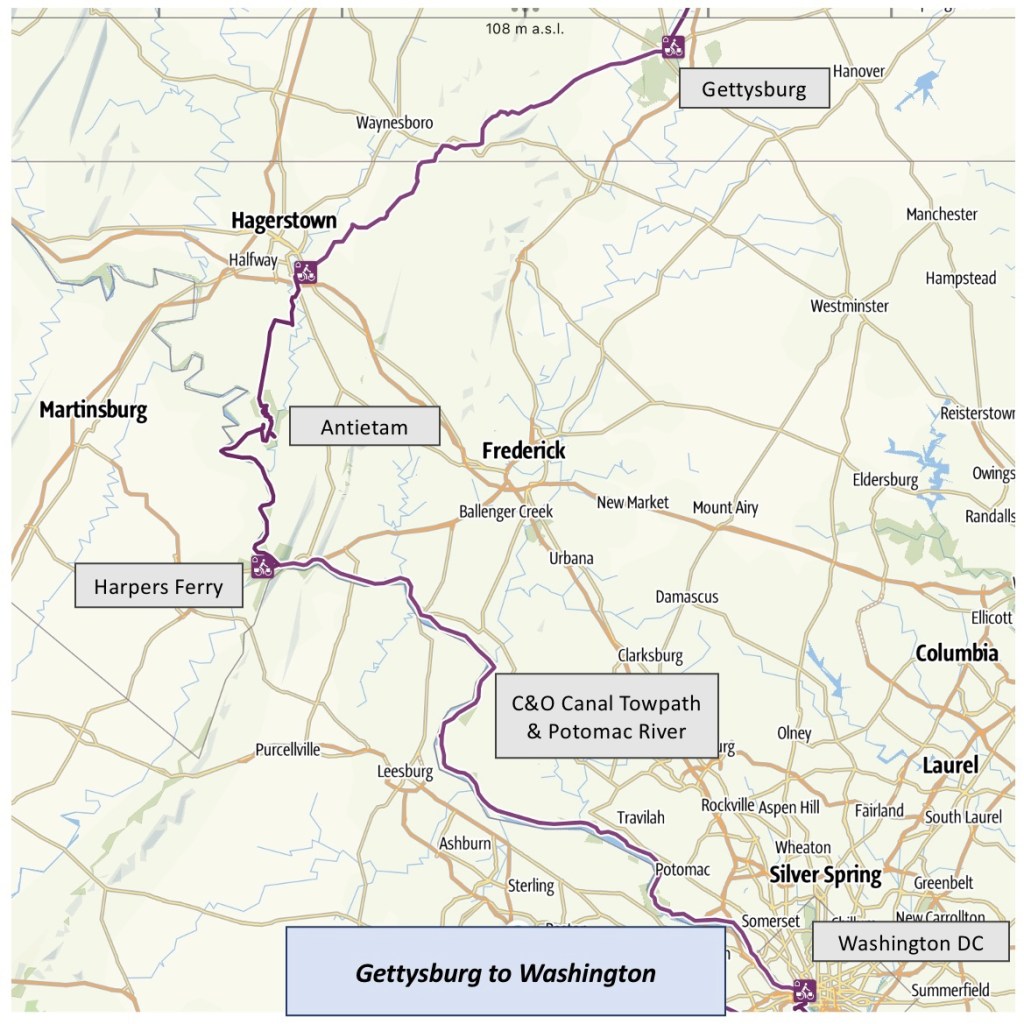
Today, Harpers Ferry is one of the main stopovers on the C&O Canal Towpath, a bucket list trip for many American touring cyclists as it’s part of a bike trail that goes all the way to Pittsburgh.

We hadn’t seen a single touring cyclist on the winding roads of New Jersey, Delaware, Maryland or Pennsylvania … but now it became impossible to miss them. On a pleasant Sunday in September the C&O transformed into a pannier clad bicycle super-highway!

A Lock Keeper’s Cottage – popular for overnight stays

Beautifully maintained as a National Park, the canal path led us through an old lowland forest full of American Sycamore, Silver Maple and Box Elder, so thick their branches only offered the occasional tantalising glimpse of the lazy Potomac river beyond.

Most of the trail is made from small pieces of ‘crush and run’ gravel which are then covered in stone dust. It’s smooth as silk.

Canal to the left, river to the right

Closer to Washington the trail became a bit rougher, full of sharp stones and tree roots. We were happy that our new German engineered Ergon saddles kept their promise to dampen down the vibrations.

Bumpier tracks

After a 100km our bottoms were ready to stop, so we were also very happy when the canal dropped us off right in the centre of downtown Washington DC.

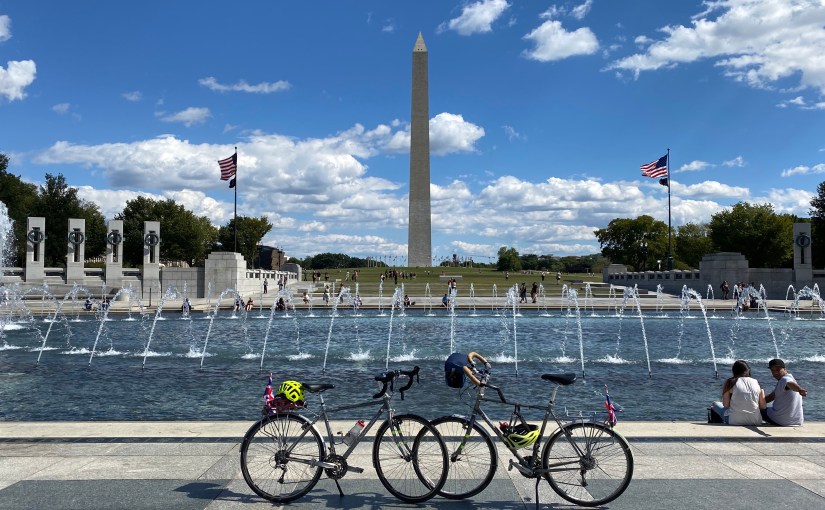
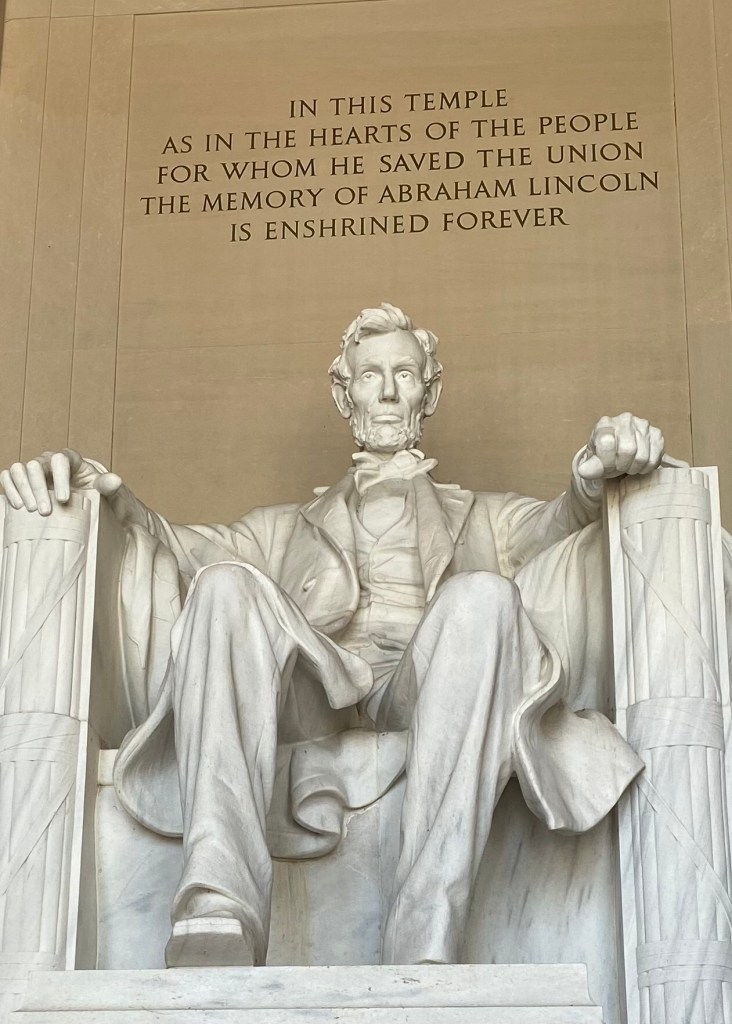
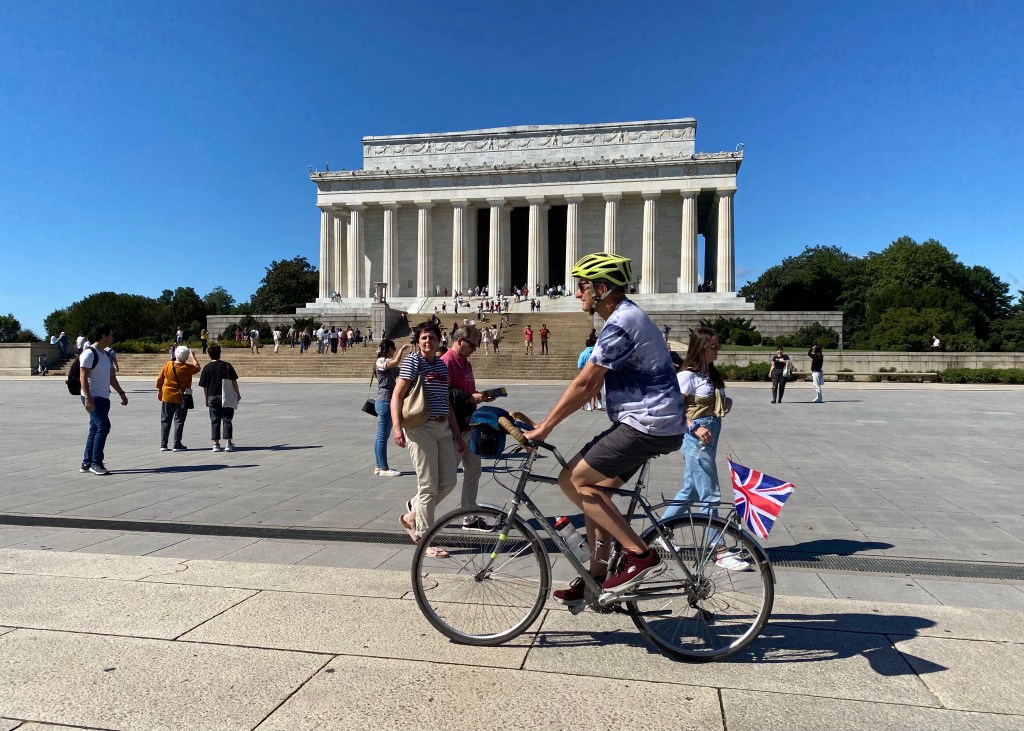
Lincoln Memorial

Washington is justly famous for many reasons … the White House, the Lincoln Memorial, Capitol Hill. But for tourists it has simply become famous as the capital of “Free-Stuff-To-Do”.

The Capitol

This is mainly down to an English chap called Smithson who died in 1829, leaving some money in his will “to found at Washington, under the name of the Smithsonian Institution, an Establishment for the increase & diffusion of knowledge among men.”

He’d never even set foot in the United States so why he did this remains a mystery. To create a legacy? Or from a chip on his shoulder at his treatment by the class-obsessed English?

Whatever the reason, the American President was naturally curious to find out how much dosh was involved, so he sent a diplomat to London who duly returned with 105 sacks stuffed with 104,960 gold sovereigns.

It was worth about half a million dollars at the time, roughly $13bn today. That’s enough for a few museums!

Today the Smithsonian Institute is the worlds largest education and research complex.

The excellent Museum of African American History & Culture

Including government buildings, we visited the following …

Capitol Hill, the Library of Congress, the White House Visitor Centre, the Museum of American History, the Museum of African American History & Culture, the US Holocaust Memorial Museum and the Museum of the American Indian.

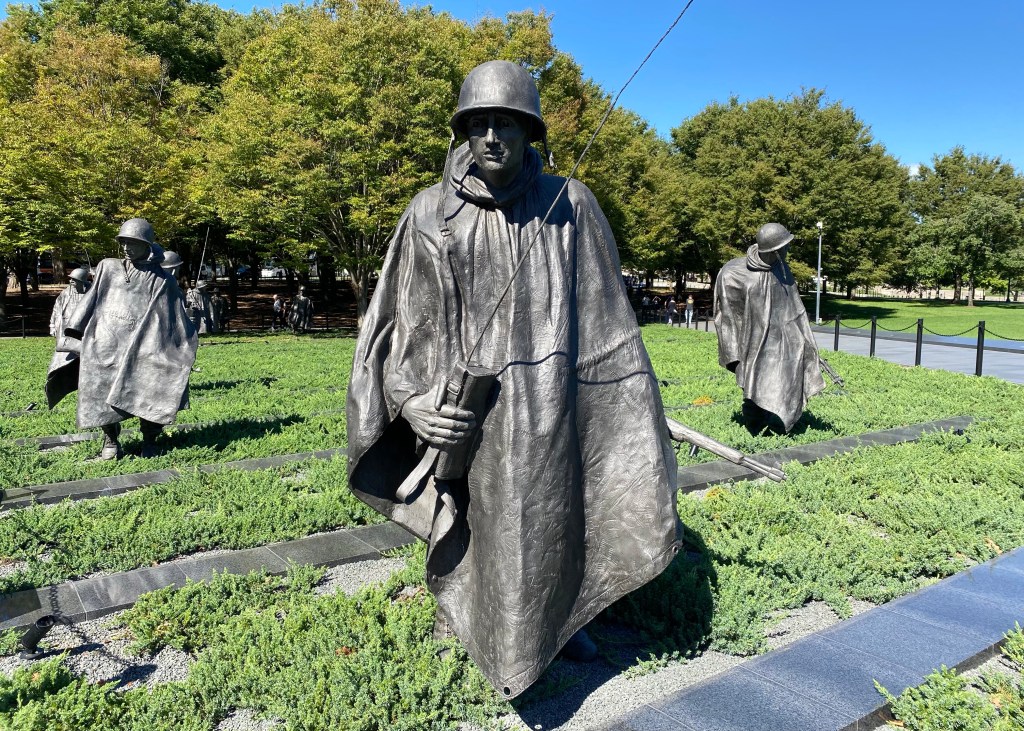
Plus memorials to Vietnam, Korean and WWII veterans, to Martin Luther King, Thomas Jefferson, Abraham Lincoln, Ulysses S. Grant and of course to George Washington himself.

Phew!

Korean War Veterans Memorial

Clare began to think that sightseeing was even more exhausting than cycling.

Enough!

On Capitol Hill we were lucky enough to see the Senate Chamber in session and to hear them debate the issues of the day. They didn’t hold back … the issues we heard were related to Iran, the war on drugs and abortion.

It was all free! And all a bit mind blowing!

Martin Luther King Memorial

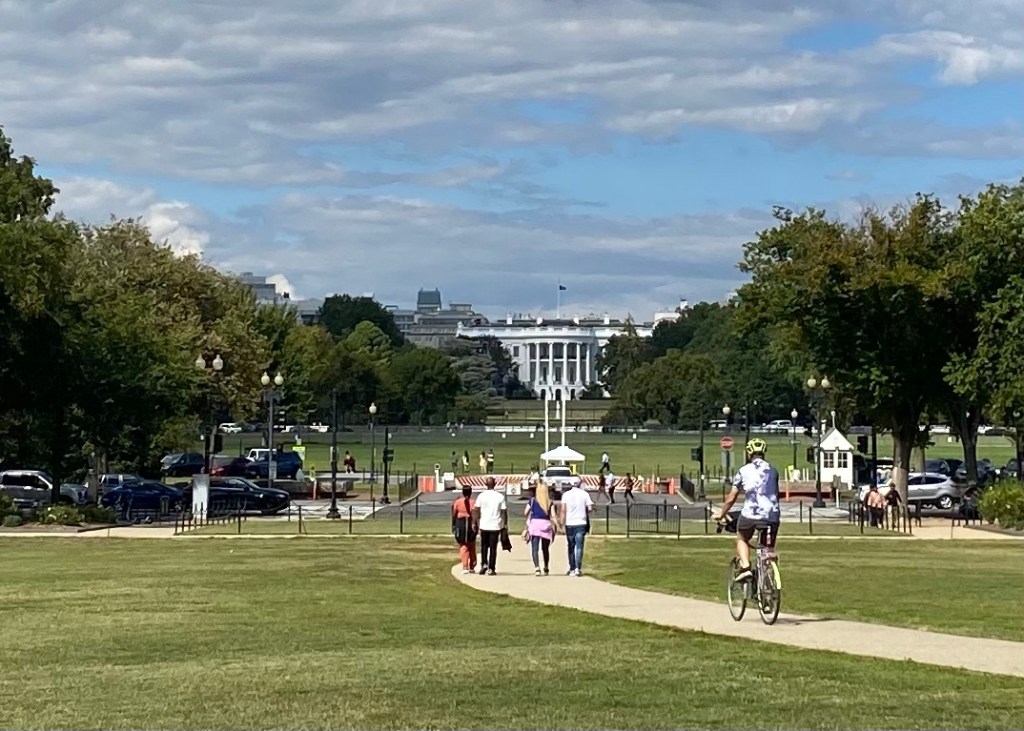
A little exhausted, we cycled each evening past the White House just hoping for a chance to personally thank Joe or Jill.

Sadly, they were busy.

Anyone home?

It’s just as well there is so much free stuff to do in Washington DC as America in general is much more expensive than any other country we’ve cycled in.

This is partly due to our $ to £ exchange rate. But we’re also finding the things that cycle tourists typically spend money on (accommodation, food & drink, entrance fees etc) are pretty expensive in $ too.

Fortunately the most important staple of any bike tour, bananas, are still affordable … at about 20 cents each.

George Washington Memorial at night

Washington is another US city that is super-easy to get around by bike. The streets are quiet and very wide, so traffic isn’t a major problem.

The pavements (sorry, sidewalks) are also wide with cyclists encouraged to use them … which did feel a bit odd at first.

But it’s the National Mall that makes Washington so good for visitors on two wheels … it’s a two-mile bike-friendly paradise that contains all the main attractions.

Apart from legally riding on the sidewalk, there are a few other rules of the road we’ve had to get used to in the US of A …

4-way All Stop Junctions: Cars from all directions have to stop, then they politely take turns. At first we kept stopping too, but most of the drivers waved us through even when it wasn’t our turn. Now we slow down and cruise through, just checking to make sure it’s safe. It seems to work!

Right Turn Lanes: On major roads an extra lane often pops up for traffic that’s about to turn right. This means that we have to hold our breath and move across to the middle lane if we’re going straight ahead. A bit scary!

Right Turn on Red: Cars and bikes are allowed to go through a red light in order to turn right when there’s space. As long there isn’t a sign saying they can’t. Until we learnt about this one, we got tooted at quite a bit while we waited for green. We’re used to it now!

Cycling rules can also be different in each state … so we must remember to check before we ride on the sidewalk in Virginia.

While we were in Washington, we saw the original “Star-Spangled Banner”, carefully preserved in a darkened room. It’s the flag that flew steadfastly over Fort McHenry in Baltimore whilst British warships were pounding it in 1814 and has since become a legendary icon.

A young man called Francis Scott Key witnessed the bombardment, becoming so moved by the defiance and symbolism that he wrote it down in a poem. 117 years later this poem became the American national anthem. You probably know the last few lines …

“O say, does that star-spangled banner yet wave

O’er the land of the free

And the home of the brave?

Ironically it’s set to the tune of a popular 18th century English drinking song!

In Gettysburg, an old injury in Clare’s knee began to get quite painful. We decided to stay on for a couple of days to rest it and it seemed much better on the ride down the canal path to Washington DC.

But now we’re turning our handlebars towards Virginia, she has to choose whether to test it again in the hilly country roads of the Blue Ridge Mountains and the Shenandoah Valley as planned. Or to cruise gently down the flat lands of the coast instead?

After enjoying the land of the free, she has of course opted for the home of the brave!

Mountain mama!

Clare and Andy

1006km pedalled so far (450 miles)

5,370m climbed

45 hours in the saddle

Country Roads and Rail Trails

We hold this truth to be self-evident. When cycling the country roads of Virginia it’s essential for the pursuit of happiness to find some authentic country music.

And we found ours right in the heart of the Shenandoah valley … at the Grottoes Bluegrass Festival in the midst of the Blue Ridge mountains.

Headlined by ‘Seth Mulder & Midnight Run’ and by ‘The Bluegrass Brothers’ (check them both out on Spotify, they’re very good), it’s a small local festival … perfect for a sunny Saturday afternoon in October.

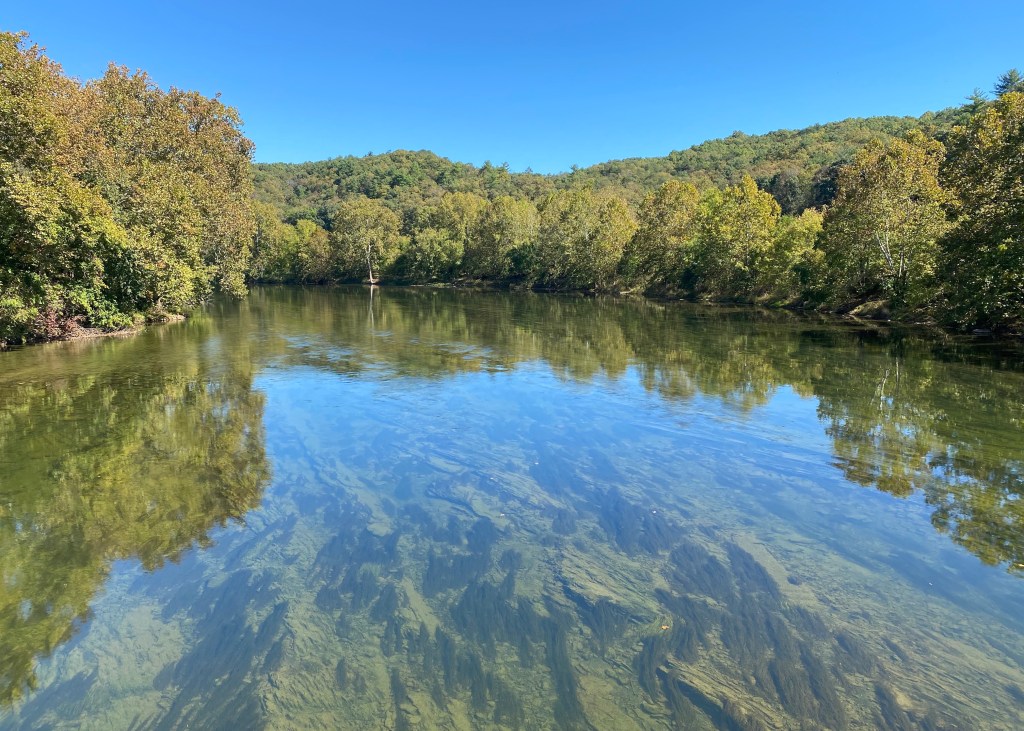
The crystal clear water of the Shenandoah River

Clare’s personal pursuit of happiness was going very well as her knee injury had now recovered. A few days of extra rest in Alexandria, sheltering from the after effects of Hurricane Ian, had worked its magic and she felt strong and fit again.

Both of us had really enjoyed the three and a half days it took us to climb up through the hills to this little music spot in Grottoes.

We settled down to watch the support bands, happily drinking coffee, eating muffins and jigging along to the music.

After a while, Clare wandered off to take some photos. Smiling, she stepped aside to let some people past … and suddenly, surprisingly … found herself flying backwards through the air.

She had back-flipped over a guy rope that was holding up a large gazebo and landed heavily on her coccyx, the whiplash then banging her head on the ground.

It hurt! A lot!

And the pain was not in a good place for sitting on a bike … with half a day of hilly riding still ahead of us.

Taken just before the fall

It turns out that an injured lady at a bluegrass festival is something of a man-magnet. By the time Andy arrived at the scene he had to join the queue. Ice-packs were applied, painkillers offered, a rug to lie down on.

She was in good hands … one of her rescuers was a retired cowboy from Montana, still very lean and strong!

We stayed on to see the headline acts from the back, no longer jigging. Then Clare bravely declined the multiple offers of pickup truck lifts and got back on her horse to painfully pedal the 30km to our hotel in Staunton, arriving well after dark.

Seth Mulder & Midnight Run

The next morning her bum was very, very sore.

Amazingly, in this hour of need we were rescued by the kindness of strangers, now firm friends.

Way back in Rehoboth Beach in Delaware we had chatted to two lovely people, Maura & Jerry, for about fifteen minutes and made vague arrangements to maybe meet up in Maryland where they live. In the end we didn’t cycle close enough … but we had stayed in touch.

As Clare was listening to more steer wrestling stories from the cowboy (the steers getting bigger and bigger), her phone rang. It was Jerry … they had some good friends, Marian & Paul, in Staunton … would we like to meet them?

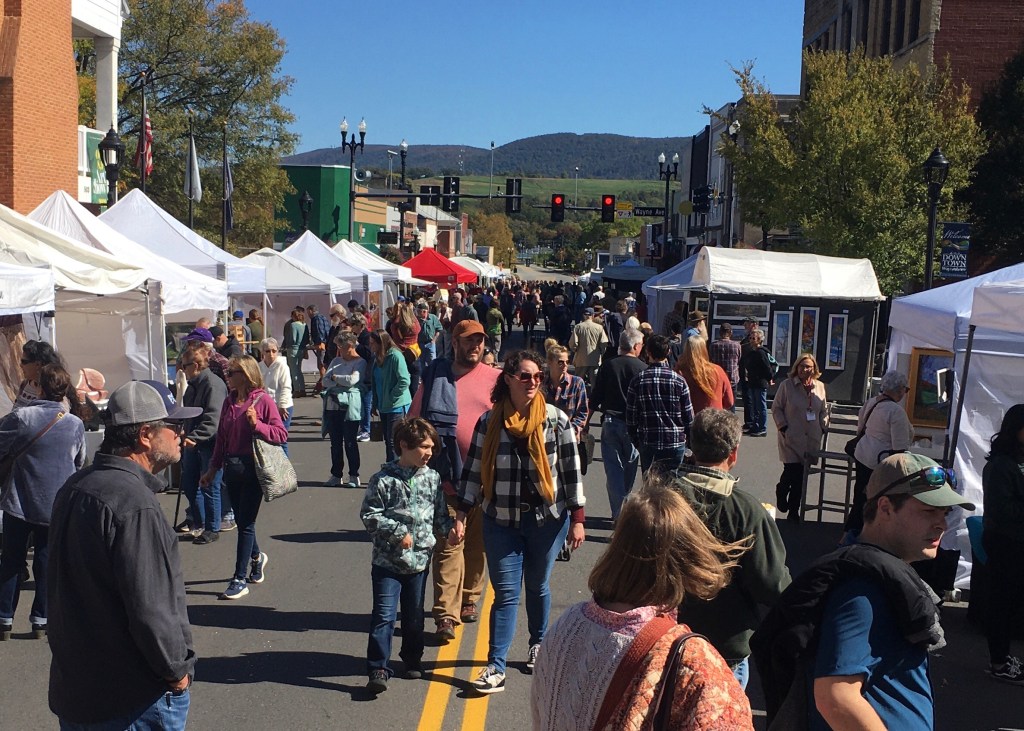
So on Sunday morning we found ourselves heading to an art festival in nearby Waynesboro, then onto a country craft brewery, then back to their beautiful home for dinner.

Waynesboro Art Festival

They introduced us to their neighbours, Tammie & Howard, who invited us back for more delicious food the following evening.

We enjoyed two warm and fun evenings. It was a real privilege to share stories with people who live in this beautiful part of the world and know it so well.

New friends

But we still had to find a way back over the Blue Ridge, as there was no way Clare could cycle over the mountains. We tried the local train (no daily service), bus (no space for bikes) and car rental (no cars available).

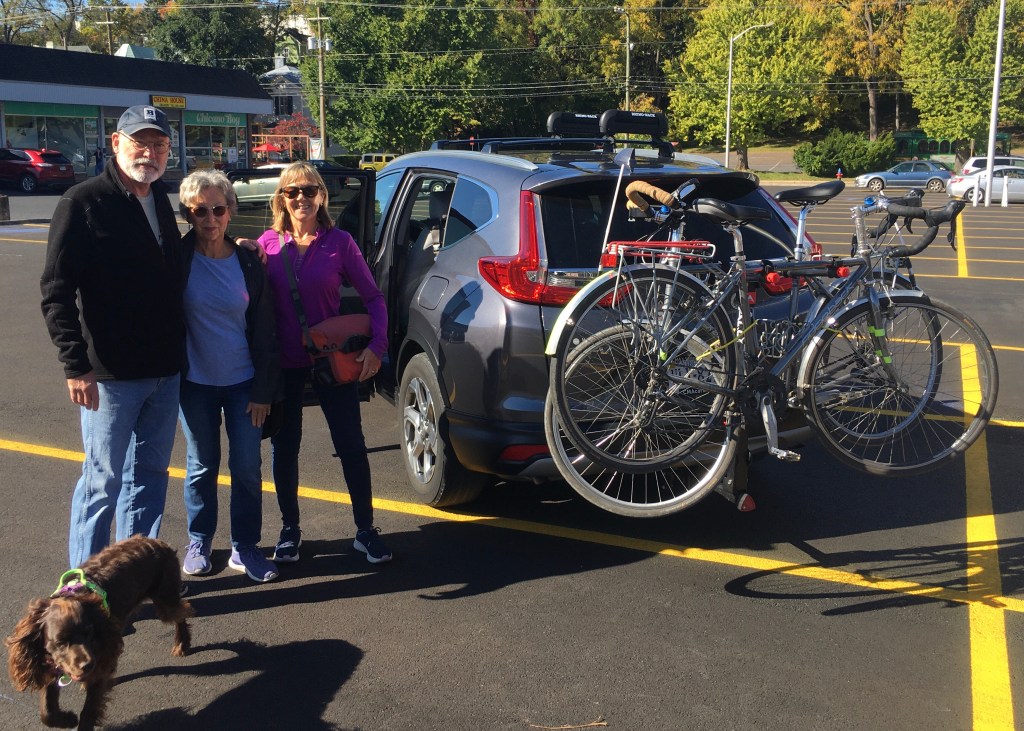
Once again we were rescued by our new friends. Marian & Paul stuck our bikes onto the back of their car and drove us over to Charlottesville.

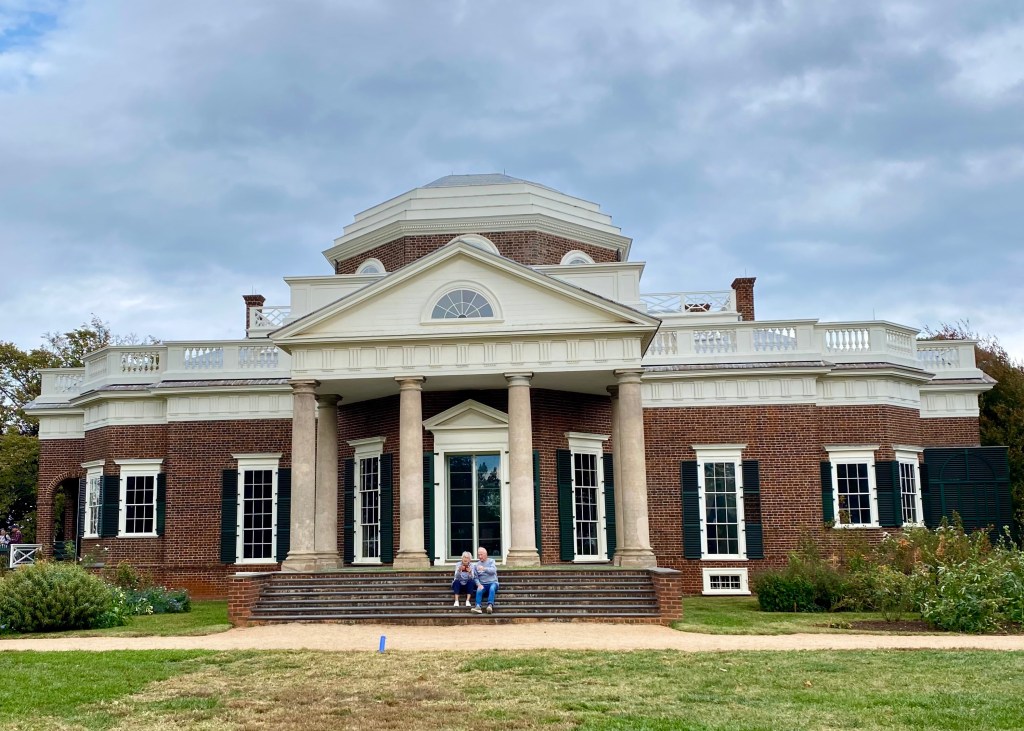
Charlottesville is mainly known as the location of Monticello, the home and plantation of Thomas Jefferson, 3rd President of the United Stares and the main author of the Declaration of Independence that, of course, includes these famous lines …

“We hold these truths to be self-evident, that all men are created equal, that they are endowed by their Creator with certain unalienable Rights, that among these are Life, Liberty and the pursuit of Happiness.”

Monticello

A week or so earlier we’d also visited Mount Vernon, the home and plantation of George Washington the 1st President.

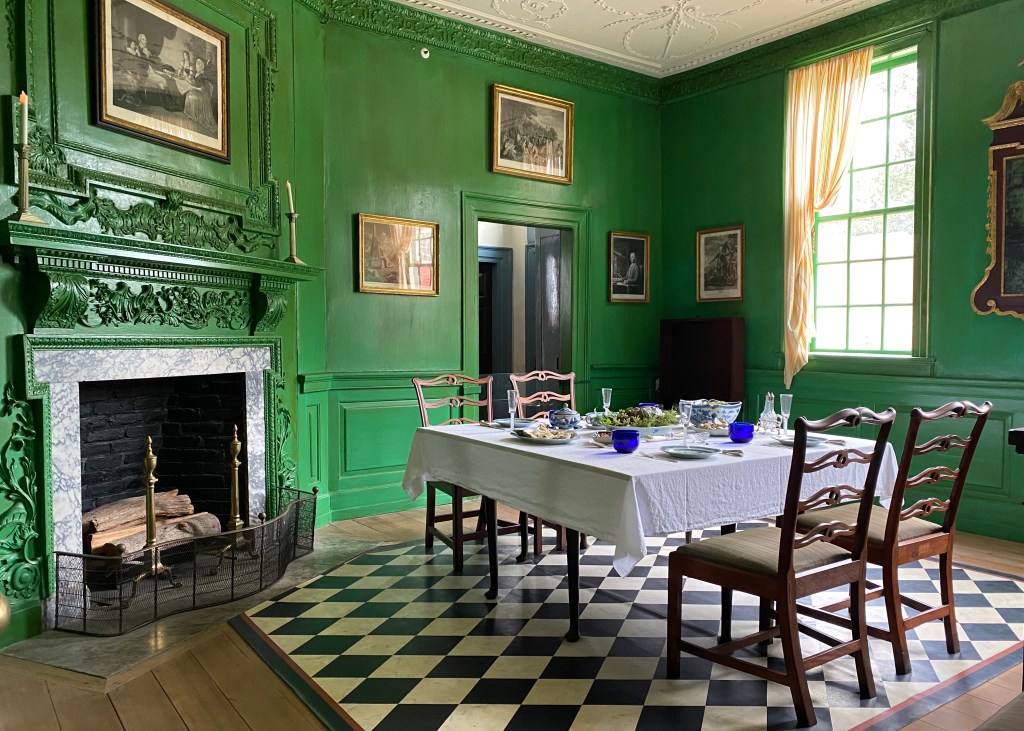
Dining room at Mt Vernon (this shade of green was very fashionable in the 18th century)

Both men come with some baggage and contradictions that America is still wrestling with today:

  • As well as being revered founding fathers, both of them were large slave holders.
  • It’s now generally acknowledged that Jefferson fathered six children with Sally Hemings, an enslaved women living on his plantation who was 30 years his junior.
  • And many people think the Declaration of Independence only really refers to the equality, liberty and happiness of land-owning white men.

But Monticello and Mount Vernon are very interesting places to visit, not least because the organisations that run them are refreshingly open and honest about both the good and the bad sides of these famous men and of the challenges that were faced by the enslaved people who worked for them.

This openness and criticism is true of many of the museums and historic sites we’ve visited in America, a trend we’re told that has developed mainly in the last decade or so.

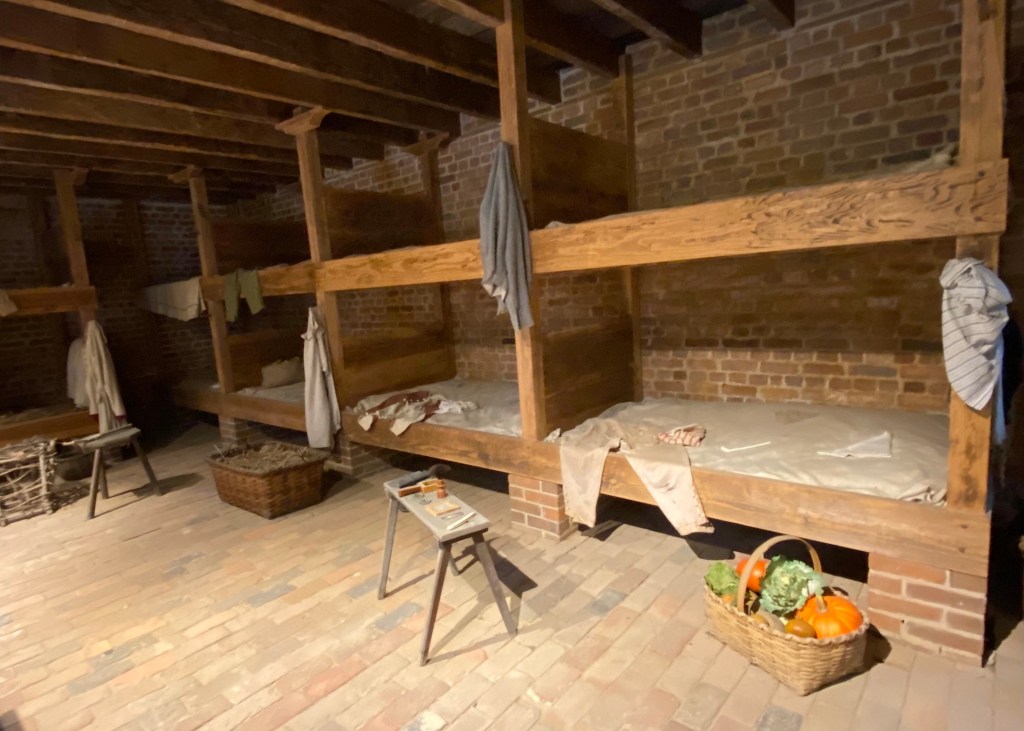
Living space for enslaved men at Mt Vernon (two to a bed)

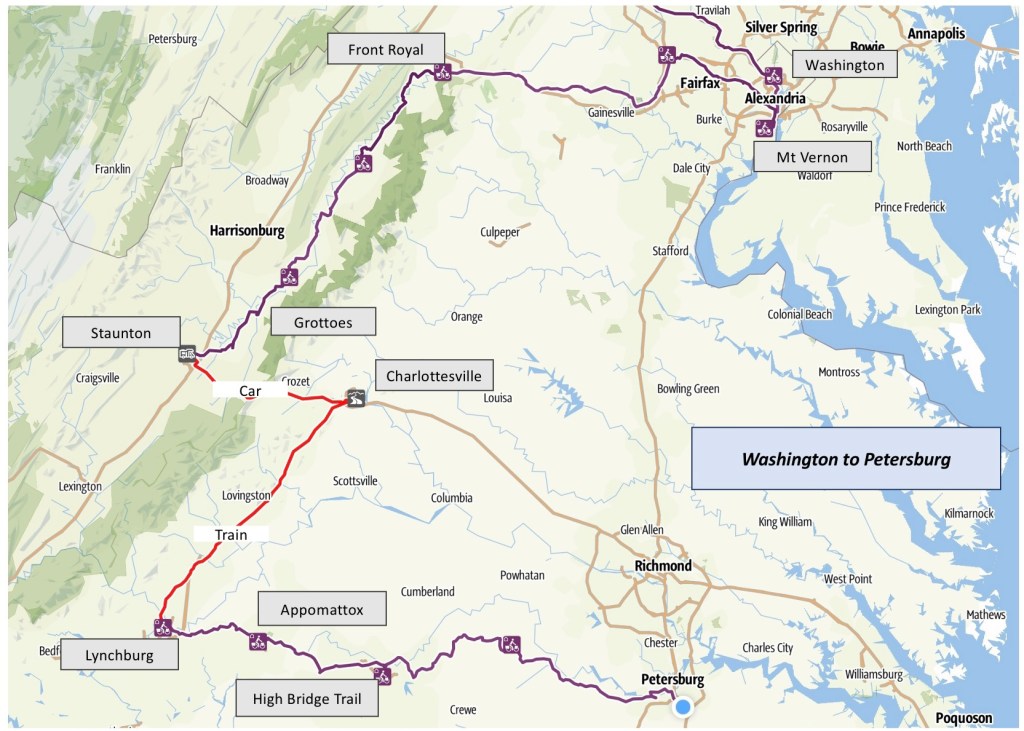
From Charlottesville we took a train 100km (62 miles) southwest to Lynchburg, partly to find out how well Amtrak manages bicycles as we’re planning a longer train journey to the south next week.

Bikes on Amtrak is fairly easy. Take off the front wheel and hang her up.

But mainly it was because we knew we could pedal from Lynchburg to Petersburg in four relatively short days, without too many ups and downs and too much strain on Clare’s sore posterior.

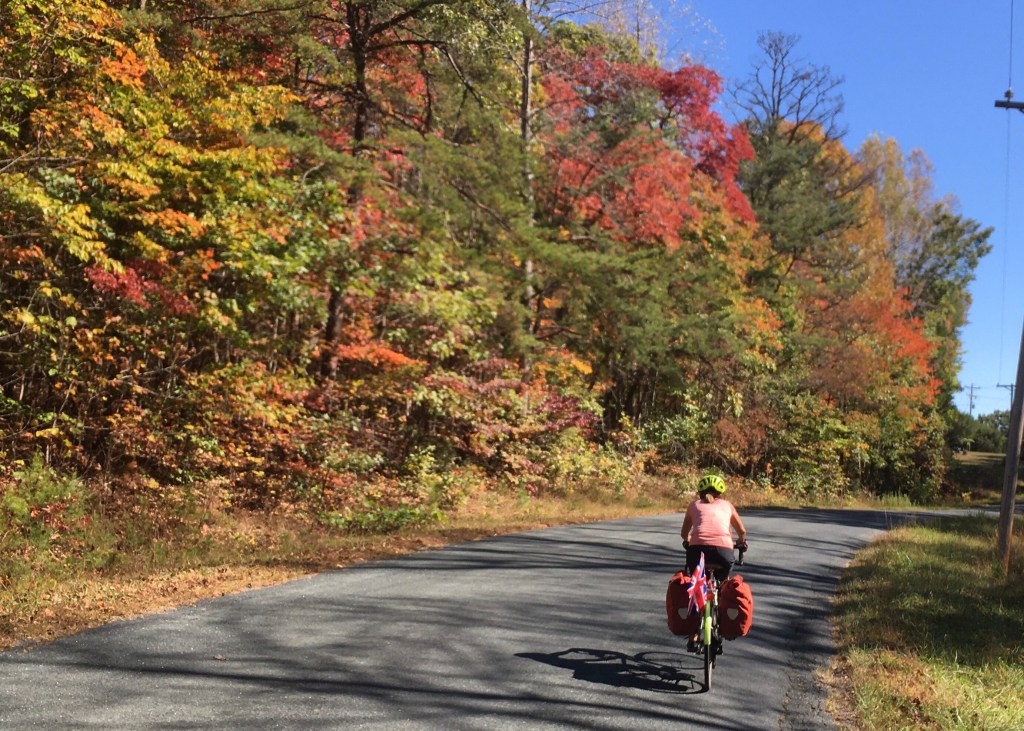
For the most part, these four days were a series of lovely bike rides … on smooth, quiet back country roads … beneath dappled sunshine … in ‘just right’ Goldilocks temperatures … past endless oak, hickory and maple trees that were transforming before our eyes into their fall colours.

We were accompanied by the continuous pop-pop noise of acorns hitting the ground, like the sound of toy guns … an echo perhaps of the soldiers who marched and fought here in the last days of the civil war.

By chance, we had chosen to follow (in reverse) the route of ‘Robert E. Lee’s Retreat’ in April 1845, the final march of a starving Confederate Army as they tried to escape back to the south.

Relentlessly and ruthlessly pursued by the Union Army of Ulysses S. Grant, they eventually surrendered in the tiny village of Appomattox, marking the beginning of the end of the conflict. Today it’s a humbling place to visit, quite different to other civil war sites, full of pathos and quiet dignity.

The room at Appomattox where the surrender was signed

From Appomattox we rode for 35km (22 miles) along the High Bridge Rail Trail, one of many such ‘rail-to-trails’ that now criss-cross America.

The High Bridge Trail

In the industrial ‘Gilded Age’ of the late 19th century thousands and thousands of miles of rail track were built across America, often by competing companies. Many quickly fell out of use and are now being gradually turned into biking and walking trails.

According to the Rails-to-Trails Conservancy over 40,000km (25,000 miles) of track has already been converted nationwide, with another 14,500km (9,000 miles) in the pipeline.

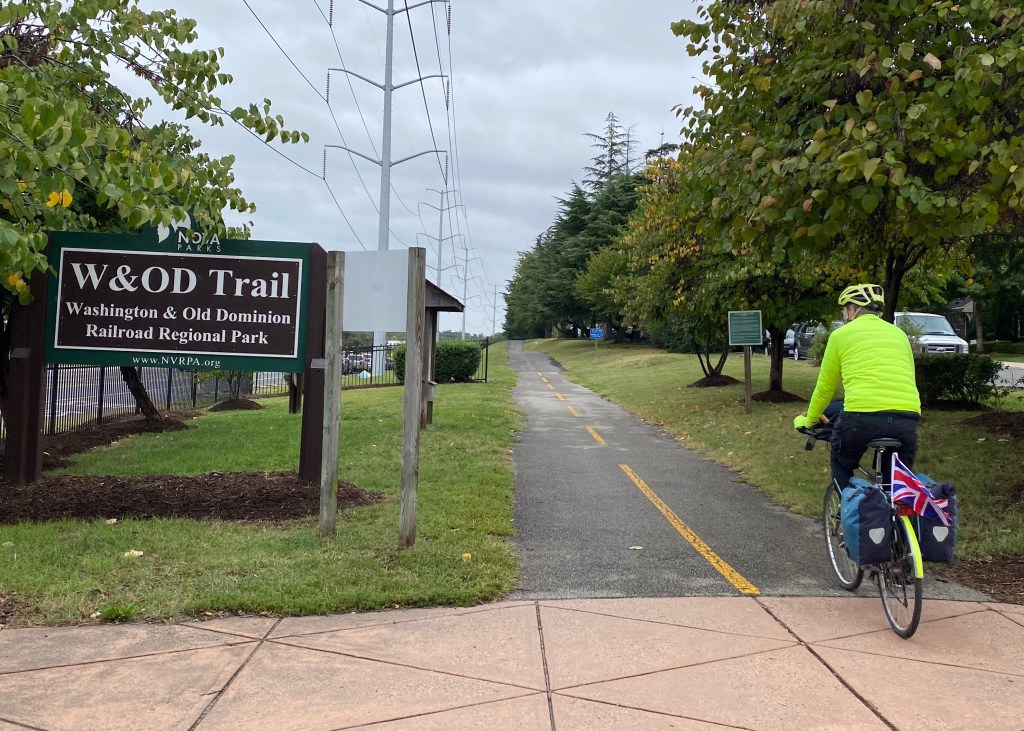
We also enjoyed leaving Washington on this rail trail

Most American touring cyclists we’ve met have told us that they try to stick to these trails as much as possible. Having now experienced some of the busier country roads of Virginia, we can see why that is.

The country roads can become very scary!

The problem is that these busy roads are narrow and the cars are big and wide, especially the ever popular pickup trucks.

Most drivers are very courteous but there is a sizeable minority (usually in pickups) that are pretty aggressive … overtaking us on a blind bend or before the crest of a hill. We’ve seen many a near miss on this trip … but fortunately we’ve only had to jump off the road ourselves once.

No pictures from busy roads … but we’ve seen a few ‘interesting’ signs

Thinking back, we haven’t seen any other cyclists braving the country roads of Virginia over the last couple of weeks.

Not a single one!

No other touring cyclists, not even someone out for a pleasant weekend ride.

A park ranger on the High Bridge Rail Trail was so surprised to see us that he flagged us down. He told us that he used to see lots of people touring Virginia by bicycle, but that we were the first he’d spotted for many years.

Why?

“Because it’s become too dangerous!”

Oh?!

“Y’all stay safe now.”

OK (gulp).

Taking refuge for a picnic in a church BBQ area

Well … if you can’t beat them, join them!

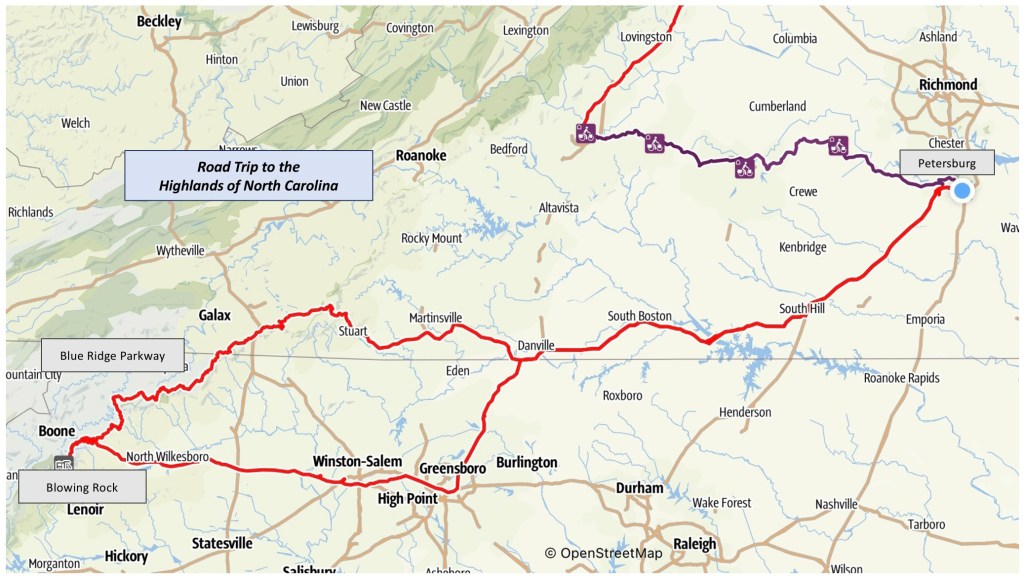
As soon as we got to Petersburg, we rented a car and drove back into the mountains to see the fall colour in all its glory. As the leaves were at their finest at slightly higher altitudes, we chose to drive further south into the Highlands of North Carolina.

It didn’t look that far on the map but it turned out to be a 1000km (640 miles) round trip. To see a few leaves? We’d never do that at home!

But it was definitely worth it!

Blowing Rock, North Carolina

As we drove along the famous Blue Ridge Parkway a tapestry of colour spread out before us … vibrant yellows, burnt orange, dark red and the blue green for which the mountains are named. The sea of trees rippled down towards the coast like waves on a shallow beach.

It was awe inspiring!

Best of all though … there wasn’t a single cyclist to slow us down!

Clare & Andy

1,692km pedalled so far (1,051 miles)

12,100m climbed

90 hours in the saddle

Pedalling back to planet normal

As we bumped down the cobbled streets of Porto and wound our way past the decaying port wine warehouses that line the Douro river estuary, we felt a frisson of excitement for the open road ahead wrapped in a blanket of familiarity.

Back on our bikes. The weight of our panniers. A salty breeze in our faces.

Leaving Porto

As we all know, it’s been a tough 18 months for many people across the world since COVID-19 raised it’s ugly head. A world of lockdowns, restrictions, cancellations, social distance, travel plans on hold. A world of severe illness and loss.

Many, many people have suffered far more badly than we have. After all, cancelled bike tours are hardly the worst impact of a global pandemic.

But here we are at last. Back on our bikes and armed with vaccination passports, lateral flow tests and passenger locator forms.

It felt like a little bit of normal.

Leaving London Heathrow

Our original plan was to cycle down the East Coast of the United States from Boston to Miami. But the American government are not yet welcoming vaccinated Brits to their shores so that will need to wait for another time.

We’ve come to Portugal instead, seeking warm air and warm hospitality. Our plan is simply to cycle south from Porto and see where it takes us. Mainly following Eurovelo 1 (EV1) down the coast but wiggling inland whenever there is something interesting to see. Hopefully into Spain as well.

EV1, the Eurovelo Atlantic Coast Route, is part of a network of cycle paths that criss-cross Europe and runs from Norway to Portugal. We’ve cycled bits of it before, as it includes the Wild Atlantic Way in Ireland.

Porto by day
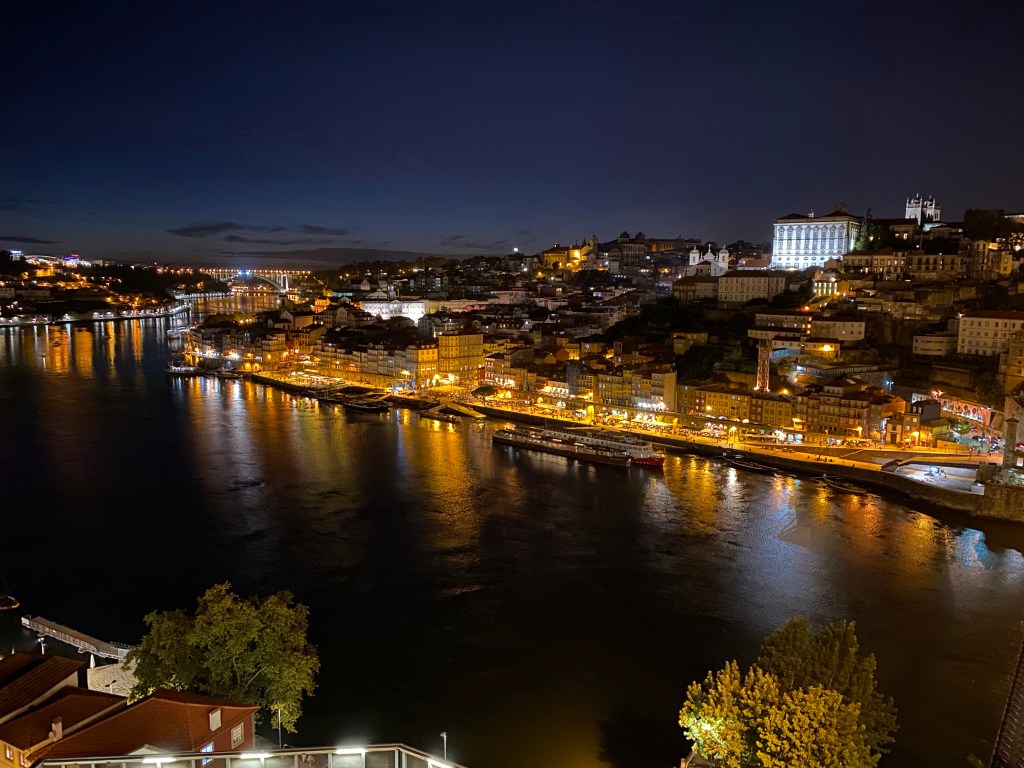
Porto by night

Porto (literally port or harbour) is a spectacular city that twists its way up from the mouth of the Douro river in a maze of medieval streets, colourful houses and ornate churches.

Pastel de Nata

Some of the food is as unique as the city itself. 

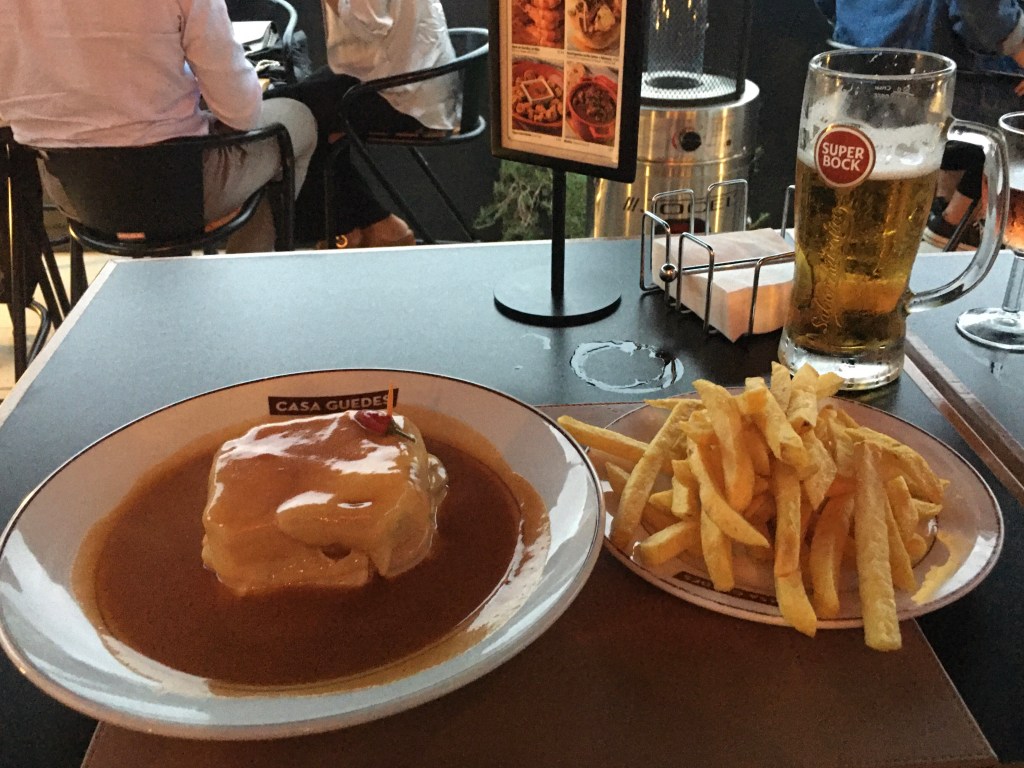
We enjoyed the port wine (of course), the Pastel de Nata (deliciously light custard and cinnamon tarts that are a one-a-day treat for many) but were not so sure about the Francesinha (literally little Frenchie, as it was adapted to local Porto tastes from the Croque Monsieur sandwich in the 1950’s).

A steak, some fresh sausage, cured sausage and cured ham are all stuffed inside two slices of bread and covered with melted cheese and an optional fried egg.  It’s then doused in a hot thick spicy tomato and beer sauce and served with chips and a large beer.

Enough calories to fuel any bike ride!

Francesinha – a Porto speciality

But not enough for a ride into the steep hills of the Douro Valley.

Haunted by memories of long, hilly days at the beginning of past trips we decided to take a tour instead. As we drove up yet another sharp ridge it felt like a smart decision … and gave us more time for wine tasting!

The Douro valley is stunning. Terraced vineyards, built behind ancient dry stone walls climb precipitously away from the river as far the eye can see, their whitewashed quintas (wine estates) glistening in the sunshine. Many with names that remember the end of a good dinner … Sandeman, Dow, Taylor’s, Graham’s, Croft.

Douro Valley

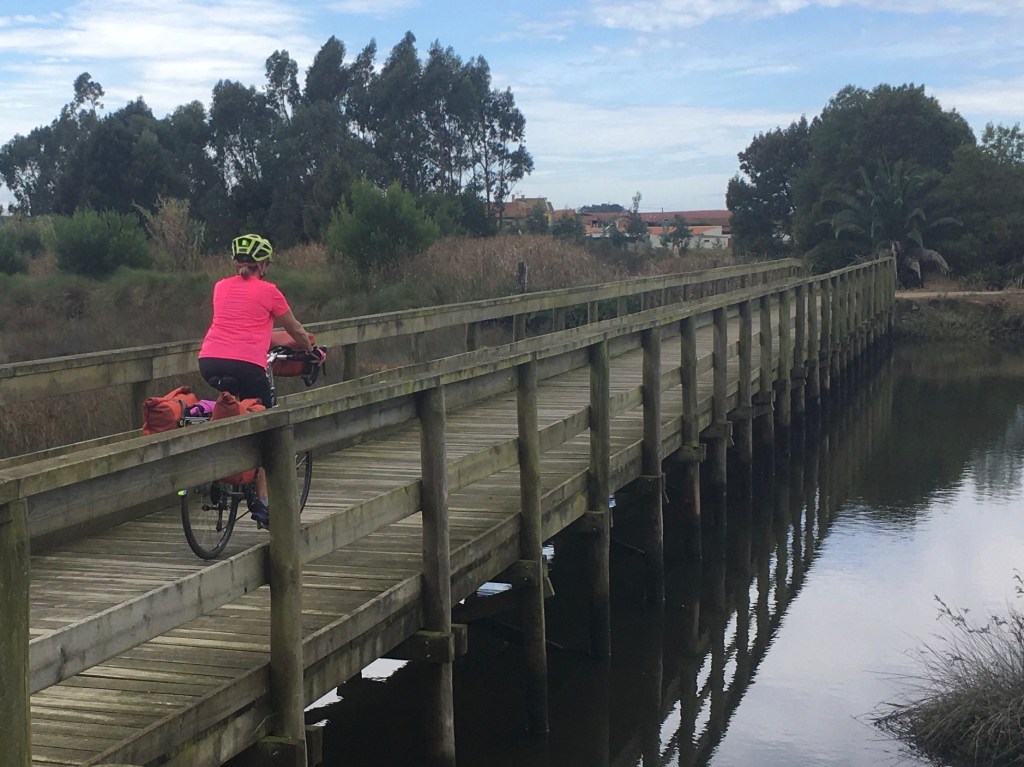
The first few days of this bicycle adventure have been spent gently pedalling down the coast on flat roads, cycle paths and board walks. Through pretty little beach towns and across salt marshes that attract a variety of migratory birds … herons, egrets, even some flamingoes.

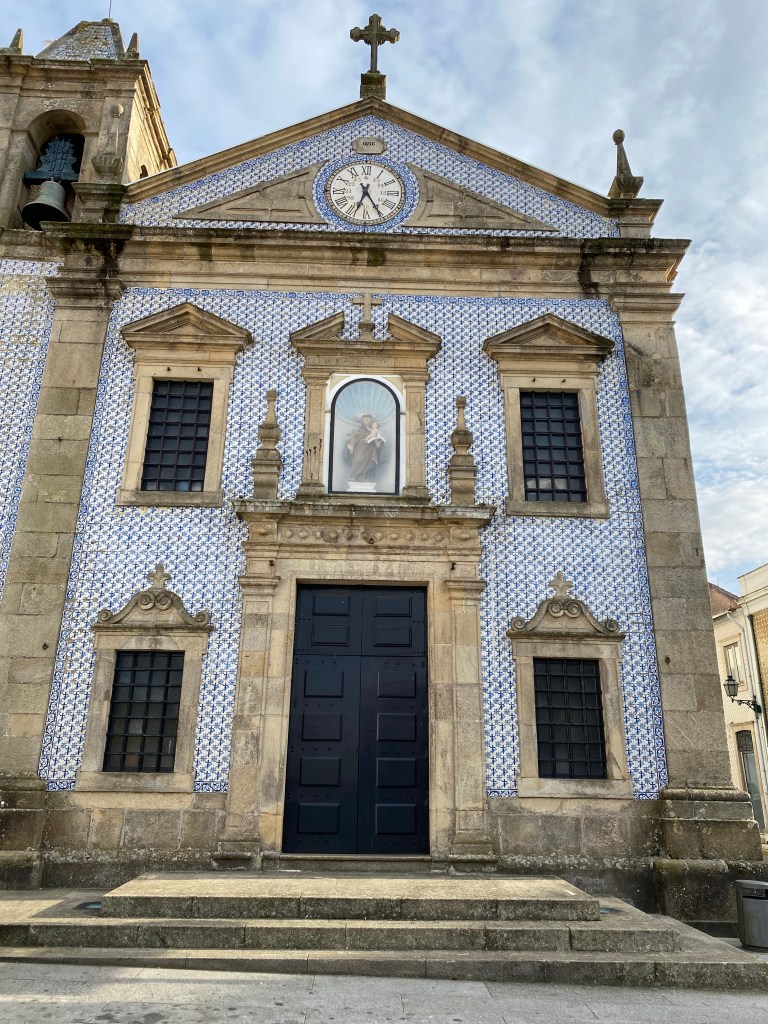
A striking part of this area are azulejos, decorative tiles that adorn many buildings. In a tradition dating back to the 13th century these hand painted tiles help keep houses cool and beautiful.

Ovar, our first overnight stop, is a ‘living museum’ of azulejos with many fine examples from the 19th and 20th century.

Railway Station art

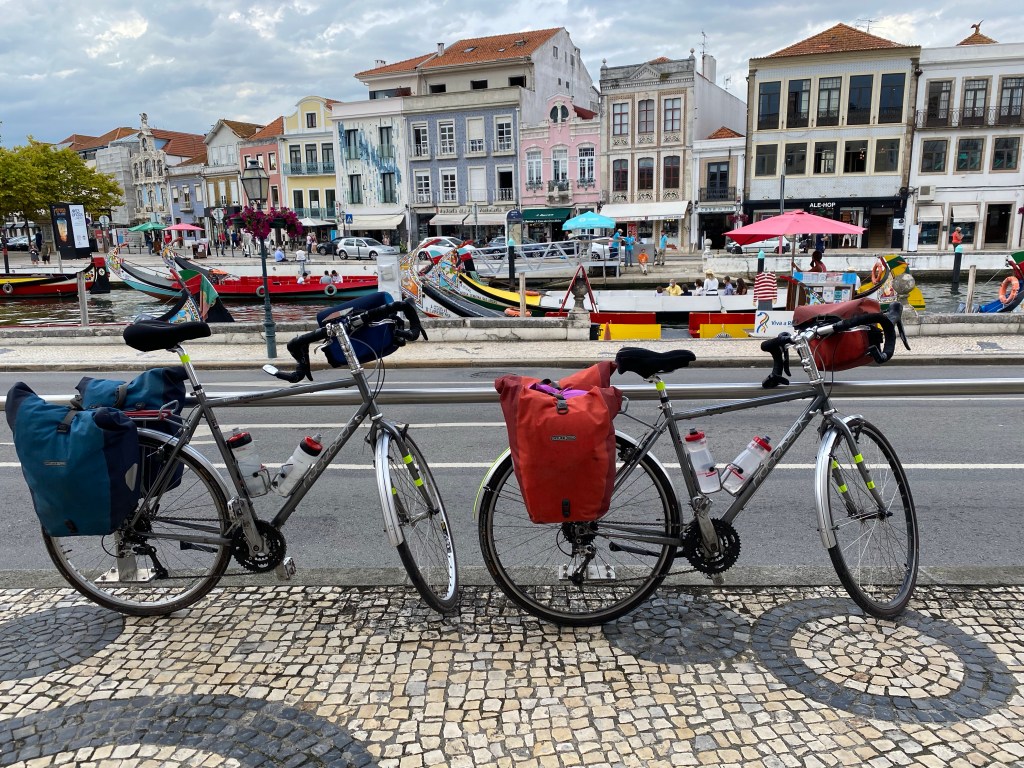
From Ovar we cycled onto Aveiro, a city that grew rich from salt but now relies on tourism as the self styled ‘Venice of Portugal’. It’s not quite as grand as the Queen of the Adriatic … although a gondola ride makes for a pleasant diversion, passing under many bridges adorned with thousands of brightly coloured ribbons.

Our young guide giggled as she encouraged us to join in … “you can tie a ribbon on the bridge for everlasting love and friendship … ooh-la-la!”

Sadly the ribbon shop was closed for lunch.

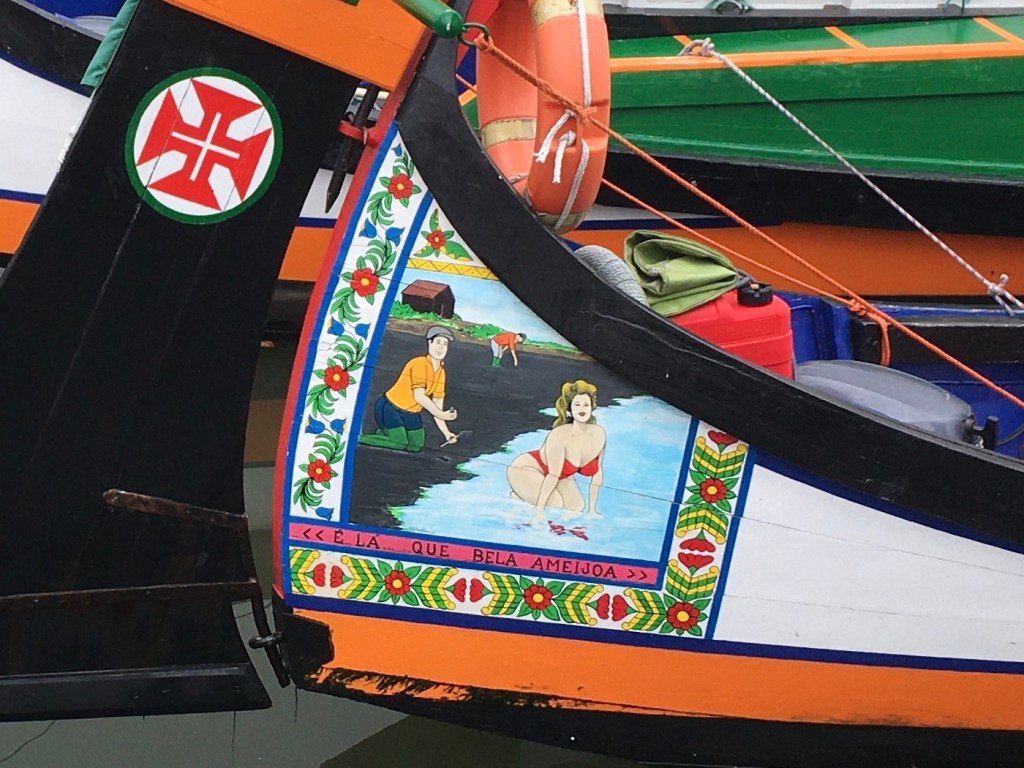
Each gondola in Aveiro has it’s own ‘kiss-me-quick’ image

The next day, we were reminded that bicycle touring is not all about easy cycle paths, boat rides and pretty coastal views. A fierce headwind blew up and it poured with rain as we struggled into Praia de Mira, sodden and a little weary.

It almost felt like cycling in England.

Arriving in Praia de Mira in the rain

But not quite. We’re in Portugal. Back on our bikes.

Ooh-la-la!

Praia de Mira, the next morning

Clare and Andy

Picture Perfect Portugal

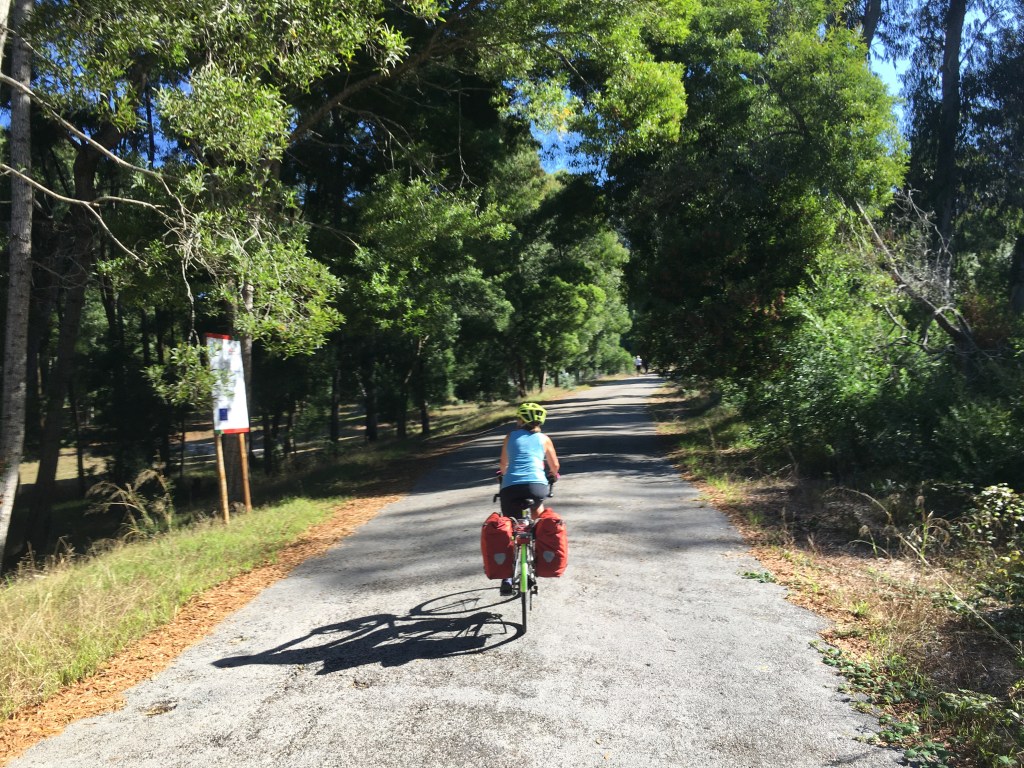
As we rode out of the delightful seaside village of São Pedro de Moel and climbed gently through a wood of maritime pines and huge eucalyptus trees, we were greeted by wide smiles and cheery “Bom dia’s” from every family we passed. Trees make everyone happy.

The air felt crisp and cool, the sun warm on faces. This was bike touring at its best.

Rounding a corner, we suddenly emerged into a starker landscape of charcoal stumps and blackened earth. It was all too familiar.

For several days we’d been cycling through the remains of the vast Leira Pine Forest, planted to build the sailing ships that drove Portugals golden Age of Discovery in the 15th and 16th centuries.

Unfortunately, 86% of the 110 square kilometre forest was destroyed by a huge wildfire in 2017. This small wood near São Pedro is a reminder of how glorious it must have been.

After the fire

On our route south from Porto to Lisbon, we’ve been alternating coastal rides with diversions inland to visit some of the great historical sites … Coimbra, Batalha, Alcobaça, Óbidos.

This part of Portugal seems ideal for bicycle touring. The distances are manageable (around 50km or 30 miles a day), it’s relatively flat and if you travel north to south you have a good chance of a tail wind to blow you along. We’ve been blessed with many sun filled days and a ‘Goldilocks-just-right’ warmth of around 25°c.

It’s also good value for money, both the accommodation and for eating out. As well as small hotels and Casas (traditional guest houses), we’ve stayed in several self-catering Alojamento Local (local accommodation) which have recently sprung up across the country.

Alojamento Local

Bike touring in Covid times has been easier than we expected. At the time of writing Portugal has relatively low cases and the highest vaccination rate in Europe … so it feels very safe.

To enter the country we had to show evidence of a negative PCR test or a double vaccination certificate. This is also required for tourist accommodation and, bizarrely, for indoor dining from Friday through Sunday (but not for the rest of the week, when restaurants seem to be just as full!)

We were worried that Brexit might cause us some difficulty as the UK is not yet part of the EU Digital Covid Certificate. This means that hotels and restaurants can’t scan our QR codes for proof of vaccination as they do for everyone else.

But it doesn’t seem to matter.

We say “… sorry, the scan doesn’t work for the UK one …” They then shrug, mutter “Inglês?”, shrug again … and we’re shown to our table.

Sardines and fries – a Portuguese staple

Here in Portugal people wear masks a lot. They’re mandatory inside and on public transport but plenty of people, young and old, choose to wear masks outside too. We’ve even seen them worn on a deserted beach … just in case!

Masking up at the end of a long ride when we arrive at our accommodation can get tricky. Sorting out the bikes, fumbling about with the panniers, lugging them upstairs, whilst chatting to the owner with steamed up glasses and sweat soaking through the masks can be a challenge!

All masked up for a boat ride

One reason why Portugal is such a great country for bike touring is that there are so many stunning things to see. A lot of them date from the Age of Discovery in the 15th and 16th centuries, when the Portuguese Kings had more money than they knew what to do with, so splurged it on lavish buildings.

Much of this cash came from a lucrative trade in gold, spices and slaves as the ships built from the wood of the Leira pine forest plundered their way around the world. Whilst it’s impossible today to sympathise with the ethics behind the source of the wealth, it’s difficult not to be staggered by the beauty of the architecture.

The royal palace, library and chapel at the ancient university in Coimbra, Portugal’s first capital.

Chapel of Sao Miguel, University of Coimbra

The castle and maze of well-preserved medieval houses in Óbidos.

Óbidos

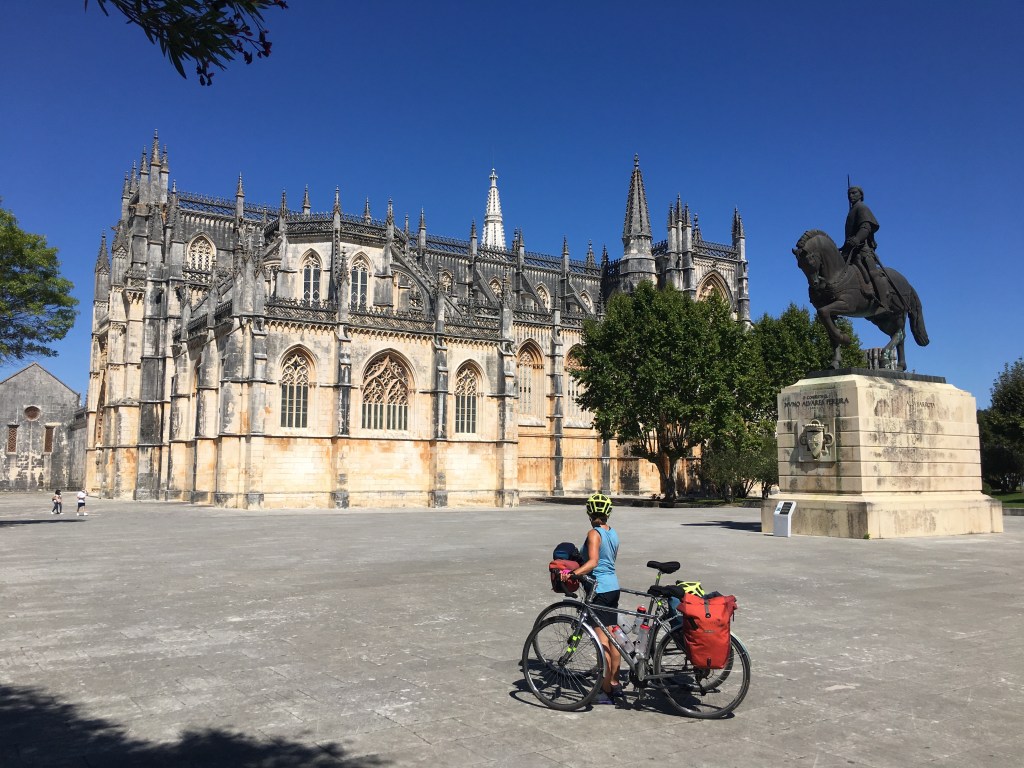
But most striking of all, the imposing grandeur of the monasteries at Batalha and Alcobaça.

Batalha Monastery

Batalha, built to commemorate a crucial victory over Castile, took 200 years to complete. Ironically it is the Unfinished Chapels that most astonish visitors, the scale of the pillars and their ornamentation are even more dramatic for being open to the sky.

Unfinished Chapels at Batalha

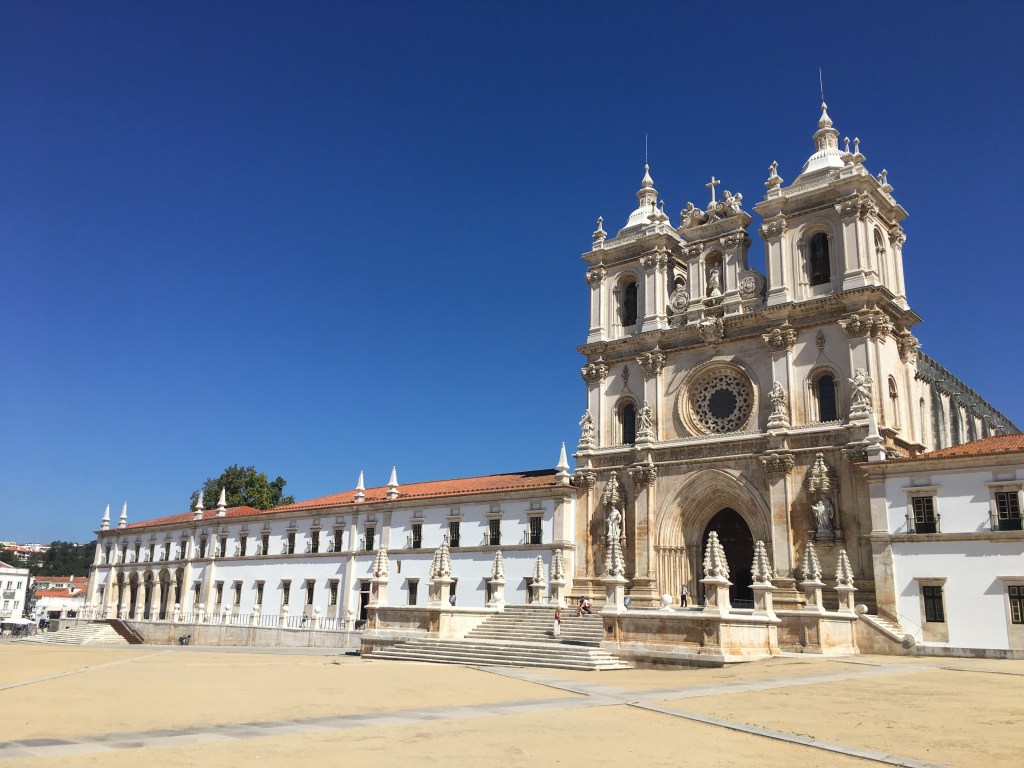
At the monastery in Alcobaça we came across a tale of two star-crossed lovers to rival Romeo and Juliet.

In 1340 Afonso IV, King of Portugal, married his son and heir Pedro to Costanza of Castile. She was accompanied to the Portuguese court by Inês de Castro (her lady-in-waiting) … “beautiful as a flower, blond as the sun” … and just 15 years old.

Pedro fell in love at first sight … but with the wrong Spanish lady. He and Inês soon began an all-consuming love affair that threatened to rip Portugal and Castile apart, especially when Costanza died a few years later.

Alcobaça monastery

Fearing trouble and strife, Afonso refused to let the lovers marry and instead banished Inês. Desperate to be together, they found a way to live together in secret and even had four children.

Eventually the old King could stand it no longer and ordered her death. Three assassins rode to Coimbra and violently decapitated her in front of her small children. Her spirit can still be heard crying at the Fountain of Tears, site of her murder.

As you can imagine, Pedro was not happy about this. When Afonso died 2 years later the new king immediately set about tracking down the assassins. He found two of them, tried them for murder and ripped out their hearts with his bare hands … in revenge for breaking his own.

According to the legend, he then had Inês exhumed, dressed her in queenly robes and made all his courtiers swear allegiance by kissing what was left of her hand. Ugh!

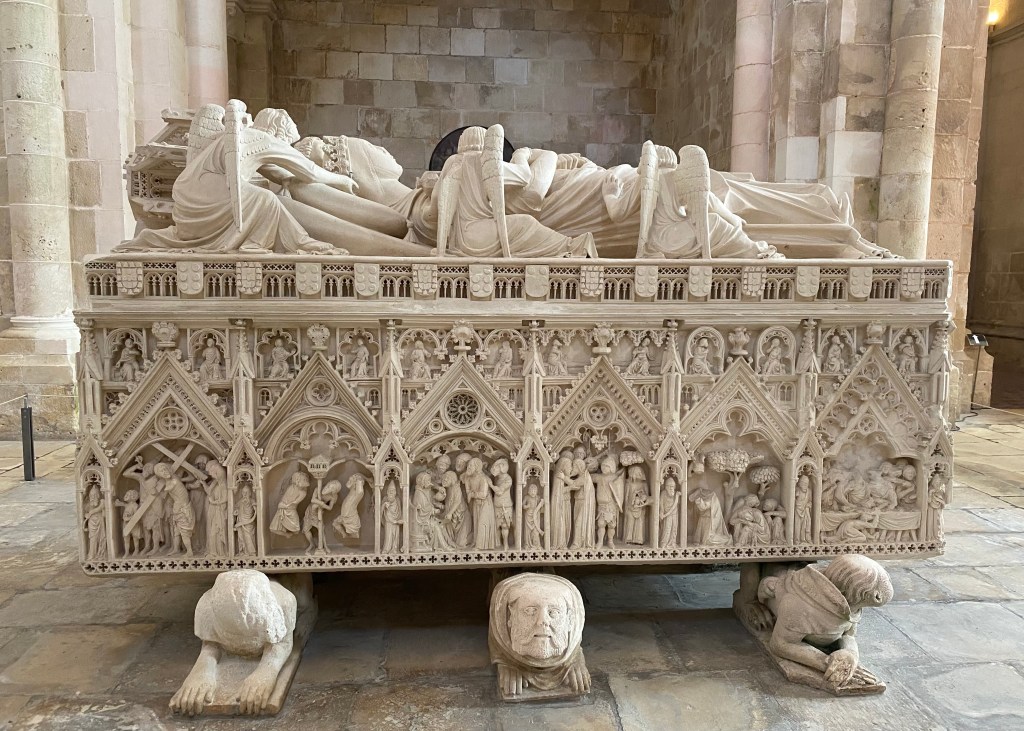
She was reburied in the abbey at Alcobaça where they now lie together ‘até ao fim do mundo’ (until the end of the world). Quite a story!

Tomb of Inês de Castro

Cycling down the endless beaches and sand dunes of the Silver Coast (named for the silvery glow of the ocean on sunny days) has been a perfect contrast.

This is a surfers coast, every beach is dotted with human seals waiting for the perfect wave. We stayed at Nazaré, where an offshore canyon famously combines with Atlantic storms to create the biggest waves in the world, towering some 30m above the beach. Andy was tempted to have a go but, sadly, conditions weren’t right on the day of our visit and the waves were a bit small for him.

Small waves at Nazaré

No bike tour would be the same without some ‘dreadful detours’ and sure enough, Andy’s map reading skills have led Clare up the normal quota of rough stone tracks. But EV1 has been just as guilty, occasionally asking us to canyon around a steep cliff or climb a precipitous rocky path.

An EV1 dreadful detour

To be fair, EV1’s dreadful detours usually ended with a spectacular view. Andy’s just finished in a swamp!

Our next stop is Sintra, a fairytale land of dense forest sprinkled with imposing hilltop castles, mystical gardens and strange mansions. Not a place for getting lost. After all, we don’t want any ghostly tears!

Clare & Andy

Magical mystery tour

As you cycle south towards Lisbon three things happen:

1. There are lots more tourists around. Further north, we only came across intrepid French tour groups. Now there are people from everywhere across Europe, which makes for much more of a buzz!

2. You need more cash. Everything becomes that bit a more expensive. This is best explained by the Clare & Andy Coffee Index which we use to measure the relative cost of everything, wherever we are.

In Porto, an abatonado (long black coffee) was €1.50. In the countryside it could be as low as 75 cents but by the time we reached Lisbon it was as much as €3.50!

3. It becomes a lot more hilly. A lot! Our average daily climbing metres increased from around 300 metres to well over 700 metres.

One of the steepest hills we tried and failed to cycle up wound it’s way up to Sintra, a fantasy hill station just north of Lisbon and the summer playground of Portuguese Kings and various other eccentrics.

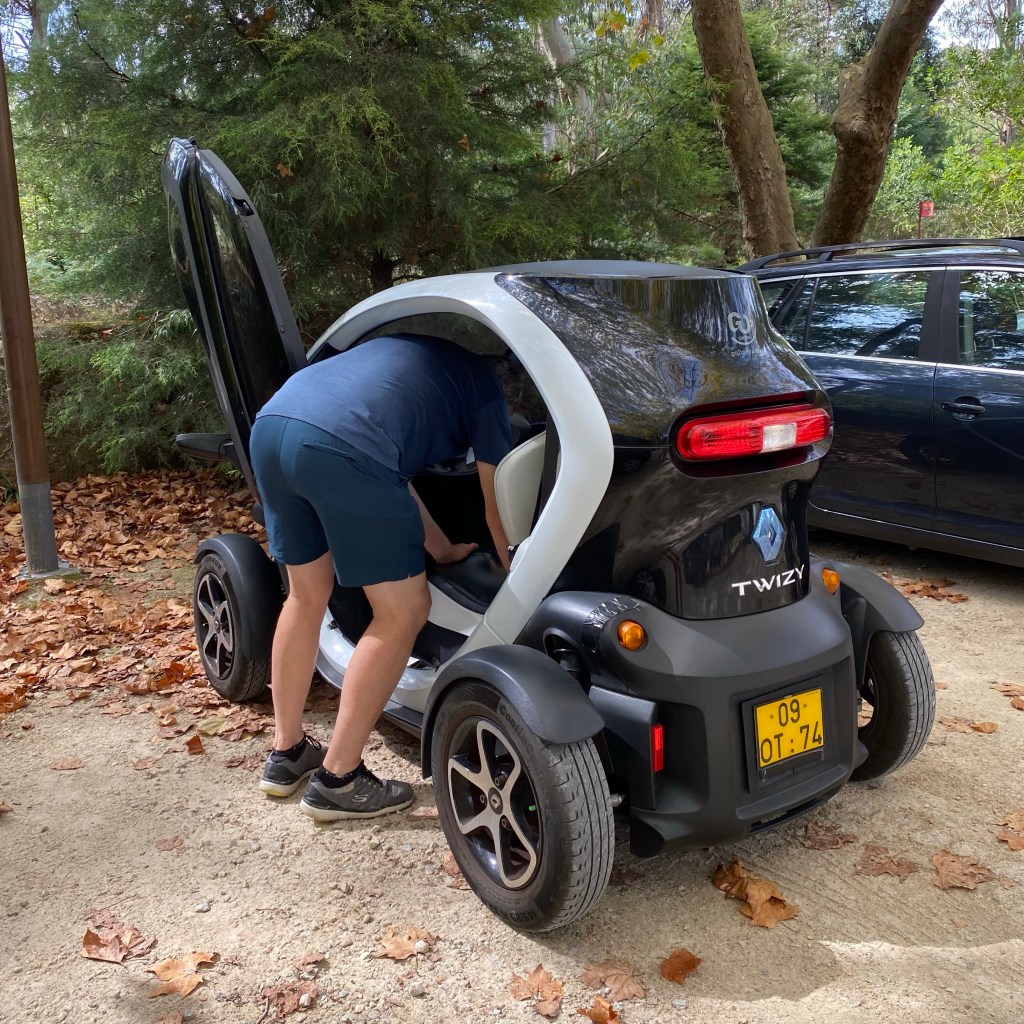
As Sintra is much too hilly for sightseeing by bicycle, we decided to hire Twizy … a little electric buggy that we could just about squeeze into together for a magical mystery tour around the various attractions.

First stop on the mystery tour was the Quinta da Regaleira, an extravaganza dreamed up by an Italian opera-set designer on the orders of a Brazilian coffee tycoon locally known as Monteiro dos Milhões (Moneybags Monteiro).

The villa is packed with ferociously carved fireplaces and Venetian glass mosaics but it is in the gardens where they really set their imagination free. Footpaths wriggle through dense foliage to follies, fountains, lakes and underground grottoes, all eventually leading to the Initiation Well that has now become a symbol of Sintra.

As you descend nine spirals of the staircase to a mysterious underground gallery at the base of the well, the nature of the initiation is never explained. But there are dark hints that it involved the rituals of the Knights Templar!

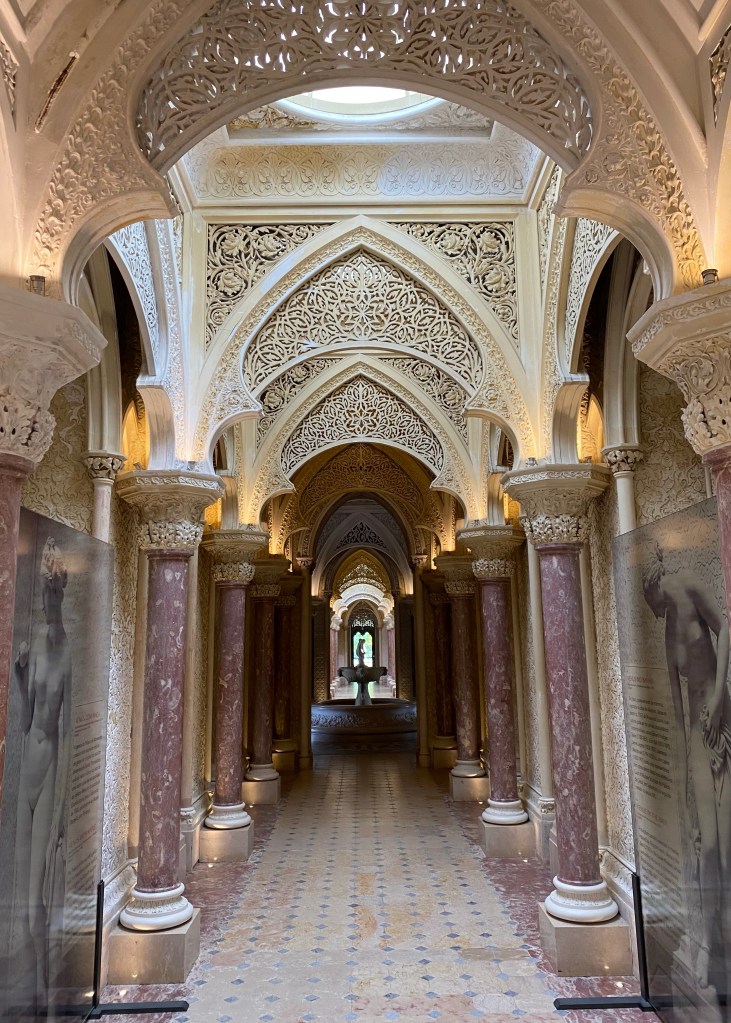
Next stop was the Palacio de Monserrate, a Moorish-Gothic-Indian romantic folly created by a wealthy Englishman in the 19th century and surrounded by gardens from all corners of the world … English roses to Mexican yuccas to Japanese bamboo.

A corridor at Montserrate

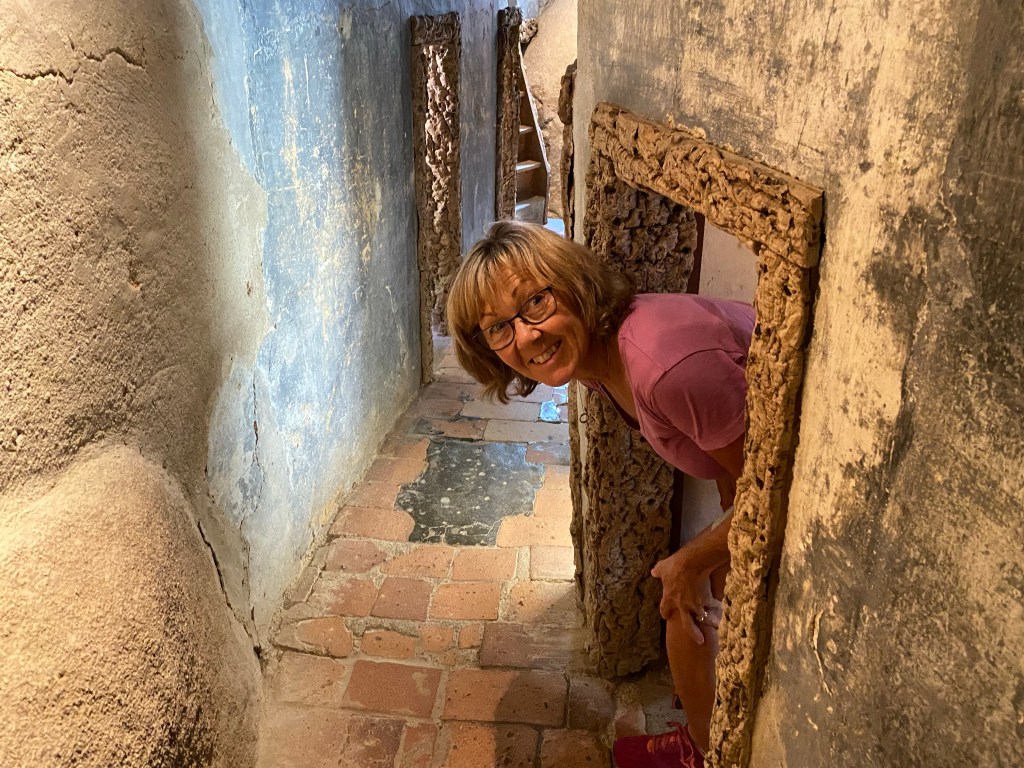
Then onto the Convento dos Capuchos (Convent of the Hoods). Here monks lived a simple but well-ordered life in tiny hobbit-hole cells with low, narrow cork-lined doors.

But these cells weren’t cramped enough for one reclusive celibate, Honorius, who moved into a tiny burrow in the ground and stayed there for 36 years.

Mind you, he lived until 95 years of age, so maybe he knew a thing or two!

The Palácio da Pena is the antithesis of this spartan monastery. Built in the 19th century as the kings summer retreat, it’s a wacky, colourful confection of lilac and lemon towers, moorish domes and writhing stone snakes gazing across at a vast Moorish castle that became part of the estate.

Sintra is only 28km away from Lisbon.

However, as aspiring touring cyclists we decided to cycle 75km around the coast instead … just to take a picture at the lighthouse that marks the most western point in Europe.

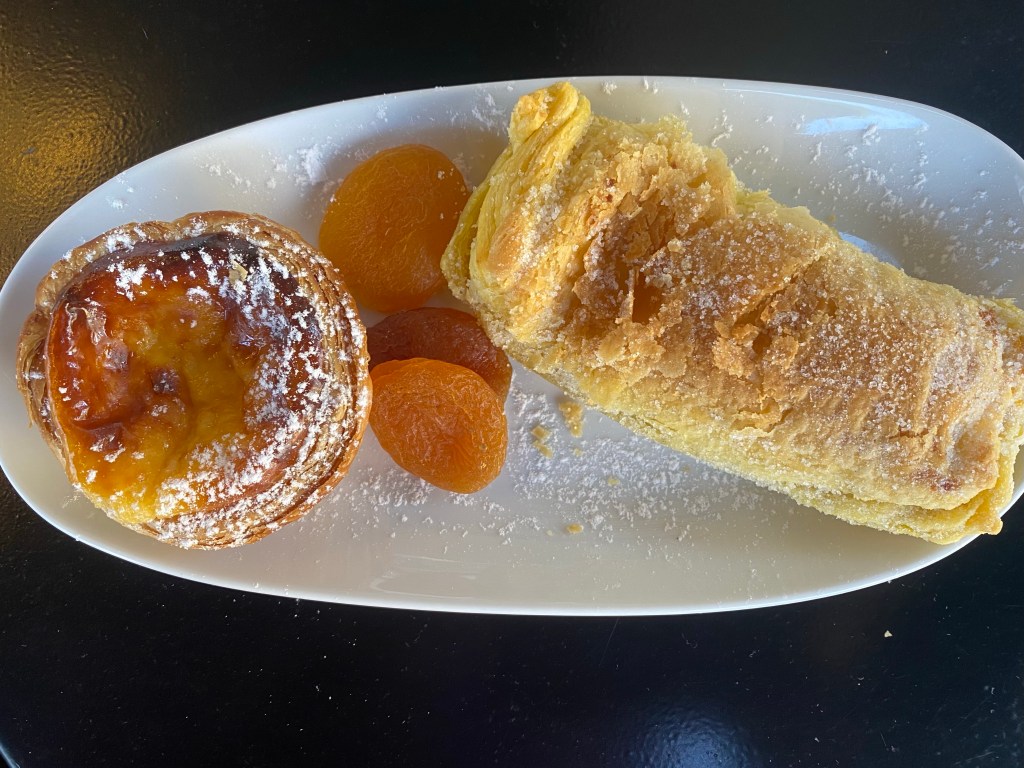
Luckily we were powered by Travesseiros de Sintra, a puff pastry ‘pillow’ filled a syrupy, creamy mixture of almonds, egg yolk and cinnamon. Enough calories to last several days!

As we cruised down a rewarding 12km descent and along the mouth of the Tagus river into Lisbon, we agreed the longer journey was worthwhile after all. As the famous bridge got closer and the city came to life, we jostled with an increasing number of cars, bikes, electric scooters, runners and tourists.

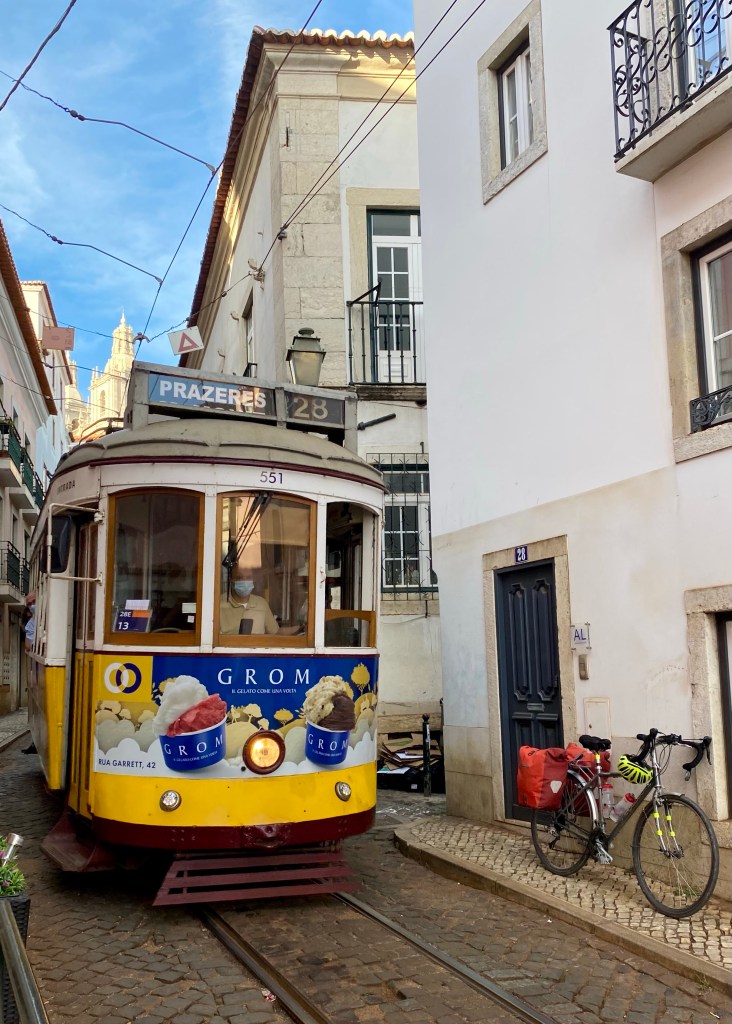
Each morning we were woken by the sound of old trams rumbling by. But we didn’t mind one bit … as this is the authentic sound of Lisbon.

Dating from 1930’s, they’re still the best form of transport to climb up and down the steep, winding cobbled streets of the old town. From time to time, the road narrows so much that pedestrians are squeezed into doorways as the tram rattles by.

Lisbon struck us as a city to hang out in … and there are lots of people doing just that. At pavement cafes, in parks and at Miradors (viewpoints) each of which came with its own busker playing Van Morrison or Ed Sheeran songs.

View from one of the many Miradors

It’s also the city of Fado, a unique type of traditional music featuring soulful vocals, backed by the lilting sound of a 12-string pear-shaped Portuguese guitar and by a classical Spanish guitar.

The mournful lyrics are often about the sea or the life of the poor, and are infused with a sentiment of resignation, fate and melancholic yearning for the past. To some extent, Fado is a window into the character of the people here. This is captured by the Portuguese word saudade … a deep emotional state of nostalgia or longing for something or someone that has been irreparably lost.

Fado

As well as hanging out with everyone else, we did manage to drag ourselves along to what turned out to be the most extravagant monastery of them all. The Mosteiro dos Jeronimos was built to celebrate Vasco de Gama’s discovery of a sea route to India that would bring the country even more wealth.

Mosteiro dos Jeronimos

It includes a room that pays homage to many of the most famous Portuguese kings, including the nicknames given to them by the people.

Hence, the first king (Afonso I, 1139-85) is known as the The Founder or The Great.

Peter I (1357-67) whose love story we described in the last blog, was know as The Cruel because of the nature of his revenge. And perhaps because his other nickname The Till-the-End-of-the-World-Passionate was rather a mouthful.

Others nicknames the kings probably liked include …

The Handsome (Ferdinand I, 1367-83)

The One with Good Memory (Joao I, 1385-1433)

The Musician King (Joao IV, 1640-56)


But these kings might not have been so sure …

The Nuns Lover (Joao V, 1706-50)

The Asleep (Sebastian I, 1557-78)

The Fat (Afonso II, 1211-23)

Praça do Comércio, Lisbon

After all this sightseeing in Sintra and Lisbon, it’s now time for us to get back on our bikes to cycle south through the sand dunes and coastal plains of the Alentejo.

We’re looking forward to it. After all, there’s no mystery about bicycle touring.

It’s simply magic!

Clare and Andy

To the end of the world

If you like quiet unspoilt beaches, seafood dinners straight from the sea and watching life roll by at a gentle pace … then the Alentejo is a perfect holiday spot you.

It will transport you back to a simpler, more innocent age where you can sit under a cork tree and gaze out at a beautiful rural landscape that seems unchanged for centuries.

But … perhaps it’s not the best part of the world for independent bicycle touring.

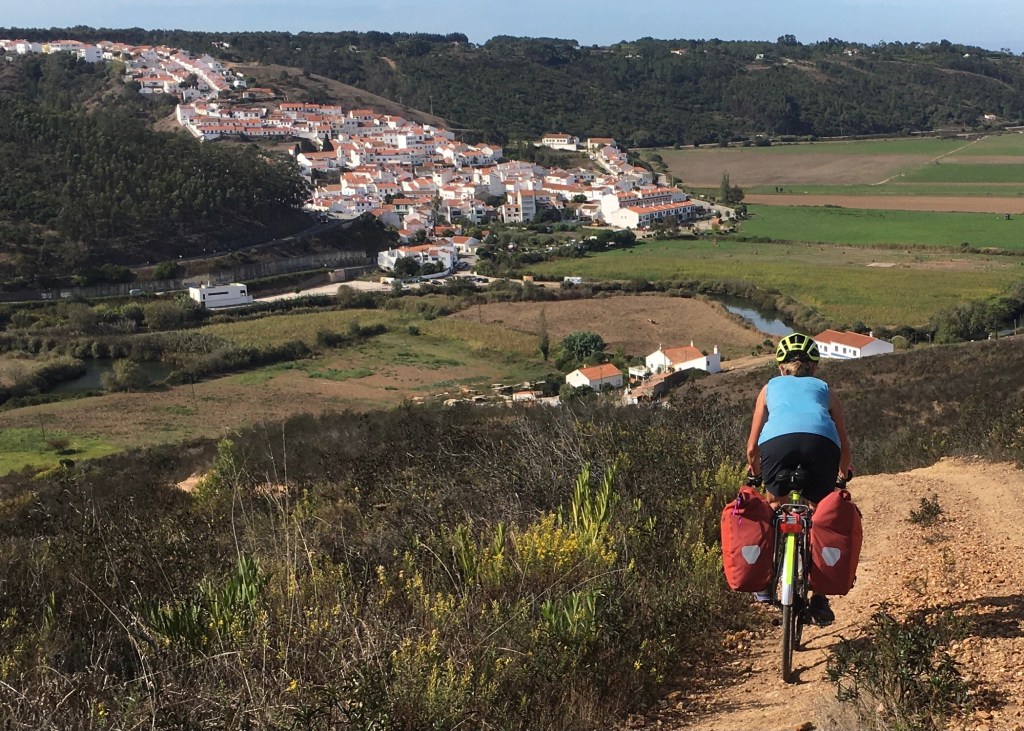
Situated south of Lisbon, the Alentejo is the poorest and least populated part of Portugal. That probably explains why most of the small country roads that criss-cross the cork forests and dusty fields are still made of gravel or sand.

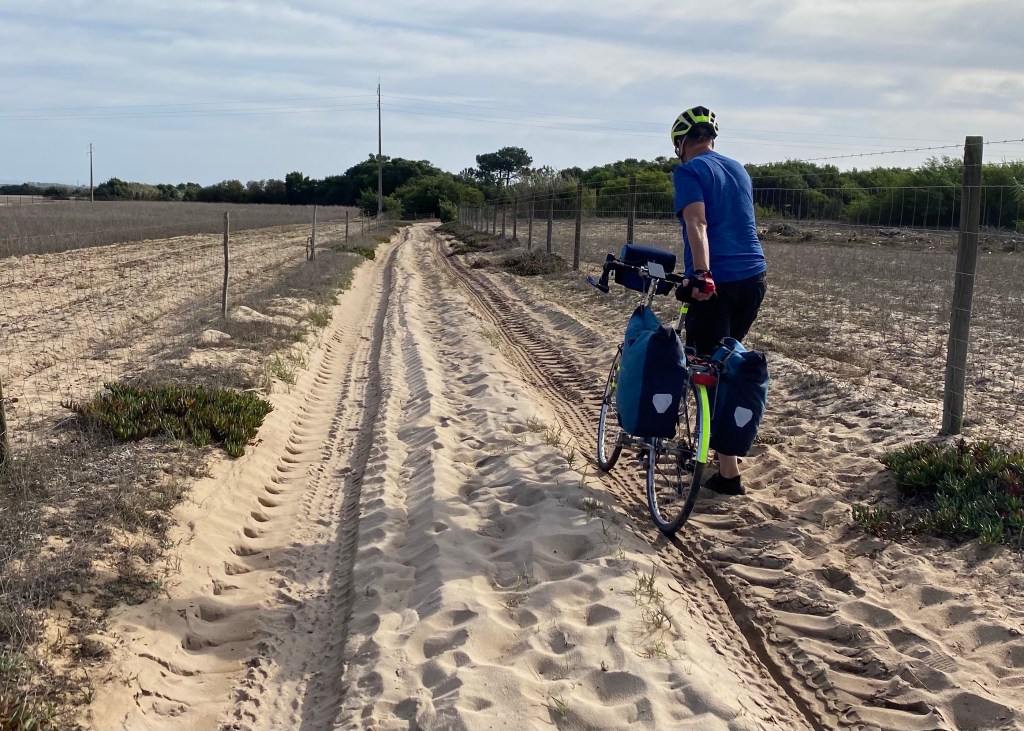
Further north these ripio tracks are an occasional hazard. In the Alentejo, they’re lurking around every corner … rutted, very bumpy and often covered in heavy drifts of sand.

On a mountain bike it would probably be a lot of fun. But our touring bikes just slither from side to side … or grind to a halt.

A bit sandy?
Some new tarmac roads …
But not all!

So we stuck to riding on larger roads instead. Not the big main roads but the secondary roads that connect one idyllic white-washed village to the next. These proved to be very straight, very flat and very narrow … therefore invitingly fast for cars and trucks.

They also contained an alarming number of obstacles at the edge of the road … large potholes, deep cracks, tree roots, drains, manhole covers. For the humble cyclist, riding along them can become a game of chicken. Smash into the tree root that’s looming up ahead? Or avoid it and swerve into the path of the car that’s zooming up behind?

Not a combination that adds up to a pleasant and peaceful bike ride.

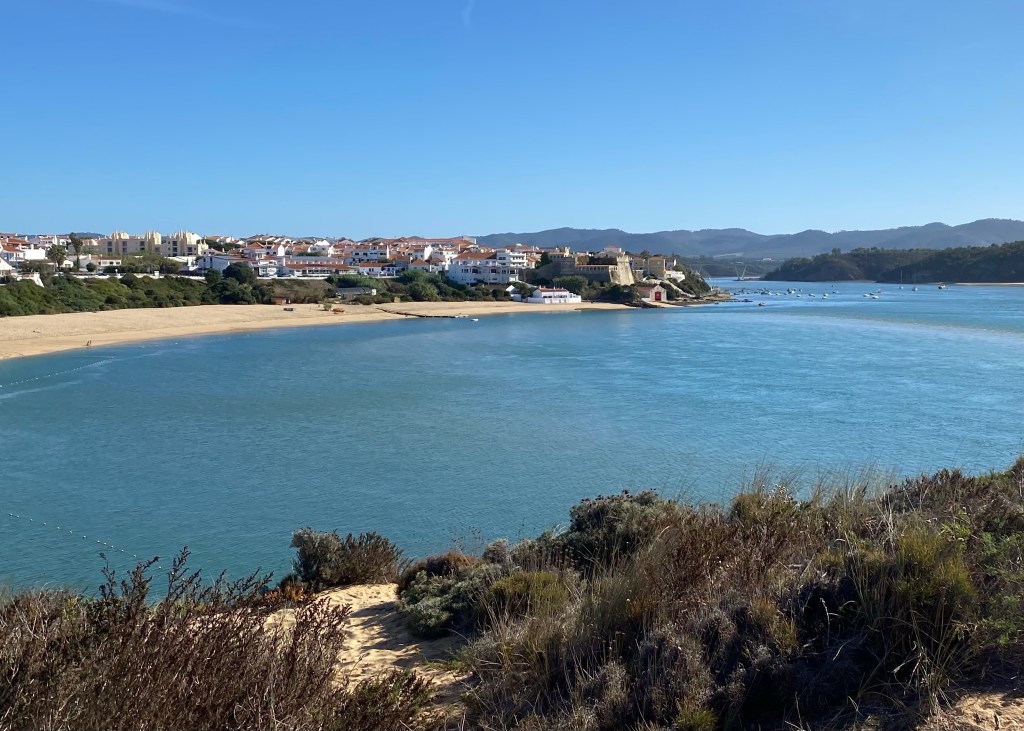
Vila Nova de Milfontes

Whilst it may not be ideal for a bicycle tour, the Alentejo is a paradise for long distance walkers. The Rota Vincentina offers a network of over 750km of caminos to choose from, including the Fisherman’s Trail down the coast, the Historic Way inland and lots of shorter circular walks.

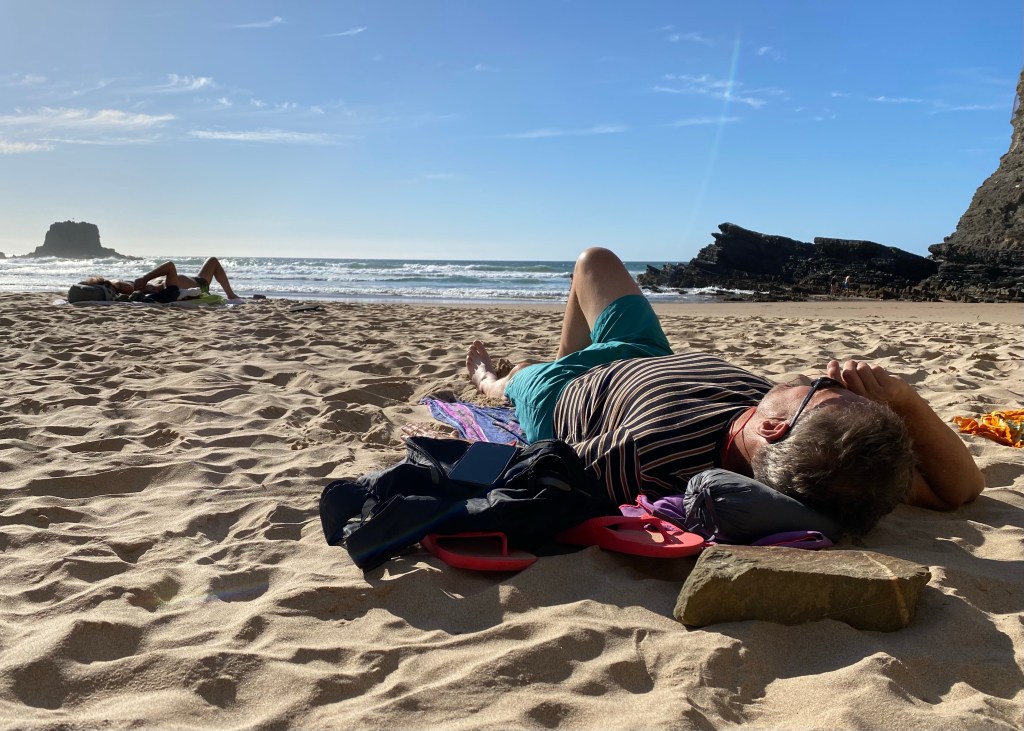
Relaxing at Zambujeira do Mar

But cycling wasn’t all bad! Apart from the delightful coastal views and the idyllic seaside villages, one of the best things about riding through the Alentejo was that we enjoyed a tailwind every single day!

Before we knew it, we had been blown to the ‘end of the world’, the name still given to Cabo de São Vicente (Cape of St Vincent), the most south-westerly point of Europe.

With only the brooding Atlantic Ocean beyond, people did indeed think it marked the end of the world, right up until the 14th century. We could kind of see why … it all felt a little unworldly as we cycled out to the cape early one morning before breakfast.

To the ‘end of the world’

As we reached the lighthouse our odometer passed 1000km cycled in Portugal. This also meant we have now pedalled for more than 10,000km since we embarked on our first bicycle tour from Bath to Barcelona, back in 2016.

On the way to the ‘end of the world’ we had a curious incident. A lady in her car flagged us down, rather flustered and urged us to be careful as there was a loose pack of dogs prowling around ahead. She was right … a dozen forbidding shapes were visible on top of the next ridge.

In rural Portugal every household has a dog. As we cycled past, each one of those dog’s barked as loudly as it could and flung itself violently at the fencing around its home. Perhaps to come and say hi? Perhaps to tear us limb from limb?

Either way … we’re a bit nervous of dogs!

As we reluctantly decided to turn back and go the long way around, a farmer rolled up in his wagon. He stopped, laughed and reversed back up to the dogs, urging us to follow him … which we did with some trepidation. As we reached them, he nuzzled a couple of the pack leaders and the rest immediately became as docile as could be.

We passed by without the slightest bark, not even a growl … in fact not even a flicker of interest!

Typical Alentejo houses

In the Alentejo we have stayed in lots of AL’s (Alojamento Local or self-catering apartments) often only booking one that comes with the gold-standard-ultimate-travellers-luxury … a washing machine!

But the main pleasure of an AL is that we can cook for ourselves.

Which creates a bit of a challenge as we can hardly carry a larder of groceries around with us in our panniers!

How do we get together a kit of ‘basics’ without repeatedly buying huge quantities and then wasting most of it? Olive oil, for example, rarely comes in anything less than a one litre bottle.

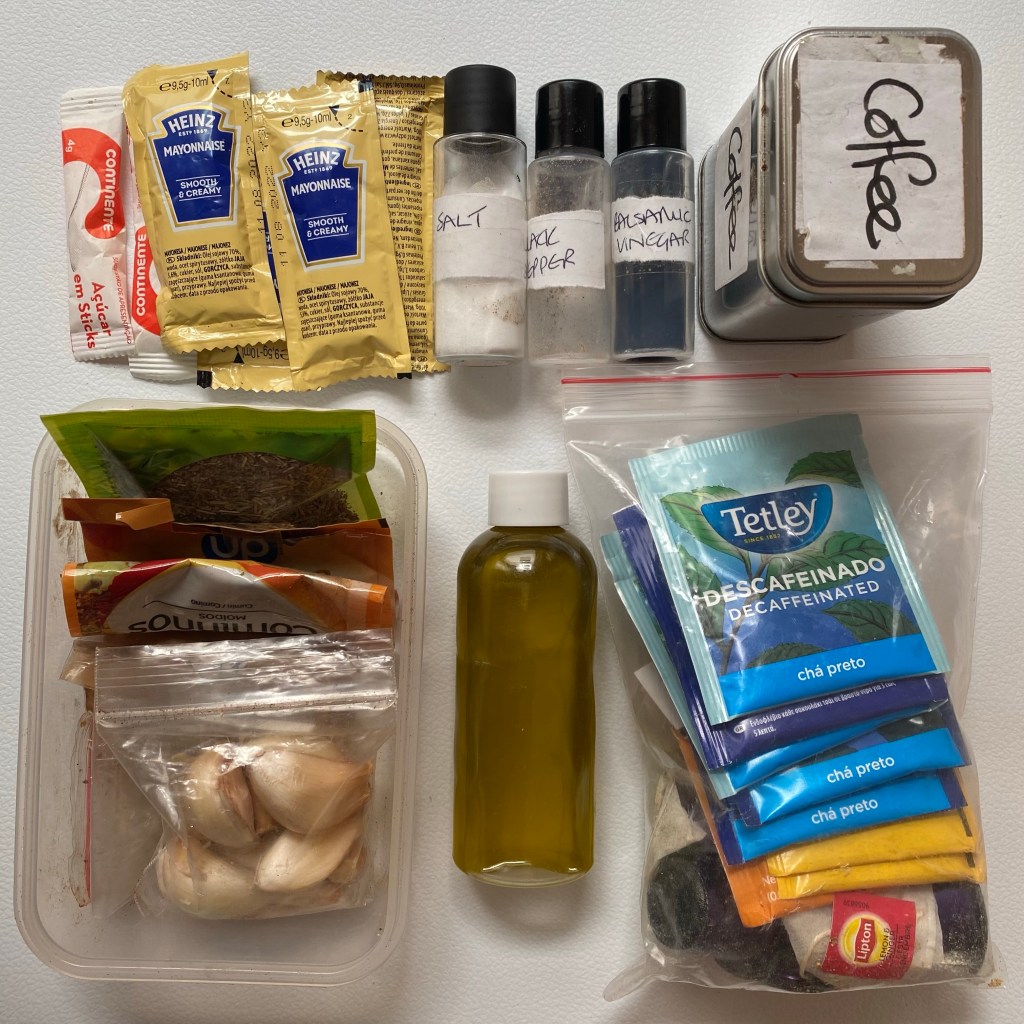
Clare has had to become very creative at collecting bits and pieces whenever she gets the chance.

She washes out the miniature shampoo bottles provided by some hotels and fills them with the olive oil, salt, pepper and vinegar. We carry a few cloves of garlic, some Italian herbs, chilli flakes, cumin and a couple of stock cubes … and bingo, we’ve got everything we need to make a familiar meal.

Clare’s kit

Every café coffee comes with a sachet of sugar. Every Pastel de Nata (custard tart) comes with a little cinnamon. Together, these combine to create some delicious stewed fruit to spice up our muesli.

The one big grocery item we’ve always got in our panniers is a large onion! But this has nothing to do with cooking.

Clare has taken to rolling around on it as a substitute for a pilates ball … to relieve her aches and pains after a long day in the saddle.

After a few days we usually cook them up … they’re always nice and tender.

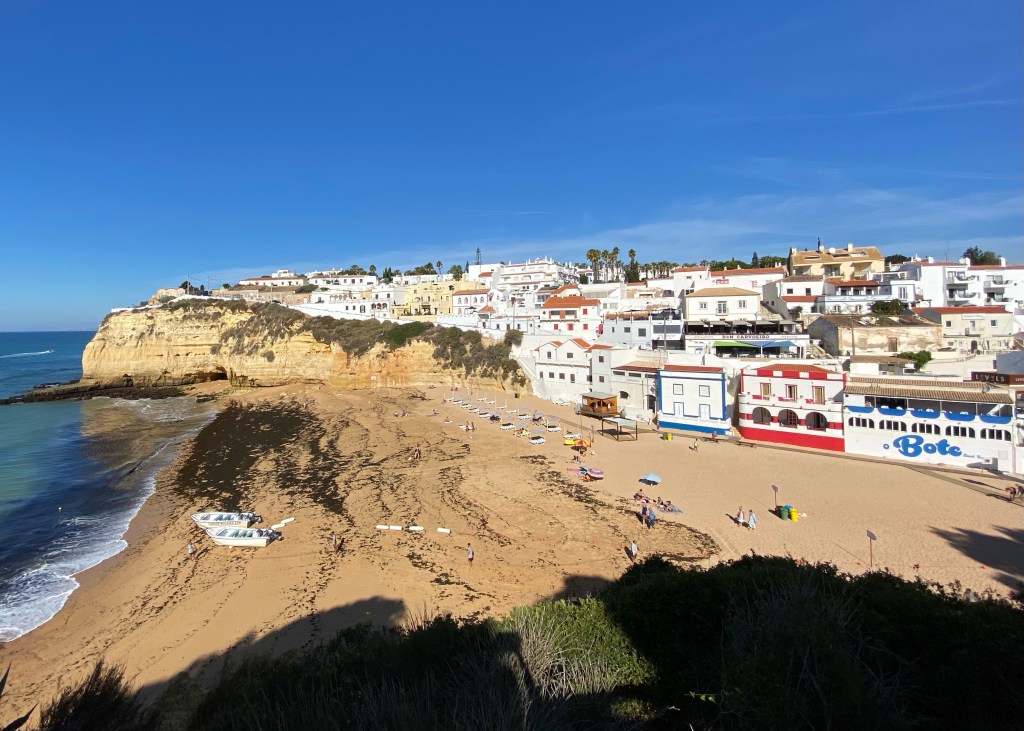
Carvoeiro

Turning east along the Algarve, we treated ourselves to some beach days in Lagos and Carvoeiro. Suddenly we’d arrived in the English Riviera. You could tell this not only from the distinct Yorkshire or Essex accents that floated up from the pavement cafés, but also from the number of Tandoori restaurants that were suddenly available.

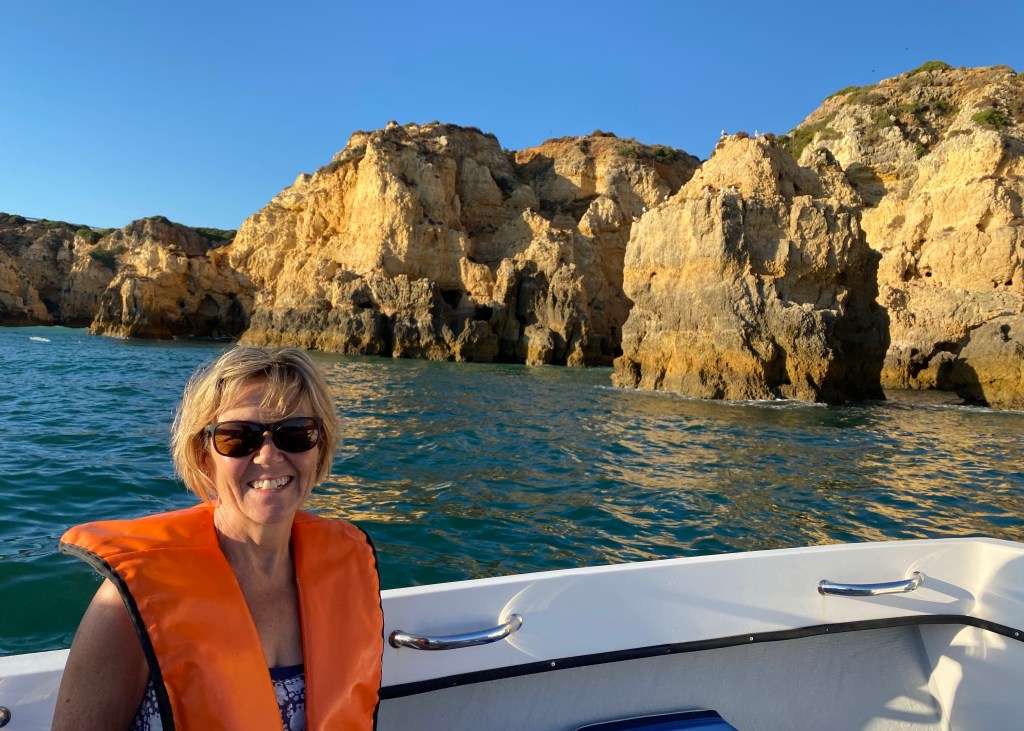
Boat trip from Lagos

Deciding not to cycle through all the pristine golf courses that hug the coast, we headed for the hills instead, passing through the lovely villages of Silves and Alte and endless groves of pomegranates, oranges, lemons and olives.

It meant a lot of climbing … but that felt like a good alternative to headwind that was developing near the sea. After all, you can’t go down a headwind!

The Algarve is only 143km wide so before we knew it we had arrived in Tavira and our last night in Portugal. To celebrate we treated ourselves to a night in a Pousada, an old convent converted into a hotel. It was delightful … so delightful that we even forgot to take away the sachets of sugar!

Pousada Convento Tavira

Marking the border between Portugal and Spain, the river Guadiana is crossed by a long motorway suspension bridge. For foot passengers and cyclists an old, wide bottomed ferry does the job instead.

For only seven Euros we chugged across and passed seamlessly into Spain. No passports, no Covid vaccination certificates, no passenger locator forms. Just masks. It was almost like the old days.

Ferry to Spain

As in any country, Portugal has its own curiosities. Sardines are served to your table still in the can. Cutlery comes in a paper bag to keep off the dust (and more recently the virus). Pastel de Nata are a daily obsession.

But one of the most endearing curiosities is that men and women say thank you slightly differently.

It’s obrigado for men and obrigada for women, regardless of who you’re talking to, although nobody much cares if you get it wrong.

We’ve loved exploring Portugal on bicycles (including the Alentejo!).

So it’s a Muito Obrigada from her and a Muito Obrigado from him. We are both much obliged!

Clare and Andy

Our stats in Portugal …

1,222 kilometres pedalled

11,489 metres climbed

83 hours in the saddle

Cycling the Golden Triangle

One of the many pleasures of travelling slowly by bicycle is crossing a border from one country to another. Whilst there may be no change in the landscape, everything about the people feels completely different.

Spain felt like Portugal on steroids … it was bigger, grander, louder.

Where Portugal has small orange groves and olive farms, Spain has endless plantations.

Where Portugal has plazas filled with blue and white azulejos, the tiles decorating the squares in Spain are a riot of colour.

When those plazas are full of people eating and drinking, there is a low hum of conversation in Portugal. In Spain people are practically shouting at each other, such is their excitement.

Even cycling in Spain takes on a grander scale. We found ourselves riding longer distances, climbing more hills and looking out at wider horizons and bigger skies.

Looking across to Zuheros

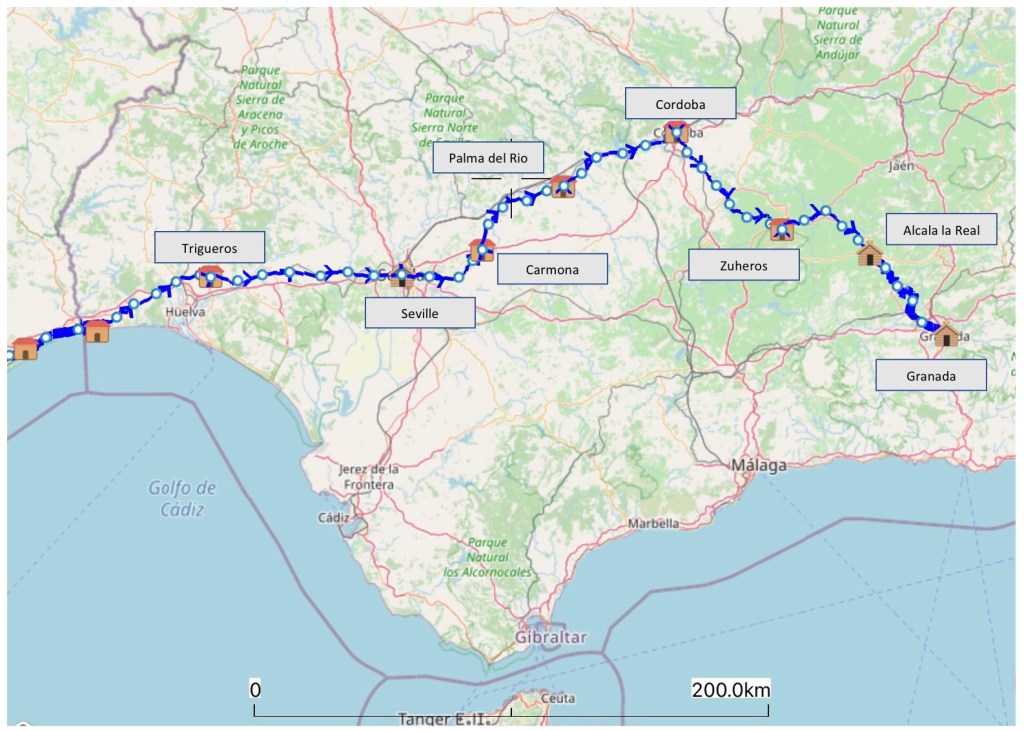
Our plan was to cycle to Seville, Cordoba and Granada, the three great cities that form the ‘Golden Triangle’ of Andalucia, pedalling for three days to reach each one.

These cities were first shaped by the Islamic kingdom of Al-Andalus …which lasted for nearly eight centuries and extended at it’s peak to most of Spain, Portugal and even a bit of France. Then by Isabella and Ferdinand, the great ‘Catholic Monarchs’, who began the unification of Spain through their marriage and completed the Christian Reconquista of the peninsula when they captured Granada in 1492.

As the last Moorish ruler reluctantly left Granada, Isabella immediately agreed to sponsor Christopher Columbus for his voyage across the Atlantic. He was seeking a new trading route to India but instead discovered the Americas and with it untold riches for the Spanish royals, ushering in the Spanish Golden Age of Exploration.

Much of this wealth was spent on huge cathedrals, built over mosques to establish the dominance of the Catholic faith. As the architects of Seville cathedral said at the time …

“Let us build such a church, that those who come after us shall take us for madmen!”

Giralda Tower, Seville Cathedral

It is both awesome and awful.

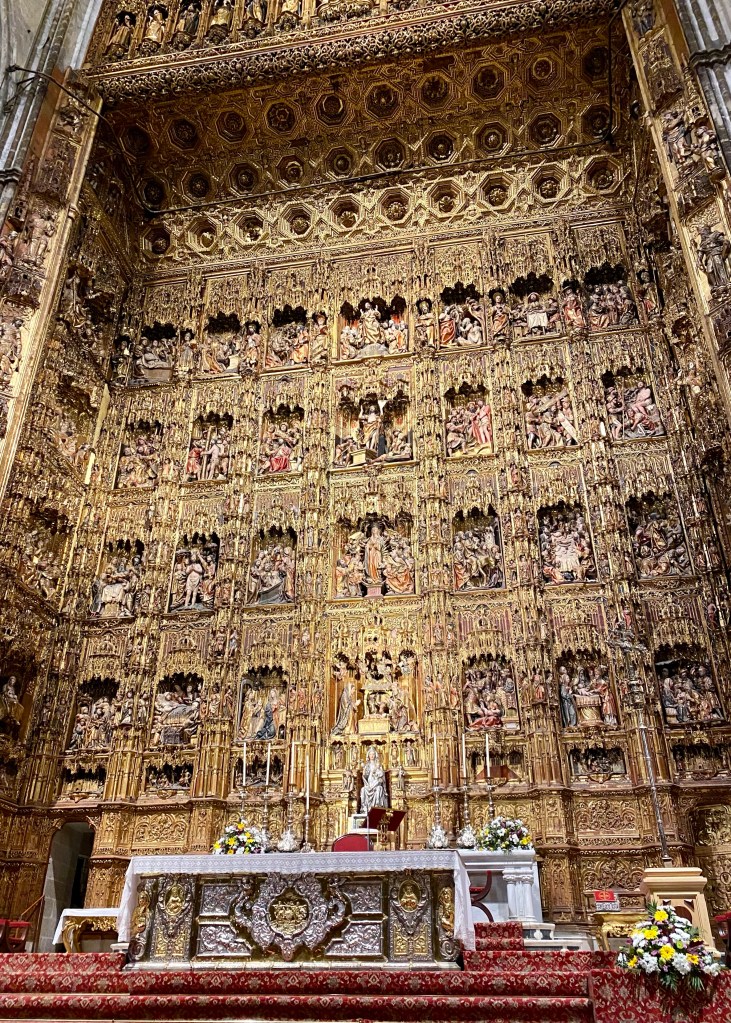
Awesome as a staggeringly beautiful building. Among many treasures, it has the world’s largest altarpiece … 45 scenes from the life of Christ carved in wood and covered by an extraordinary amount of gold.

The altar in Seville Cathedral, created by a single craftsman

Awful as a symbol of religious power that was enforced by the Spanish Inquisition, set up by Ferdinand and Isabella at the same time.

This reign of terror, based on local informants, torture and ritualistic executions lasted for 350 years. The Spanish Inquisition drove out all other religions (Jews, Muslims, Protestants etc.) and gradually extended their remit to a wide variety of other ‘crimes’.

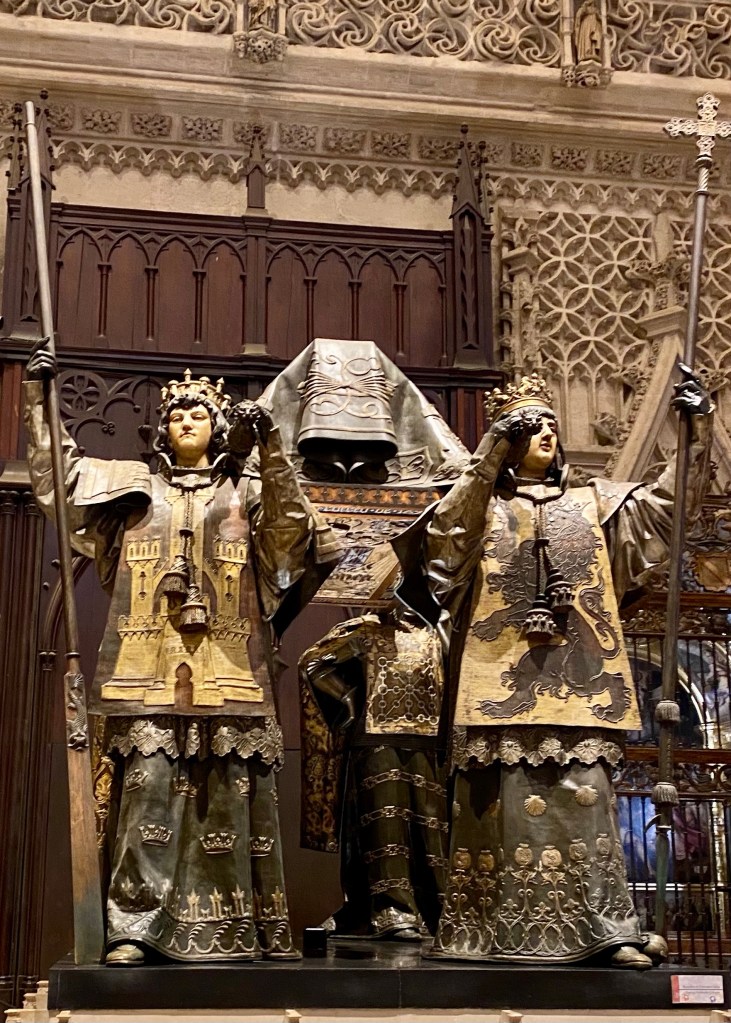
Having made all this wealth possible, Columbus is rightly honoured with an enormous tomb in the centre of the cathedral, held aloft by four kings no less, representing each region of Spain.

Tomb of Christopher Columbus

Cycling from Seville to Cordoba we followed the River Guadalquivir through endless orange plantations, interspersed with pomegranate, walnut and almond trees.

We enjoyed staying in small hostales, simple 2-star family run hotels that usually included a breakfast of crusty toast topped with tomato paste and olive oil.

A noticeable feature of these small Andulician towns is the large number of churches, each with a bell tower that rings out the time.

They’re charming during the day but not so endearing at night!

Whilst most churches stop ringing their bells at 10pm, some are less polite. One culprit was right next to our hotel. Clanging every half hour, it was so loud that we thought the bells must be in our bathroom!

Yes … we accuse you … the Inglesia de Santa Maria in Carmona … for keeping us awake all night! Luckily for you, we are not the Spanish Inquisition … so we can only name and shame.

The annoying bells

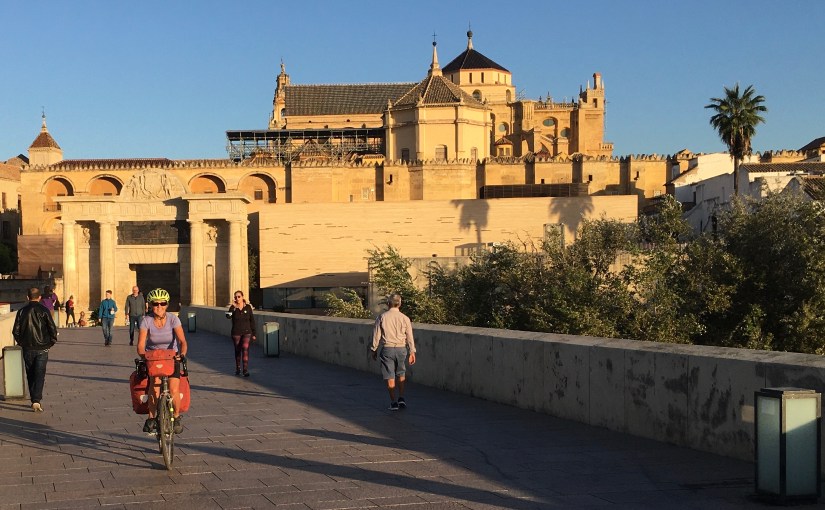
Cordoba was our favourite of the three cities. It’s famous for the Mezquita, a huge 9th century mosque that extends out in all directions through a series of striped arches. In the 16th century, a Cathedral was plonked right in the middle of it. This has created a unique ‘Cathedral Mosque’ that shows off the contrast between the simple, geometric designs of Islam and the more decorative Catholic style.

Inside the Mezquita

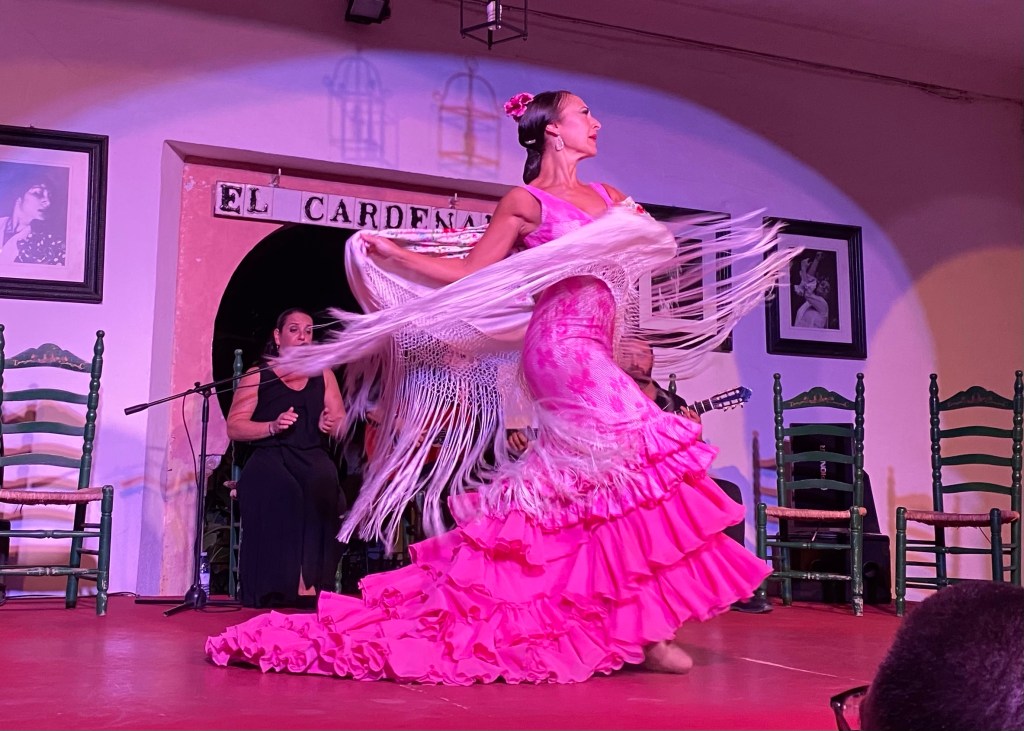
An important part of Andalusian culture is flamenco music and dance. We took in a show at El Cardenal in Cordoba where prize winning artists have been strutting their stuff for over 25 years.

To be honest, we didn’t know what to expect. But it was astonishing … from the virtuosity of the guitar playing, to the rhythm and colour of the dancers and the serious, passionate expressions on their faces. Standing ovations all round!

From Cordoba to Granada the nature of the cycling changed. It was mainly uphill!

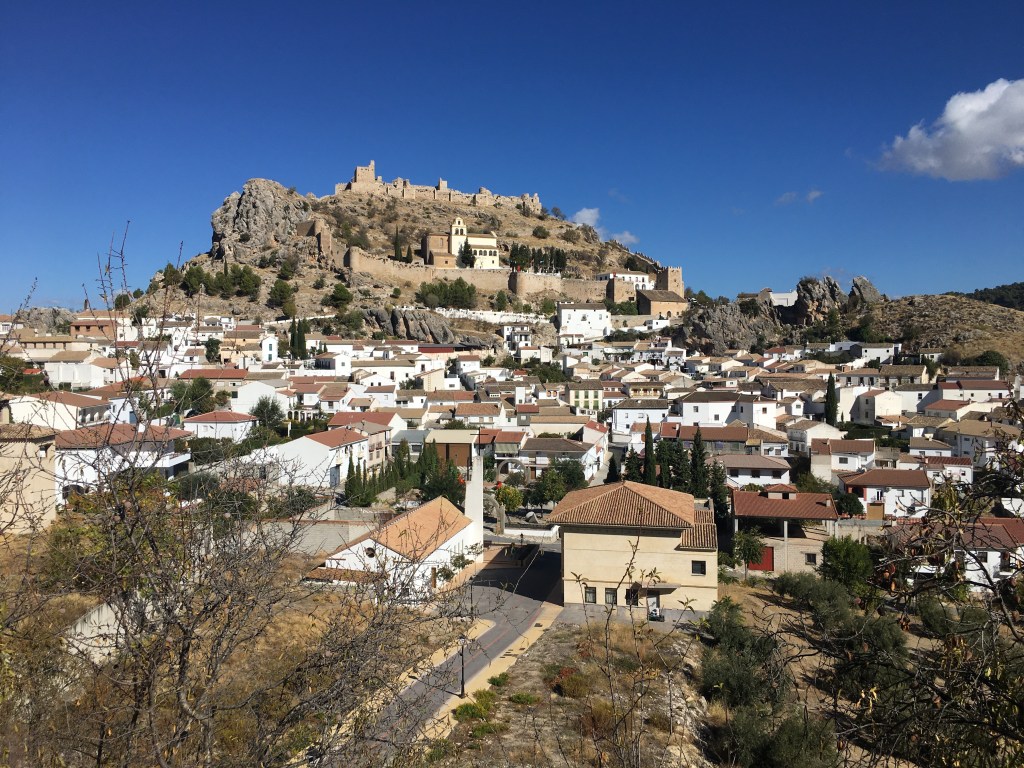
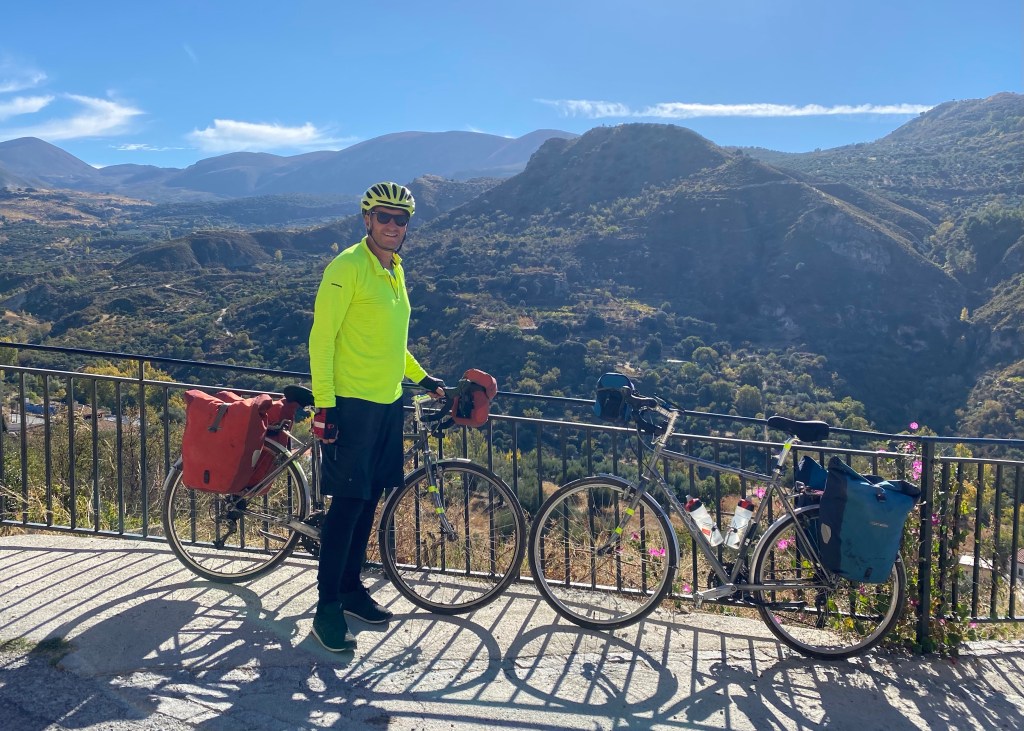
We climbed more than 1000m a day, often riding up through groves of olives trees to stunning white villages that are nestled on the hill tops and are always protected by an old Moorish castle.

Moclin

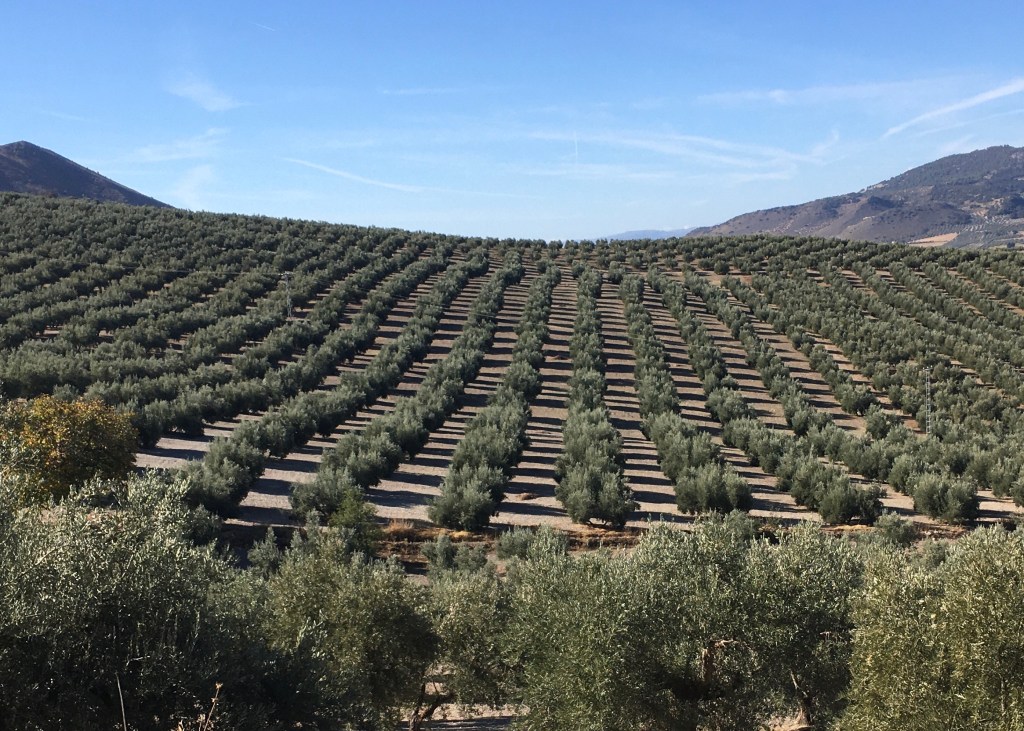
Spain produces about a third of the world’s olive oil (more than any other country) and most of it comes from Andulucia. It shows … every day we rode through an ocean of olive trees, lined up across the hillside like legions of Roman soldiers. They call it the worlds largest human made forest.

It was noticeably cooler when we arrived in Granada ready to explore the jewel in the crown of the Golden Triangle, the Alhambra. This towering Moorish citadel is set against a backdrop of the brooding Sierra Nevada mountains and contains some of the finest Islamic architecture in Europe. As one of the most visited attractions in Spain, you need to buy a ticket several weeks in advance.

But it’s worth it … it genuinely takes your breath away!

Alhambra at night
Window inside the Nasrid Palace, Alhambra

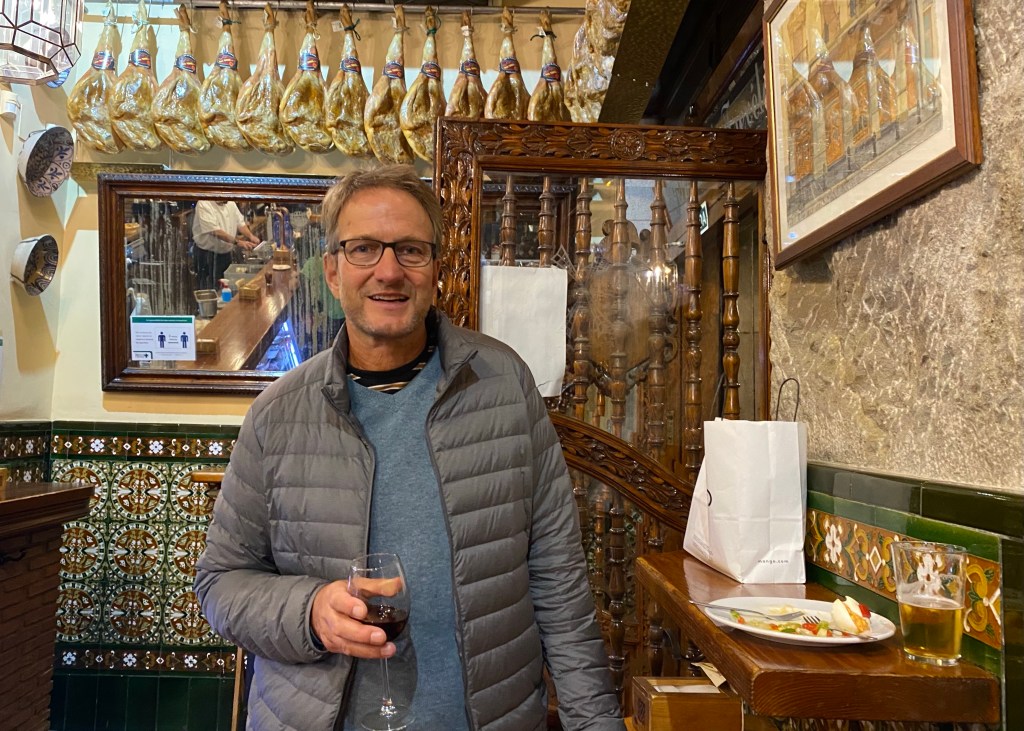
Granada is one of the last places in the country to continue the highly civilised tradition of serving a free small plate of tapas with every drink. Each time you order a small beer or a glass of wine, a plate of deliciousness will magically arrive. Another drink, another different tapas.

One tapas we were not so sure about was Salmorejo, a local Cordoba delicacy. It’s a thick soup made from tomatoes, bread, olive oil and garlic, served cold and topped with crumbs of Iberian ham and hard boiled eggs. Delicious at first, we thought there was a hint of baby food after a few mouthfuls.

Salmorejo

So, where next?

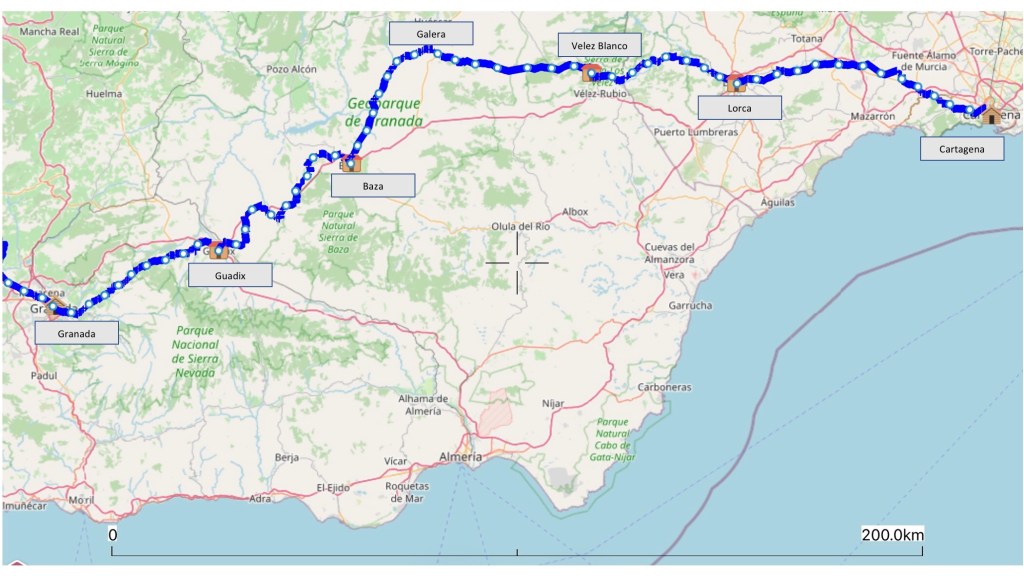
Our immediate plan is to cycle east into the Badlands of Baza and then onto the Mediterranean coast at Cartegena. We promise to be good while we’re there!

Over the last few weeks a thought of where we might end up has been stirring in both our minds. Here’s a hint, from a picture that was taken in the Plaza de España in Seville (where Spanish tourists traditionally pose for a picture in front of a fresco of their home province).

It may not be our golden age of exploration but if we get there … it will be our longest bike ride so far!

Clare and Andy

Stats to Granada:

1,778 kilometres pedalled

16,613 metres climbed

120 hours in the saddle

Crossing the Badlands

We always thought that the five day bike ride across the Badlands from Granada to Cartagena would be the biggest challenge of this trip. And it didn’t let us down!

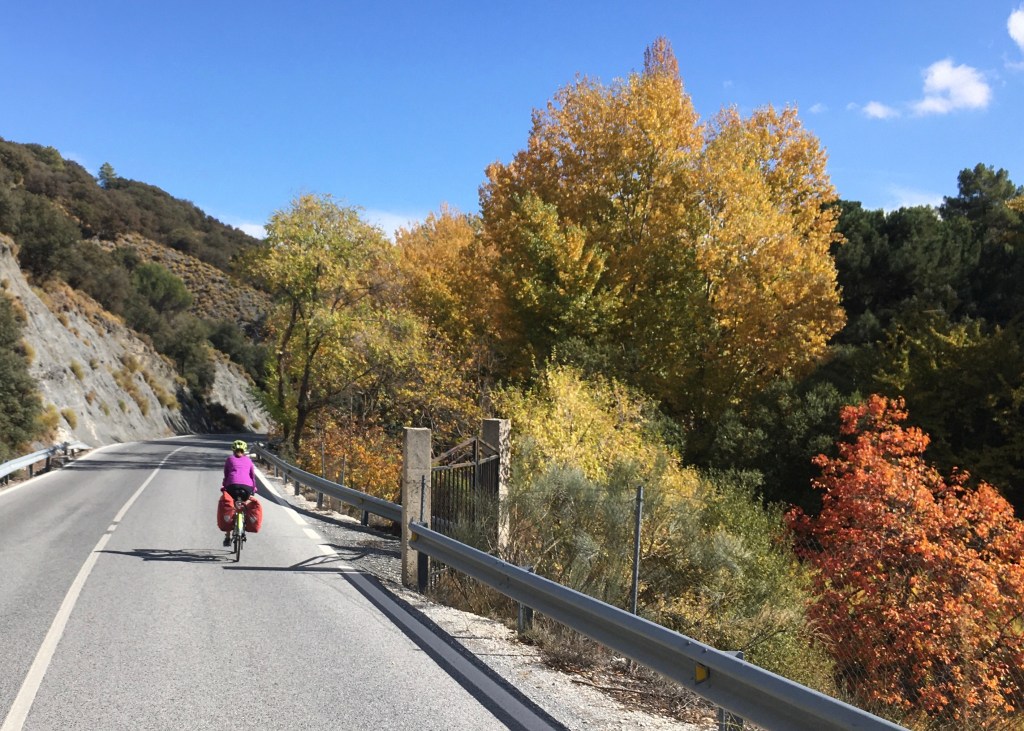
The first test was to get through the mountains of the Sierra Nevada or at least the edge of them. It was a long climb up to the Puerto des Blancares pass (1297m high) but a clear blue sky, autumnal colours and cool, fresh mountain air brought back many happy memories of our first mountain journey through the Pyrenees … exactly five years ago.

Sierra Nevada

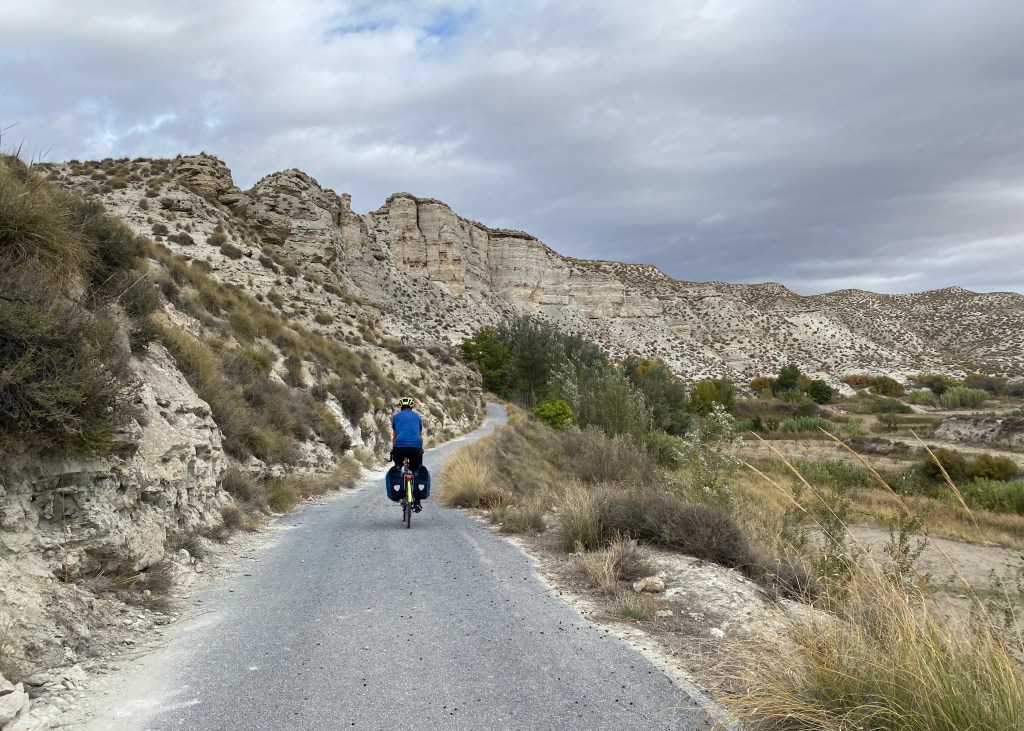
Descending the other side down to Guadix felt like landing on a different planet! This high plateau is El Altiplano de Granada otherwise known as the Badlands.

Protected by the mountains which act as a natural rain shadow, the Altiplano is an arid semi-desert … stone dry and slightly forbidding.

Once covered in water, different rates of erosion between sandstone and clay have created deep gullies and folds in the earth. It’s an otherworldly landscape of yellow, orange and brown.

Some of the earliest fossils and bones have been discovered here, indicating that humans were hunting and gathering in this area over a million years ago.

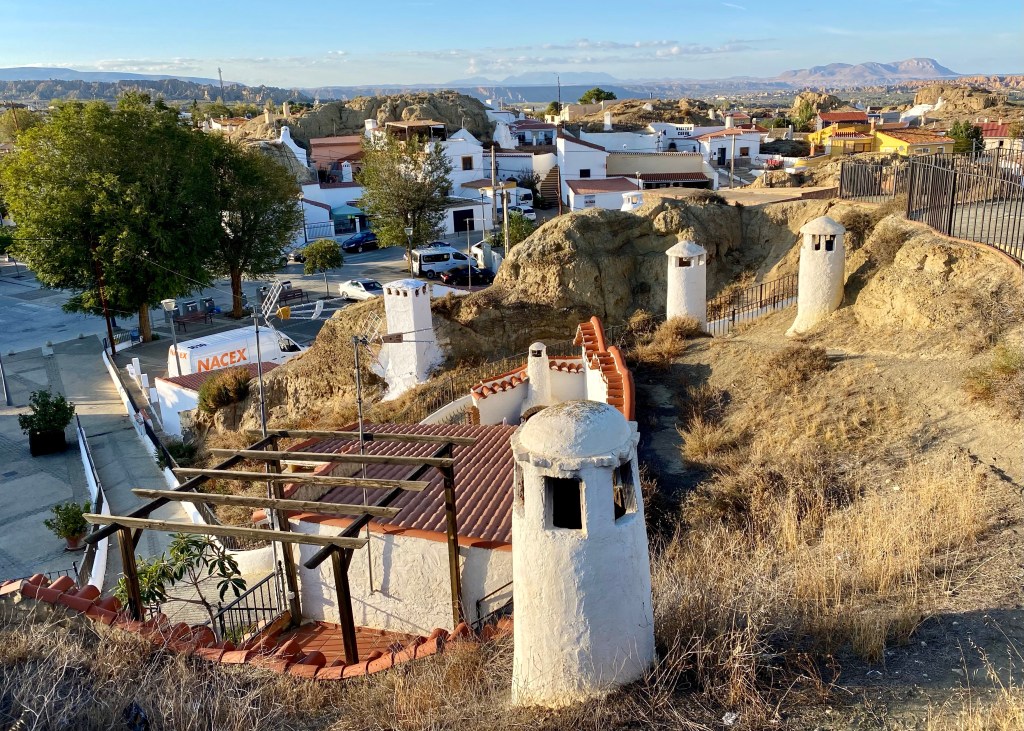
Cave district of Guadix

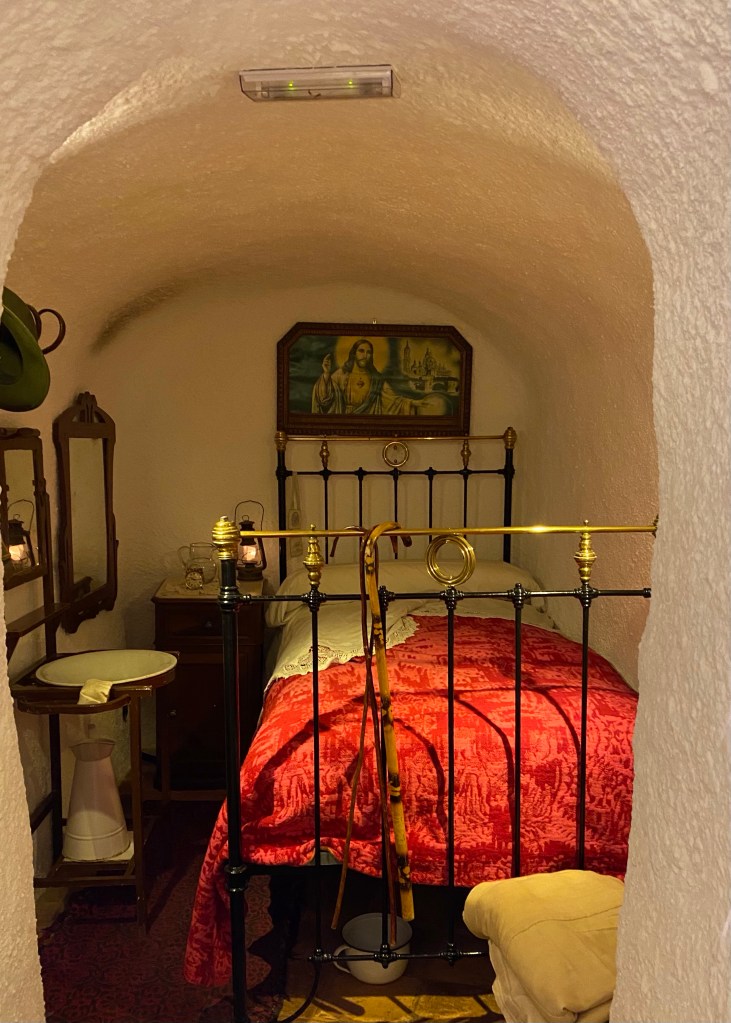
The layers of sandstone and clay create perfect conditions for tunnelling out cave houses. Today there are several thousand cave homes in the area, the highest concentration of anywhere in Europe.

The main cave district of Guadix is an extraordinary sight. The whitewashed outer walls of cave homes nestle into the hillside. Stumpy chimneys and TV aerials indicate which mounds of earth are inhabited. A spiders web of pathways lead up and over many of the houses.

Once shelters for poor migrant workers, cave houses are currently enjoying a renaissance, as practical and trendy homes. Cool in summer, warm in winter they have many advantages. Need a new room? Then just dig one out!

Andy might not fit in this one

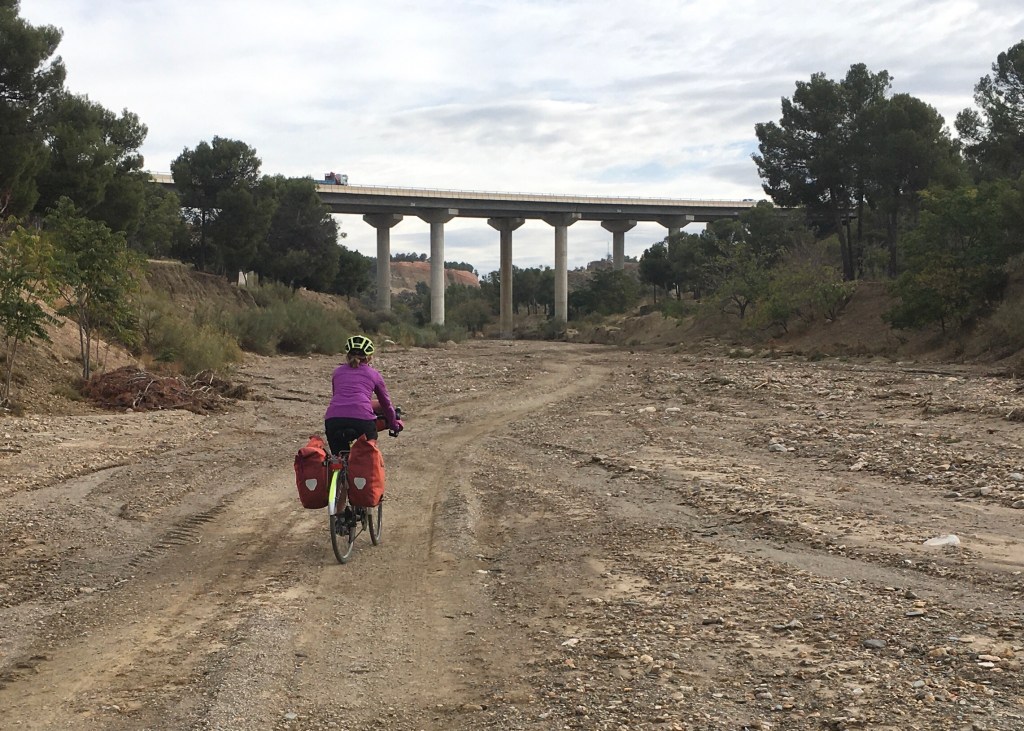
Leaving Guadix for Baza, the N-342 Autopista rudely blocked our path and made for a very tricky day. Built on top of the old road, it’s now the only way to get from one town to the other… and we humble cyclists aren’t allowed anywhere near it.

Instead, we found ourselves climbing up a dried-up river bed, taking long deviations on remote country roads, riding down a bumpy service road beside the motorway and sliding in the fresh, chunky gravel of a Via Verde that was really designed for mountain bikes.

The dried-up riverbed under the Autopista
The country road deviation
The Via Verde

This Via Verde came to an abrupt halt after tunnelling under the motorway just outside Baza. The only way back was up a steep track. So steep that we couldn’t push the fully loaded bikes up it and were forced to leave our panniers at the bottom, before climbing back down to retrieve them.

A new challenge for our bicycle touring CV!

The climb

The ride that day was only 65km with 800m of climbing … but it was slow going. By the time we eventually hobbled into Baza we were utterly exhausted!

The motorway tunnel

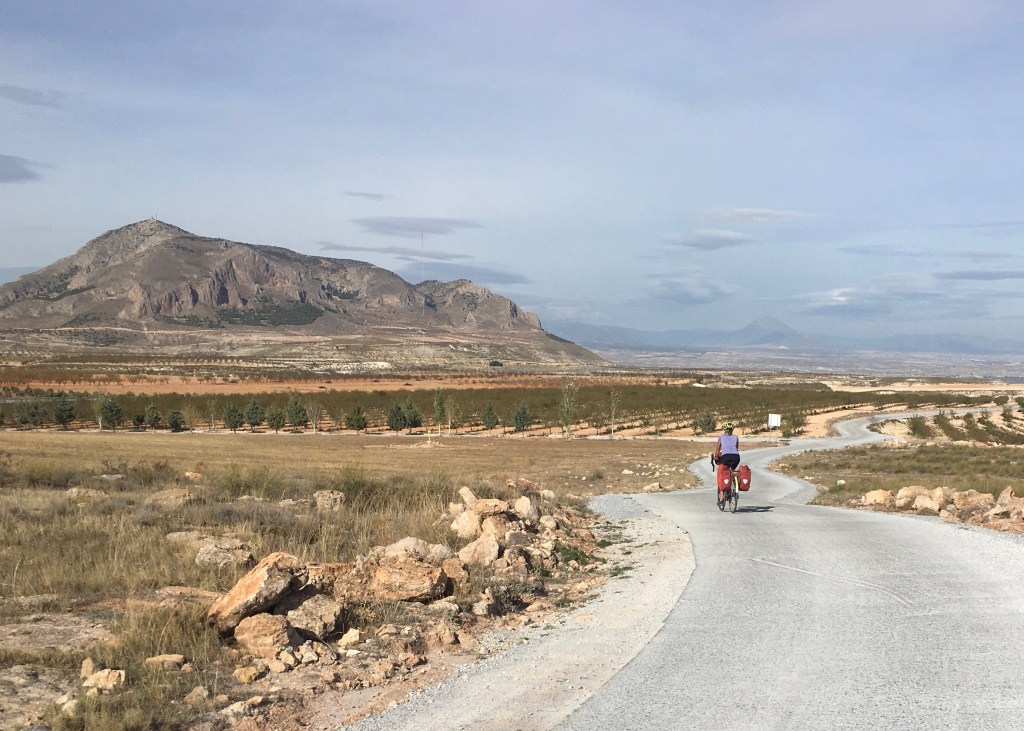
The following day was just as epic but much more rewarding. We pedalled across the remote desert wilderness of the high Altiplano for over 90km, climbing gently back up to a height of 1300 metres.

There didn’t appear to be any vegetation worth eating, yet several times we passed a classic biblical scene of a shepherd guarding his flock of sheep as they squeezed every drop of nutrition from the dried stalks of grass.

At lunchtime we bumped into Sandy and Chris, two fellow cyclists who now live in the unspoiled village of Galera where they have built a beautiful cave house on the hillside above the village. In an extraordinary coincidence they moved to this area from Bath, our own hometown.

It was interesting to learn more about the area from them and reassuring to hear that they had often cycled the remote road that lay ahead of us that afternoon, despite the threat of rain.

Their cave home Photo Credit: Sandy & Chris Hicks
Photo Credit: Sandy & Chris Hicks

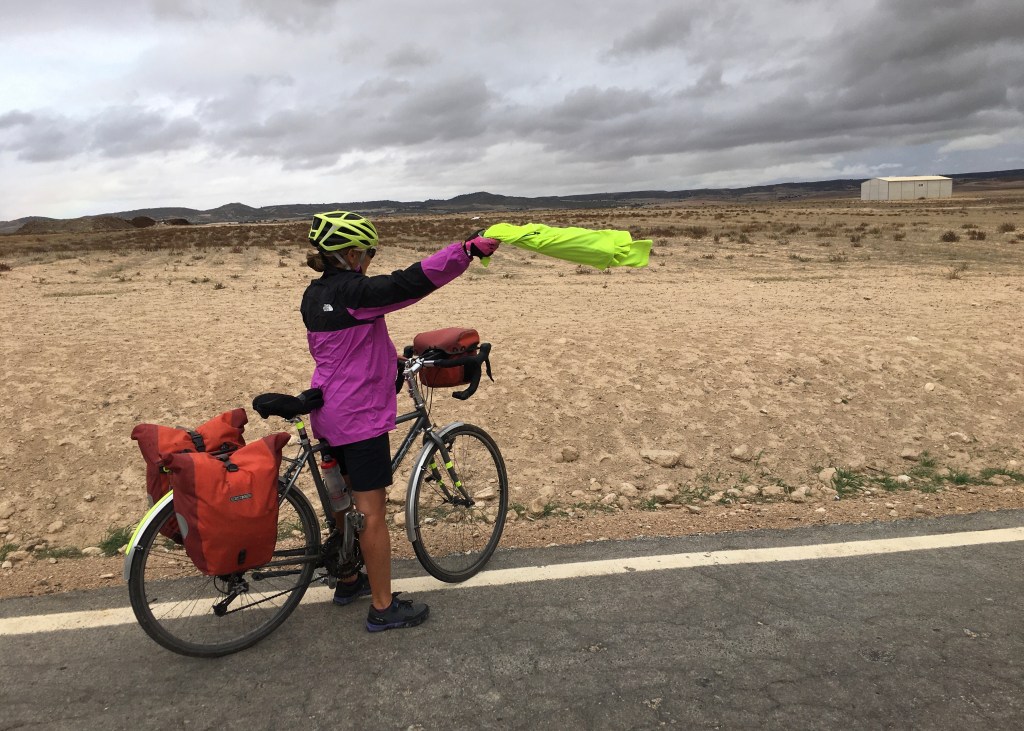
Luckily the mountains protected us from a weather system that was stirring up storms across the rest of Spain, although the brooding skies only added to the sense of isolation. That same weather system also presented us with a strong westerly wind to push us along for mile after mile.

Trying to show the strength of the tailwind

There’s nothing quite like riding ahead of a powerful, sustained tailwind on a bicycle. A rare pleasure in our experience, it literally feels like you’re being pushed forward by an invisible hand. And it’s completely calm … there’s no hint of a breeze on your face because you’re travelling at roughly the same speed as the wind.

High Altiplano

After two of the most dramatic days we’ve had on our bicycles, we really enjoyed relaxing in Velez Blanco that evening, a pristine mountain village capped by an imposing fairy-tale castle.

Velez Blanco from the castle

The last two days from Velez Blanco to the Mediterranean port city of Cartagena were mainly downhill. We were riding on a Sunday and then on All Saints Day, a public holiday in Spain when families gather to remember their ancestors. This meant the roads were almost deserted.

Empty roads, a tailwind, a downward false flat and a sense of euphoria from making it through the badlands unscathed all combined to make us a little giddy. We took turns at pretending we were Mark Cavendish or Marianne Vos, surfing each others wheel before sprinting to an imaginary finishing line.

Perhaps the Badlands had made us a little mad?

But we felt we deserved a bit of fun. On our way to Cartagena, we passed 2000km and 20,000m of climbing for this trip.

Not too bad after all!

Clare and Andy

.

Stats to Cartagena

2,124km pedalled

20,253m climbed

140 hours in the saddle

.

Featured photo credit: Sandy & Chris Hicks