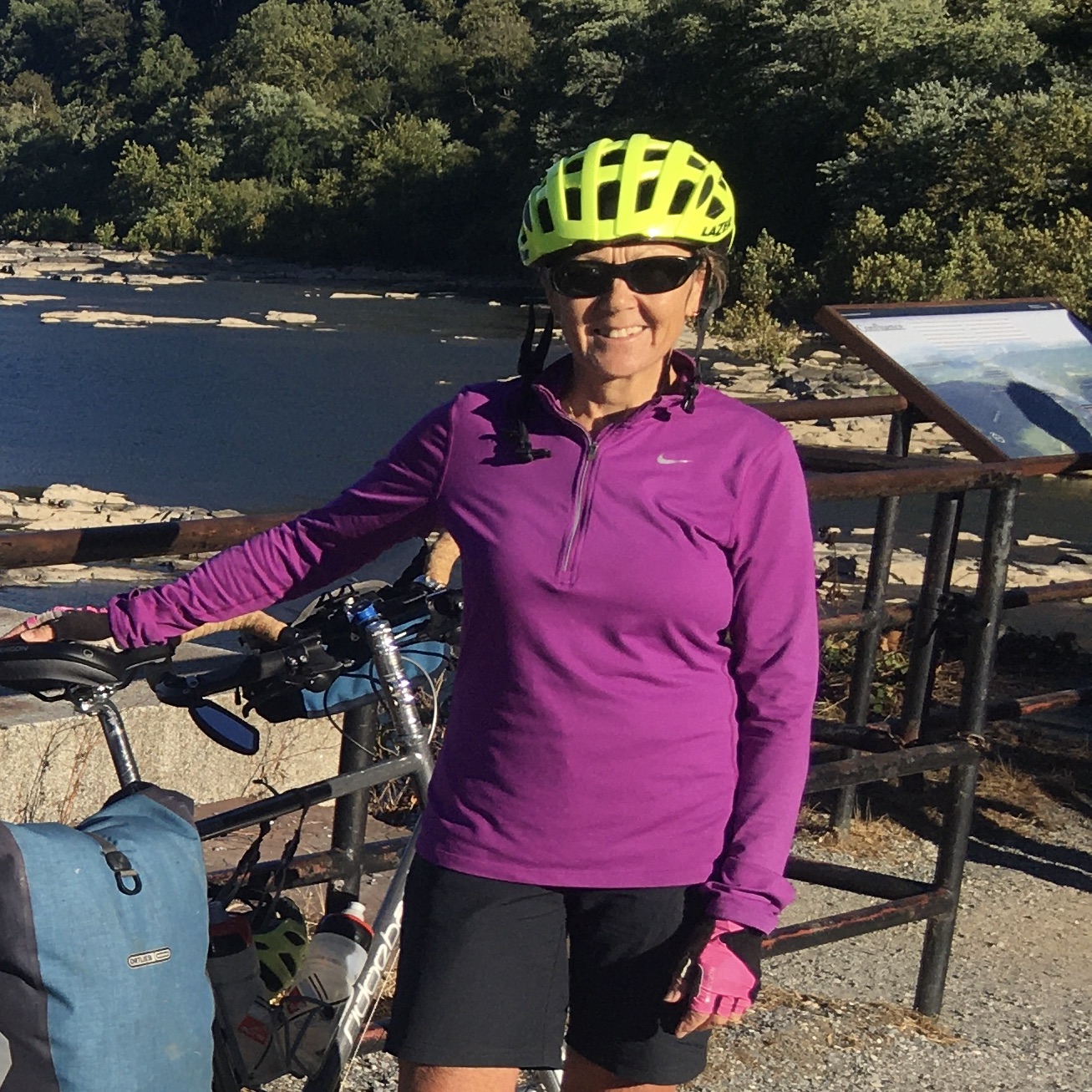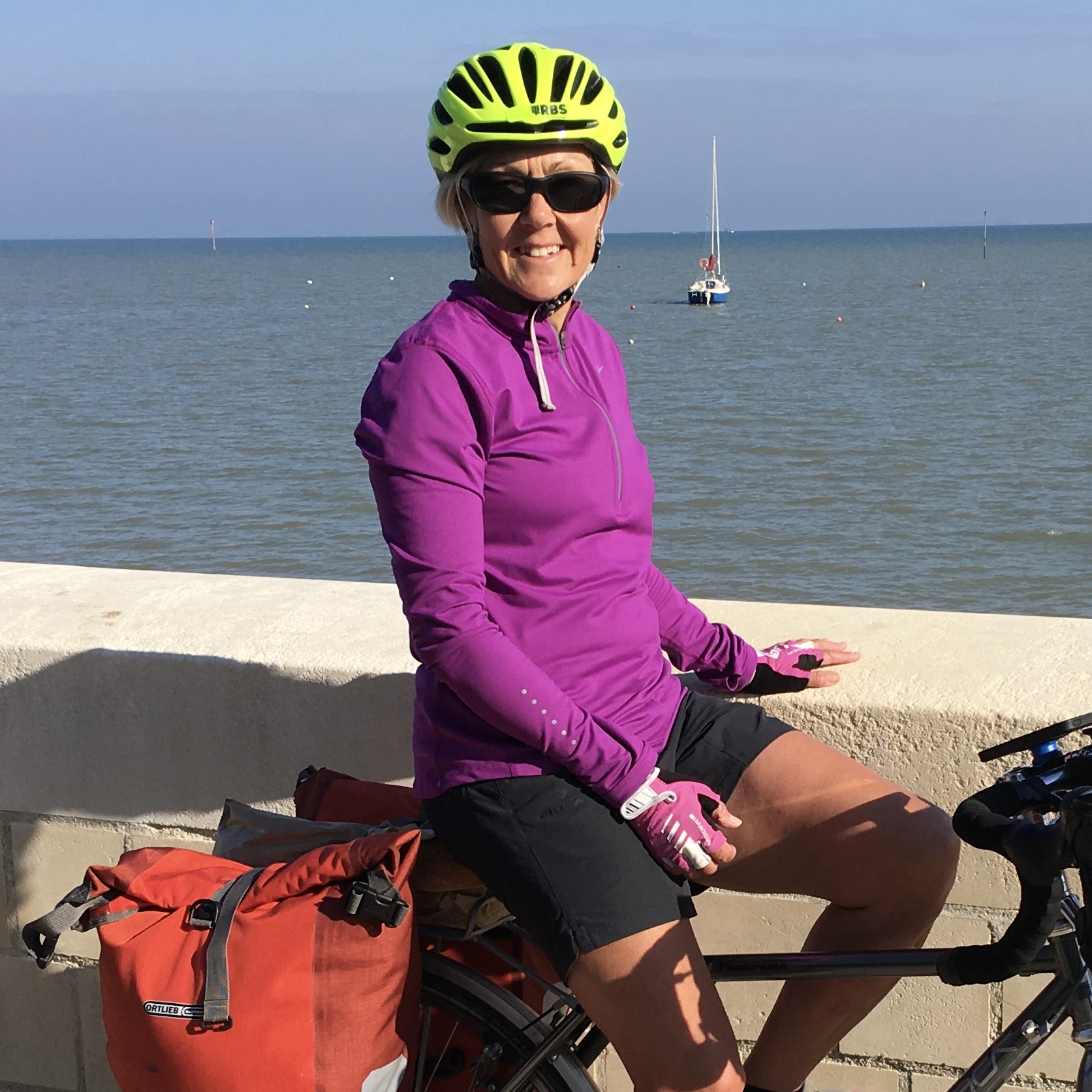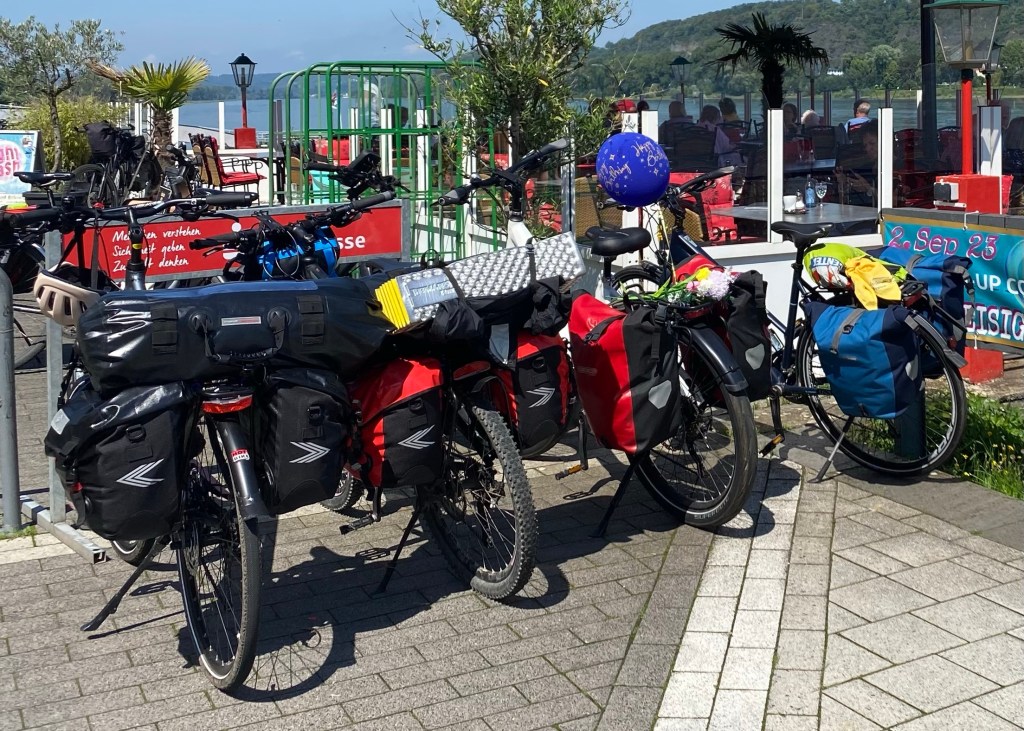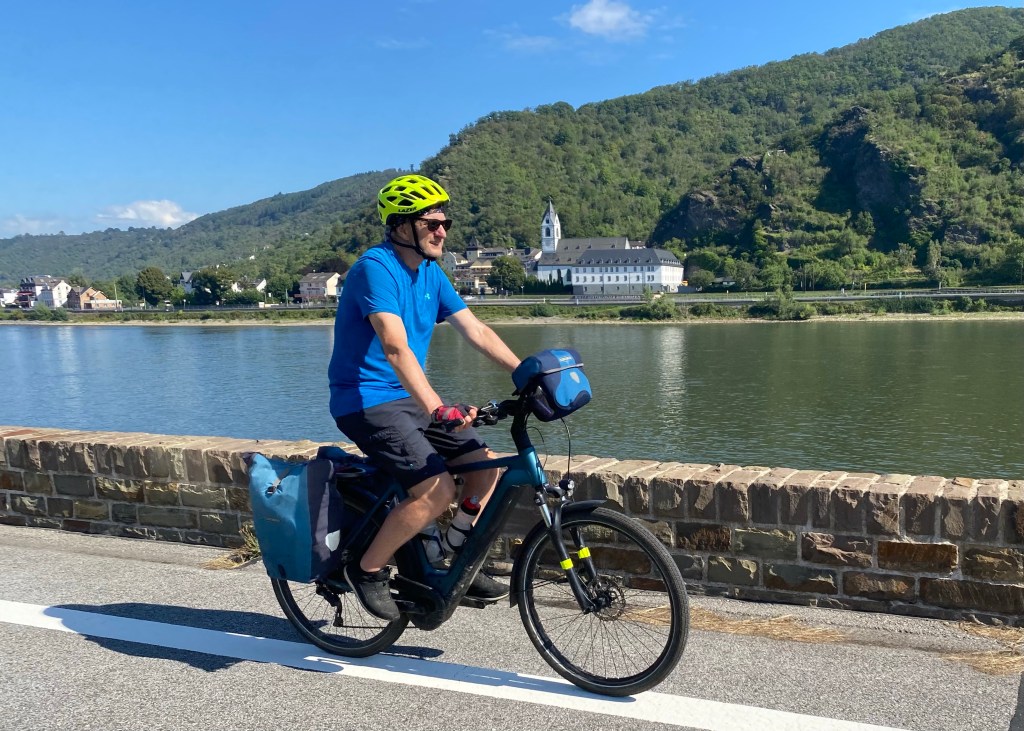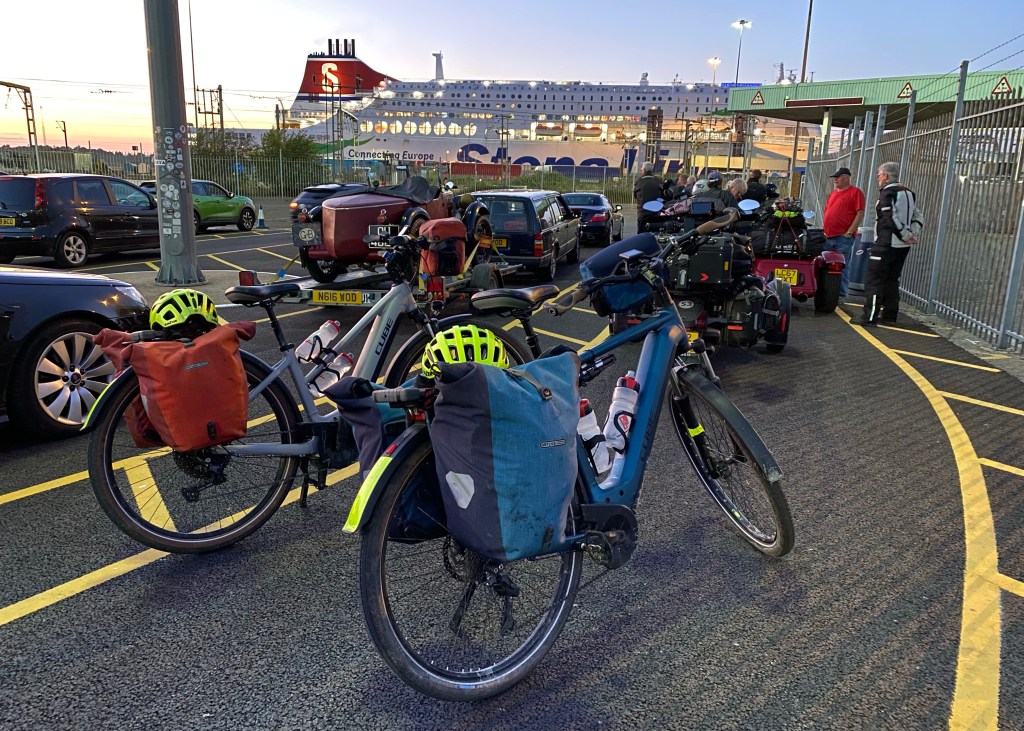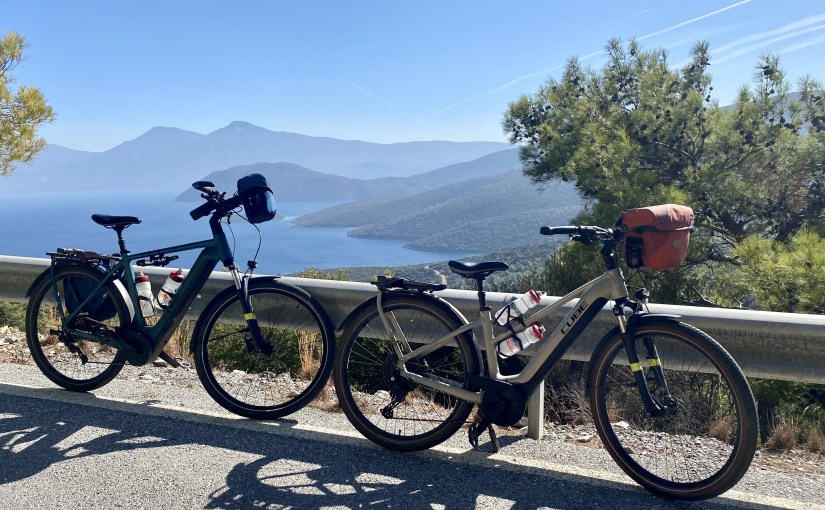
Striking out for Home

We’d made it to Istanbul! The dream had come true!

Now we had to get home.

We couldn’t fly with e-bikes and didn’t want to cycle all the way so we were looking at ferries, trains, buses and maybe a man-with-a-van.

You might think there’d be a ferry from Istanbul to, say, Athens? But no … because of the delicate history between the two countries the ferries that operate between Turkey and Greece only go as far as the nearby islands.

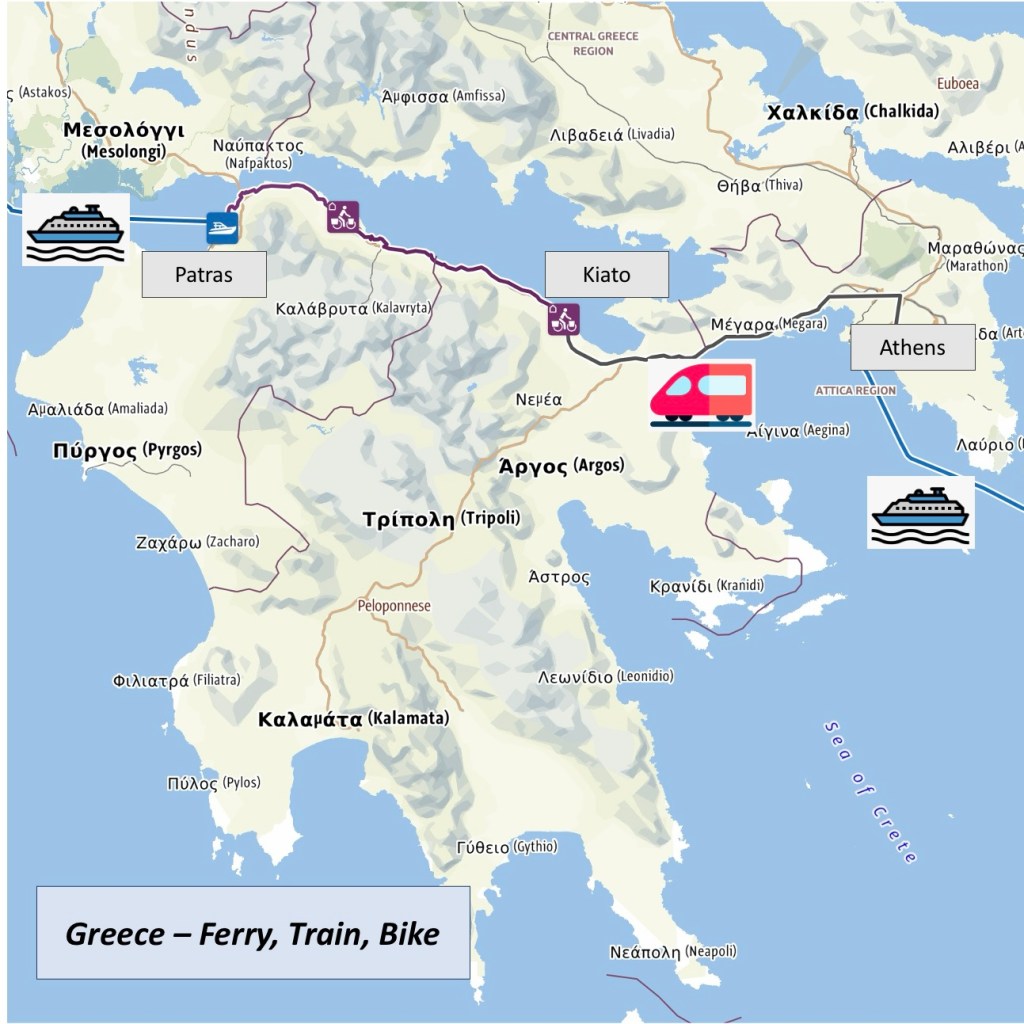
If we could get to a Greek island in the Aegean we could take a ferry to Athens, cycle across the Peloponnese to the other side of Greece and get yet another ferry to Italy.

In Italy there would be just one last challenge remaining. Other touring cyclists had warned us that it was almost impossible to take bicycles on international trains, say from a town in Italy to Nuremberg in Germany where we’d left our car in Frank’s care.

We decided the worst case scenario would mean we’d have to jump on a train without them, pick up the car, drive back across the Alps to Italy to collect the bikes and then drive home to Bath. A hell of a long way around … but just about possible.

Before then the first task was to get across Turkey to the coast. Everyone we asked in Istanbul just told us to take a bus.

But past experience has made us nervous of buses as it’s difficult to squeeze bulky bicycles into the luggage compartment especially if the bus is full.

Even if you buy a ticket, even if the staff at the bus station say it’s fine, even if it’s not completely full … getting on a bus with a bike entirely depends on what the driver has to say about it. And we’ve been thrown off lots of buses at the last minute.

Instead, we looked around to see if we could find a man-with-a-van in Istanbul or maybe a one way van rental. Sadly, these proved to be ruinously expensive.

So still feeling quite fit, we decided to cycle the 400 hilly kilometres instead.
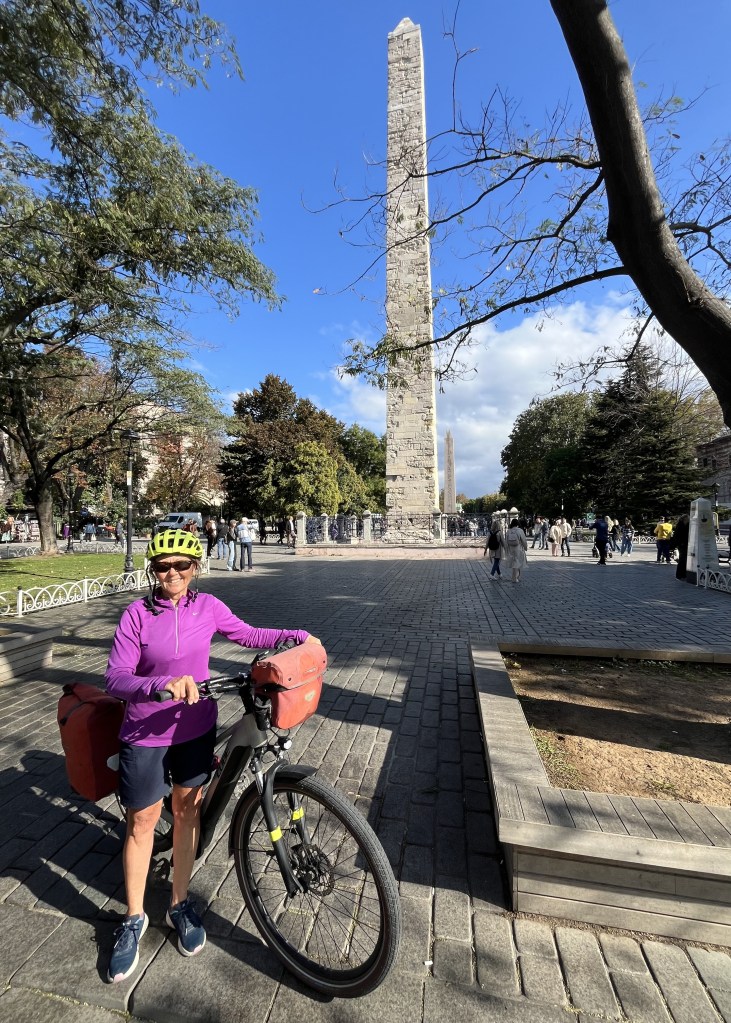
Leaving Istanbul

Before climbing back onto our bikes, we could get well on the way by taking a ferry across the Sea of Marmaris. Arriving at the terminal on a blustery day, tickets in hand, we were soon approached by a flustered looking official.

“Where you go?” he asked.

“Bandirma,” Andy smiled back.

His face dropped. “Oh no. Sorry, no. Big problem. Bandirma boat cancelled. Much wind. Sorry, winter much wind problem, sorry.”

Using Google Translate, he explained that it wasn’t just blustery in the middle of the Marmaris, it was a very windy Force 7, far too much for the ferry. The wind wasn’t going to calm down for at least a couple of days.

Helpfully, he took us over to a map.

“Other way possible,” he said. “This one” (to Mudanya, quite near our planned cycling route), “3 o’clock … maybe go? … maybe not?”

“Or this one” (to Yalova, a long way away from our cycling route), “go in 20 minutes. Bigger boat. OK … this one OK.”

So we went on the bigger boat. After all, what was one extra day of cycling?

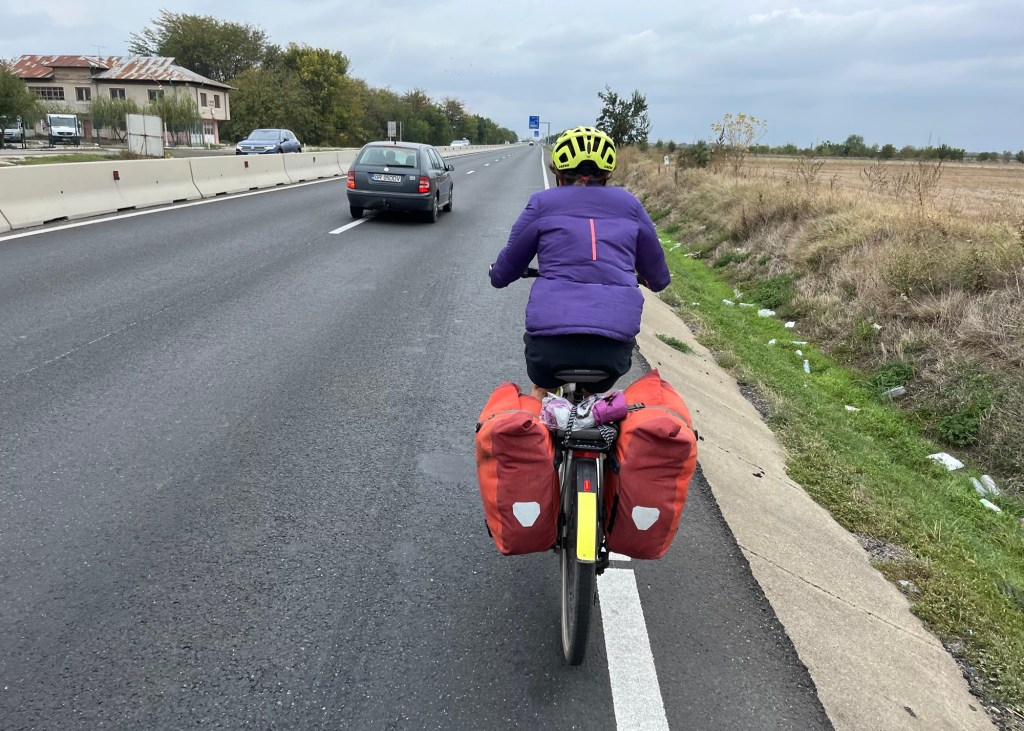
As it turned out, we both enjoyed the 80 kms enforced ride to Mudanya that day. We felt good after 4 days off the bike in Istanbul, cycling first on wide main roads and then on a lovely quiet coast road, watching the late afternoon sun sink down in the sky.
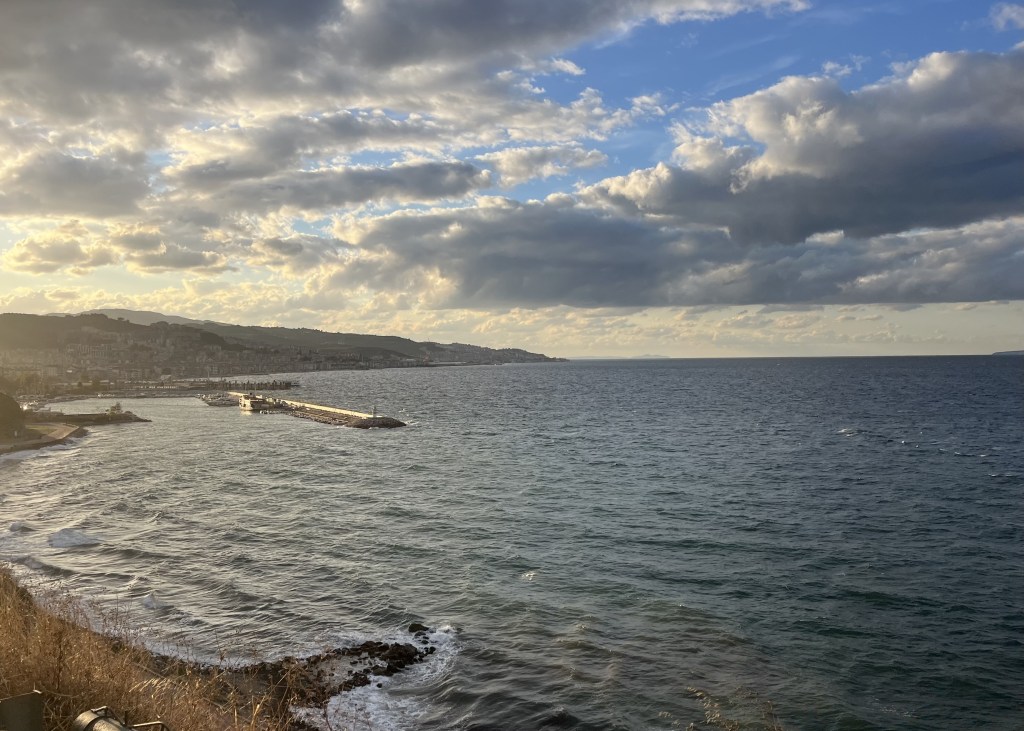
But keen to get to the Aegean as fast as possible, we convinced ourselves it might be easier to find a man-with-a-van in a small town like Mudanya.

Again, everyone we asked kept telling us to take the bus instead. It’s different in Turkey, they said. Many bus companies in Turkey, no problem with bicycle, all they want is your money. Anyway buses not busy now, not holiday season.

So we took a deep breath and decided to give it a try.

They were right about the huge choice of long distance bus companies; there was a dazzling array to choose from. We bought tickets to Kuşadasi and waited. No problem, the ticket ladies said. Of course you can take bike on bus, don’t worry.
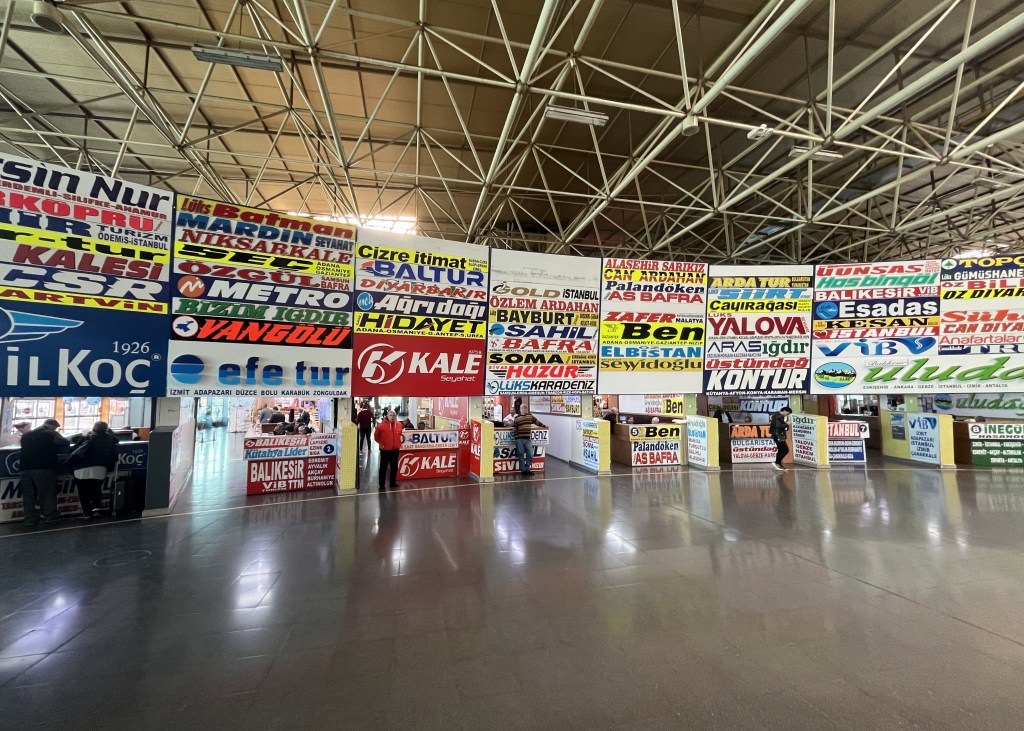
Just a few bus companies

When the bus arrived, 20 minutes late, it was packed with both people and luggage. The driver was clearly not at all happy. But after a lengthy discussion with his colleagues, full of head shaking and pointing, he reluctantly moved some bags and helped us to jam the bikes in, front wheels removed.
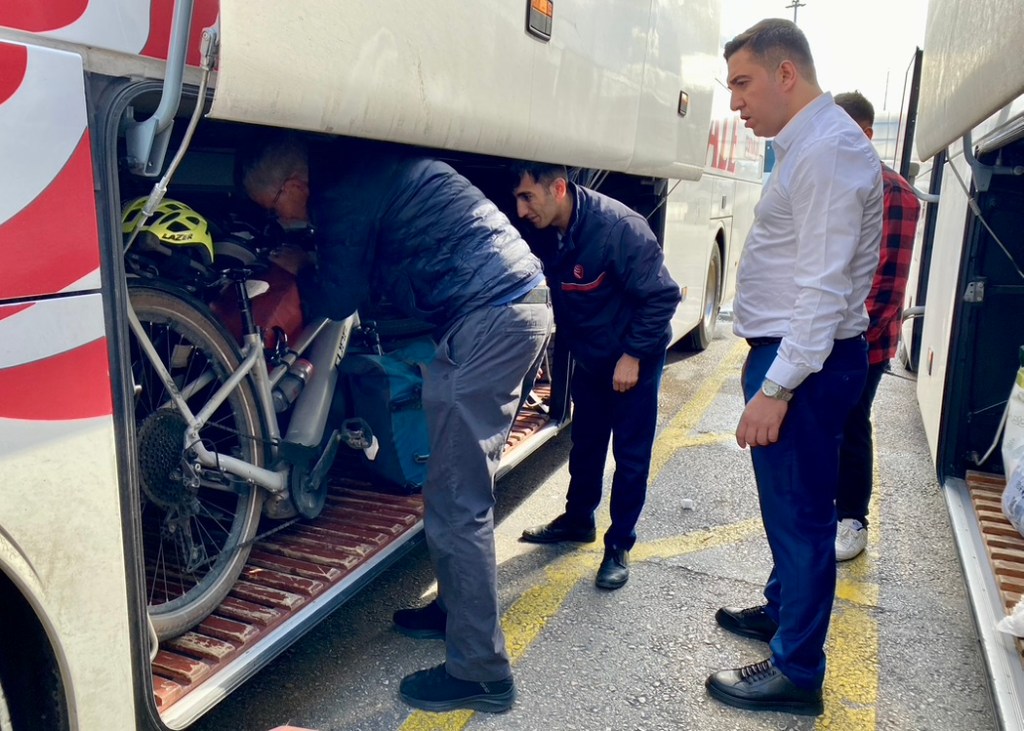
The bus itself was fantastic. Lots of space, great leg room, a clean loo, plus free drinks and snacks served by two friendly hosts.

We settled gratefully back into our seats and day-dreamed … as long as the bikes survived, we’d have time for a mini Turkish holiday by the sea … we could explore the area on our e-bikes, potter around the old town, eat delicious Turkish food and visit Ephesus. We wouldn’t even be using any precious Schengen days.

Mmm … as long as the bikes survived …
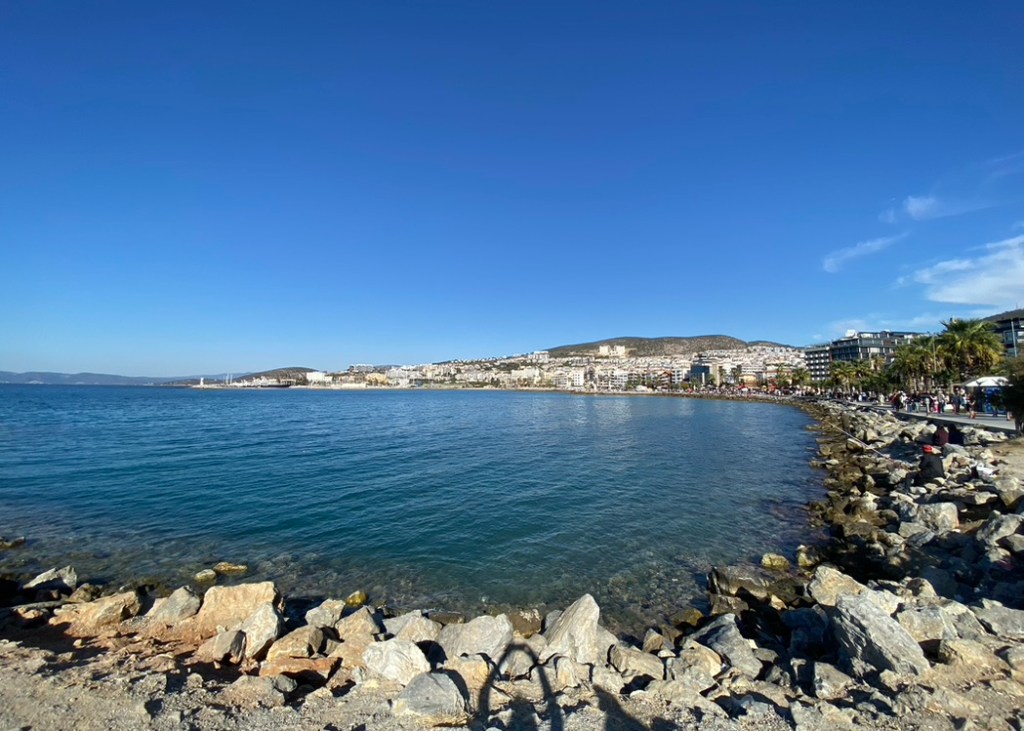
Kuşadasi

And miraculously they did survive.

Despite bent mudguards, bells no longer working and loose fittings, there was no major damage. The mini Turkish holiday in Kuşadasi was everything we had dreamt of.

The theatre at Ephesus

Wandering around the ancient port of Ephesus, it was easy to imagine a bustling, cultural city first of the Greeks, then of the Romans; or to imagine early Christians making a pilgrimage in honour of St Paul, St John and Mary, mother of Jesus, who was said to have lived there for her final years.

We were particularly struck by the ‘Terraced Houses’, luxurious Roman family homes with plumbing, heating and lavish interior frescoes built within strolling distance of the many temples, theatres, libraries, public baths and shopping centres; the remains of which still line the marble streets.

Ephesus Terraced Houses

On the ferry across to Samos (the closest Greek island to Kuşadasi) we bumped into David, a lone touring cyclist from New Zealand who was nearing the end of a long trip from London to Istanbul and then around Turkey and Greece. He’s been doing it the hard way … no e-bike of course but also no apartments as he was wild camping most nights on beaches, behind mosques or on any patch of grass he could find. An amazing experience but very tough … full respect to him.

Chapeau David!

As well as being good company, David was brilliant at foraging for food. An endless supply of goodies emerged from his panniers … sweet figs, juicy persimmons, even some fresh fish he’d bought straight off the boat.

David, loaded up

Now we’d arrived in Greece, we’d have to put our skates on, as we only had 23 Schengen days left. But … we weren’t going anywhere quickly as the Greek ferry workers had called a sudden 48-hour strike which meant that our ferry to Athens was cancelled. Two days later they extended the strike by a further 48 hours.

When we got to the front of the queue at the local Blue Star Ferries ticket office, the lady told us how lucky we were to have grabbed the last cabin on the next ship out.

“I must book it quickly before it goes,” she said.

“Well lucky and unlucky,” mused Andy, thinking about the delay.

She didn’t miss a beat. “No, no, no …  you are very, very lucky,” she said. “You are forced to stay more days on the beautiful island of Samos. The sun is shining, the sea is still warm, what can possibly be nicer?”
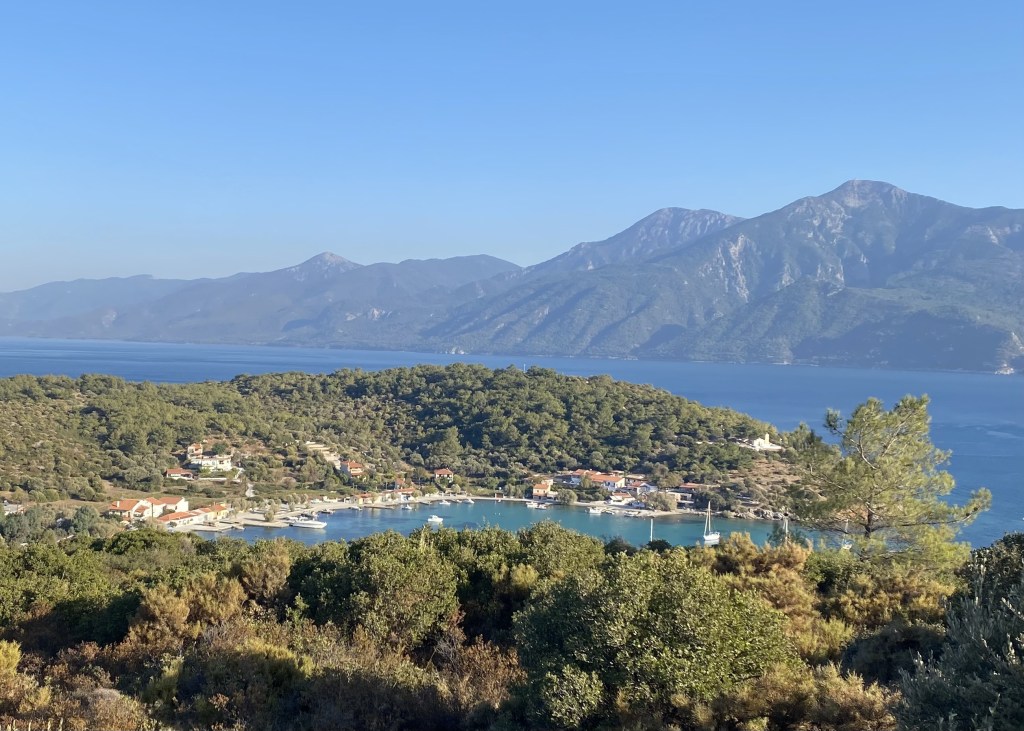
Samos

And she was right, those few extra days on a beautiful Greek island turned out to be another wonderful mini break. As we slowly explored Samos on our e-bikes (the perfect way to get around this very hilly island) we forgot all about the strikes and our ticking Schengen time-bomb.

We stayed in an aptly named apartment called Heavens Door with a view to die for. We ate fish for lunch, drank cool white wine and even swam in the sea.

We sent grateful thanks to the ferry workers!
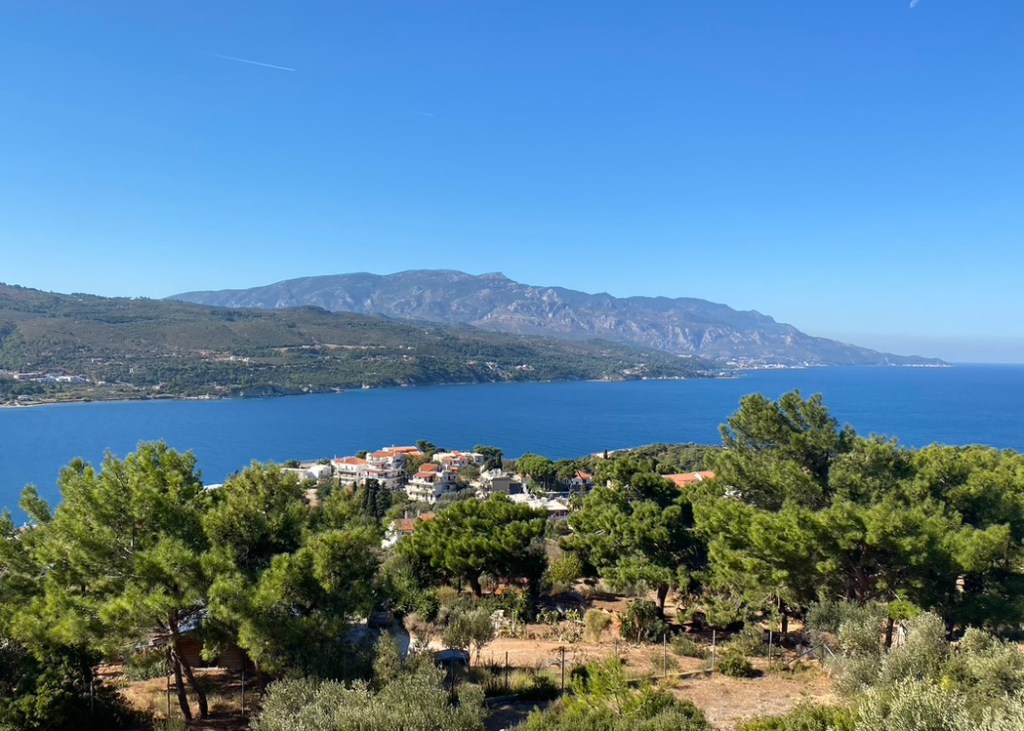
View from Heavens Door

However, the delay from the strike did create one onward travel headache … we now only had 2 days to cycle 240km across the Peloponnese from Athens to Patras. Too much for us … now that we’d lost fitness and gained a few pounds from all the mini breaks!

Arriving in Athens at 3 o’clock in the morning, we found a friendly hotel foyer to hang out in until dawn and then managed to book ourselves and our bikes onto a small suburban commuter train that ran out to a place called Kiato, cutting the ride down to just 120km.
It was a national holiday in Greece, celebrating the moment in 1940 when they said “Oxi” or “No” to Mussolini when he told them to allow Axis troops to enter the country or face war. It’s been celebrated ever since as a source of great national pride with parades, flag waving and marching bands.

Oxi Day made for an easy introduction to travelling with e-bikes by train as we practically had the 6:15am to ourselves.

Nice and easy

The ferry to Italy was almost a mini cruise, steaming for 24 hours through the Ionian islands, past Corfu and then up the Adriatic.

It had always been our plan to cycle for a few days in Italy as long as the weather was OK and we had enough spare Schengen. We wanted to get a taste of Italy as we hope to come back and explore more of the country by e-bike another time.

Taste is the right word … as Italy lived up to its culinary reputation, enticing us to stop for extended pasta lunches every day, always washed down by a glass or two of Italian wine.
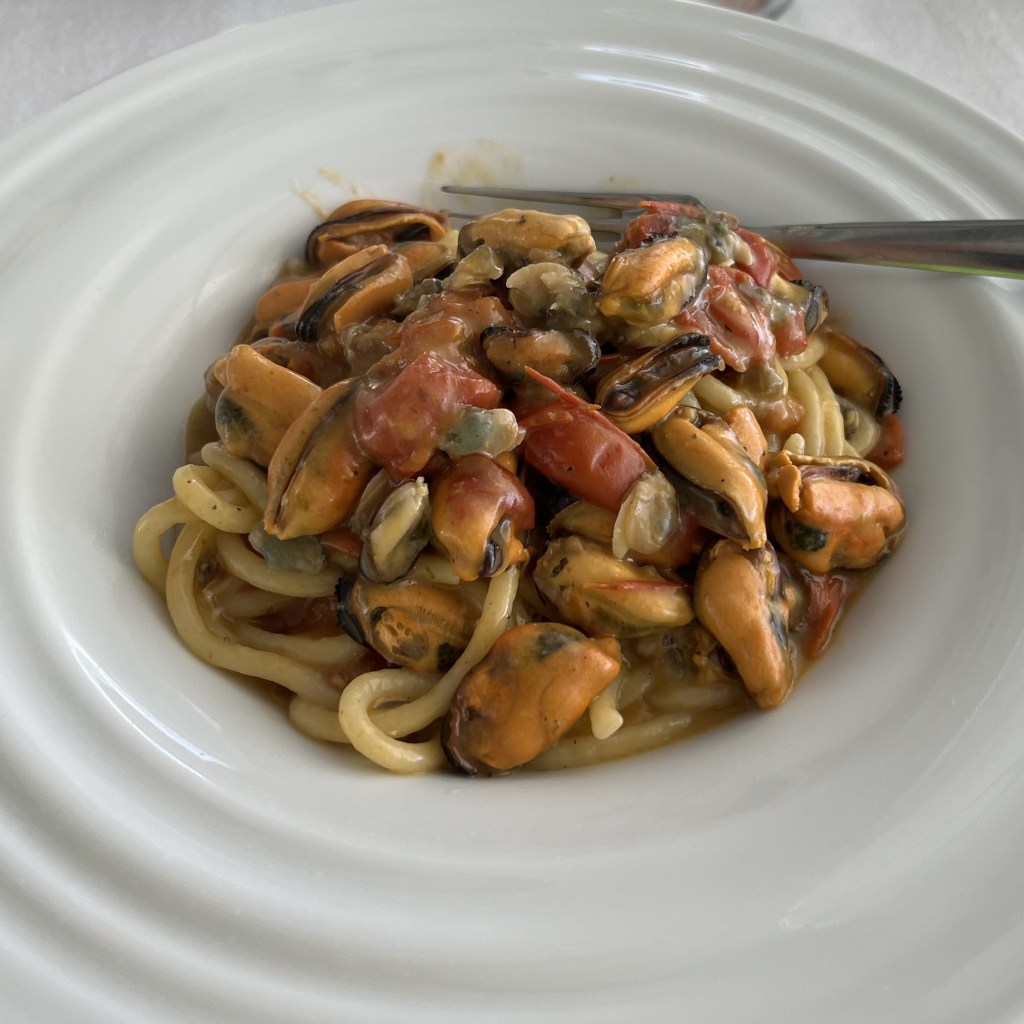
Spaghetti with Mussels and Tomato

And we needed that pasta to power us, as Italy also lived up to its reputation for brutally steep hills. So steep that on the second day of cycling from Pergola to Carpegna we even had to recharge our batteries over lunch, something we’ve never contemplated before.
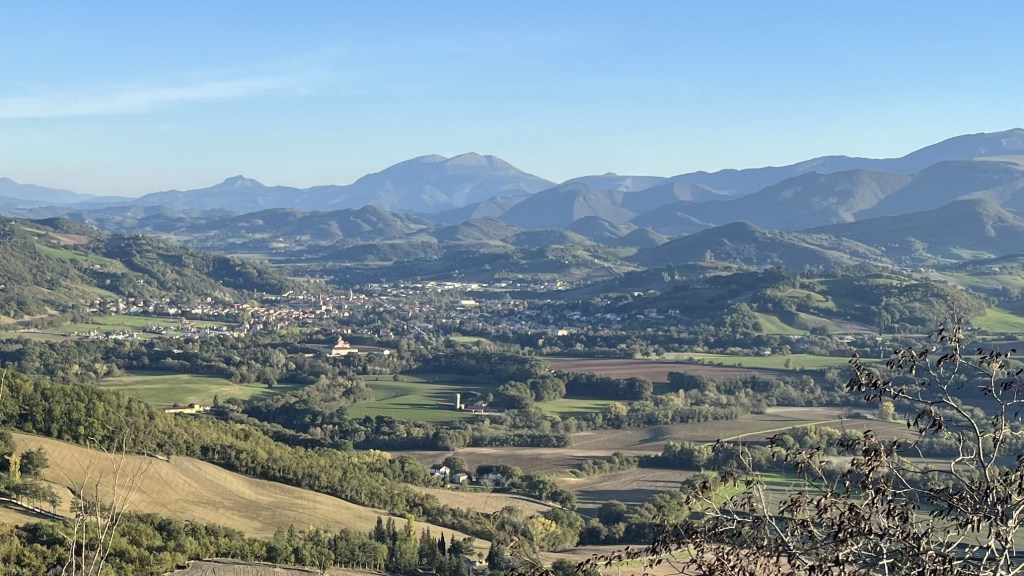
Folding Hills of Le Marche

Which was easier said than done.

Most of the electrical sockets were old fashioned Italian 3-pin plugs, which our 2-pin European adaptors didn’t fit into. And it was All Saints Day (a public holiday) so none of the shops were open.

Furthermore, we found ourselves at the epicentre of a famous truffle festival which meant that the restaurants were jam packed, full of contented gourmands enjoying this special delicacy.

But the Saints must have been smiling on us. We rounded a corner to find an open supermarket, stocking the adaptors we needed. Then on the edge of town, we cycled past a restaurant with just one free table available on the terrace.

So whilst the batteries recharged, we recharged ourselves with Tagliatelle smothered in Black Truffle shavings and a couple of glasses of delicious Verdicchio to wash it down. It was perfect!

Tagliatelle with Black Truffle

But … we still had 60km to ride and several hills to climb, including a 750m summit finish to Carpegna. Maybe it was the wine that made us forget the clocks had just moved back to winter time. We’d be lucky to get there before dark!

Fortunately, the e-bikes were also feeling nice and replete. They were happy to ramp up their power and speed up the hills in the glorious late Autumn sunshine, whilst we revelled in the stunning landscape of Le Marche region.

It will go down as one of our more epic cycling days (and the only epic cycling day with a good lunch!)

Appropriately, the Italian food bicycle tour ended in Bologna, famous as Italy’s food capital. Here, we indulged in even more pasta and gelato and enjoyed wandering through the porticoes to visit the sights … Europe’s oldest university, the famous two towers, the unfinished Basilica.
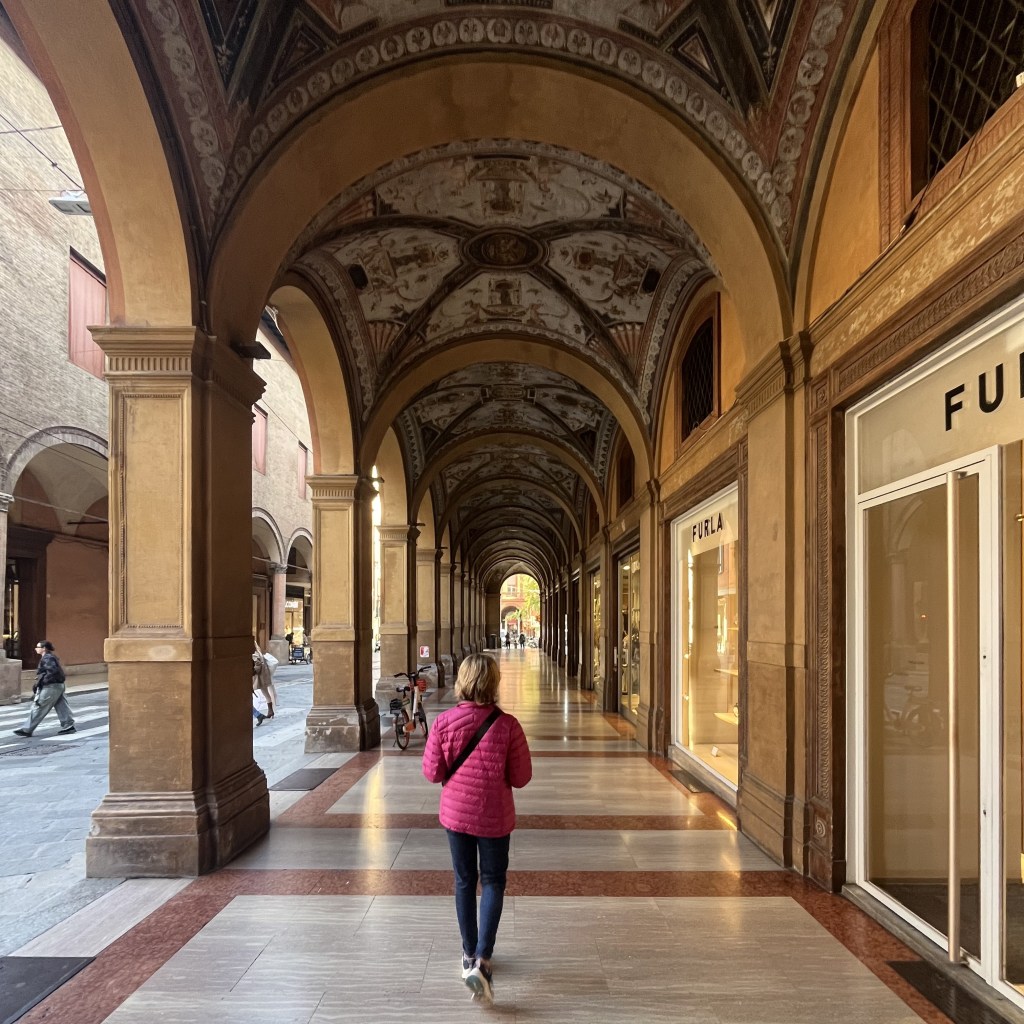
Strolling through the porticoes of Bologna
Bologna

There was one final treat in Bologna.  We were amazed to find a train with two bookable bike spaces that would take us all the way over the Brenner Pass, through Austria and then onto Munich. Bike spaces that were booked out for every single day, except for the one day we wanted to travel!

A glance at the amazing train travel website that is ‘The Man in Seat 61’ told us that we would be travelling on a brand new, shiny red, Austrian train with easy access, luxury accommodation for the bikes, comfortable seats for us and even a buffet car to help pass the 8 hour journey.

But when the train rolled in (only 25 minutes late), it wasn’t red, it wasn’t shiny, it certainly wasn’t new. It looked tired and old.

Another strike!

The previous day, the Italian railway union had called everyone out in protest at staff safety arrangements after a conductor was attacked near Genoa. Fair enough. But it meant that all the trains were in the wrong places. Which meant that the Austrians had to pull this one out of retirement from a dusty siding, as an emergency measure.

We were soon joined on the platform by two incredibly helpful female conductors, one Italian, the other German. Follow us, they said. We’ll take you to the carriage for the bicycles. We followed them to the far end of the train.

Oh dear, they said when we got there. It hasn’t been connected. Never mind, follow us, we have a guard van, you can put them there. We followed them to the other end of the train.

But the rolling door to the guard van was jammed shut. Oh no, this is no good, they said. Go to the next carriage and put one bicycle at each end.

Which we did, lifting the heavy bikes up precipitous steps, then jamming them uncomfortably between the loo and the train door.

Not good!

The train set off but we didn’t think our efforts would be up to Health and Safety rules.

When they came through the train to check the tickets, they agreed. No, no this doesn’t work. Go to the next carriage. There you will find hooks to hang them on.

We lugged the bikes through the train. Unfortunately, those hooks were designed for the sort of streamlined road bike beloved by Italians, not our heavy e-bikes with their thick tyres. They simply didn’t fit.

Oh dear … problem after problem, they said. But don’t worry, it’s not your fault. It’s because we changed the train. Phew, we thought … they’re not going to throw us off.

Suddenly Andy had a bright idea. Could we take the bikes off the train at the next station, go back to the guard van but lift the bikes up through the passenger door and into the guard van from the inside? Mmm, they said.  Yes, yes, maybe this could work.

Verona was the next station and half of Italy seemed to be getting onto our train. Not surprisingly the doors to the 1st class carriage were also jammed, so all those passengers now had to climb on through the guard van. The two lovely guards continued to be friendly and sympathetic, the other passengers a bit less so! 

After much gesturing and shrugging Italian style, we managed to get the bikes into the van, where they lived in luxury for the rest of the journey.

Luxury accommodation

The platform in Munich was on the opposite side of the train. On that side, the guard van door rolled up without a hitch so the bikes came off very easily. We celebrated, perhaps a little prematurely, as we still had to get onto the connection to Nuremberg.

This turned out to be a sleek German Inter City Express high speed train, travelling all the way to Hamburg. It didn’t look at all like the type of train you could take a bicycle on.

But we found one carriage with two huge bicycle images printed on the outside. With easy roll-on access, there was a lovely space for the bikes. The only problem was that the tyres were again too thick to fit onto the safety attachments. The more officious conductor took one look and started scrolling through his regulations.

Oh no! Were we going to fail at the final hurdle?

He lifted his head, smiled and asked “Can you lock the bicycle to this attachment?”

Yes. Yes! YES! … we can!!
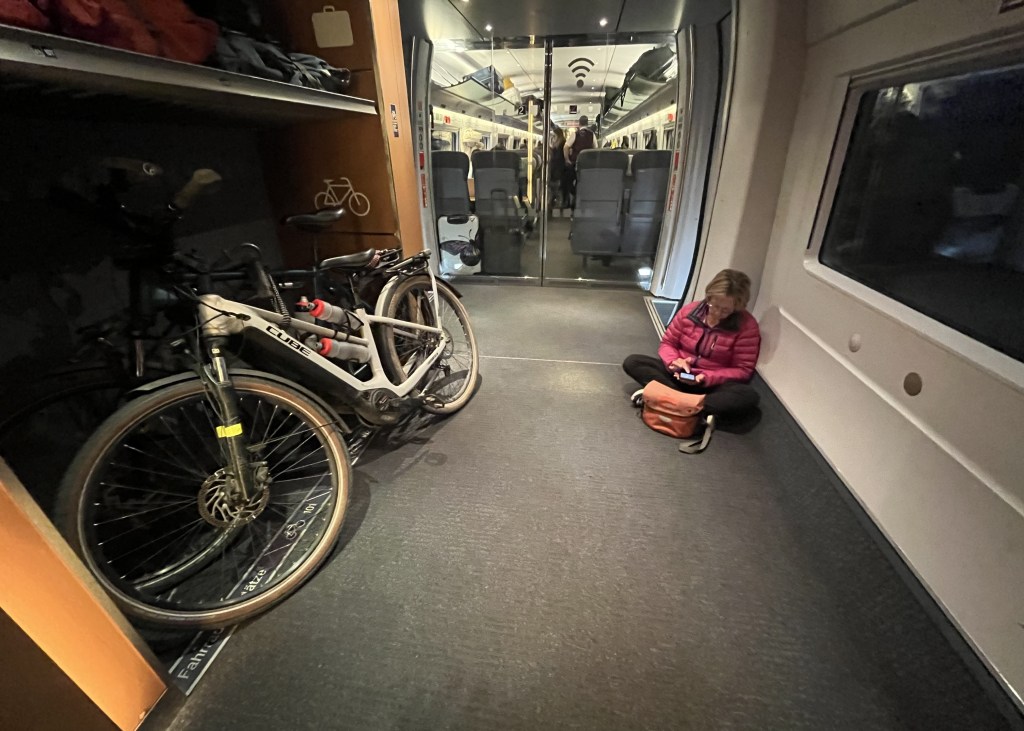
On the train from Munich to Nuremberg … phew!

We had made it to Nuremberg, ready to enjoy a celebratory curry with Frank as a thank you for looking after our car. Lots of great German beer, lots of laughter.

From Nuremberg it was a two day drive back to Bath, arriving in Phileas Fogg style, exactly 80 days since we’d set out. We cruised through the French customs without incident … despite the strikes we’d only used 17 Schengen days to get home from Istanbul, so we still had a whopping 6 days left!
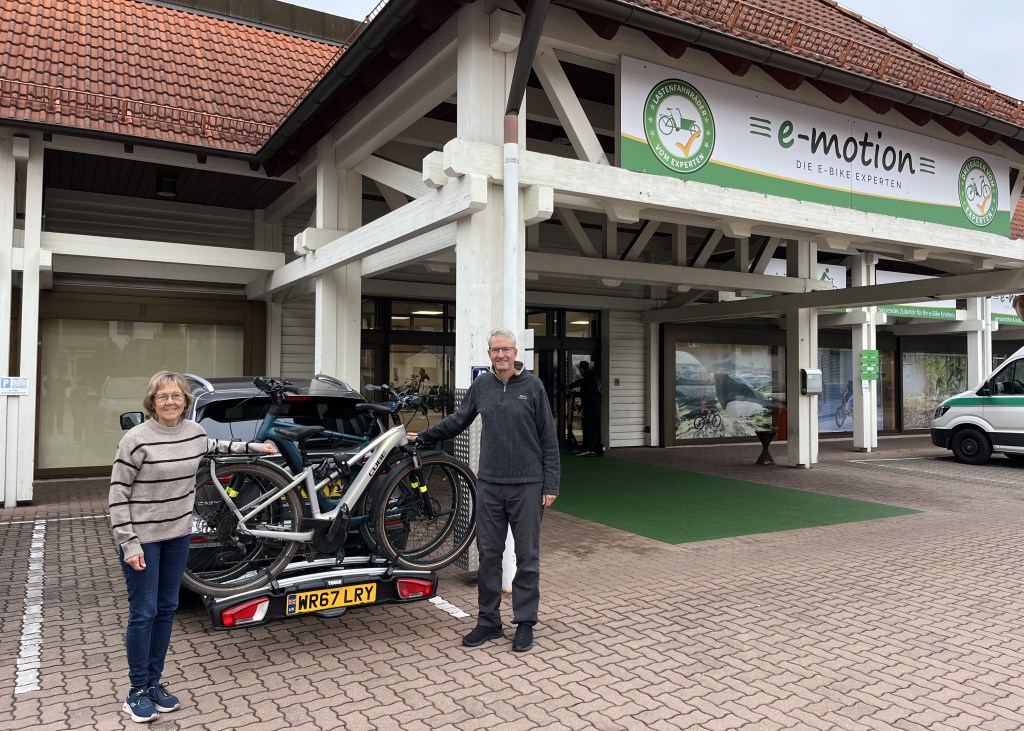
Back to the car in Nuremberg

All this public transport has taught us a few lessons for future e-bike tours:

  1. Ferries are the best – there’s plenty of room for bikes, no fuss, no extra charges.
  2. Bookable trains are easier than we thought (with an extra charge for the bikes) – as long as they come with a friendly conductor.
  3. Buses are a last resort – e-bikes are simply too big to go in their luggage compartments, it’s rude to try.
  4. Most of the staff on the ferries, trains and buses are incredibly helpful. They’re on your side and will get you on board if they possibly can.
  5. It’s more difficult than you’d think to find a man-with-a-van in Turkey.

When we first set out on this odyssey, both of us had secretly decided it was probably our last long bicycle tour. But after a few weeks on the road, we both realised that we’re not ready to hang up our cycling shorts just yet.

The e-bikes are simply too good and there are too many wonderful places to explore.

Clare suggests going to Morocco next … to experience an African adventure.

Andy suggests Italy … to eat more pasta.

Watch this space.

Clare and Andy
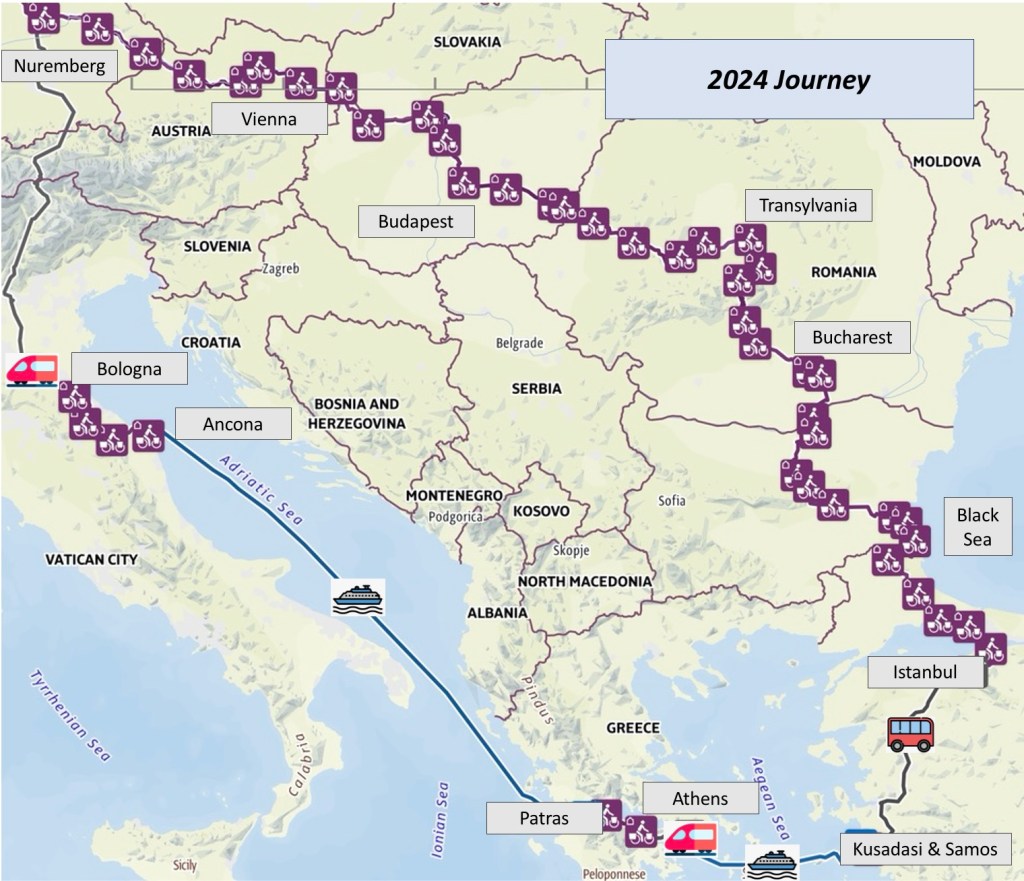
Nuremberg to Istanbul to Bologna (this year)

3,746km pedalled (2,328miles)

28,014m climbed

193 hours in the saddle

Bath to Istanbul to Bologna (the whole journey)

5,075km pedalled (3,153miles)

35,803m climbed

264 hours in the saddle
2024: A Cycling Odyssey

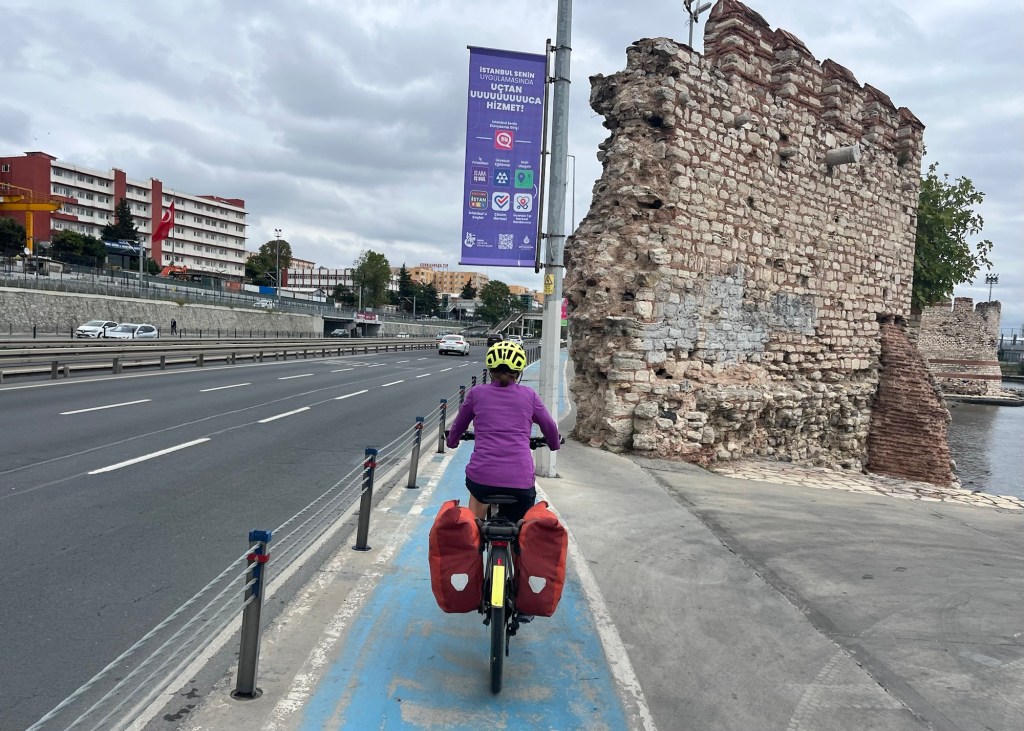
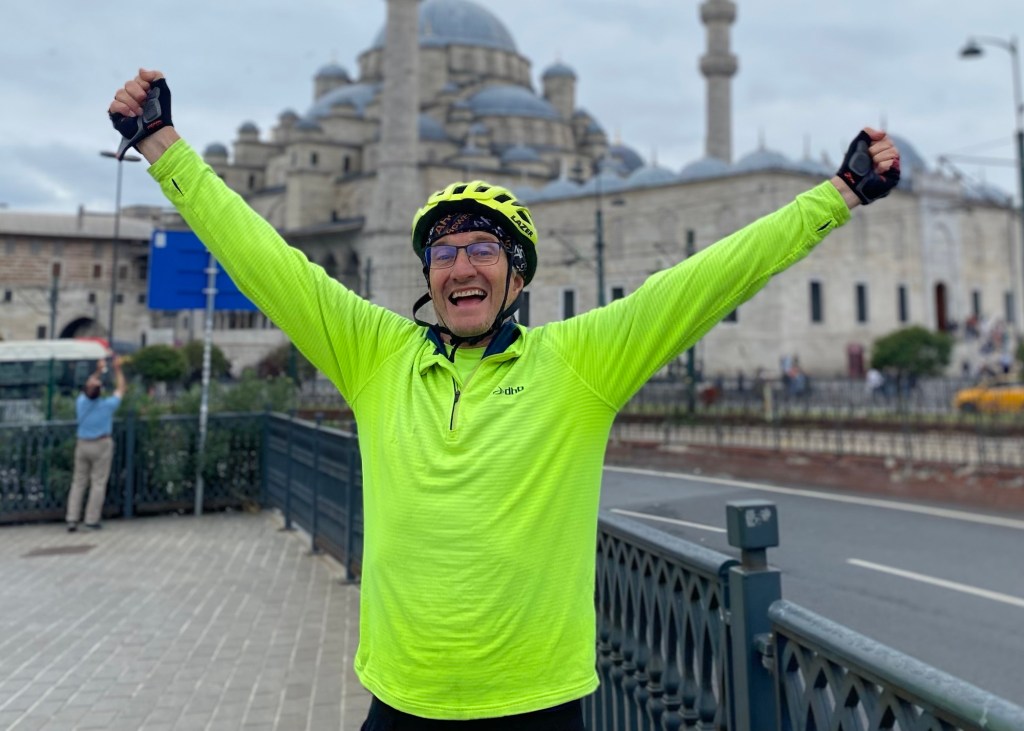
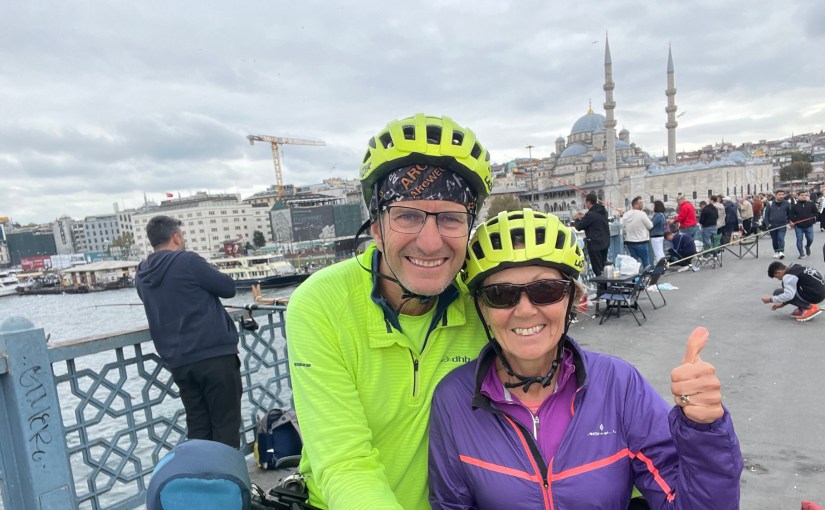
It’s impossible to over state our emotions as we pedalled that last kilometre towards the mouth of the Golden Horn, finally arriving in Istanbul on an overcast Sunday in the middle of October.

Gateway to the East, the junction between Europe and Asia. Through the centuries Istanbul has seen a huge number of mystics, merchants, nomads and conquerors pass through its walls … and now it was welcoming two emotional touring cyclists from Bath.

But why not feel the enormity of the moment?

Since leaving our car at Frank’s shop in Nuremberg in late August we’ve cycled 3003 kilometres (1866 miles). 39 days in the saddle.

And if we look at the whole trip since we left Bath last summer it’s 4332 kilometres (2692 miles). 56 days of cycling across 9 countries.

It was nine years since Clare first came up with the idea of cycling to Istanbul during a chat around our kitchen table.

And it was fourteen months since we were forced to stop our journey in Nuremberg because of Andy’s racing heartbeat from Atrial Fibrillation. Almost exactly a year since his catheter ablation gave us the chance to go back and try again.

During those nine years we’ve been on many bicycle tours to many amazing places. But Istanbul was always the dream destination, the big one, the journey of a lifetime … our personal cycling odyssey!

Yet the junction between Europe and Asia seemed so far away, much further than we’d ever cycled before. It just felt too big a challenge.

Those kitchen table chats went round and round in circles … can we really cycle that far? … can we be away for so long? … what’s the best way to go? … when’s the right time? … will we be limited by the post-Brexit Schengen visa restrictions?

The more we talked about it, the more we decided that no, we couldn’t do it. We weren’t getting any younger and various bits of our bodies were starting to complain in a way that they hadn’t before. Istanbul was just going to be too much!

But then we switched to e-bikes and realised we could travel much further each day for the same number of hours in the saddle. We discovered that whilst e-biking is still good exercise, we don’t suffer from the same level of exhaustion from hill climbing as we did on our old steel touring bikes.

Suddenly the cycling odyssey was back on!

Any bicycle tour of this length is not just about the pedalling …

It’s a lot of staring at maps and planning the best route for the next day.

It’s many hours spent researching the most appropriate places to stay.

It’s endless packing and unpacking of our panniers, trying to remember to put things back in the same place.

It’s taking the batteries off the e-bikes and recharging them every night.

It’s plastering on enough chamois cream or vaseline to keep the saddle sores at bay.

It’s washing out smelly cycling shorts in a hotel sink.

But best of all it’s about being in a bicycle touring bubble together, riding behind each other or side by side, sharing a lot of date nights, both equally consumed by the whole experience.

“A journey of a lifetime is measured by memories, not by time.” Debasish Mridha.

The final leg of this journey-of-a-lifetime got off to a rather bleak start.

Leaving Bucharest on a cold damp morning we cycled back towards the Danube across the featureless farmland of the Danubian Plain. Now widening out as it heads towards its delta, the river has always been a formidable barrier in this part of the world, protecting Romania from many an invading army.

And so it proved for us.

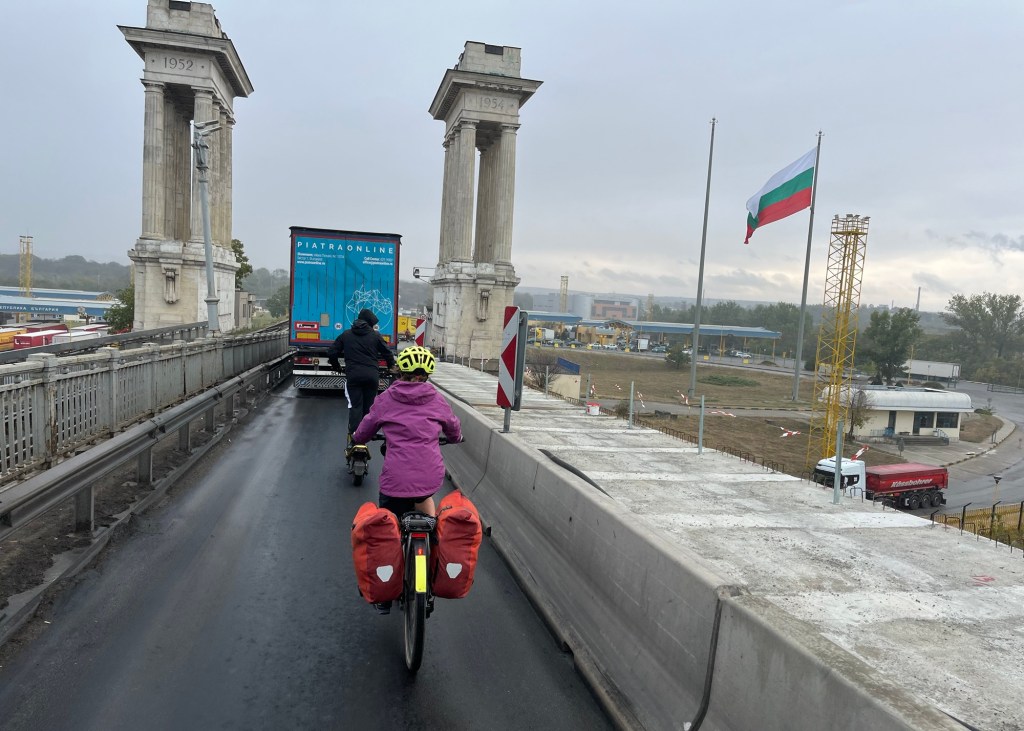
Amazingly until 2013, there was only one bridge over the Danube from Romania to Bulgaria, the ‘Friendship Bridge’ between Giurgiu and Ruse which opened in 1954. Even now there are still only two, the second being the ‘New Europe Bridge’ which is much further west near the Serbian border.

There are several ferries we could have aimed for but the best crossing point for our route was easily the Friendship Bridge. Now old and tired, it’s in need of substantial repairs which means lane closures and lengthy queues.

Bulgarian Border

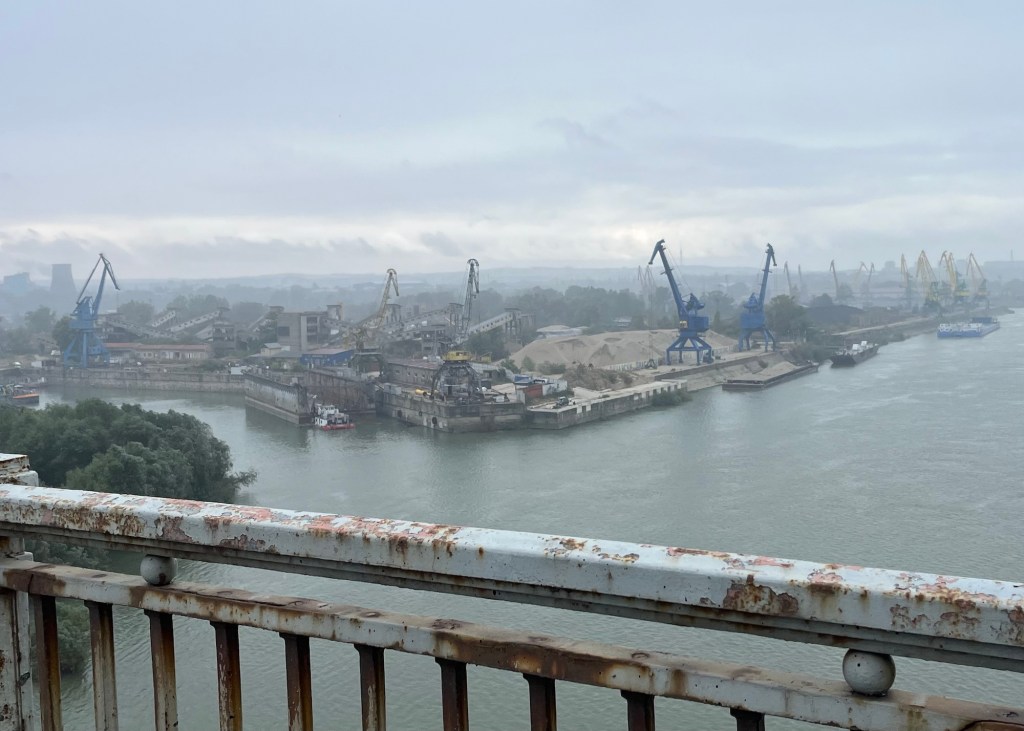
That gave us plenty of time to gaze across at the forbidding industrial landscape that greeted us as our first view of Bulgaria.

And to pick our way through the questionable cycle path that led to the border controls.

Is it that way?

Oh! Maybe not?

Before arriving in Bulgaria we knew even less about the country than we did Romania. So we decided to pedal first to the historic city of Veliko Tarnovo in order to learn a bit more.

Veliko Tarnovo

Tucked into some dramatic bends of the Yantra river and surrounded by an amphitheatre of forested hills, Veliko Tarnovo is a gem. Capital of the second Bulgarian Empire (a two hundred year respite from Ottoman occupation between the 12th and 14th centuries) Tarnovo was also the site of the declaration of independence for the modern Bulgarian state in 1908.

To mark its status as the country’s historic and cultural capital, Veliko meaning ‘Great’ was added to the city’s name in 1965.

Tsarevets Fortress, citadel of the 2nd Bulgarian Empire

Clare scored us a great last-minute-midweek-hotel deal there, a 5-star boutique hotel with only four beautifully curated rooms, a significant upgrade on our normal digs which we have to admit added to our enjoyment of the city.

Best room

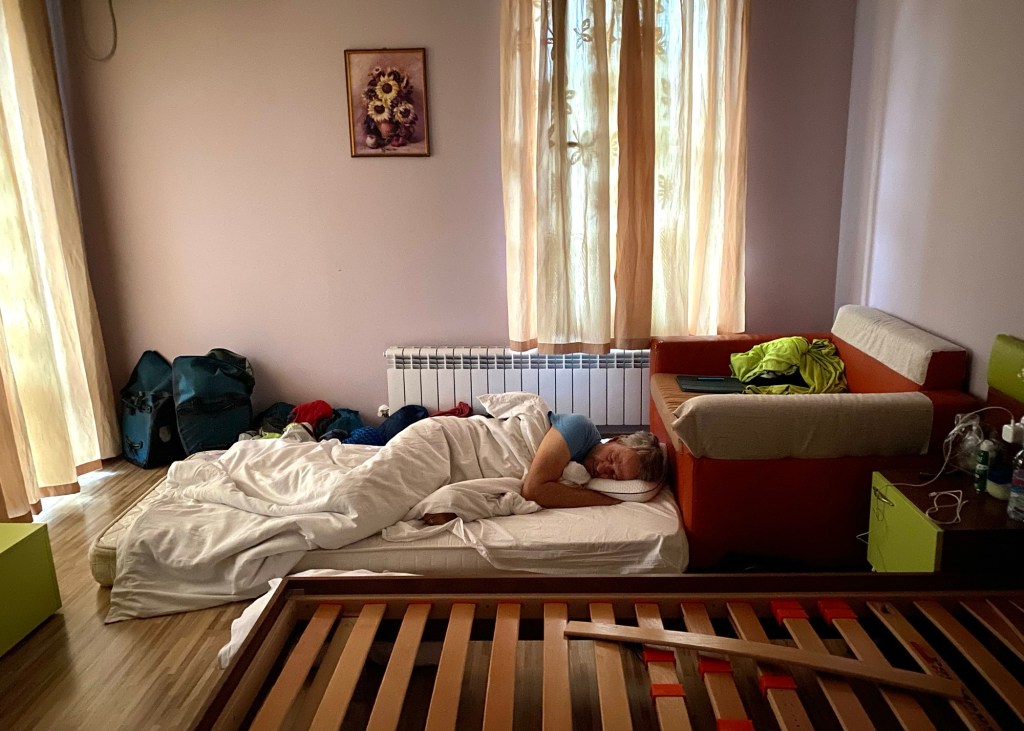
The worst room of the trip also came in Bulgaria, the bed so uncomfortable that Andy pulled the mattress onto the floor in the middle of the night. In the morning he realised the discomfort was caused by some spare wooden bed slats left under the mattress. What a delicate princess-with-a-pea he is!

Worst room

After leaving Veliko Tarnovo we pedalled onto Elena, gateway to the Balkan Mountains that split Bulgaria in two, north and south and give their name to the whole Balkan region.

Here we stayed in a small workman’s cottage with a charming owner who re-assured us that the quiet pass we’d planned for the next day was indeed the perfect way to cycle over the mountains.  

Then he went on to tell us that there are only three border crossings between Bulgaria and Turkey. Only three!

“Don’t go main road way to Edirne” he said, “Many big trucks from Istanbul. Many people coming in car from Holland or Germany.”

“Better you go Black Sea. Very beautiful. Especially Sozopol, much beautiful place.”

“Then you go through nature park to other border. Third border. Not many people go there. But oak trees, oak trees far as you see. Much better for bicycle. You go that way.” 

So we did. And he was not wrong.

Those two days of climbing, first over the Balkan Mountains and then up through Strandja Nature Park to the Turkish border, were one of the highlights of the whole trip. The Balkan Mountains are covered in a carpet of ancient beech, hornbeam and spruce forests, Strandja Nature Park in ancient oak trees many of them well over 500 hundred years old.

With barely any cars passing by, the sun shining in a clear blue sky overhead and with every ridge and fold of the hills covered in a thick carpet of trees, it felt as if we had been plunged into a sparkling pool filled with fresh forest air.

A carpet of trees

Ever keen to preserve her battery, Clare once again stayed in blue (level 2 support) for the whole of both climbs. Andy gambled on purple (level 3) simply to try and keep up with her. It was cutting it fine … on both days he rolled up to our accommodation with just 3% of his battery left!

Into the oak forest

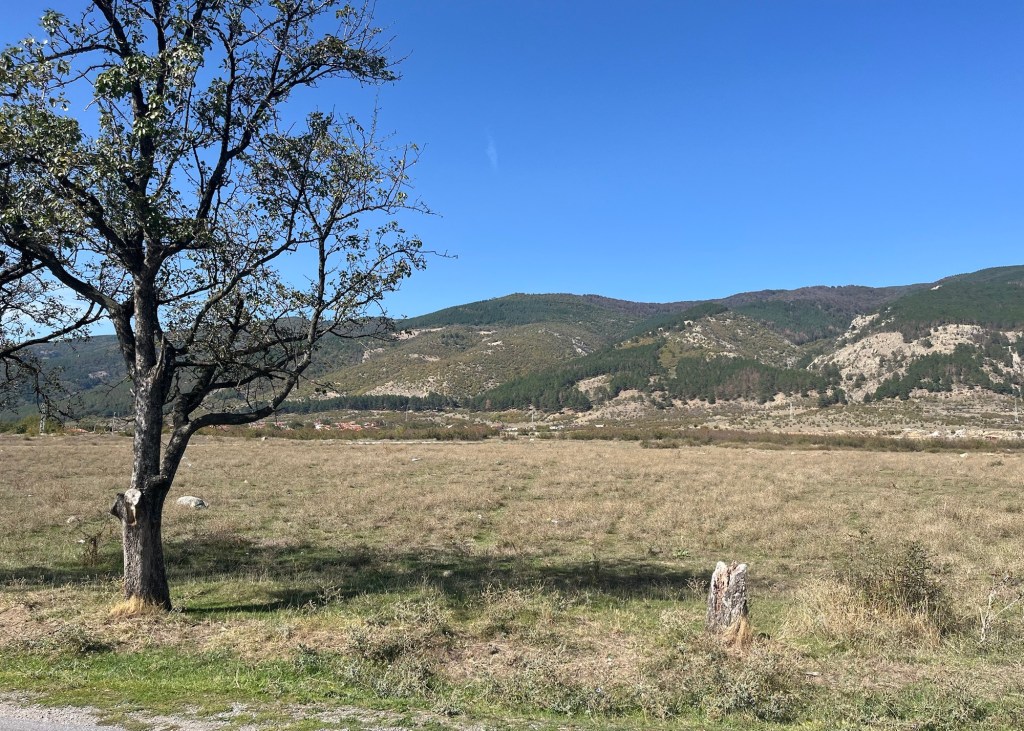
Once we got over the top of the Balkan Mountains and into Southern Bulgaria the landscape changed considerably. Gone were the lush forests, replaced instead by an open, arid, Mediterranean outlook.

An arid feel to the south

The south also seemed poorer to us, more neglected. For example, we rode past several piles of fly tipping, something we hadn’t noticed before.

This got us to thinking about the pre-conceptions touring cyclists and other slow travellers bring to the countries they pass through.

We hadn’t expected to like Bulgaria very much and found ourselves noticing things that continually reinforced that view … the litter, the abandoned dilapidated buildings, our difficulty understanding the Slavic language and Cyrillic alphabet, the food always smothered in cheese (which Clare hates), the apparent brusqueness of the people.

We felt we were in a kind of negative reinforcement loop that was hard to get out of. 

Many of the same things were also present in Romania but that was a country we expected to like. There we only found positive reinforcement … the rustic charm, the smiles from friendly people, the easier Latin based language. 

This didn’t seem fair to Bulgaria somehow.  But you can’t help what you think as a traveller passing through.

We decided we’d need a spectacular experience to shock us out of the negative spiral and see the country afresh through more positive eyes. The two days of riding up through the forests almost did it … they were amazing, inspiring, incredibly beautiful, almost enough to change the spiral. But not quite.

Reaching the Black Sea

The Black Sea coast didn’t reverse the spiral either.

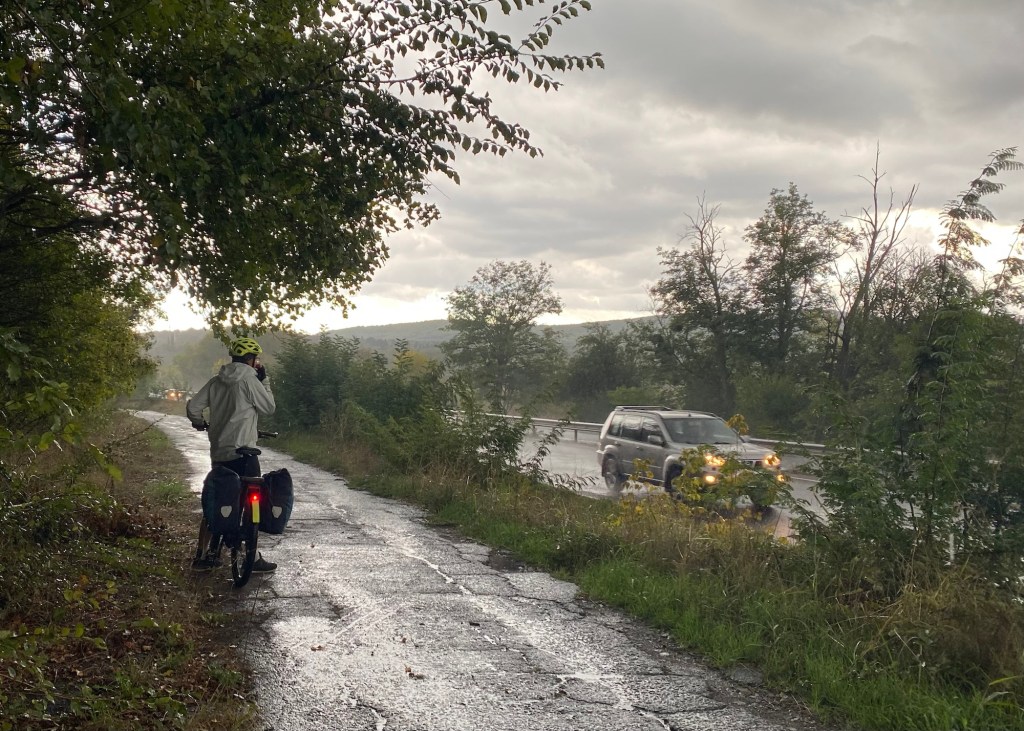
Much of the cycling was challenging, along busy roads or along some of the worst maintained cycle paths we’ve ever pedalled on.

Worst cycle path ever?

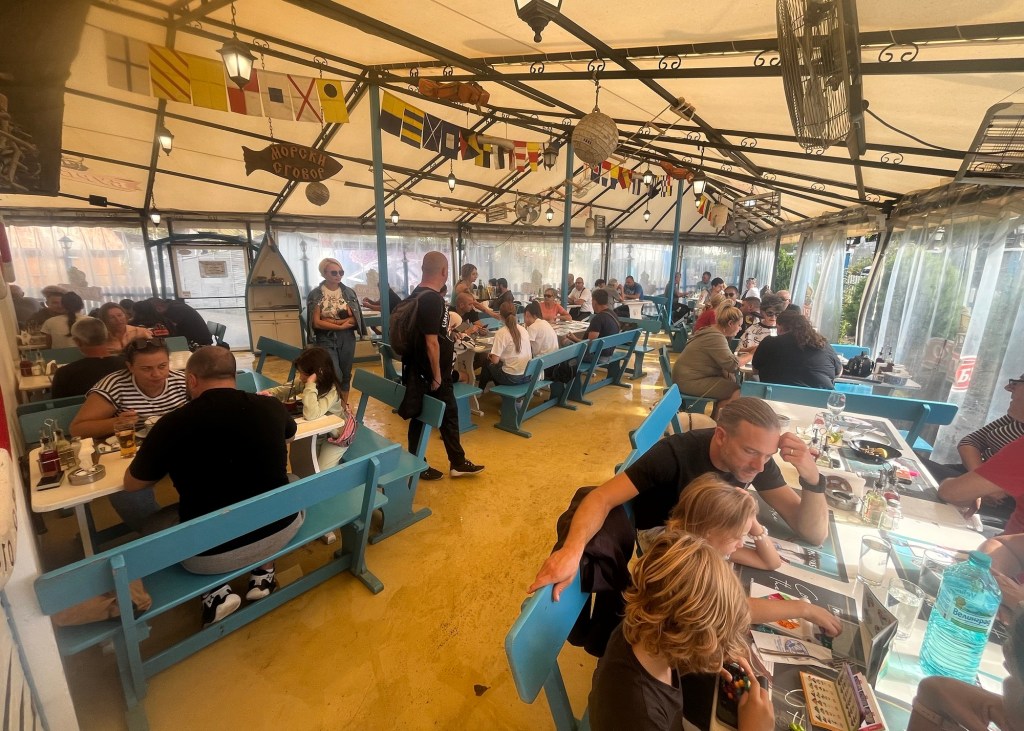
One Sunday we were bumping down such a cycle path when the heavens opened into an almighty thunderstorm that forced us to shelter under the trees for an hour. 

Eventually we took refuge in a pop-up fish restaurant full of people enjoying a family lunch.

Our host in Elena was right, Sozopol is a charming old town … full of meandering cobbled streets and pretty wooden houses, all huddled together on a narrow peninsula.

Wooden house in Sozopol

And Tsarevo, further down the coast, is a pleasant family resort.  Both are notable for being unusually clean, swept and scrubbed each morning by an army of street sweepers armed only with straw brooms.

Tsarevo

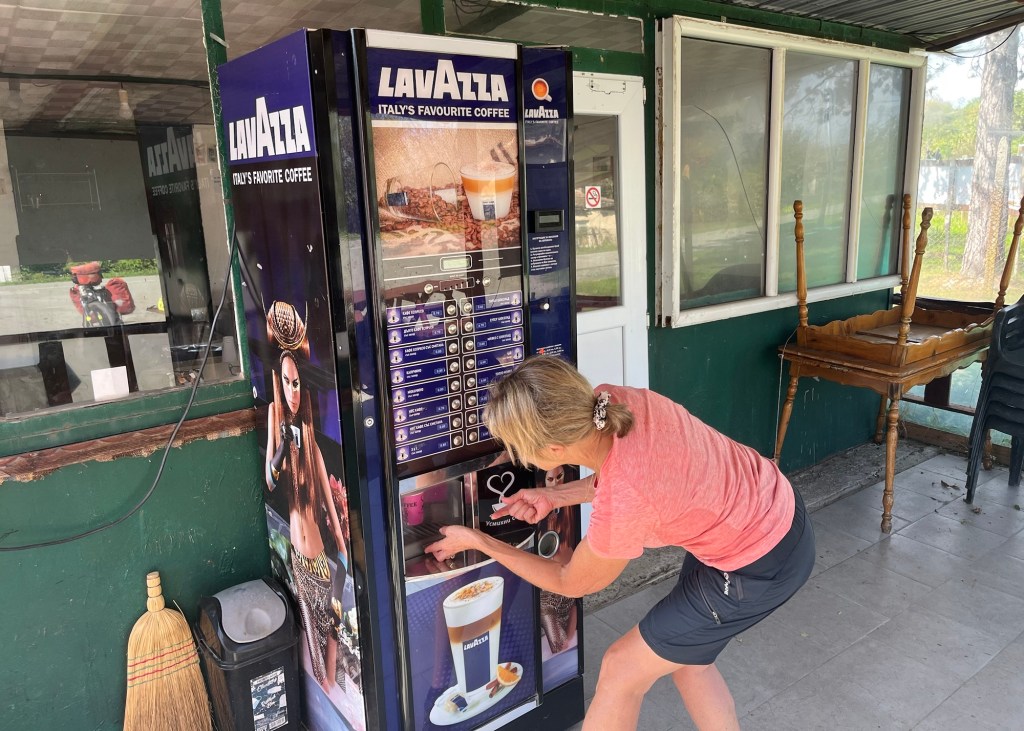
On the way up from Tsarevo to the Turkish border, we paused in the tiny village of Kondolovo, delighted to find a coffee vending machine with real Italian coffee!

A welcome sight!

These coffee machines are extremely popular in Bulgaria. They’re everywhere … on street corners, in bus stops, even in remote villages … and they offer a shot of surprisingly good coffee for a very low price.

A welcome break!

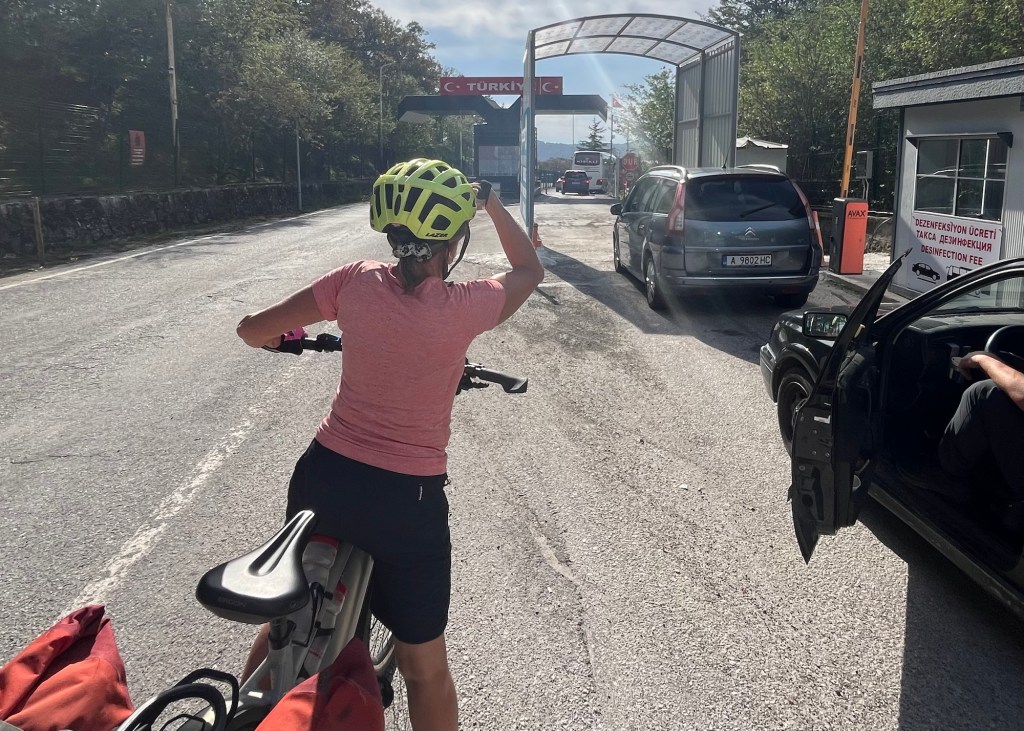
At the border we were surprised to come across a number of coaches which must have driven up the main road from Burgas, each one taking 20 minutes or so to process. No matter … Clare cleverly sliced her way through the queue of traffic like a knife through butter with Andy following sheepishly in her wake.

Within minutes we had left the EU and the Schengen zone behind.

Clare slicing her way through the border in record time

From the border it was a three day ride across Eastern Thrace (European Turkey) to reach Istanbul. Turkey already felt very different … mosque minarets signalling the next village in place of church towers, women dressed in burkas, groups of old men languishing outside every tea shop.

But they all gave us a notably more cheery welcome as we pedalled through, waving and calling out encouragement.

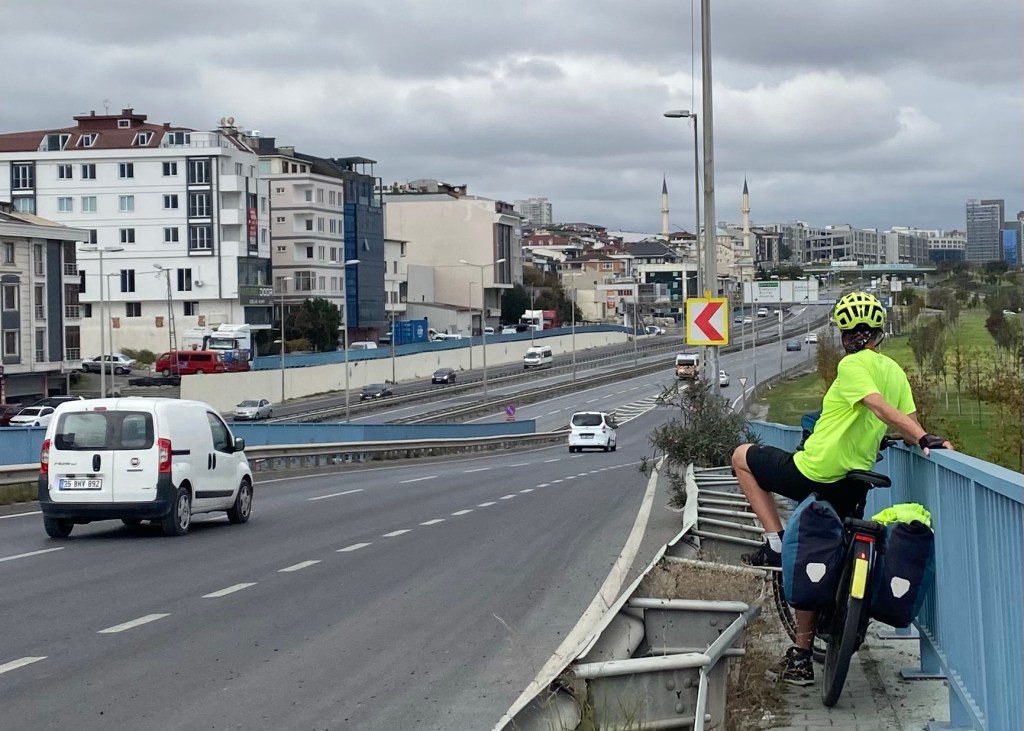
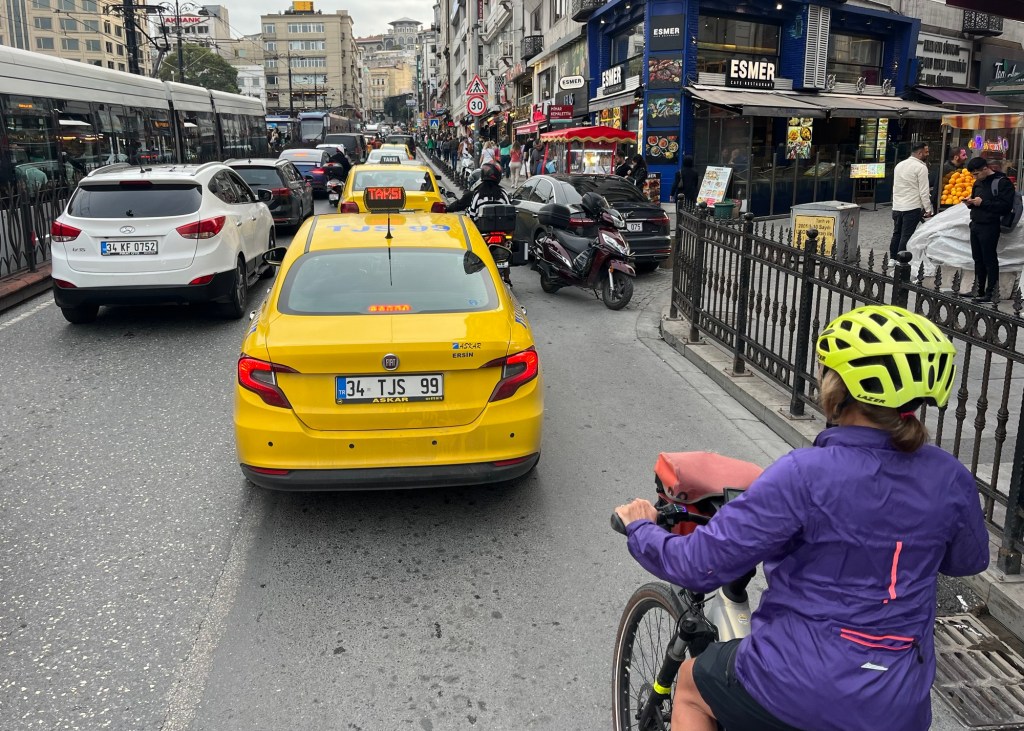
The ride into Istanbul itself is notorious in the bicycle touring community for being especially difficult, highways full of impatient mad drivers, narrow side roads completely blocked by traffic, roadworks everywhere.

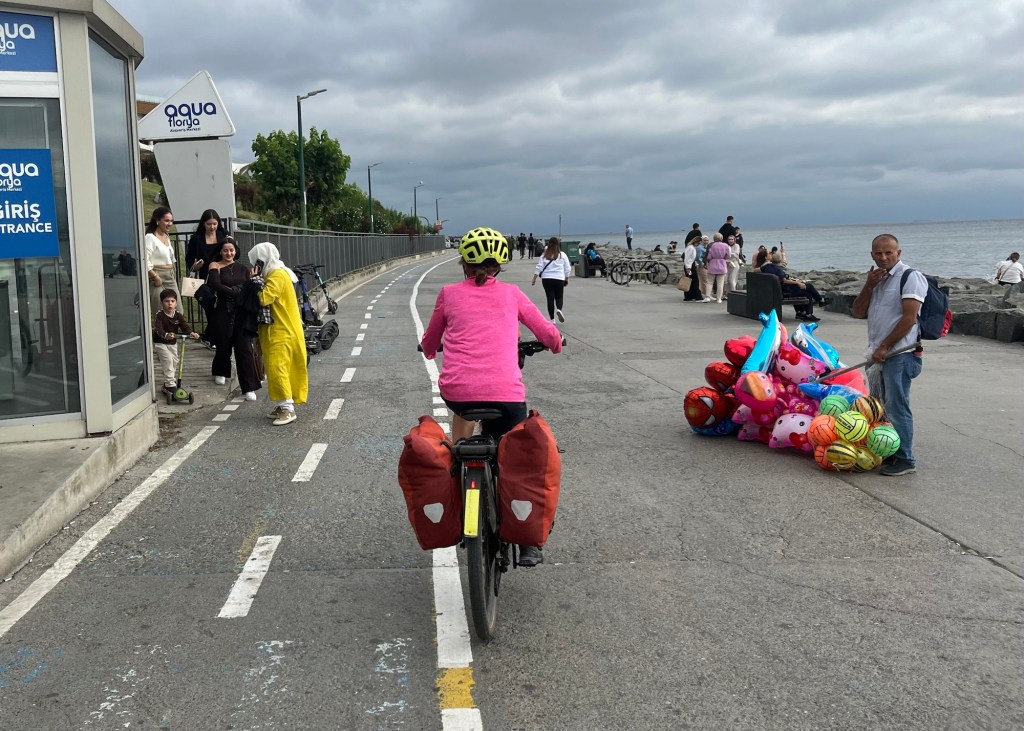
We followed the advice of a couple of young bloggers and hugged the Sea of Marmaris as closely as we could. It turned out to be a mix of the serene and the scary.

Serene

Serene as we cruised gently along coastal cycle paths, weaving our way between families enjoying their weekend stroll. Scary when we were cast out into the traffic, winding through suburbs in a desperate attempt to avoid any main roads.

Scary … perhaps not the best time to try the pavement!

But it wasn’t as bad as the warnings suggested so after reaching the Golden Horn we decided to carry on cycling through this crazy city taking in its sights and sounds. We even caught a ferry across the Bosphorus to Anatolia (Asian Turkey) … just to make sure we’d properly completed our journey from West to East.

Enjoying the Bosphorus ferry

By the end of the day we were weaving through the traffic like a local Deliveroo rider!

We’ve been lucky enough to visit Istanbul a few times before and it’s one of our favourite cities. An enchanting blend of Eastern and Western culture, it’s a vibrant modern city but with many layers of history to peel away … from Byzantium to Constantinople to the Ottoman era to the Turkish War of Independence.

The famous Hagia Sophia

Jam packed with people, Istanbul is chaotic, colourful and confusing with extraordinary experiences lurking around every corner.

A fitting destination for our cycling odyssey.

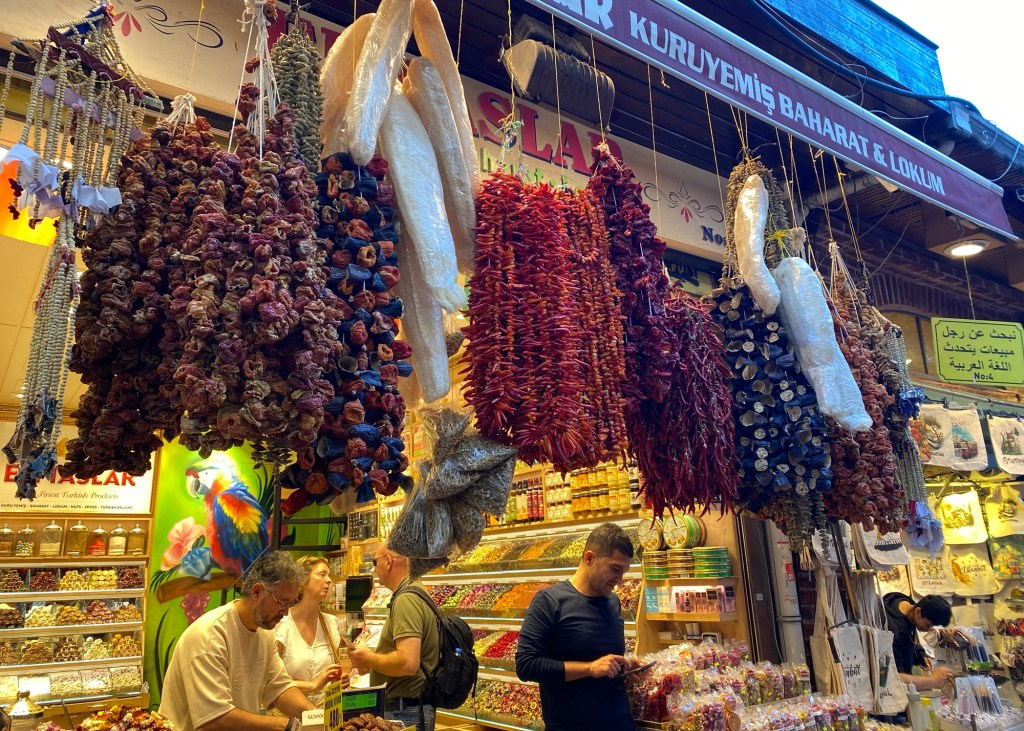
Spice market

Now it’s time to turn around and travel west in order to get home. We have 23 Schengen days left to get back to Bath. Our rough plan uses 20 of them so there’s not much time for things to go wrong.

We can’t go on planes (as they won’t carry our e-bike batteries) but trains and automobiles are part of the plan. As are buses and ferries, lots of ferries … and a bit of cycling.

Not much cycling though, that part of the odyssey is done.

Clare and Andy

Bath to Istanbul

4,332km pedalled (2,692miles)

27,209m climbed

224 hours in the saddle

Drum Bun across the Carpathians

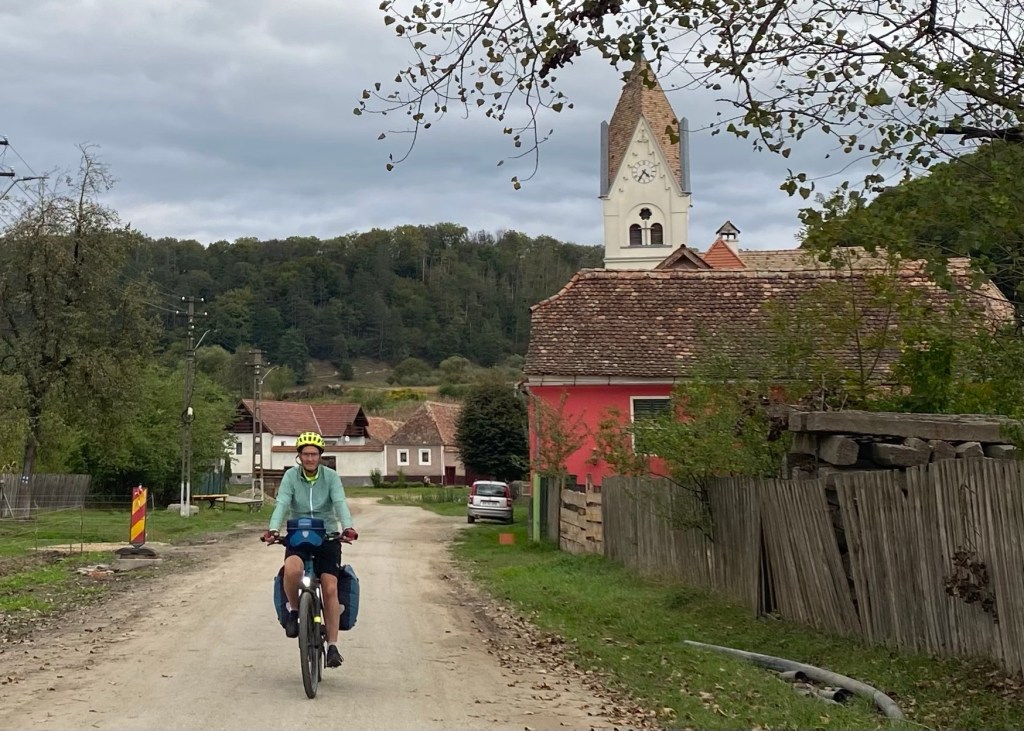
Pedalling out of every village in Romania we were sent on our way with a cheery Drum Bun … bon voyage, safe journey, happy trails, good road.

It became the drum beat of our journey through Transylvania … calling out Drum Bun to each other as soon as we saw the sign, backwards and forwards, loud and joyous.

We even wished startled Romanians Drum Bun, occasionally greeting people who were simply sitting outside their house. It’s easier to say than most Romanian phrases.

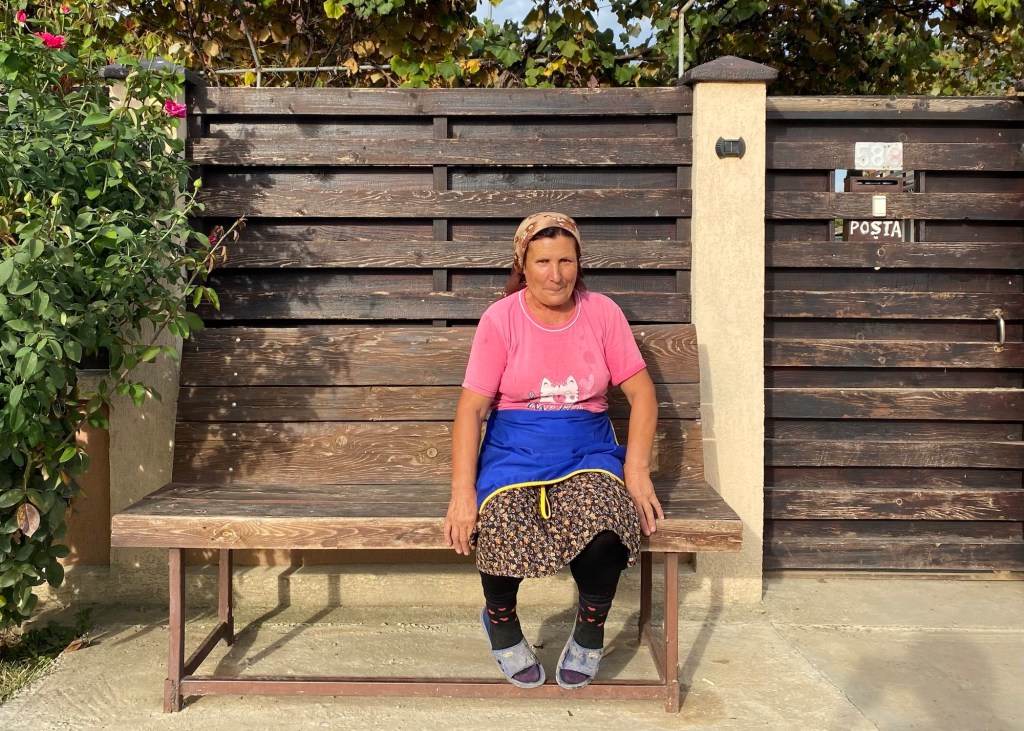
And sitting on a bench outside your house watching the world go by is something older Romanians do a lot.

It’s part of the rustic charm of Transylvania, together with the conical haystacks, the horse and carts, the honey trucks, the Saxon villages.

Photo Credit: True Romania Tours

At times it seemed we were pedalling through a living history museum.

Before coming to Romania, we have to admit that we thought Transylvania was a range of mountains. We were also a bit vague about the Carpathians … maybe they were further East?

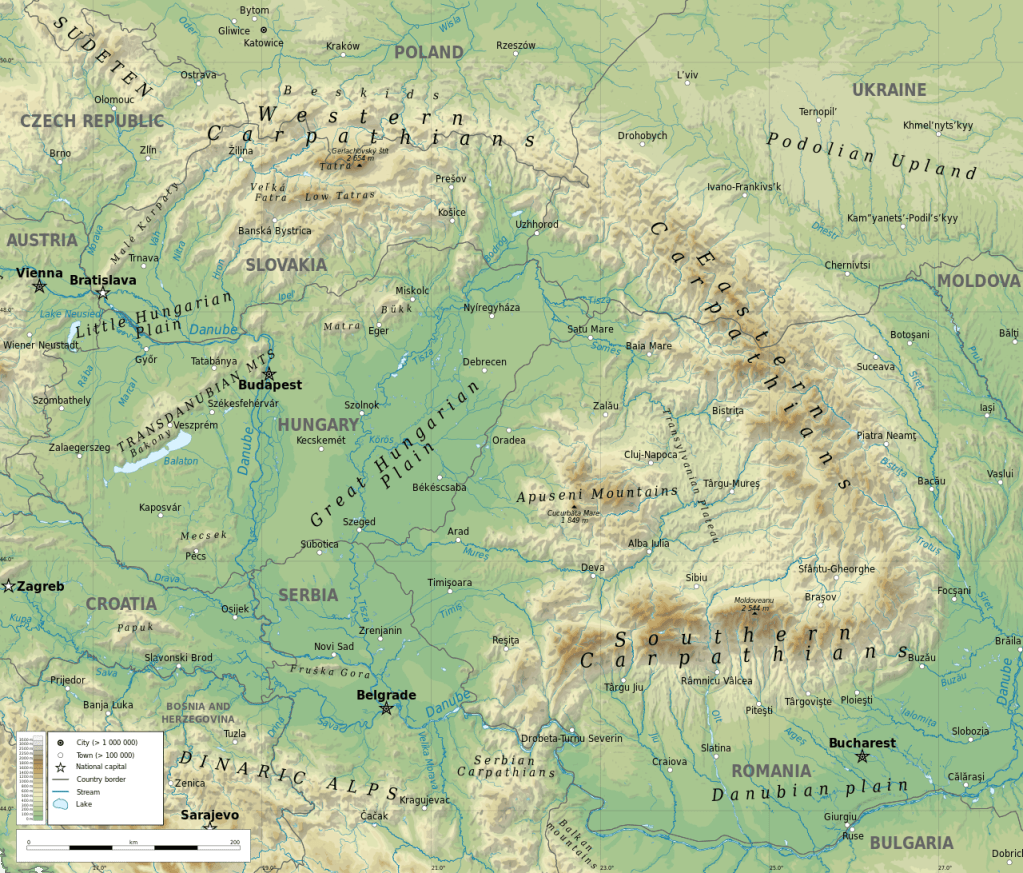
We learnt that Transylvania is one of four historical regions, together with Wallachia to the south, Moldavia to the East and Dobruja by the Black Sea. The Carpathians are the mountain range, sweeping through Transylvania like a fish hook.

The Carpathians Photo Credit:Wikipedia

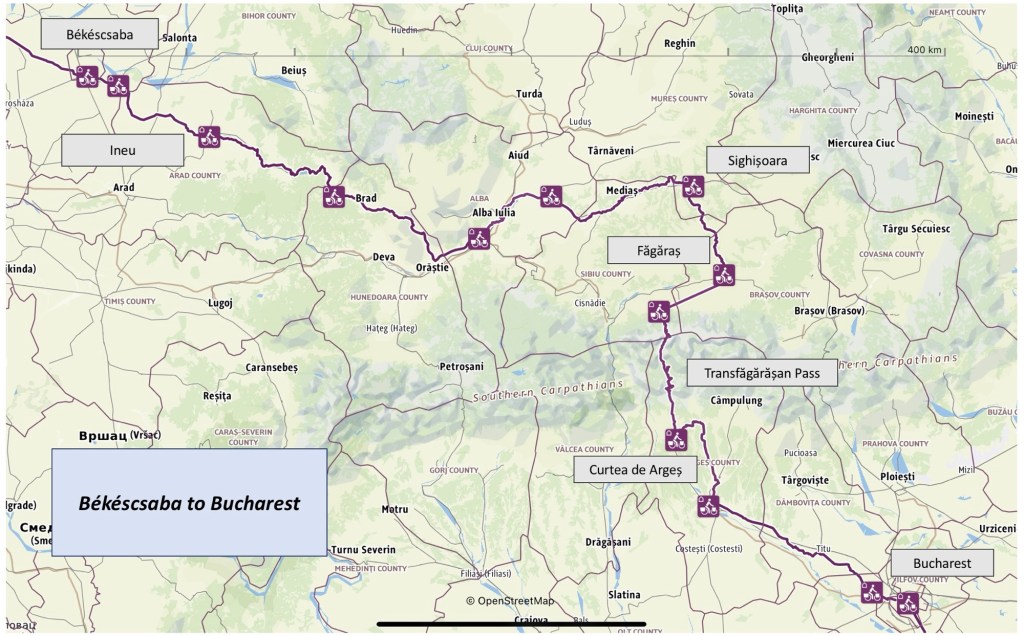
Our route took us north of the Southern Carpathians, then across the Transylvanian Plateau

Transylvanian Saxons were first invited to colonise this area in the 12th century. Initially they came from the Low Countries, especially Luxembourg, whose language is the most similar, then later from across modern Germany.

These people created the unique appeal of Transylvania but have now almost entirely disappeared, driven away by the deprivations of the communist era to Austria or Bavaria.

Having learnt about the ‘tragedy’ of the Trianon Treaty to Hungarians it was interesting to hear a different point of view. Transylvania voted to join Romania (not Hungary) on 1st December 1918 two full years before Trianon, with the date still commemorated as a national holiday, Great Union Day.

History is all about perspective.

Sighișoara streets

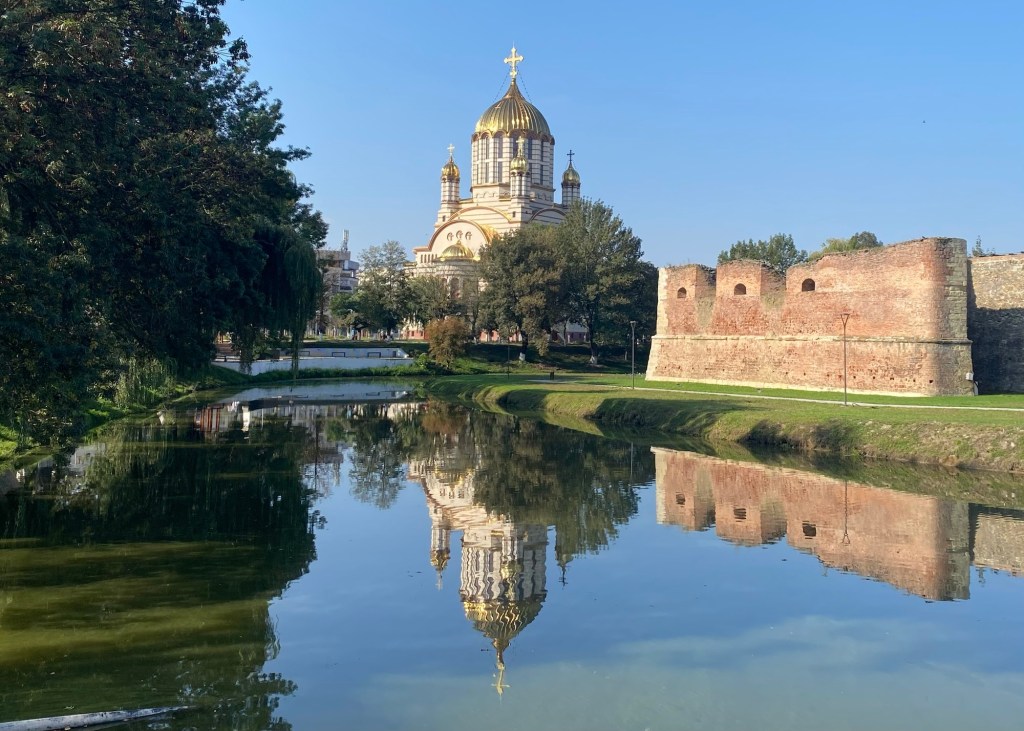
As well as plenty of rural rustic charm, we pedalled through some delightful Saxon towns, notably Sighișoara with its narrow, colourful winding streets and Făgăraș with its stunning renovated castle and Orthodox Church.

Făgăraş Orthodox Church

Any google search for independent travel in Romania throws up many a dire warning. Don’t rent a car, the roads are terrible, the drivers suicidal. 

We beg to differ.

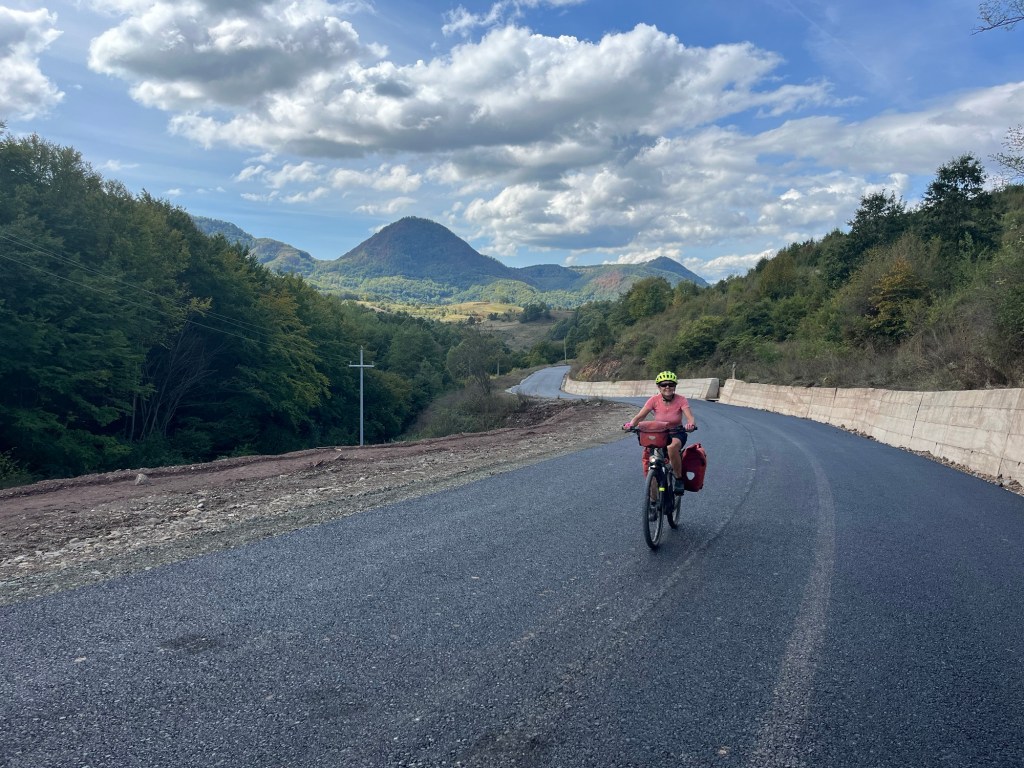
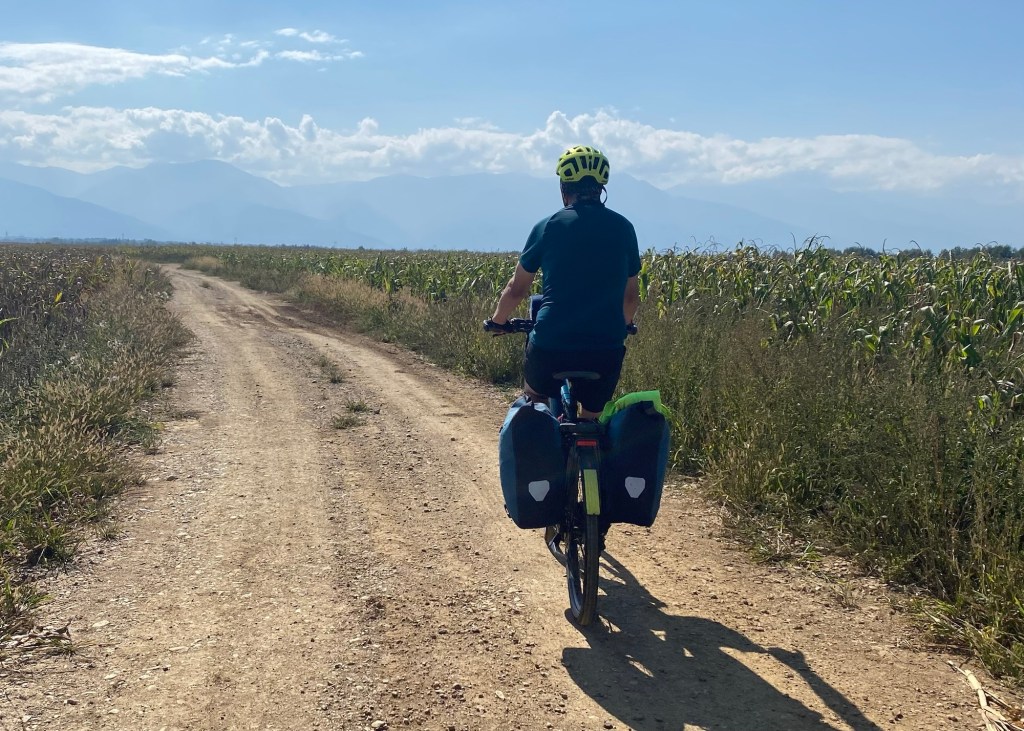
Of course we went on quite a few rough roads, including our fair share of gravel tracks but surprisingly we found ourselves cycling on brand new tarmac a lot of the time. 

New tarmac on a mountain pass

Recognising that the legacy of a creaking infrastructure from the Ceausescu era is holding the country back, the government are half way through a €17bn investment  programme to build new roads and improve existing ones, much of the money coming from the EU.

It shows … and some of it is even being spent on small country roads.

But it wouldn’t be a Clare and Andy bike tour if we didn’t find ourselves in some scrapes when the tarmac runs out.

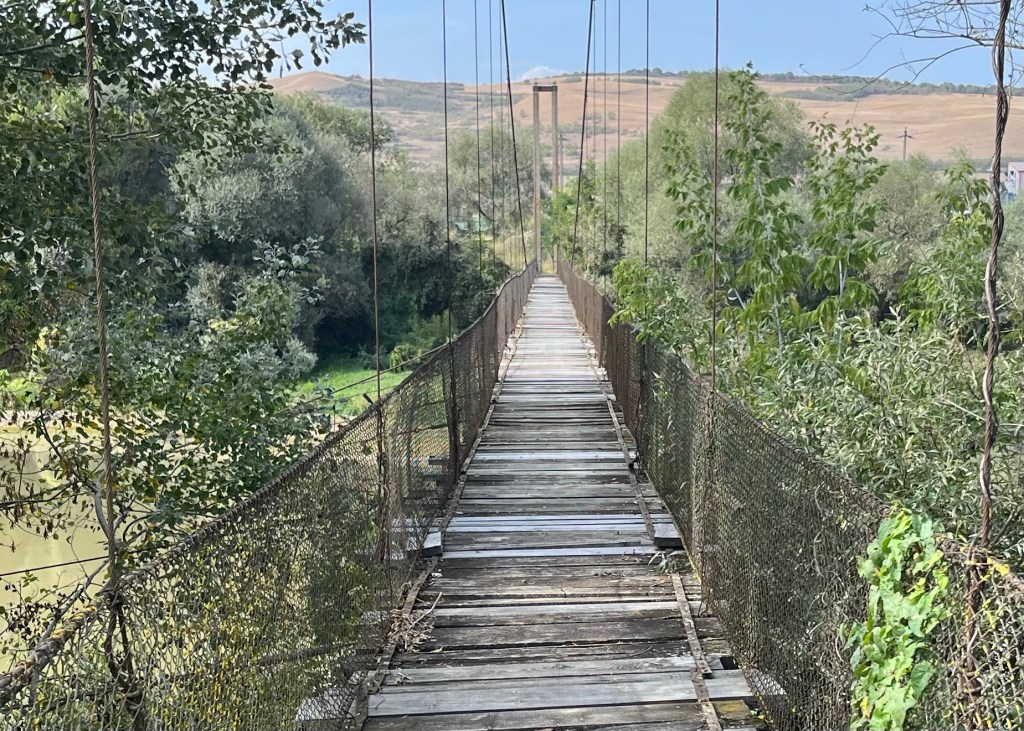
One day we pedalled down a series of small roads through a chain of villages. The road became gravel, then a farm track, before reaching a narrow suspended footbridge.

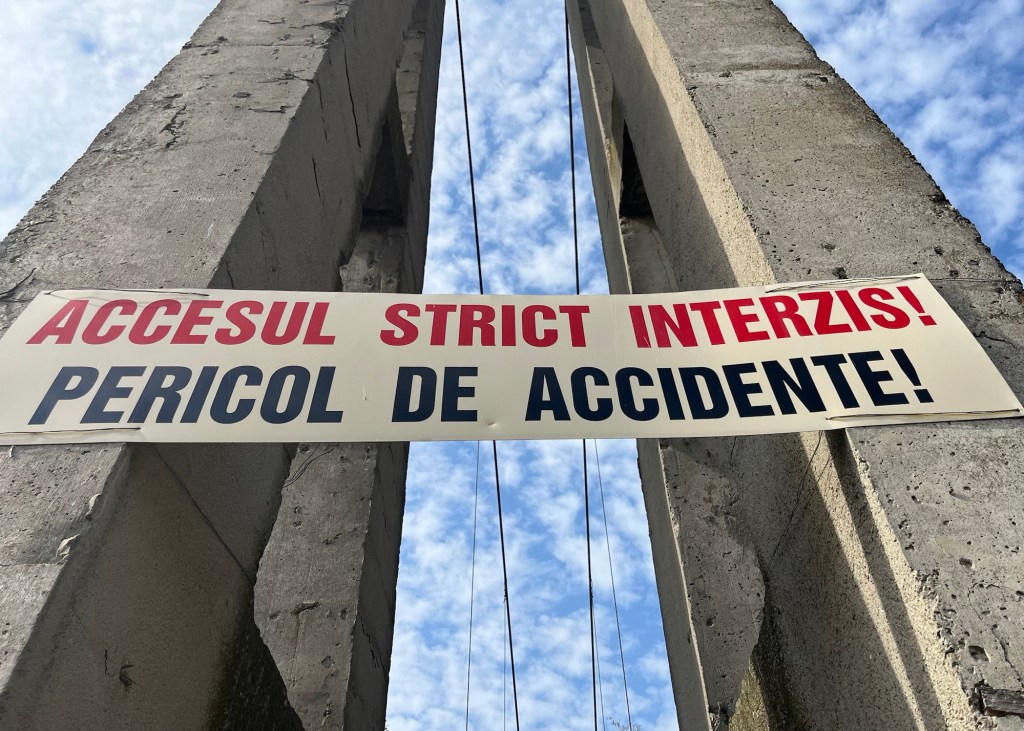
There were some serious warning signs …

Andy went to investigate … the wooden boards did seem a bit rotten in the middle. Probably not worth the risk.

But maybe, just maybe, could it be ok?

As he was pondering, Andy gradually became aware of some loud shrieking noises behind him. It was Clare explaining just what she thought of the whole situation …

“NO WAY am I going across that bridge!”

“You are TOTALLY CRAZY. I would rather go ONE HUNDRED kilometres to get round!!”

“It says PERIL OF ACCIDENT … STRICTLY ANT-TER-DEE!!!”

So we did go round … not 100km but about thirty, back to the main road we’d been trying to avoid, back to the white van drivers late for their last delivery and worst of all back to huge swarms of flying ants that had come out to enjoy the evening sunshine.

Another attempt to avoid the main roads

As well as the roads, the drivers in Romania have been better than advertised.

Romania might have its fair share of boy racers and impatient white van drivers but most people have been pretty good. In fact, we’d put Romania in a solid mid-table position in our Clare & Andy Driver Courtesy League (Holland at the top, Argentina at the bottom) which positions Romania above the UK … who are flirting with relegation!

The other thing we were warned about in Romania were packs of dogs.

It’s common for villagers in Transylvania to let their dogs roam free, especially late in the afternoon. They get together with their mates and there is nothing they like more than chasing unsuspecting touring cyclists … rushing out to bark and yap at us, maybe worse.

Our natural instinct is to speed up and try to outrun them … but we’d read this is exactly the wrong thing to do. It triggers their chase instinct and they can easily out-pace and out-last us.

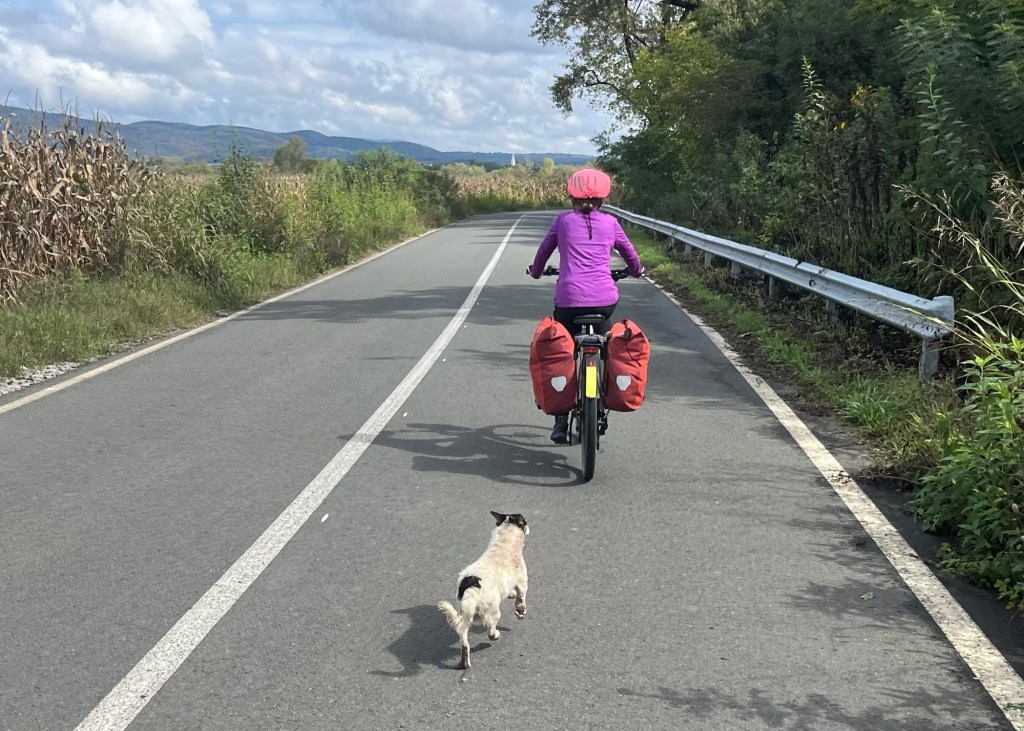
We discovered this for real when this little dog peeled off from his pack and chased us for over six kilometres, sometimes overtaking just to show us that he could. 

He was completely harmless, only wanting to run alongside us for a bit of fun. It was only when we reached the rival dogs at the next village that he gave up and returned to his friends.

To be honest, most of the dogs we’ve seen on the street have been equally harmless, lazily raising an eyebrow as we passed by or politely crossing the road to let us through. Most of the barkers and yappers have been behind a fence with the real devil dogs properly chained up.

The one time we came across a more aggressive pack we did what the experts suggest (even though it’s completely counterintuitive). Slow down, stop, get off your bike, place it between you and the dogs, make a commanding noise and raise your arm as if you have a stone.

The only problem is it takes Andy a very, very … very long time to get off his bike. So long that Clare has likened him to a floundering elephant. Enough time for a snarling dog to take a piece out of him.

Andy’s normal method of getting off his bike

But adrenaline kicked in.

He leapt off, shouted “Oi! Oi!”, stood tall behind his bike and put his arm in the air. It worked … the snarls stopped and the dogs slunk away to a safe distance.

Andy had made himself Top Dog!

A guesthouse devil dog warning

Vlad Dracula is another a ubiquitous presence in Transylvania.

He was a real 15th century Wallachian prince, engaged in endless battles with the Ottomans, but is also said to have inspired Bram Stokers famous fictional character, Count Dracula.

His signature was not fang marks on a victim’s neck but to have his enemies, including many Transylvanian Saxons, impaled on stakes so they endured a slow, painful death. Much more bloody!

Thus he became known as Vlad the Impaler.

To some Vlad is a hero for standing up for Wallachia and keeping the Ottamans at bay. To others he is a villain for his extreme cruelty.

Fighting Vlad

He is certainly a hero to the Romanian tourist industry … he’s everywhere, either as his historical self or as a fictional vampire.

Keeping away of Count Dracula

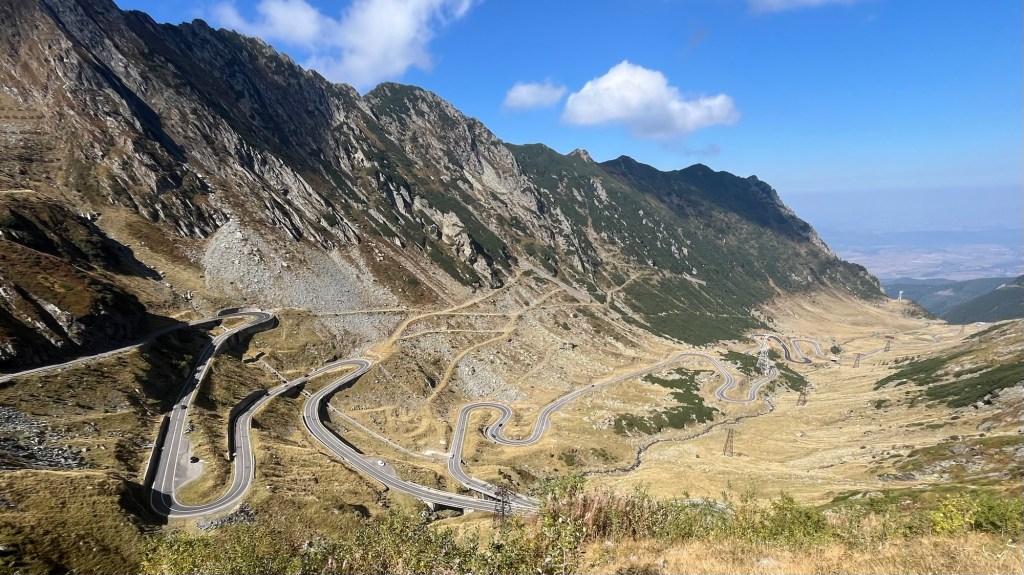
Before we started Andy had tried to persuade Clare to include the famous Transfăgărășan pass on our ride through Romania, a highway that no less an authority than Jeremy Clarkson has described as “the best road in the world!”

She was not at all keen.

Maybe it was the 1600m of climbing that put her off? Maybe it was the stray dogs?

No … it was the bears!

29% of Romania is still forested, especially in the Carpathian Mountains, providing the perfect habitat for Eurasian brown bears. There are over 6000 roaming the woody slopes.

After a beautiful day of cycling through the rolling hills from Sighişoara to Făgăraş, Andy thought the Transfagarasan was worth one last try. 

Would she like to go to Brasov, visit the famous Blad Castle and enjoy/endure more Vlad Dracula memorabilia? Or would she like to ride over that pass he’d mentioned?

This time Clare was extremely enthusiastic. That’s a proper cycle touring experience, she said, of course we should go!

“But what about the bears?”

“No probs … now you’re Top Dog, you can easily fend off a bear!”

Andy wasn’t sure it was quite the same thing.

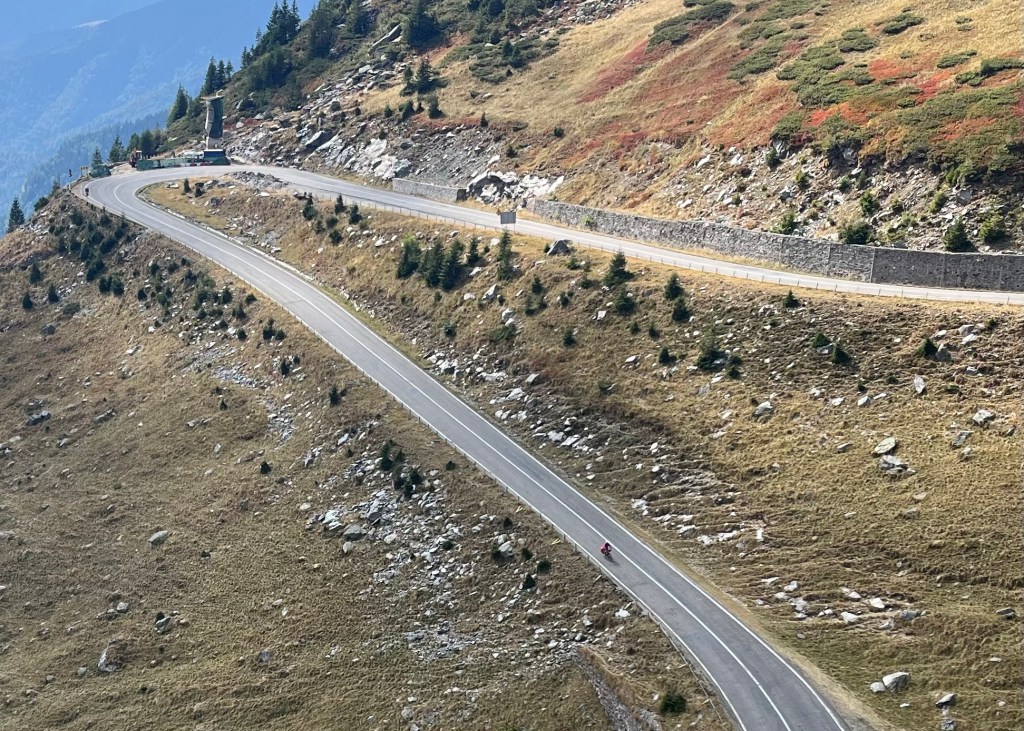
Transfagarasan Highway

The road is unquestionably beautiful but it also has a dark history. Built during Nicolae Ceausescu’s dictatorship in the 1970’s as a military escape route in case of a Czechoslovakia style invasion by the Soviet Union, it was dynamited out of the bedrock by untrained soldiers. There were many casualties, officially 40 deaths but unofficially it was in the hundreds.

Memorial to the victims

Staying overnight at the bottom of the climb we had the first bit of range anxiety we’d had for ages, as this was our first high mountain pass on our e-bikes. 

How much will a 1600m climb take out of our batteries? Even with a long descent, will we make it to or our hotel 110km away? Will we run out of juice just as we meet a large bear?

Andy’s bike feeling nervous about his battery life

Setting off bright and early, we wound our way up this extraordinary road enjoying the mountain air. Clare is now much faster than Andy at riding uphill on e-bikes as the power-to-weight ratio has moved in her favour.

Long time readers will be pleased to hear that Clare is now clipping in on both sides so that’s also increasing her uphill pace. She first tried the technique racing along the Danube, inevitably falling off the first time she stopped but she’s now adapted well and is enjoying the extra power.

Andy just has to watch her zoom up the climbs, disappearing from view.

To stay anywhere near her, he normally switches to purple (level 3 support) or even to red (level 4 turbo). But this time we made a pledge to stay in blue (level 2) to save our batteries, which made it quite hard work. Clare was kind, easing off to avoid wearing Andy out too much.

Phew!

Emerging from the tree line, we paused to take in the view and pulled over next to a man who was playing with his two young sons.

He broke away from the game and stared hard at our bikes. “Are you thinking to go over the top on those?” he asked.

“Yes”, said Andy “it’s not far to the top, we’re about half way.”

“No, no,” he looked worried, “I don’t mean the climb. There are bears the other side, many bears, many.”

“Where are they?” asked Clare “In the parking areas?”

“Yes, yes. The parking. Also in the street.”

This was NOT what Clare wanted to hear. Much as Andy reminded her that people cycle over the Transfagarasan all the time, she could not get the image of a bear attacking us out of her head. 

And we hadn’t seen anyone else on a bicycle that day. 

And she was no longer feeling quite so sure that Andy’s top dog tactics would work.

Andy explained to the man that it didn’t matter as we’d be going downhill, so we could make a fast getaway. He smiled weakly and got back into the safety of his car.

We carried on climbing, carefully monitoring our battery consumption, admiring the views, watching the cable car, even enjoying a lunch of roasted vegetables at the top.

Lunch service

When we reached the summit, we’d both used 52% of our batteries for 27km distance at an average gradient of 5.1%. A few quick calculations … it should be OK.

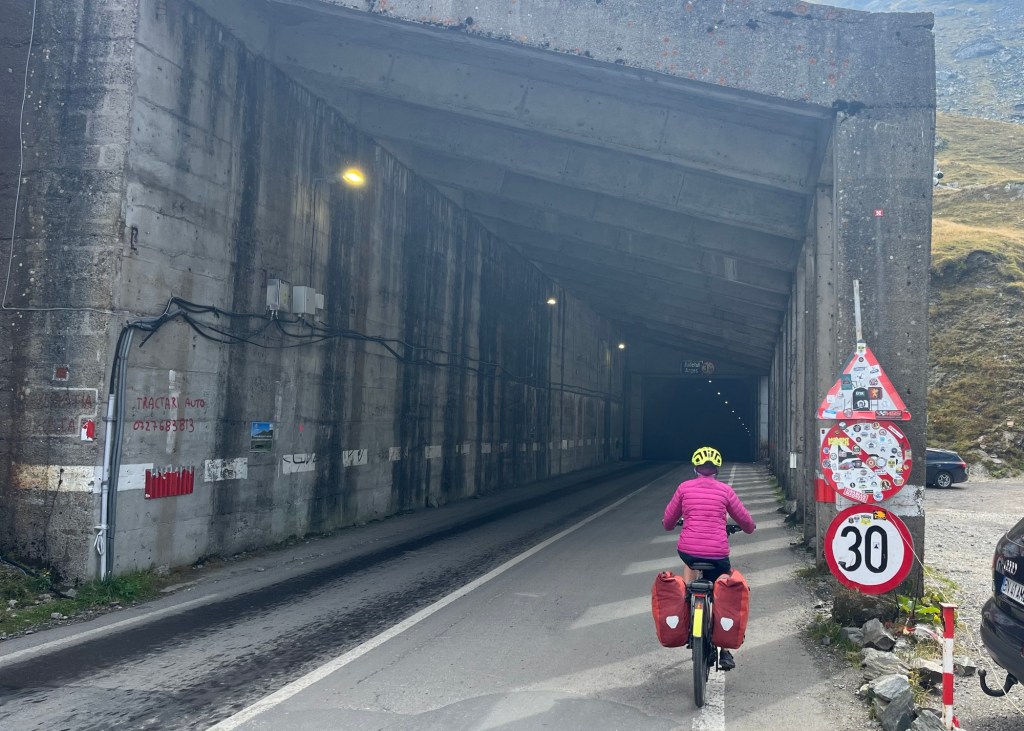
Before enjoying the twists and turns of the descent, we first had to pass through 884m of the Bâlea tunnel. Then we swept down the mountain, all the time keeping a watchful eye out for dark brown bear-like silhouettes. By the time we reached Lake Vidrarul we’d only seen two bears, both surrounded by tourists in cars taking photos.

Not a bad result at all we thought.

Clare descending

Lake Vidrarul, formed by a dam at the far end, is a big lake. The road around it runs for 27km up and down through thick forest, which meant using a lot more precious battery power than we’d bargained for.

It also meant our escape speed was limited, should we need it. 

And we did need it … we kept running into bears, one after another just as the man had said, usually with 2-3 cars in attendance. Despite the many warnings, some tourists continue to feed them … which of course is why they’re sitting by the side of the road in the first place.

We managed to slide by unnoticed.

But then we turned a corner to find a large male patrolling our side of the road. We stopped and decided to try the safety technique recommended by local cycling experts … wait for a car, ask them to drive slowly past the bear and keep the car between you and the bear.

We were lucky, the four young people in the next car to come along spoke perfect English, understood exactly why we wanted to do this strange manoeuvre and executed it perfectly.

In total we saw nine bears. In truth, none of them took any notice of us, even this mother protecting her two cubs.

From the dam at the end of the lake it was another 30km ride to Curtea de Arges and our hotel. We both pulled up with just 10% battery left.

Brilliant, thought Clare, that’s a good buffer.

Damn it, thought Andy, I could have used more power on the climb.

Our hotel in Curtea de Arges

After all that excitement we decided to skip Bucharest and get to Bulgaria as quickly as possible.

But when John and Anne told us they were going to be passing through at the same time, we jumped at the chance to see them. It was so lovely to catch up with good friends, talk about normal life, eat and laugh together, explore the city a little.

Anne and John are interailing to Turkey and back

It seems ironic that the most popular sites in Bucharest are based on the excesses of Ceausescu and his wife and the personality cult they were obsessed with developing.

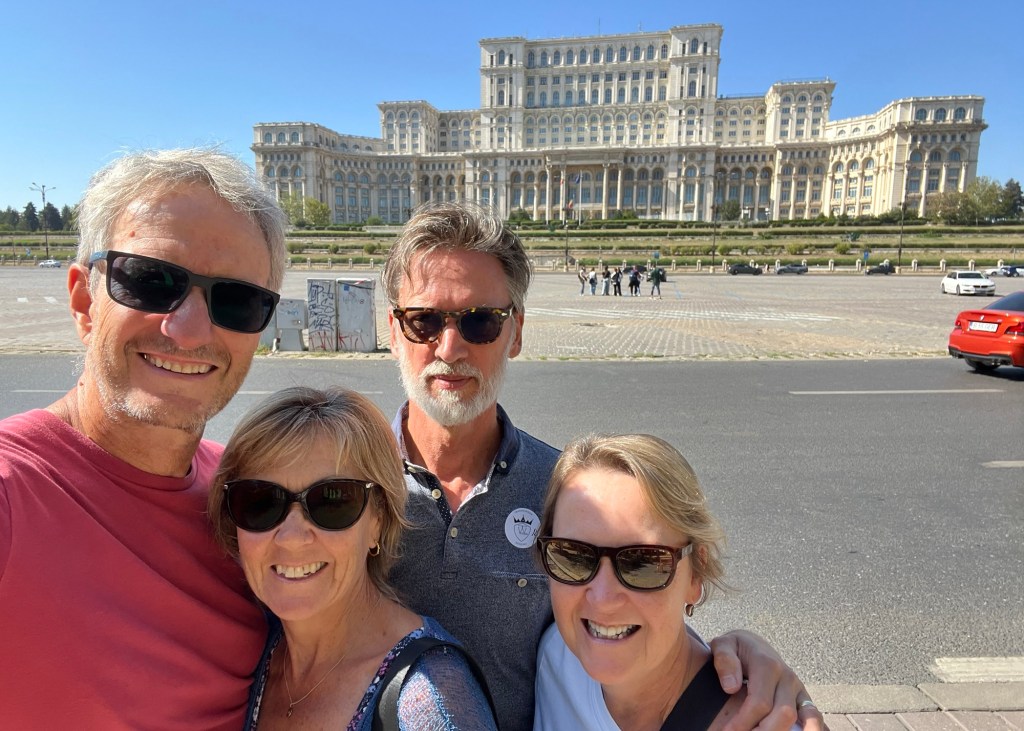
We joined the tour groups, gawping at the outrageously large Palace of the Parliament, the heaviest, most expensive and most ornate administrative building in the world. It cost over €4 billion at a time when Ceausescu had imposed a crippling austerity programme on the people with food, fuel, energy all rationed and many starving.

Just a hallway

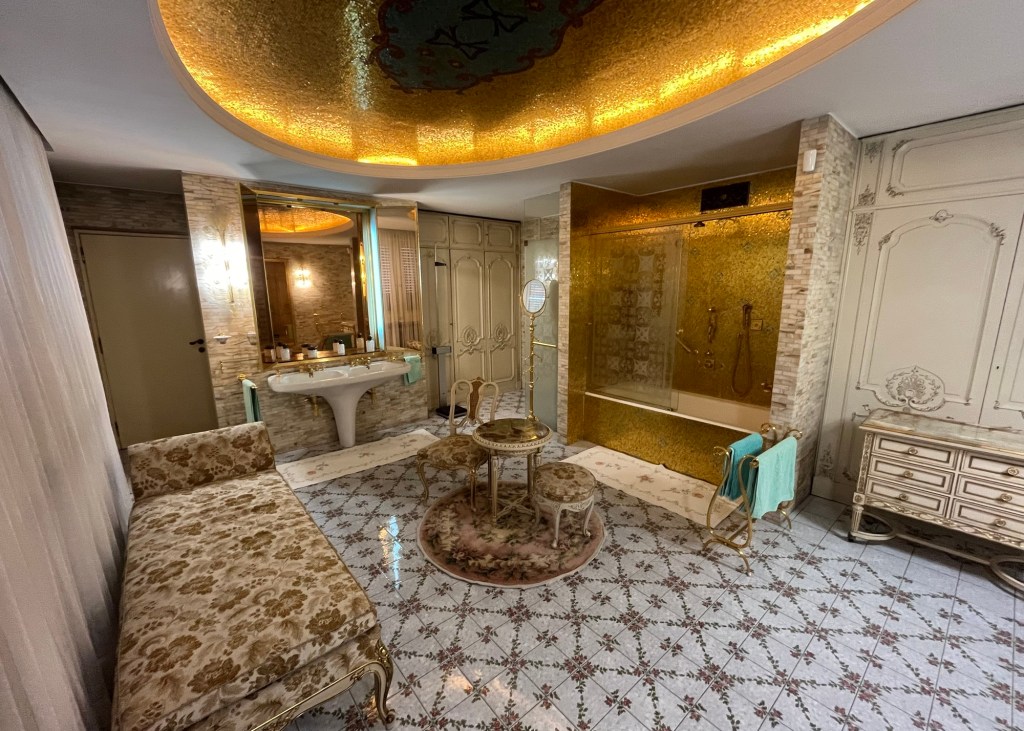
Then to their private villa with its famous gold bathroom fittings, swimming pool and nuclear bunker in the basement.

The bathroom

As Anne said, it was weirdly distasteful.

Romania has been truly delightful country for slow bicycle travel. An ever fascinating iMax view from our handlebars and none of the dangers we were warned about becoming real … not the roads, not the drivers, not the dogs, not even the bears!

In Bucharest Photo Credit: John Coghlan

So come to Romania if you’re looking for an interesting and unusual country to visit. John and Anne advise against the slow, unreliable trains … but take a tour, hire a car … especially rent an e-bike.

And when you come … we can only wish you one thing. Drum Bun!

Clare and Andy

Bath to Budapest

3,407km pedalled (2,117 miles)

17,678m climbed

176 hours in the saddle
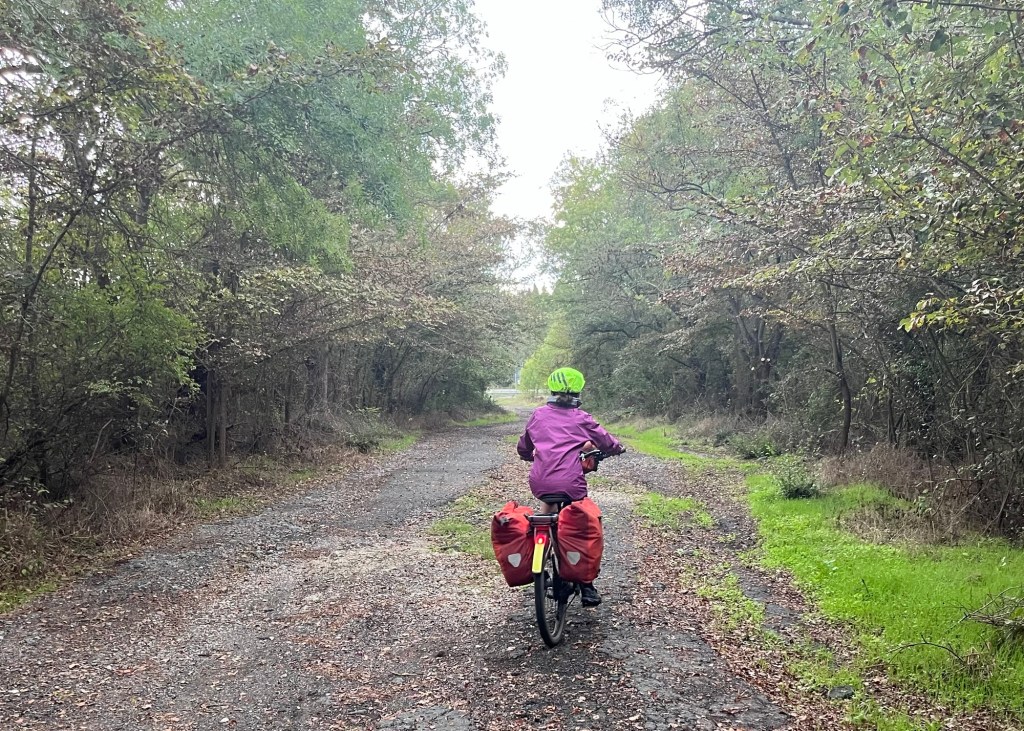
Clare was excited to pass 2000km since we left Nuremberg

The Rough with the Smooth

Clare’s face was a picture!

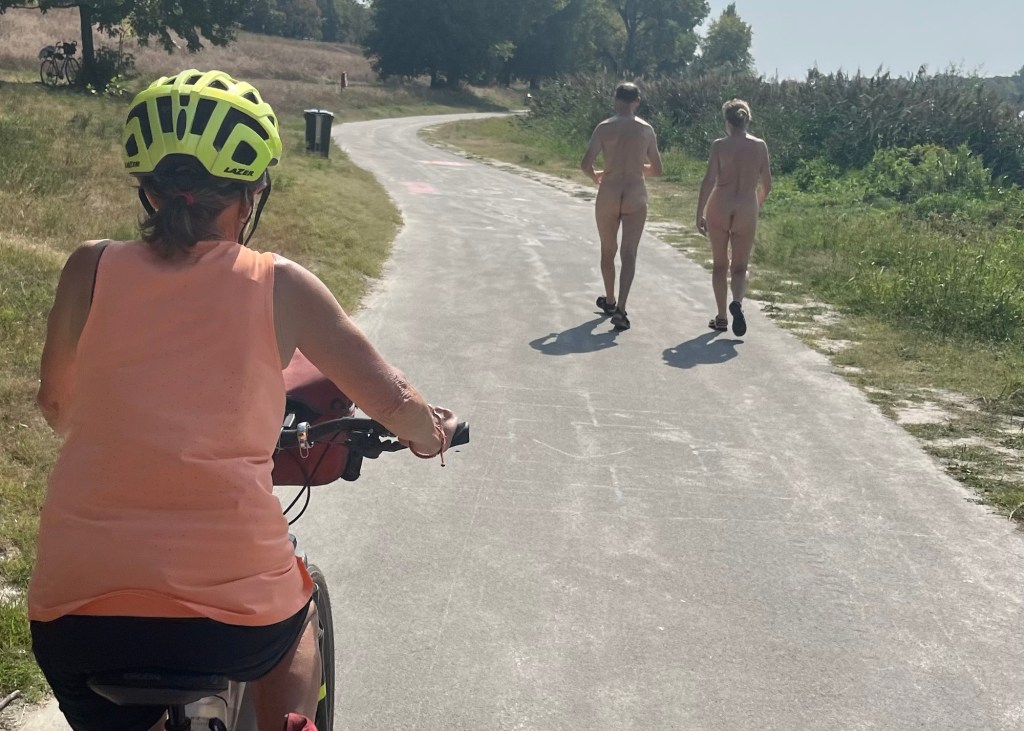
Blocking her path was a man wearing only a pair of sandals and an all-over tan, proudly displaying his not inconsiderable manhood.

Behind him was another, and then another.

Leaving Vienna, we had just rejoined the Danube Cycle Path towards Bratislava. Eyes front, head down, she pedalled on.

Naked people were everywhere. Sunbathing, enjoying a coffee, sauntering down the path ahead of us.

This part of the Danube turned out to be an area for Freikörperkultur or FKK, literally translating as Free Body Culture, a ‘type of naturism that makes maximum use of sun, air and water to restore your physical and mental well being.’

But it was also a family-friendly bicycle path.

And it was certainly one of the more unusual views we’ve ever had from our handlebars!

Cooling off in Budapest after the shock

Since rolling off the ferry in Holland last August we’ve worked out that a remarkable 80% of our journey through Europe has been on dedicated cycle paths. Most of them have been extremely high quality … super-smooth and free of any bumpy tree roots pushing up through the tarmac.

And the prize for the smoothest of all goes to …  Slovakia. We spent very little time in the country but all of it was pedalled on raised, smooth, brand new bicycle-dedicated ribbons of asphalt.

The smoothest of all … Slovakia

So it was a bit of a shock to find ourselves back on the roads in Hungary! 

Not that Hungary is not doing its best to introduce a cycling network to rival its northern neighbours.

It is … there are plenty of bike paths.

Some of them are good bike paths, smooth with a fresh coating of asphalt.

But others are bad bike paths, rough, cracked, weed infested and with large tree roots pushing up through the surface, bumpy enough to send our panniers flying.

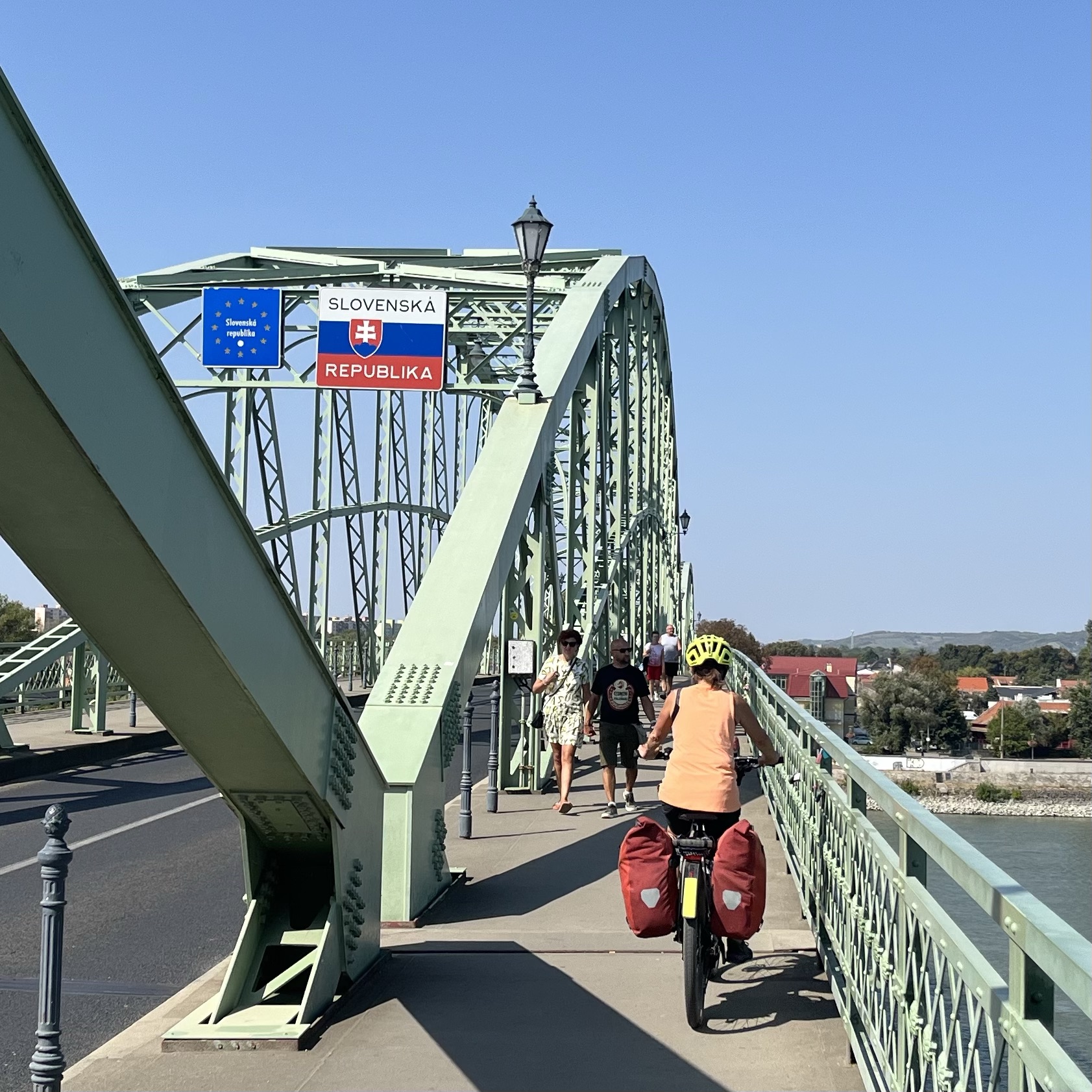
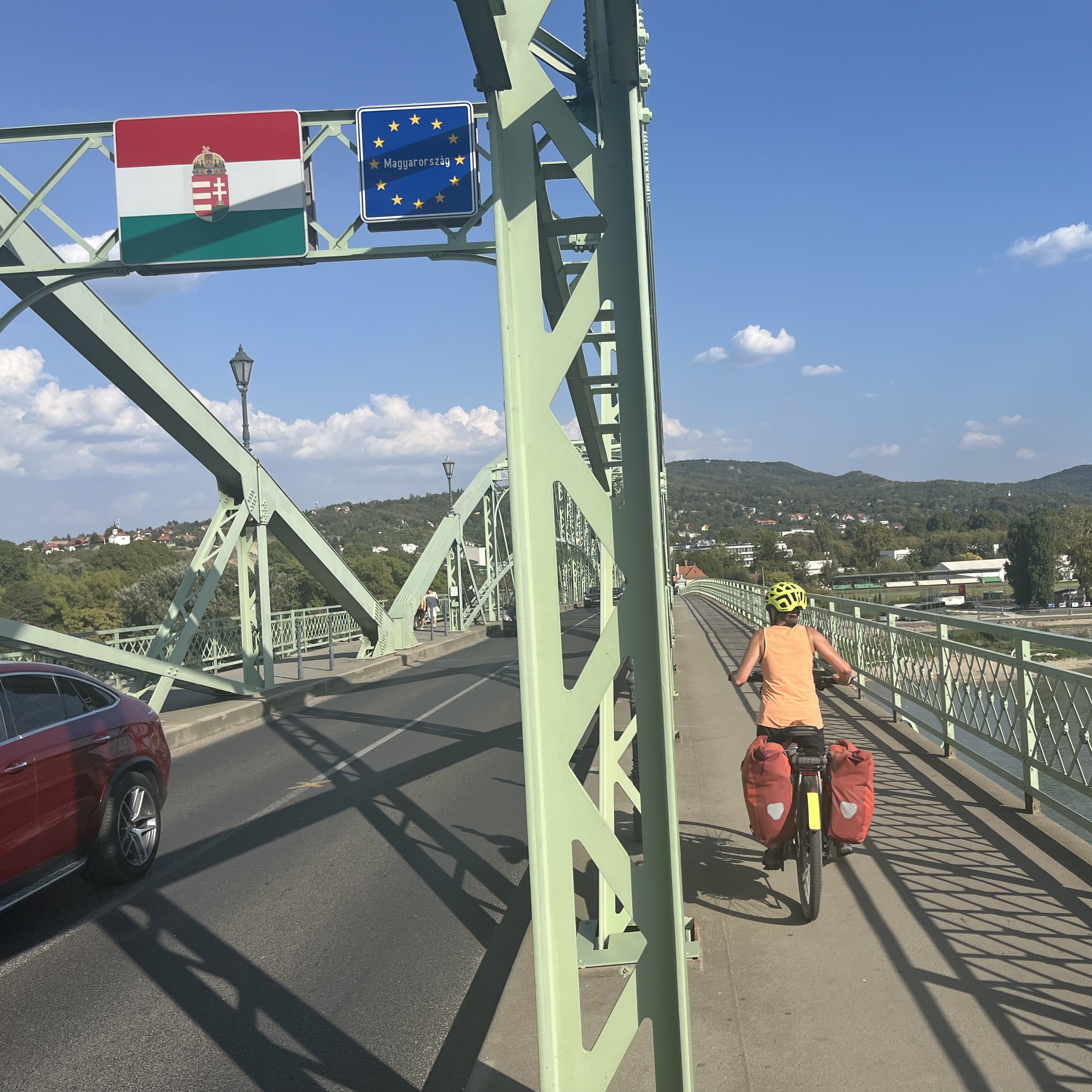
In the first few days in Hungary, we managed to avoid their roads by crossing the Danube back into Slovakia as often as we could. Being able to criss-cross the borders at will was a reminder of how much things have changed in Europe.

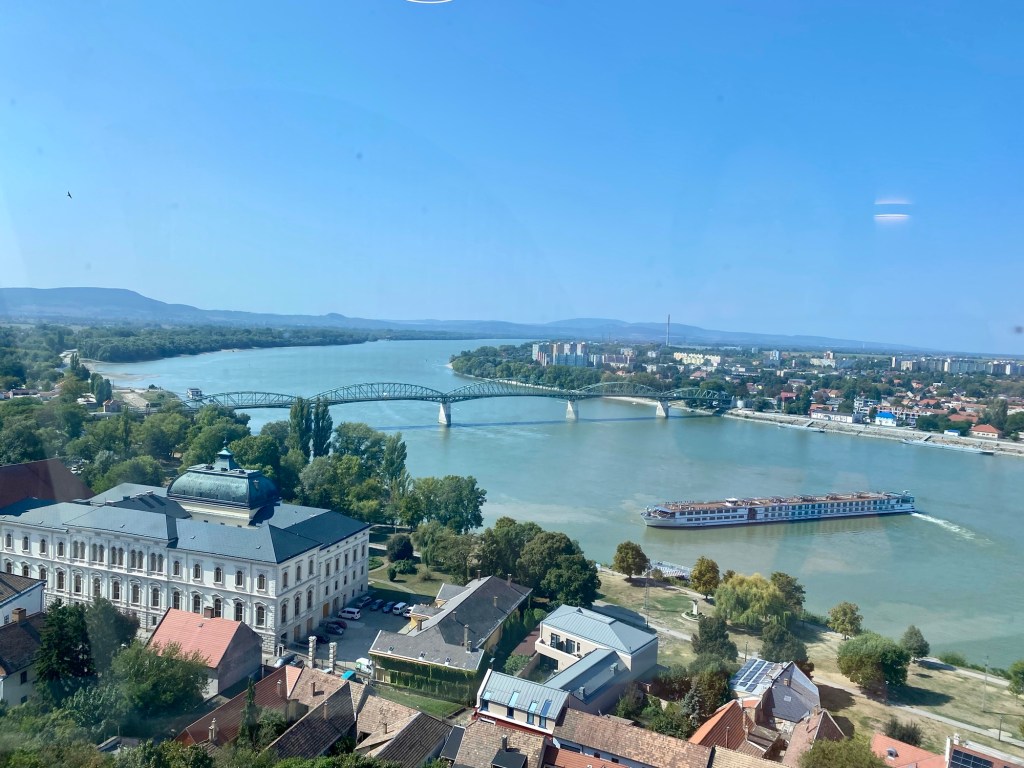
All this border crossing brought us to the beautiful town of Esztergom, the first capital city of Hungary and site of the crowning of St Stephen, their first king.

Esztergom Basilica

The magnificent baroque Basilica was built in the 19th century and is still Hungary’s largest church.

View from the Basilica

Esztergom lost most of its influence in 1920 after the Treaty of Trianon, imposed by the Allies (UK, USA, France, Russia) at the end of World War I, reduced it to a border town.

We heard quite a lot about this treaty as we passed through Hungary, surprised to find that several young people we met still felt resentful about it, given that it was signed over 100 years ago.

Hungary lost two thirds of its land, 60% of its population, 30% of ethnic Hungarians and many resources including almost all its gold & silver mines and over 80% of iron ore.

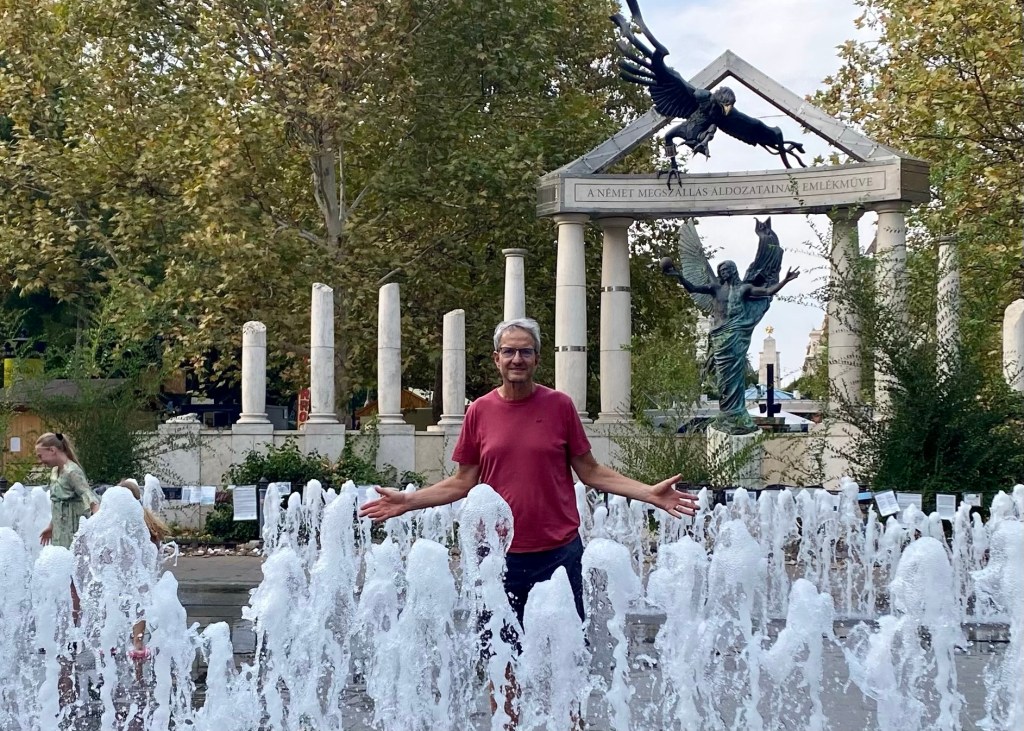
Victor Orbán, the Prime Minister, often keeps the issue alive as part of his nationalist message. In 2020 to mark the 100th anniversary, he unveiled a memorial right outside the Budapest parliament building depicting the names of all the lost towns and villages.

A bit shocked that we’d never heard of this treaty before, considering the impact it had on a major European country, we still don’t fully understand it. But it does feel like rough justice to Hungarians … though no doubt a relief to the many ethnic Romanians, Slovakians etc. who live in those areas.

Arriving in Budapest

We ended up staying in Budapest for four days, enjoying another city break. This was not to see the sights but to treat some saddle sores that Clare had developed probably from the extremely hot, dry weather.

Saddle sores are different to being sore from the saddle. They look like angry red spots and get so painful they become all you can think of as you ride along.

Clare has nicknamed them ‘pickels’, German for pimples, and for a while we thought these pickels might bring a premature end to our trip, such was her discomfort on and off the bike.

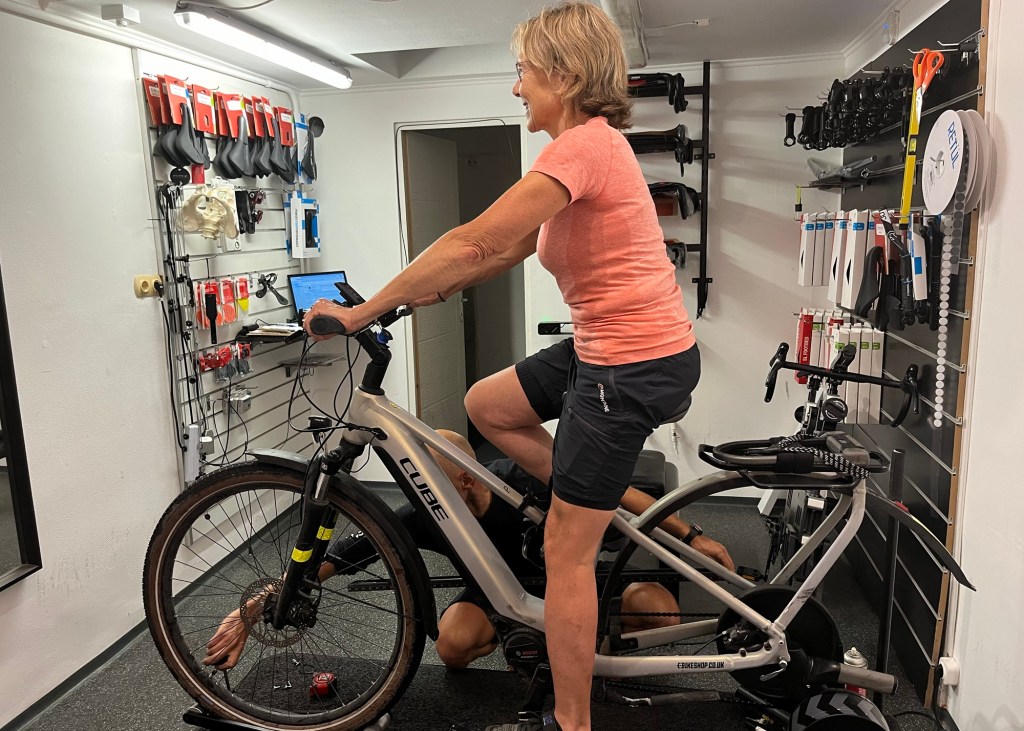
A four day break from cycling helped a lot. As did new cycling shorts, some Preparation H cream (normally used for haemorrhoids) and a last minute bike fit. Zoltan changed the tilt of her saddle a fraction and made a tiny adjustment to the position of the cleats on her shoes.

Small changes can make a big difference … apparently!

Bike Fit

Looks like he was right … since leaving Budapest her pickels are a lot less angry.

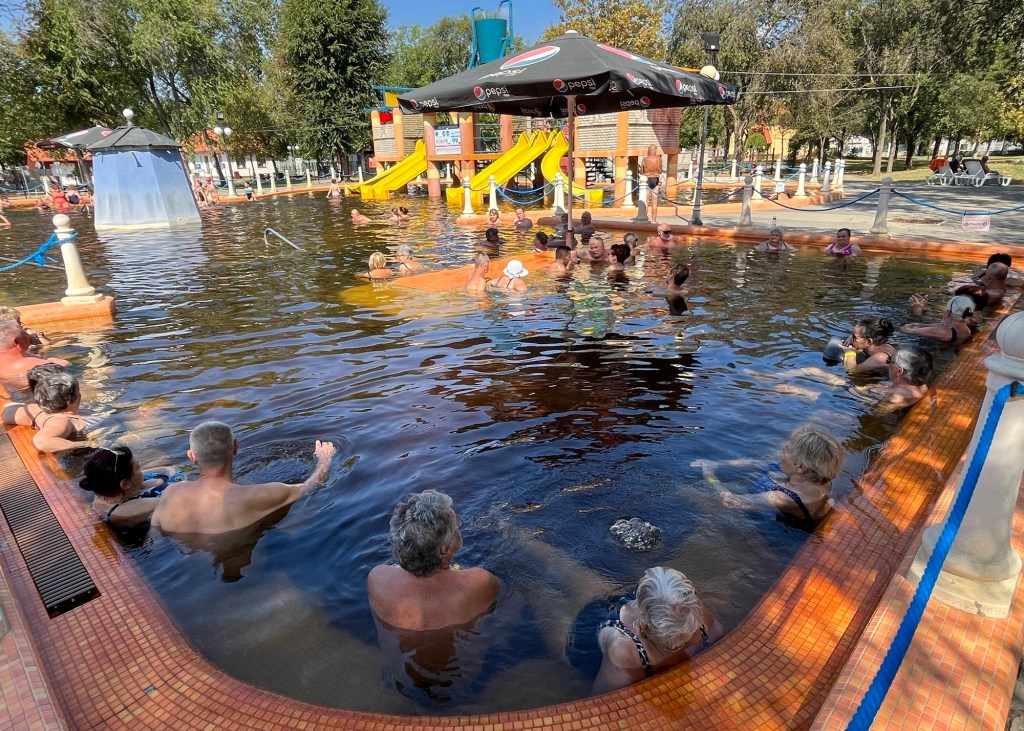
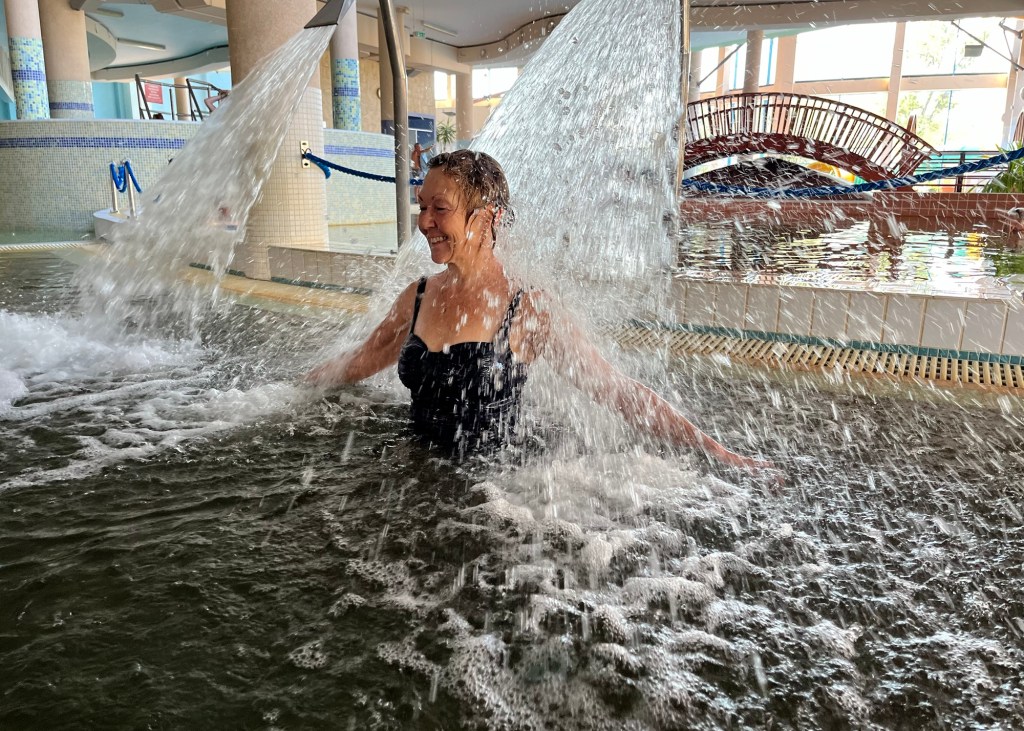
Perhaps the biggest benefit came not from the bike fit or the haemorrhoid cream but from the thermal baths for which Hungary is famous. We went to two in Budapest … the biggest and most popular at Szechenyi (jam packed with tourists) and a smaller more local one called Rudas (better but still very busy).

Szechenyi Baths – so busy, even on a Monday

Rudas Baths

But it was in the small village of Cserkeszőlő that we stumbled across our best thermal bath experience, completely by chance. It was just an overnight stop on the ride across the Great Hungarian Plain towards Romania.

Discovered in 1938 during a failed oil exploration, the water in these baths emerges at 93°C and comes from a depth of 2000m, containing some of the best mineral content of any spa in the country.

For Cserkeszőlő it’s liquid gold!

A well balanced life?

In total, there are more than 1300 thermal baths in Hungary, a country where soaking in warm mineral waters for hours on end is not seen as a decadent indulgence, just a natural part of a well balanced life.

Decadent indulgence

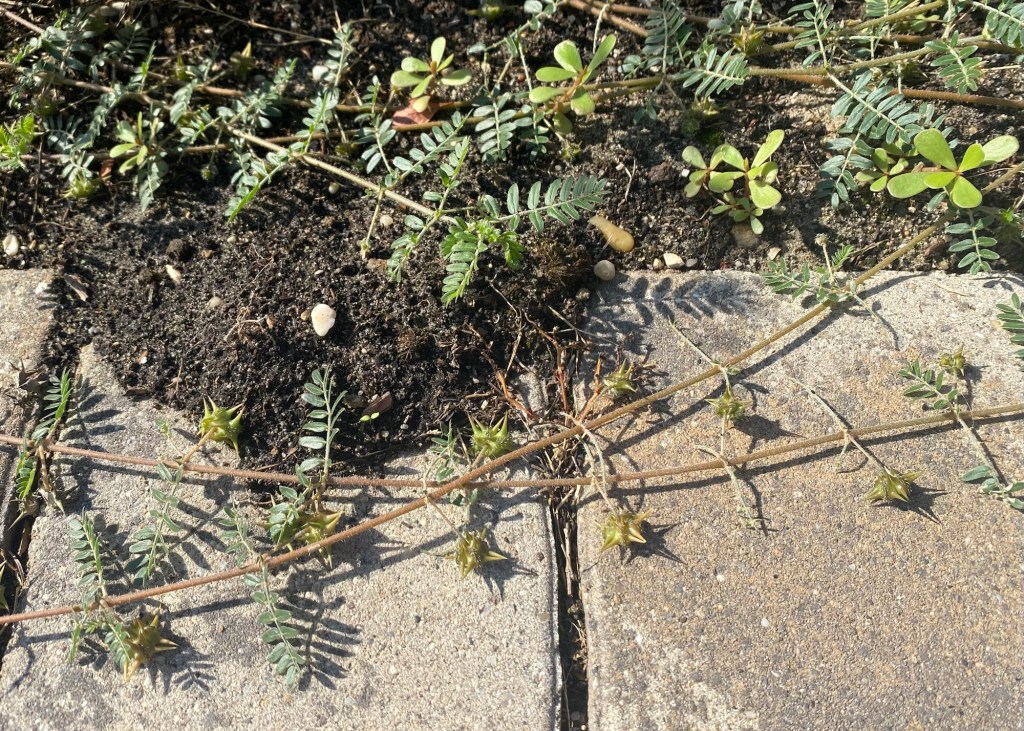
The moment she saw our bikes, the lady at our Panzio (B&B) in Cserkeszőlő rushed out in alarm . “Danger, big danger!” she shrieked as she grabbed a small weed from the centre of the drive and thrust it towards us.  

It looked harmless. 

“Very bad, very bad …. my bicycle … six, SIX! Big danger!”

She was trying to tell us that she’d suffered six punctures in as many weeks. It was only when we looked more closely at a longer stem that we saw the seed pods and understood … each one was protected by sharp, nasty barbs.

Small but lethal

This plant is Tribulus Terrestris, known to cyclists as Puncture Vine but with many other names including Goathead, Devil’s Thorn and Devil’s Eyelashes.

It thrives in loose, dry arid soil which few other plants can survive so is perfectly adapted to the cracks that form on cycle paths. The seed pods are barbed so that they can attach themselves to animals hooves for greater dispersal and are strong enough to penetrate a bicycle tyre, especially as they dry out.

Hence the name!

Instinctively we looked down at our tyres. Sure enough there was a seed pod clinging to the side of Clare’s front tyre … and it was now a very squidgy tyre!

“I told you, big danger!” she said, “Everywhere in Hungary. EVERYWHERE! Very bad.”

The Panzio (B&B) in Cserkeszőlő

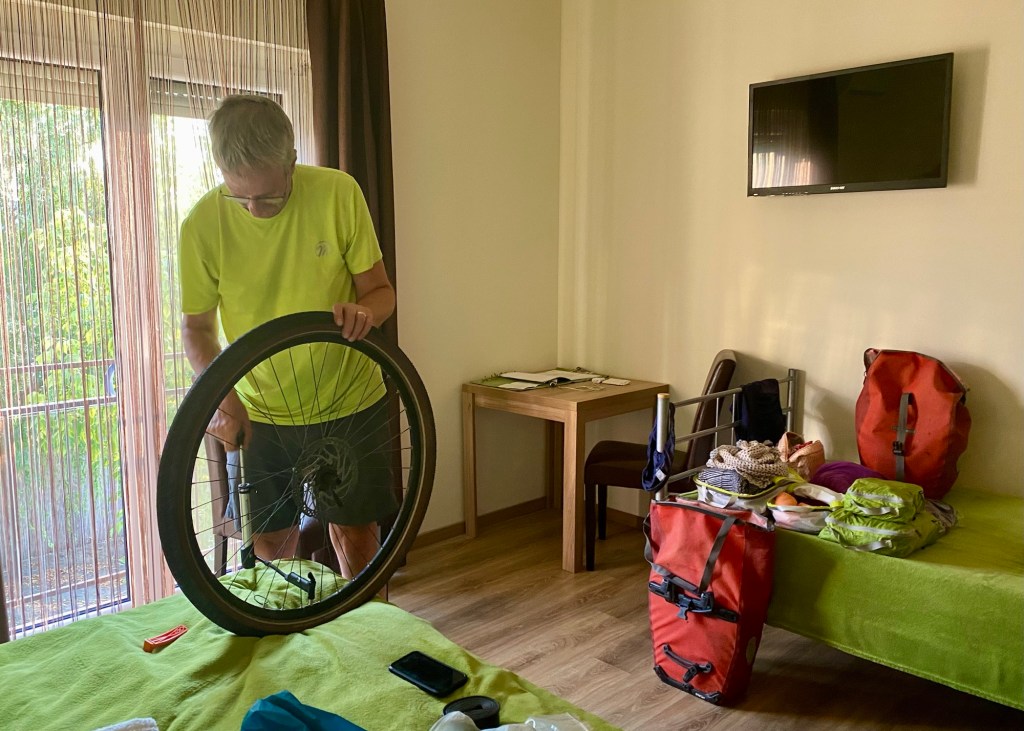
This was our first puncture for three years and the first on our new electric bikes with their big fat tyres.

We thought we had become reasonably good at replacing inner tubes but this one was a major struggle. We were rubbish, completely out of practise, just relieved to be doing it in our room rather than by the side of a dusty road.

The next morning we relaxed for a long time in the thermal baths safe in the knowledge that we’d only planned a short, leisurely ride that day. It was pure decadent indulgence.

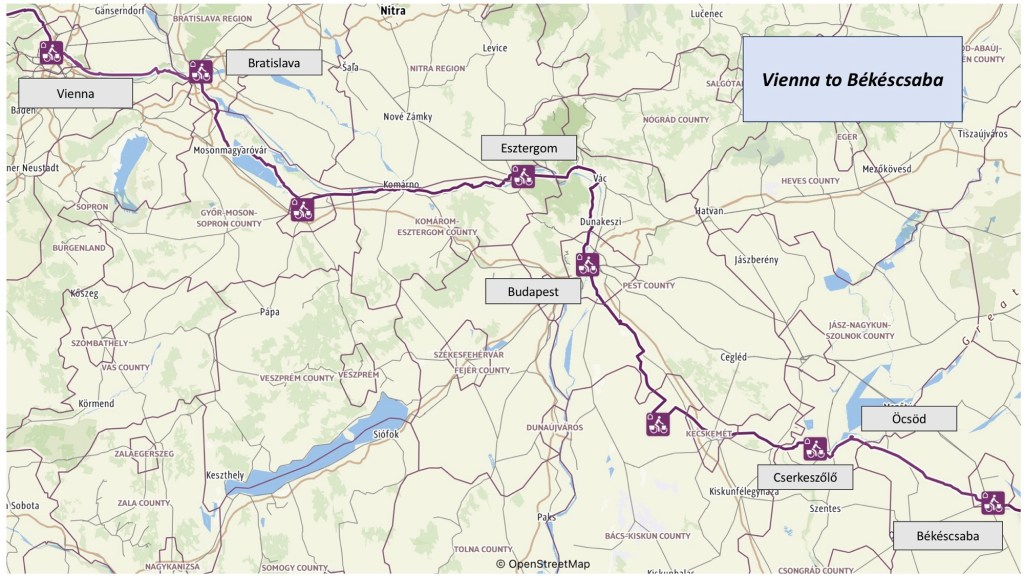
When we’d planned the best way to pedal across the Great Hungarian Plain from Budapest to Békéscsaba, there had been two choices …

One … follow Hungary’s bicycle route 5 as it meanders beside the Körös river. This meant taking an extra day but with shorter rides each day.

Or two … follow the main road and the cycle path that goes alongside it. Fast, but boring. And who knows whether it will be a good or bad Hungarian bike path?

We chose the leisurely river route.

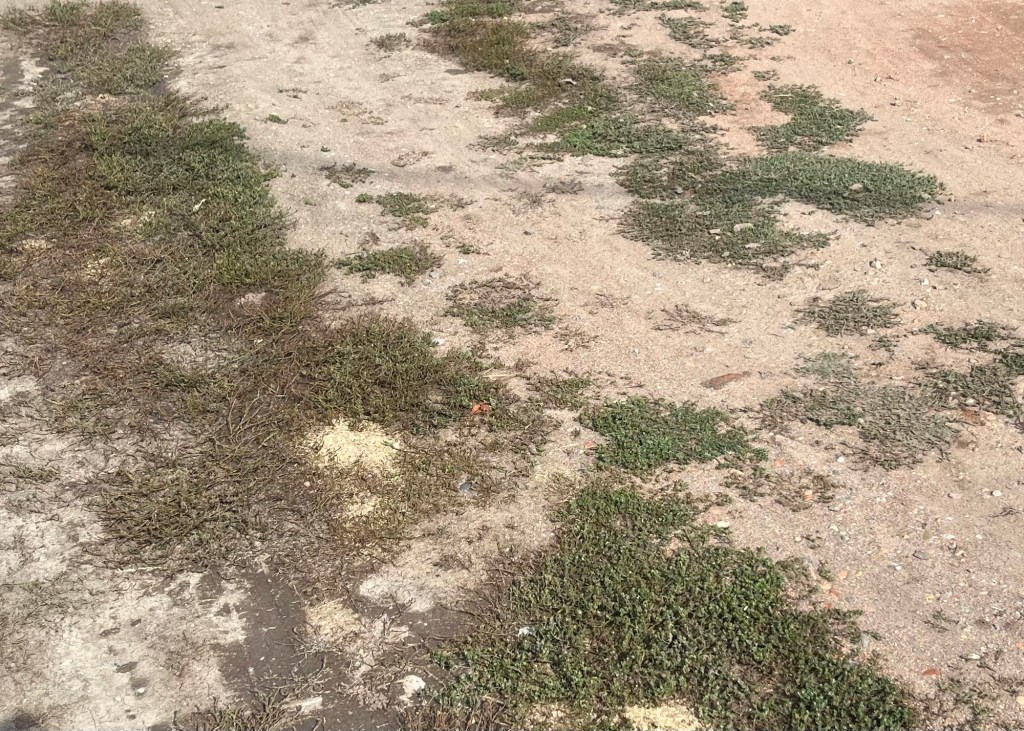
We’ve never noticed puncture vine before. But it’s one of those things that once you know about it, you start seeing it everywhere. EVERYWHERE! … just as the lady said.

Sure enough the cycle path out of Békéscsaba was riddled with it. We gave up and pedalled on the road instead.

Dodging the puncture vine

Hungarian drivers have generally been very courteous, leaving plenty of room when overtaking and giving way whenever a cycle path crossed the road.

As long as we used the cycle path that is!

If we ever had the audacity to cycle on the road when a (good or bad) bike path was available, a driver would wind down their window and deliver a surprisingly long explanation of what we were doing wrong.

Of course, we didn’t understand a word … but we imagined they were saying something like …

Even though you shafted us so badly at Trianon, we have saved money to build you beautiful bicycle paths all over our great country … so the least you can do is show a little respect and use the bloody thing!”

We retreated back to the bike path, puncture vine and all.

But the start of the Route 5 river path in the small village of Öcsöd was too much. The path was so stony and so covered in puncture vine that it was difficult to pick a way through … it was not the leisurely ride we’d imagined at all.

No way through

Retreating to a kids play area and surrounded by graffiti, we were amazed to find we had 5G.

In just a few minutes, we’d cancelled that night’s Panzio, replanned the route back to the road, checked on Google Earth that it was a good Hungarian bike path and booked a new hotel in Békéscsaba. 

Try doing that in a tiny village the middle of Yorkshire!

It was a long, straight ride but it was a surprisingly good Hungarian bike path without a hint of puncture vine. Adopting our heads-down-crack-on-new-ebike-cruising-speed we easily made it before dark.

Almost Danubesque

Which was just as well as Storm Boris was now ravaging Central Europe, causing chaos to the areas we’d just pedalled through … Vienna, Bratislava, Budapest etc. We hunkered down for two days watching the rain fall and then finally braved the conditions for a cold, damp ride crossing the next border into Romania.

A statue in Békéscsaba … they don’t seem worried about the cold

A week ago we’d left Vienna in 35-40°C (around 100°F) under sunny skies. Now it was just 9°C (48°F) with a biting headwind and light rain.

Quite a change! Even the naked enthusiasts by the Danube might have had to put some clothes on!

Clare and Andy

Bath to Békéscsaba:

2,534km pedalled (1,574 miles)

11,350m climbed

132 hours in the saddle
Cycle Touring Super Highway

It was just 50km outside Vienna that the young couple overtook us … cruising serenely past with their matching e-bikes and small, lightly packed panniers. “Grüß Gott” they beamed in greeting “Guten Morgen!”

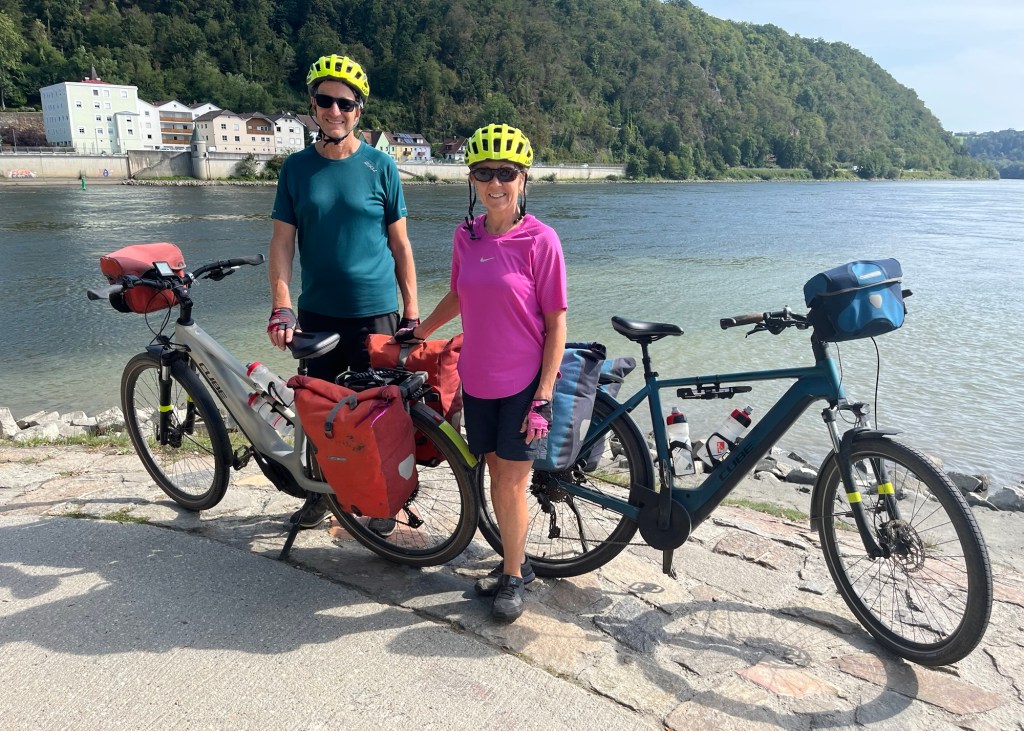
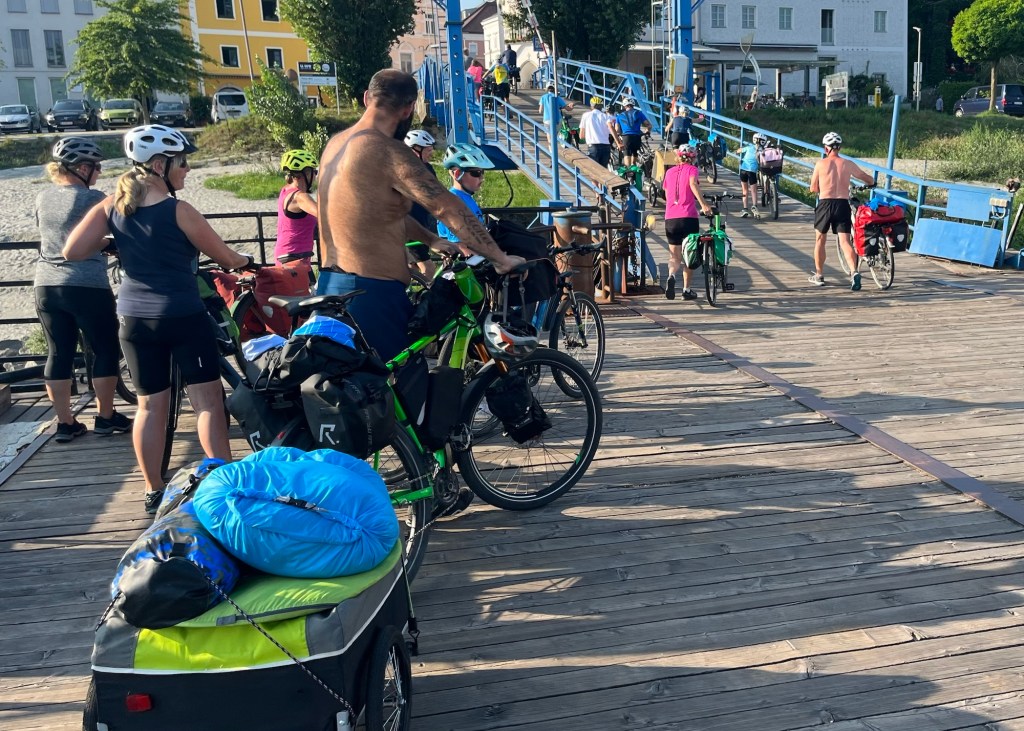
And why not? It was a beautiful day and they were nearing the end of a wonderful holiday, enjoying this most popular of adventures … the Danube Cycle Path from Passau to Vienna.

Setting off from Passau

Over 30,000 cyclists enjoy riding this section of the Donau Trail every summer, making it the busiest bicycle path in Europe. It’s a true Cycle Touring Super Highway.

Most cyclists with panniers had read the same instructions as us and were cycling downstream from west to east.

They were a mixed bunch. 

Older couples on e-bikes were in the majority.  But there were also plenty of young families, often towing the family dog along for the ride. We also saw several large organised tours, all with matching bikes, matching panniers and sometimes even matching t-shirts.  

Mum had the luggage, Dad the younger child, Daughter the dog

Once or twice we came across a bare chested e-bike warrior gamely pulling a mountain of camping gear on his trailer and racing ahead of the rest of his group.

E-bike warrior

On the super smooth surface we were able to ride happily along at our new e-bike cruising speed of 24-25 km/hour, just below the point at which the motor cuts out. At this speed we reeled them all in … the oldies, the families, the groups, even the e-bike warriors … effortlessly passing by with a cheery “Guten Morgen” or some such annoying greeting.

Until now!

Humph, we muttered to each other … nobody overtakes us on on e-bikes!

We put in a tiny bit of extra effort and managed to overtake the young couple back, pretending of course that we weren’t trying.

They came past us again.

An e-bike race almost happens in slow motion. All our motors are limited to the same speed and it’s a huge effort to cycle consistently above that cut out point.

The path veered inland so we tucked in behind them, swooping as a pack around hairpin bends, just missing a wiry old gentleman on a rusty black bike.

Then it opened up onto another long straight. Carefully holding the pace we eventually inched past them and held our position for another exhausting four or five kilometres. They were on our back wheels the whole time, like sinister shadows.

As this race was only really happening in our heads … we could decide where the finishing line would be. Feeling pretty knackered, we quickly decided it was the footbridge just ahead.

We pulled over breathing deeply.

They rode on with a grin and a cheery wave. They probably thought it was just the end of the first lap.

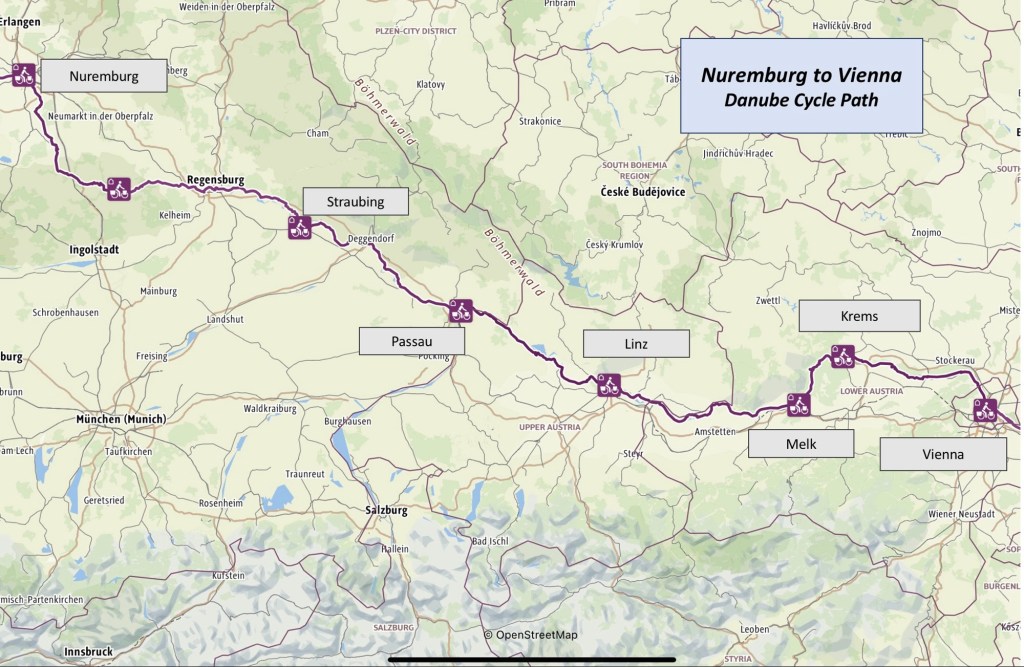
Riding at this e-bike touring speed means that we can cover longer distances for our preferred 4-5 hours of pedalling each day. From Nuremberg to Straubing to Passau to Linz to Melk we leapt down the Danube in 90-100km stages.

The prize for all this effort was a proper tourist cycling day of just 45km, cruising through the beautiful Wachau valley between Melk and Krems.

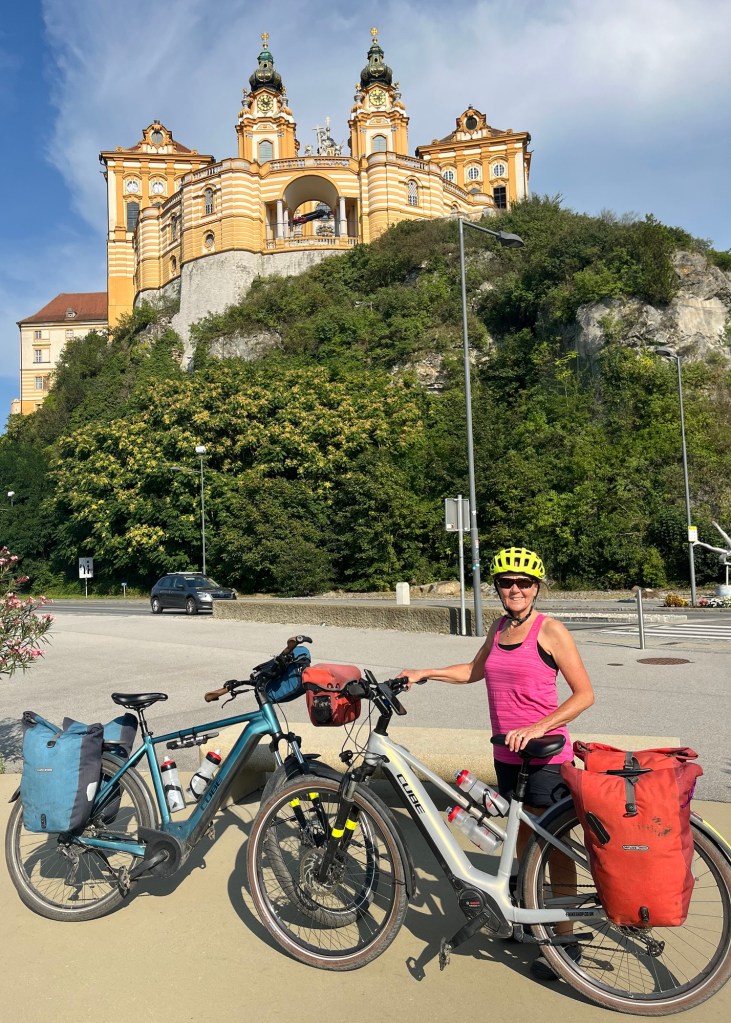
We started at the stunningly beautiful Melk Abbey, rebuilt in the Baroque style in the early 1700’s and surviving the dissolution of the monasteries that destroyed many of its peers later in the same century.

Melk Abbey

This makes it one of the best preserved Baroque buildings in the world. So well preserved that photography is not allowed inside the abbey itself which was great news for us as it meant we could enjoy the building without looking through a sea of camera phones.

But it also means we can’t show you what it looked like. 

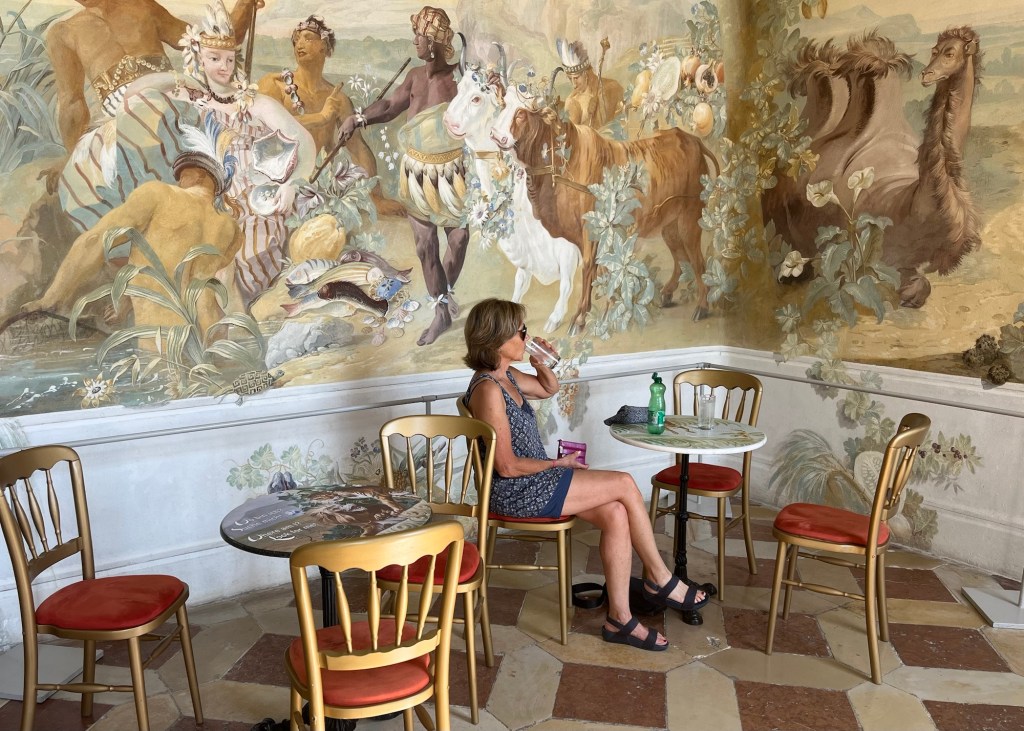
So here’s a picture of the cafe instead …

No doubt you can tell from the cafe that the abbey itself was not understated!

Just 6km downstream was another fairytale gem, the 12th century Schloss Schönbühel. No need for camera phones here either as the castle was temporarily closed.

Schloss Schönbühel

The guy at the ticket office was very pleased with his joke, which he must have said a thousand times already … “Das Schloss ist geschlossen!” Ho, ho, ho!

No matter, there was still plenty more fun to be had in the rest of the Wachau. But we had barely pedalled a few kilometres before we discovered the next surprise … the Danube Bike Path was blocked by a landslide.

No way through

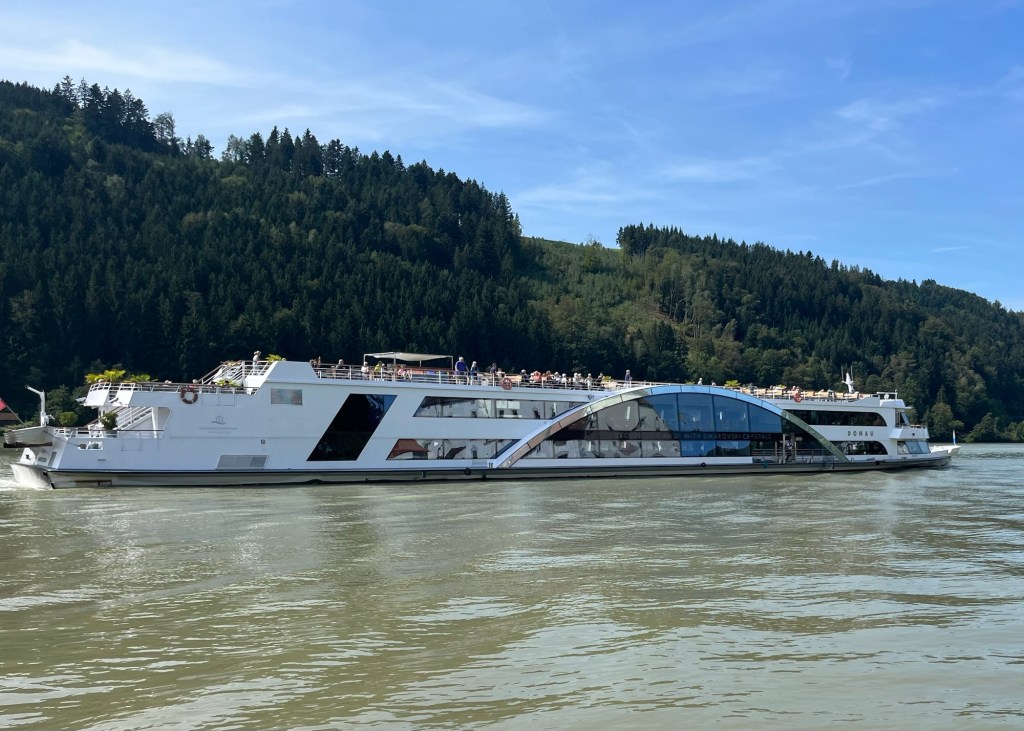
That meant for an unexpected treat … a free Danube River Cruise. We’d seen plenty of pleasure boats cruising up and down the river, so imagined we’d be transported in something that looked like this …

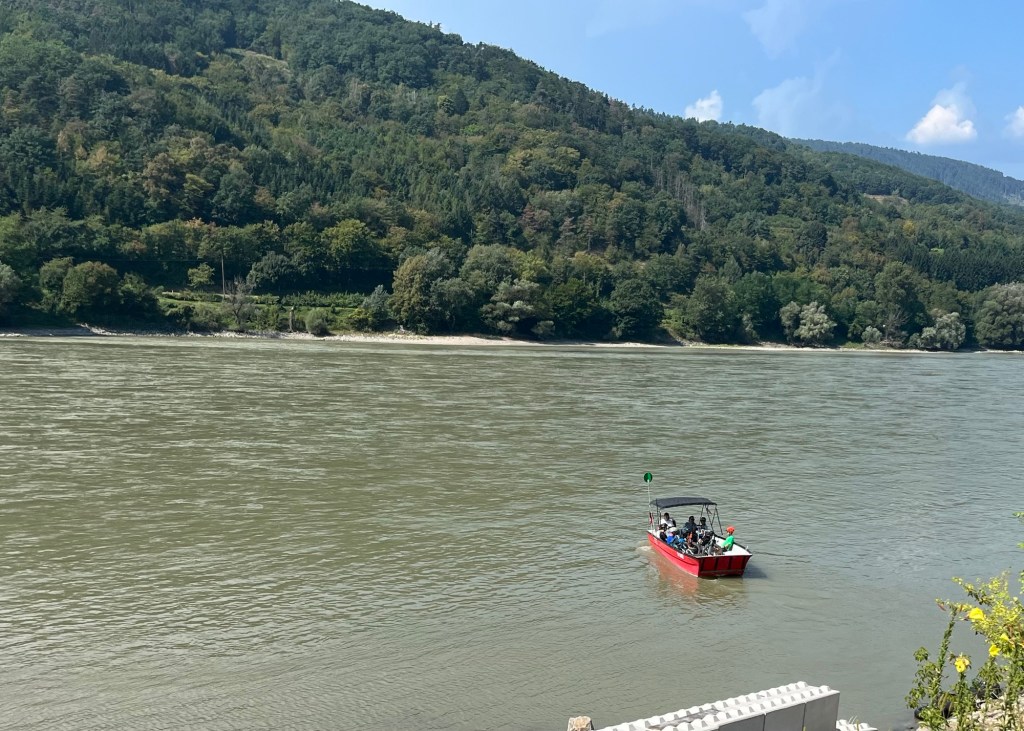
What we got was this …

It was still good fun to get out onto the river, if a little bumpy! There was so much wash from the proper river cruisers that our young skipper excitedly declared that these were the biggest waves he’d ever seen on the Danube. EVER!

He seemed to be loving it a lot more than we were.

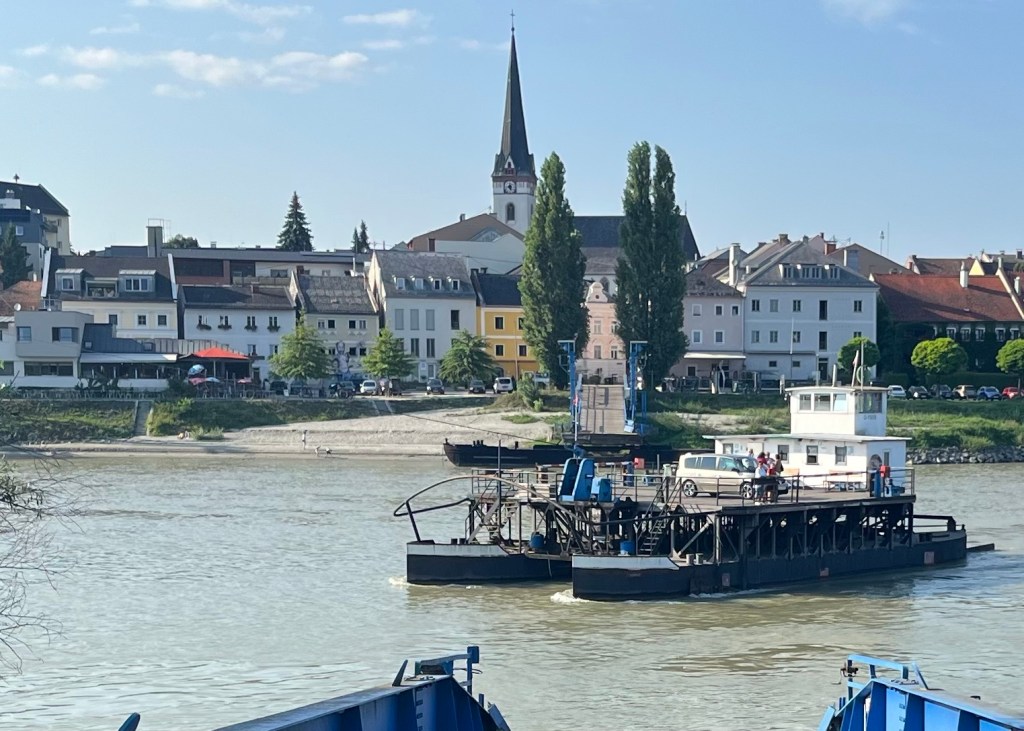
We were back on the river again as soon as we reached Spitz, this time on a calmer, more familiar vessel. Ancient cable ferries have been taking people and their stuff backwards and forwards across the Danube since the 13th century.

Cable Ferry

They’re simple but very clever. Secured to a cable fixed high above the river a few metres upstream, they just need to angle their twin bows into the current to glide silently across. Perfect eco-friendly transport!

The cable

After spending so much time on the river we fancied a view so we cycled up to the ruins of Hinterhaus Castle. It was the second time we’d gone off piste to get some height and both occasions have required some serious mountain-bike skills to navigate the steep, rocky bike paths.

Feeling like Tom Pidcock

The first occasion was an even more rugged climb to enjoy the iconic view of the Schlögener loop between Passau and Linz where the river is forced make a series of 180 degree bends. Tough … but we’re sure you’ll agree the view was worth the effort!

Schlögener Loop

From Hinterhaus castle, we not only had a great view of the Danube, but also of the vine terraces that make the Wachau valley famous. The abundant grapes turn into some of Austria’s finest wines, notably Grüne Veltliner and Riesling. 

Wachau Valley vineyards

As the late afternoon sun mellowed, a ride down through the vineyards and apricot orchards made for a glorious end to a perfect cycling day.

As did sampling both a delicious home made apricot ice-cream and, of course, a glass or two of Wachau’s finest. It would be rude not to!

A week earlier it hadn’t looked so rosy.

We’d arrived at Frank’s bike shop in Nuremberg after an incident free journey and left our car in the capable hands of his team. It was exactly a year since we’d abandoned the ride to Istanbul and it felt quite emotional to be back on exactly the same spot.

We rode off to our hotel literally shrieking with pleasure and relief, much to the alarm of the people who happened to be passing by.

Leaving Frank’s shop

Once again we were on the road. Once again we were heading towards Istanbul.

Once again it didn’t quite turn out like that.

Andy woke up at 5am the next morning with a nasty dose of sickness and diarrhoea. We’ll spare you the details but suffice to say a stomach bug is not a good fit with a bicycle tour! Andy was beginning to feel he had the Nuremberg curse. 

Fortunately it only lasted three days and was gone by the time we reached Passau.

Passau

Our friend, Judith, once made a very insightful comment on this blog about the dubious pleasure of riding down canal paths, something we’ve endured many times. 

“Canal paths are like fish and chips, nice to start with but then too much and rather boring.”

By comparison the Danube River is a royal banquet, a smorgasbord of delights. 

As you cruise down the super smooth cycle path the river swirls gently by, milky jade mixed with cinnamon and ochre undertones … never still, always changing. The trees lining the banks seem to lean forward slightly as if lazily dipping their toes in the water. 

Then to break things up, the path will meander away from the river, up through a wood or around a village. Sometimes it accompanies a railway line, sometimes a road. Sometimes it climbs a little for a broader perspective.

If you wander off the main path it’s not too difficult to find your way back to the river. There are plenty of signs. The Danube is your constant and reliable companion.

Easy to find your way

And the Austrian authorities do love a sign!

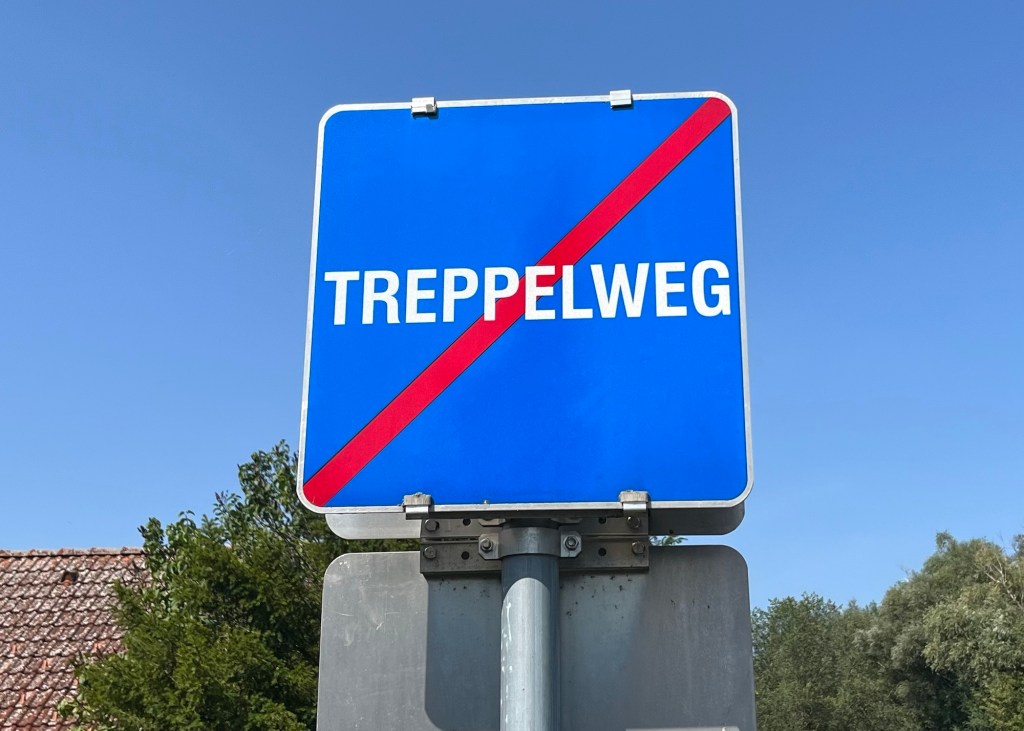
One particular sign that kept popping up every few kilometres was to warn us of the danger of a Treppelweg. What could it be? These nasty Treppelwegs were everywhere.

A dangerous current in the river to watch out for? Some kind of vicious animal? The Danube River Monster?

Sometimes the signs were crossed out, helpfully telling us the Treppelweg danger was over. Phew! Then around the corner there lurked another one.

In the end we had to look it up … a Treppelweg is a slope.

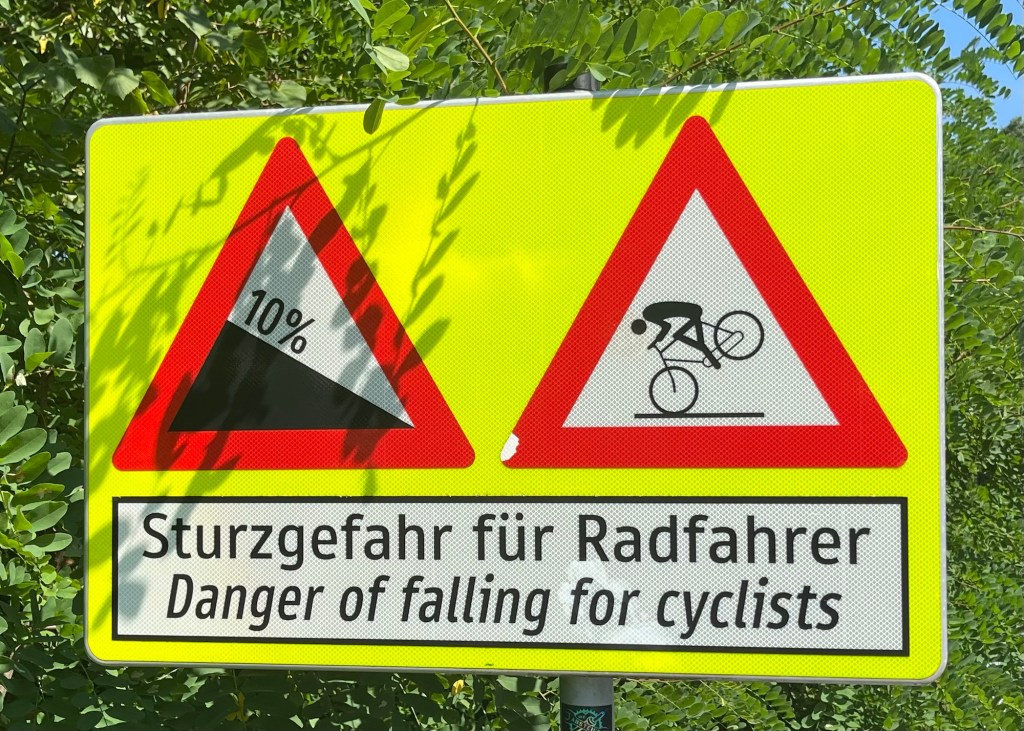
Now this is the very, very, VERY flat Danube Cycle Path, not the Alps, so if there was a slope it was barely perceptible. A gentle dip at most. But thanks for alerting us to the danger Austria!

The warnings became catastrophic the only time there was a proper slope …

The Danube Cycle Path is not perfect though. Sometimes the path turns to gravel … although it’s very smooth gravel. Once (shock horror) we found ourselves on a road. A proper road with trucks and fast cars zooming past. On this occasion the signs were sadly lacking, making our presence quite a surprise for both cyclists and motorists.

That’s probably because it was flat, if only there had been a Treppelweg there would have been loads of signs!

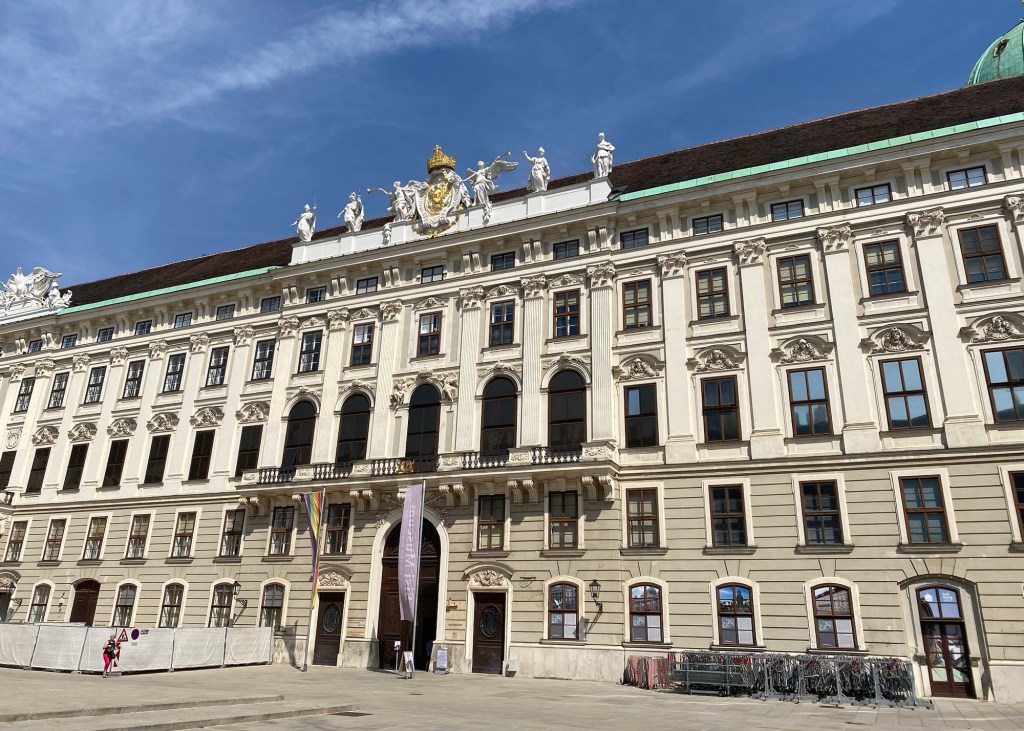
Hofburg Palace, Sisi’s apartments

The destination for most people holidaying on the Danube Cycle Path is Vienna and it’s a real treat, a fantastic city break.

Two people dominated our weekend there … the Empress Elizabeth of Austria and Wolfgang Amadeus Mozart.

Both of them are everywhere. 

Elisabeth, better known as Sisi, is easily Austria’s favourite Empress. She did have an unusual and interesting life. Some of the  highlights that stood out to us include:

She enticed the emperor away from her older sister at the tender age of 15.

She played a pivotal role in negotiating the creation of the Austro-Hungarian empire.

She did gymnastics every morning in her bedroom (you can still see the equipment).

She slept with cloths soaked in cider vinegar to preserve her slim waist and bathed in olive oil to preserve her skin tone.

She fell into a deep depression after her son killed his 17 year old mistress and then shot himself. 

Mozart is Austria’s favourite composer having lived in the city for many of his most productive years, achieving fame but sadly, not fortune.

We listened to an excellent string quartet at the Sala Terrana, the very room in which the maestro himself (allegedly) played.

They were very good

We then ate at the city’s oldest restaurant, the Greichenbeisl (Greek Inn) the very place where maestro (allegedly) enjoyed many a convivial evening. 

His signature is on the ceiling, together with those of Beethoven, Strauss, Schubert, Pavarotti and Phil Collins … so it must be true!

Dinner beneath Mozart’s signature

Empress Sisi once said … “Destination’s are only desirable because a journey lies in-between.”

She could have been summing up the joy of bicycle touring … on the Danube Super Highway or anywhere else. 

Our journey to Budapest is back on that Super Highway.

But we promise not to use it as a race track anymore. After all, we’re not e-bike warriors … well not yet!

Clare and Andy

As we’re continuing the journey from last year, we’ve decided to combine the stats starting from Bath.

Bath to Vienna:

1,938km pedalled (1,204 miles)

10,514m climbed

102 hours in the saddle
This means we’re now about half way from Bath to Istanbul.

Ticker Test Ticked

It’s now twelve months since we abandoned our pan-European e-bike tour due to the havoc that e-biking was playing with Andy’s heart. Fortunately he had a successful catheter ablation for his Atrial Fibrillation (AF) in October and has been healthy ever since.

Now the smooth, silky surface of the Danube cycle path is calling us back. Our e-bikes are desperate to get back onto the most popular bike ride in Europe and to once again point their handlebars in the direction of Istanbul.

And who are we to deny them that pleasure?

Our plan is to drive the bikes back to Nuremberg to exactly the same car park that we stopped in last year, just outside Frank’s bike shop. As the nicest man in the e-bike world, he’s promised to keep an eye our car while we’re away. Having a car in the centre of Europe will certainly make getting home a lot easier at the end of the trip.

We will enjoy the Danube for a couple of weeks as it winds its way through Germany, Austria, Slovakia and northern Hungary before saying goodbye to the river in Budapest. We’ll then head south east to see how far we can get … hopefully all the way across Hungary, Romania, Bulgaria and onto Istanbul!

There’s one thing that’s a little trickier this year though.

In March, both Romania and Bulgaria joined the Schengen Zone for free movement across the EU which only leaves Turkey (of the countries on our route) that’s still outside the bloc. After Bloody Brexit, Brits are only allowed to stay in Schengen countries for a rolling 90 days in every 180 and we’ve already used up some of our allowance with a holiday to Greece in June. This means we’d better not outstay our welcome … or we’ll be facing a difficult discussion with a French customs official on the way home!

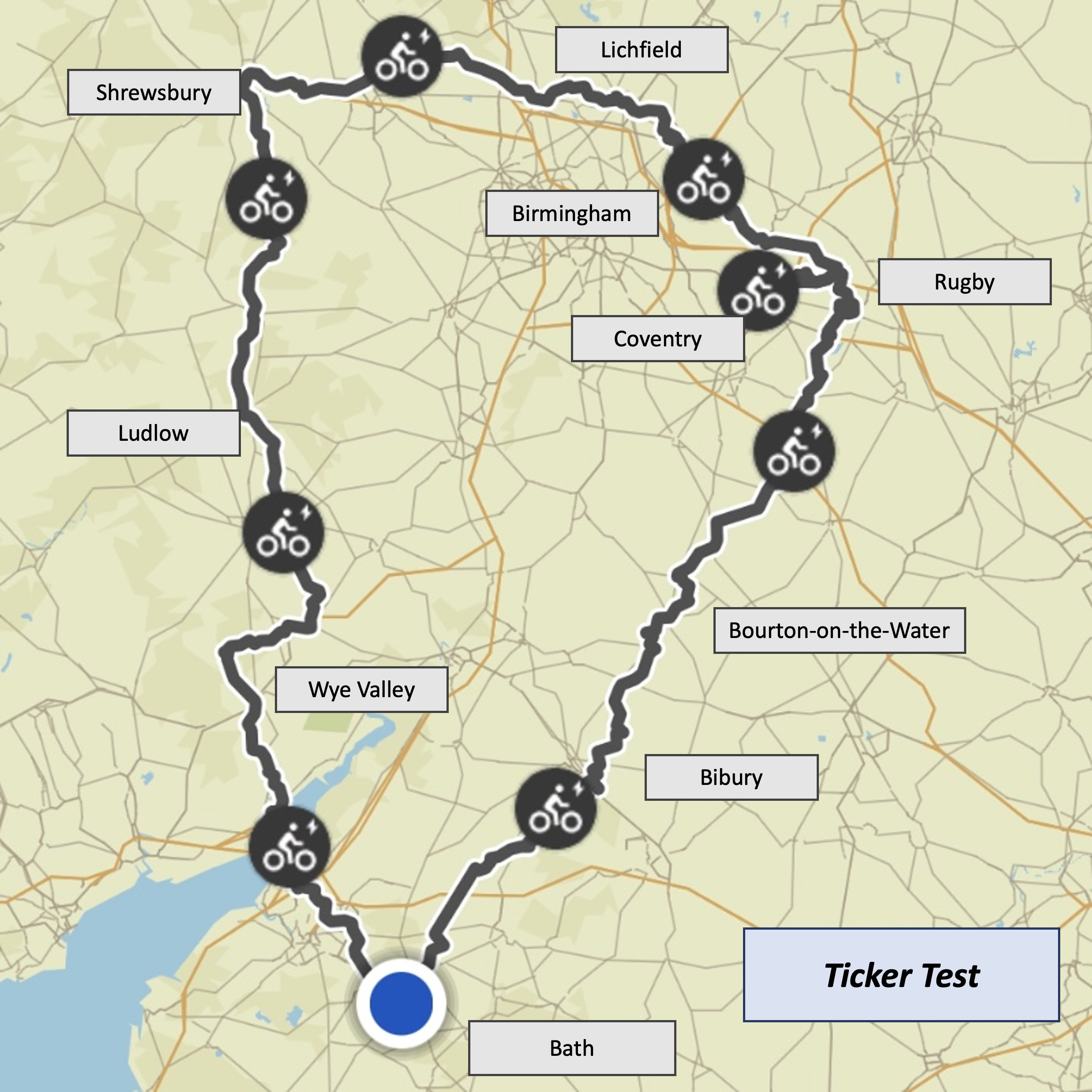
To find out whether the gentle exercise of bicycle touring might re-start Andy’s AF, we went on a ‘Ticker Test’ ride in April, cycling north through the Cotswolds, around the top of Birmingham and back south down the Wye Valley. To make for a proper test we pushed it a bit by riding over 80km a day for eight days straight.

Andy passed with flying colours … not a murmur!

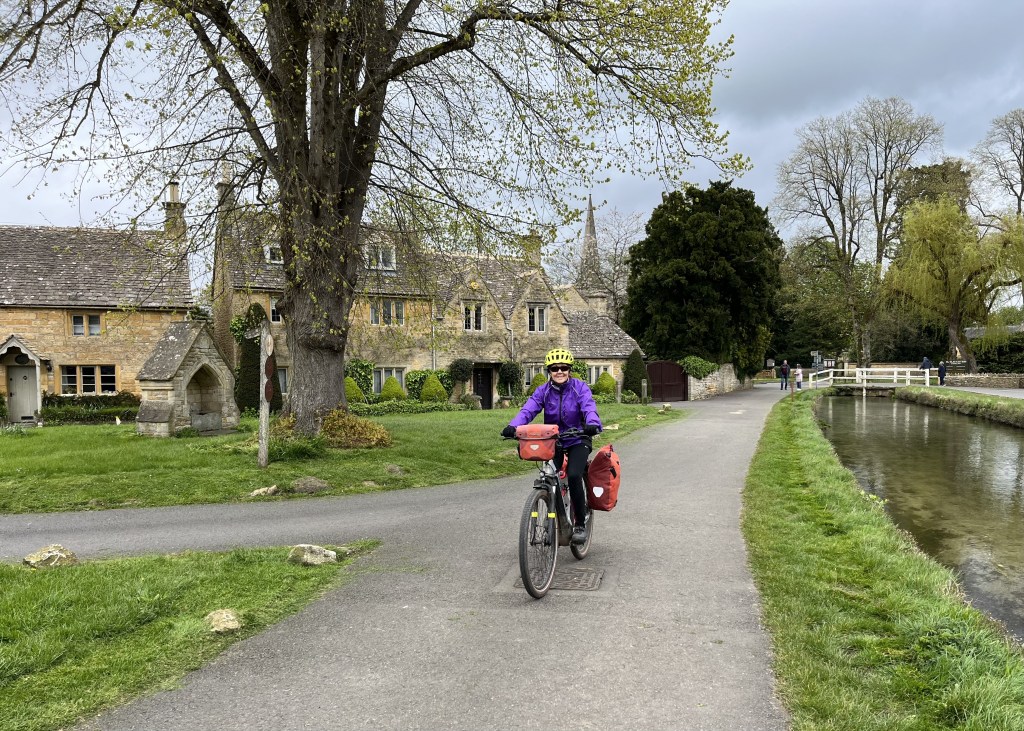
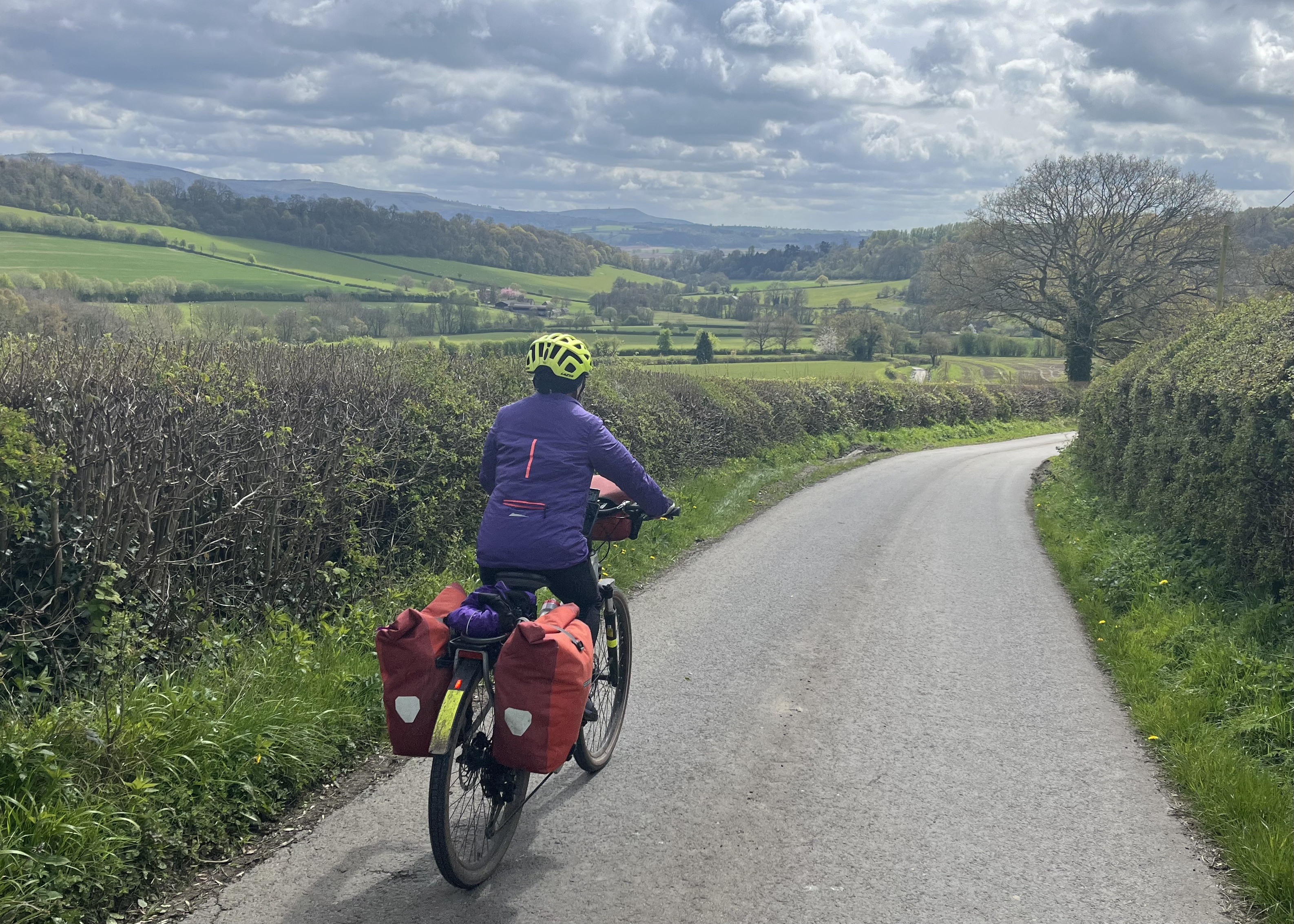
Despite the chilly April weather, it was a lot more enjoyable to be cycling in the UK than we’d expected. Once we left behind Somerset and Wiltshire, both notorious for deep potholes, we found the roads to be smooth and the countryside delightful. From the pretty Cotswold villages of Bibury and Lower Slaughter to the border towns of Shrewsbury and Ludlow in the Welsh Marches it was a green and pleasant land that stretched out ahead of us in the view from our handlebars.

Lower Slaughter

We kept telling each other that we really must go on a long bicycle tour across our own country sometime instead of always heading off to foreign climes. An idea for next year, perhaps?

Cycling through a green and pleasant land

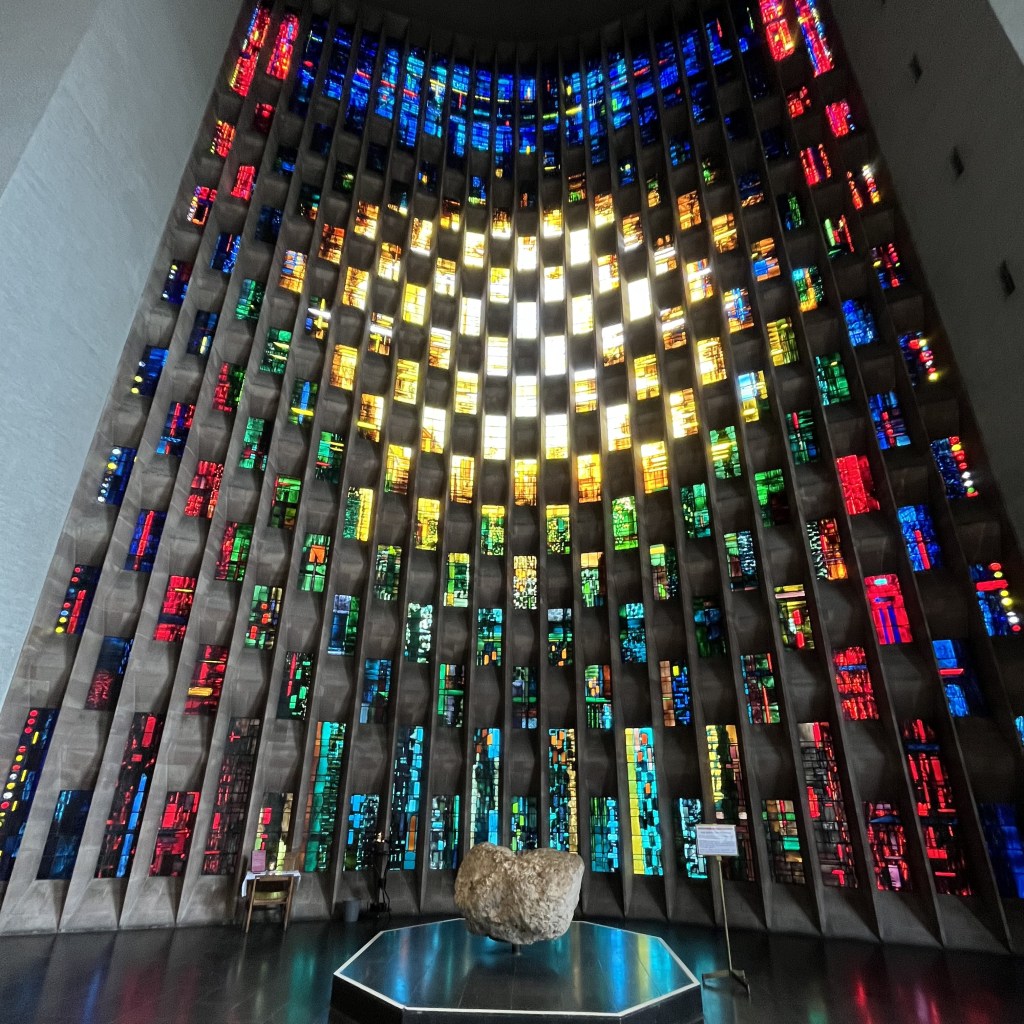
Staying with good friends Jane and David near Rugby, we joined them for a detour into Coventry to visit the ‘new’ Cathedral, completed in 1962 as a symbol of peace and reconciliation after the second world war. It’s a building we’ve wanted to see for a very long time.

The tapestry dominating Coventry Cathedral

The modernist design of the interior is both striking and peaceful, dominated by Graham Sutherland’s vast tapestry of Christ and by John Piper’s colourful Bapistry Window.

Bapistry Window

When asked whether the window symbolised anything in particular, Piper is reported to have replied “No not really … other than a burst of glory!”

Just a day later, we were sitting outside another remarkable cathedral in Lichfield, famous for the carved figures of kings, queens and saints that adorn the exterior. We arrived just in time for Sunday evensong, made even more special as the choristers were accompanied by an organ that Clare’s grandfather used to regularly play.

Remembering her Grandfather at Lichfield Cathedral

In Ludlow we were surprised when our guest house hosts urged us to be sure to book a restaurant for the evening, even though it was only a Wednesday. Undeterred we took our chances and were lucky to get the last two seats in an Indian restaurant where the chef and the staff travel out from Birmingham every evening to serve up their famous Birmingham ‘Balti’ curries to the people of Shropshire.

It was only when some friends messaged to say how fortunate we were to stay in Ludlow and enjoy its famous fine dining scene that we understood the need to book ahead. We could only reply that “it was a very fine Balti” … and indeed it was!

Ludlow, famous for fine dining

Keen to make up for it, Andy suggested a detour the following afternoon when we reached Ross-on-Wye, turning right and riding for 25km out of our way just over the border into Wales. We’d be surprised if many people go so far out of their way for the simple pleasure of a meal in Wales but this one was well worth the extra kilometres. Both the meal and the overnight stay at the Bell in Skenfrith ended up being a highlight of the whole trip!

Crossing the border … just for dinner

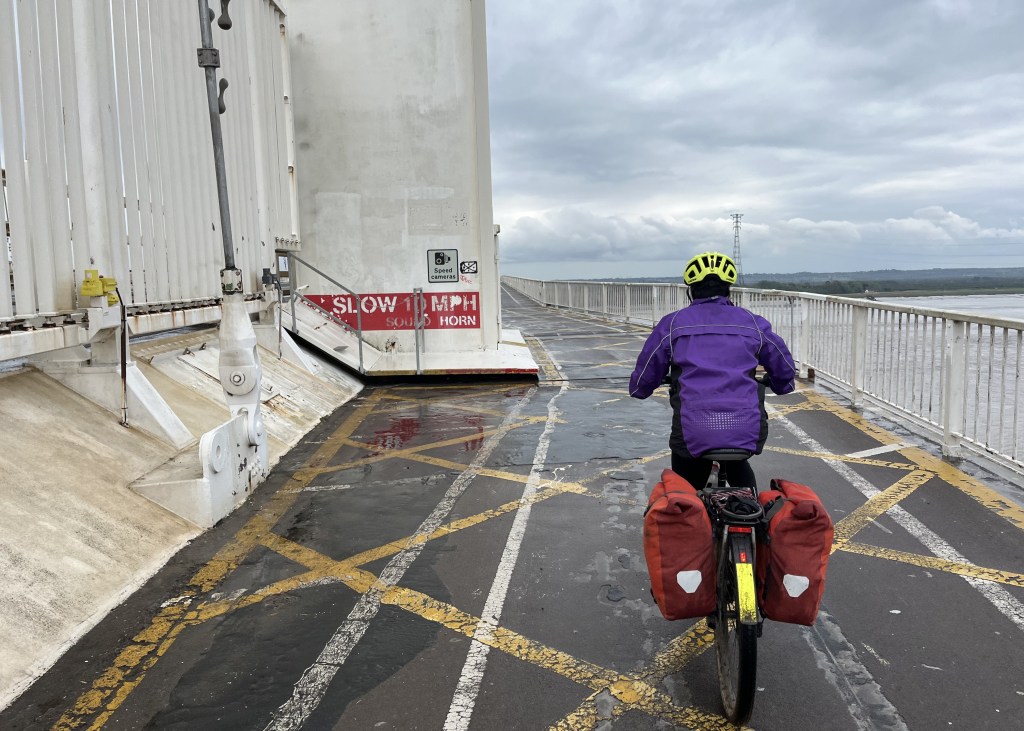
From there we had the fun experience of crossing the old Severn Bridge back into England, but were surprised to find speed cameras on the cycle path and a leisurely speed limit of just 10mph. Fortunately, after all that food, it wasn’t too difficult for us to pedal so slowly!

Can anyone sound a horn on a bike?

So the Ticker Test was well ticked back in April. The e-bikes are now chomping at the bit to get going and we’re now all set to head back to the Danube in a few days time.

But to prepare properly, Andy has been taking every precaution with another vital part of his bicycling anatomy … his bottom.

As well as the AF, Andy suffered from some painful saddle sores for the first time last year, probably because his new e-bike had a slightly different set-up to his trusty old Ridgeback, on whose saddle he’d ridden for over 14,500 km without the merest hint of an annoying pimple.

Firstly, he’s invested in a big tub of Sudocrem, a UK brand of nappy rash cream beloved by babies and new parents alike.

Secondly, he’s been for a specialist bike fit to make sure his position on the bike is as comfortable as possible … something he now wishes he’d done years ago. If any of our Bath based friends fancy giving it a try, we would thoroughly recommend Jasper at Physio Impulse. As an Osteopath he’s unusual amongst bike fitters at being more focused on comfort than on power and performance.

It’s amazing how much difference some small adjustments can make

And thirdly, Andy’s found some new touring cycling shorts and undershorts. After much research he’s bought them from Corinne Dennis, a small company based in Cornwall. Their clothing may not be the most fashionable but it’s specifically aimed at touring cyclists seeking maximum comfort over long distances, on and off the bike. No lycra, no tight leg grips and padding made from soft, supple fleece.

New cycling shorts mean that Andy’s last piece of clothing from our first bicycle tour to Barcelona in 2016 has eventually bitten the dust … his favourite old shorts once held up by safety pins, frequently repaired but still missing a working fly zipper for several years.

This means that Clare has empathically won the make-your-kit-last-a-long-time competition. She might have ditched the hairdryer a long while ago but she’s still wearing the same cycling tops, shorts and sunglasses that she wore to Barcelona.

One of these photos is from 2016, the other is from 2022. Can you tell which is which? Answers on a postcard please … or in the comments below.

Clare and Andy

By the Rivers of Germany

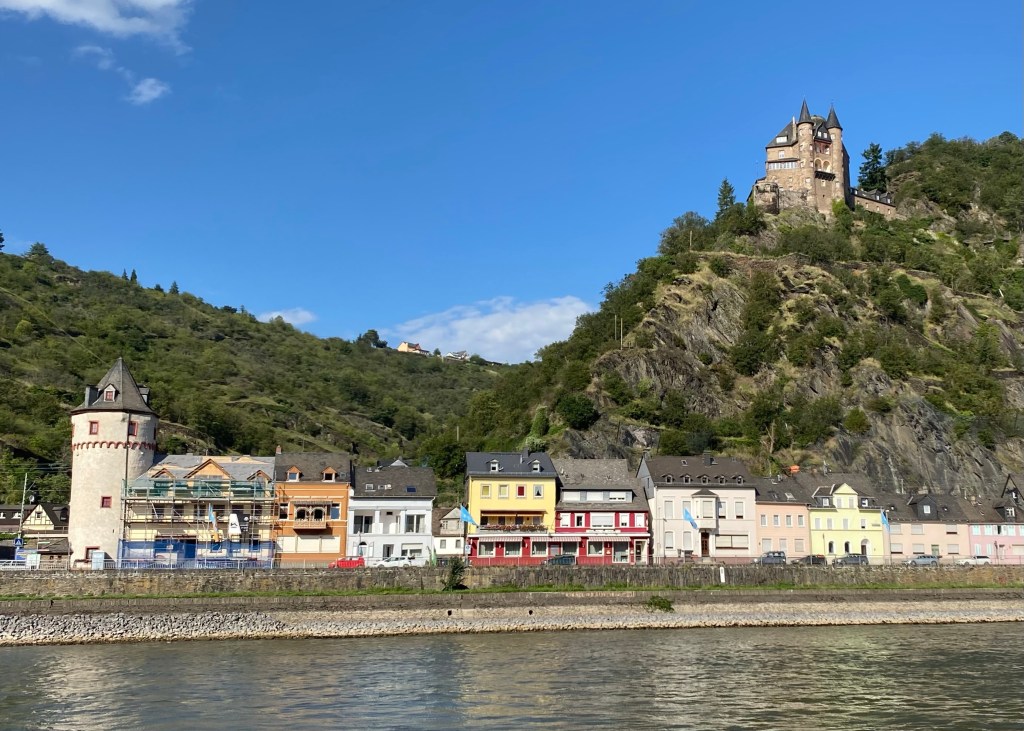
It’s a calm, sunny afternoon and we have just reached the river Rhine. We’re cruising along on a beautifully smooth radweg (cycle path), slowly overtaking an aak (river barge) and gazing up at a schloss (castle) on the hillside above.

Two touring cyclists are coming towards us. Slowing down, we beam at them, wondering if they fancy a chat. “Schöne morgen!” (lovely morning) we call out … but only receive a cursory nod in return.

No bother … another couple of well-panniered cyclists are just behind them. “Hallo!” (hello) we smile. Again, just a nod.

Then another couple and another and another. All enjoying this gorgeous curve of the Rhine on this gorgeous day. All just nodding or staring silently ahead.

Everywhere else we’ve travelled, it’s been an event to come across another touring cyclist, a cause for celebration, a chance to stop and swap tales of the road or at the very, very least to smile, wave and call out “Bonne Route” or “Happy Travels” or some such.

Except for here.

And before you think it, it’s not because they’re German.

Lots of touring bikes

It’s simply because there are so many people pedalling down the Rhine that it’s impossible to greet everyone. For us too … by the time the fifteenth couple had cruised past us we had become nodding dogs. By the end of the day we wondered if our heads would still be attached to our shoulders.

We were the odd ones out. Cycling from north to south. Upstream. Very, very slightly uphill.

Most people prefer to ride downstream so we had a lot more touring cyclists to greet … sorry, nod to … sorry, stare silently ahead.

Practising the stare

This part of the river from Koblenz to Mainz is known as the ‘Romantic Rhine’. So picturesque, it inspired many an early 19th century romantic, most notably the painter William Turner who used it as the subject for many of his greatest landscapes.

We’ve both fallen in love with e-bike touring and are now fully embracing the ‘E’ in e-bike!

No more do we say that we “only ever use Eco”. In fact, we haven’t seen the Green Eco (level 1) light for weeks!

Instead we cruise along in Blue (level 2) and help ourselves to generous dollops of Purple (level 3). There are many good reasons for a Purple Boost … the incline increasing … the merest hint of gravel … feeling slightly tired at the end of the day. It’s a wonderful feeling … like being given a little push.

And a more serious hill? Bang it straight into Red (level 4)!

Enjoying the Red Zone

A good trick on flat river paths is to cruise along at 25km/hour, just below the speed at which the power cuts out. It’s easy to maintain momentum without working too hard.

So far we’ve averaged 82km a day, which means we’re riding for between 4 and 5 hours. Both of us love the amount of exercise this gives us. It’s a moderate but sustained effort but we’re never out of breath.

To compare it to normal bikes, let’s say regular bike touring exercise is on a scale of 1 to 5 where 1=pottering through a village looking at the sights, 3=riding at a good speed on the flat and 5=climbing a steep hill in the hot sun.

E-bike touring is always between 1 and 3, whatever the conditions. Clare does not miss the 4’s and 5’s!

Before reaching the Rhine we cycled through the old forests of the Eifel National Park … a very different experience. As an 87km day with 1340m of climbing it was a good test, both for us and for our batteries.

The Eifel

The bikes give you lots of information including a remaining range indicator but we prefer to keep an eye on how much of the battery we’ve used v how far we’ve travelled.

On flat days we get over 2km for every 1% of battery. On that hilly day through the Eifel, Andy got just under 1km for every 1%, which still gave him a range of over 90km.

So he wasn’t worried when his battery almost ran out near the end of the ride. As we pulled up outside our guest house in Bad Munstereifel, he had just 4% left!

Well judged, thought Andy, a good test.

Just as well there wasn’t a dreadful detour, thought Clare.

An orange light is bad news

As long as the e-bikes keep working!

Clare’s motor suddenly stopped as we were leaving Mainz, displaying an alarming error code.

The UK shop we bought the bikes from told us it was a software issue and that we couldn’t fix it ourselves. We did all the normal computer things … turning it on and off again, pulling the lead out and pushing it in again.

No luck!

Spirits sinking, we slowly rode back towards an e-bike shop we’d seen in town when Clare decided to try one last thing. She turned it on and off whilst the bike was actually moving.

Miraculously it worked and it’s been working ever since!

Early morning coffee in our Mainz apartment

From Mainz we headed cross country, first to Heidelberg and then through Franconian Bavaria to Rothenburg ob der Tauber and on to Nuremburg.

It was joyful. Proper bicycle touring in rolling hills, through lush meadows, along forests trails and down winding country backroads that led us from one chocolate box village to another. Secretly we were both delighted to get away from the river for a while.

We began to properly appreciate what a superb country Germany is for Radwandern (literally bicycle wandering) with more than 70,000km of well-signposted long-distance cycle trails criss-crossing the country.

One of many Radwegs

On the rare occasions we found ourselves on the road it was usually because we hadn’t spotted the radweg!

Even country roads have a dedicated cycle track alongside

Heidelberg is as beautiful as it’s reputation, a real highlight.

Surrounded by forest and on a beautiful riverside setting beside the Neckar, it’s Germany’s oldest and most famous university town, renowned for its baroque Altstadt and evocative half-ruined hilltop castle.

Heidelberg Castle

We stayed in one of our favourite ever hotels, the 3-star Panorama. Not much to look at from the outside, it’s a friendly family run place with comfortable rooms, a superb breakfast and a safe, comfortable cellar for our bikes.

Hotel Panorama

In general, the accommodation has been very good in Holland and Germany. We’ve alternated between pensions/small hotels and apartments which allow us to cook for ourselves. Wherever we’ve stayed, the bikes have been reassuringly well looked after and it’s been easy to recharge the batteries.

Mind you, we weren’t so impressed by our stay in the little village of Sindringen, the night after leaving Heidelberg, as the church bells kept us awake all night, chiming every 15 minutes right outside our window. We must remember to check out how close we are to churches in the future.

Rothenburg ob der Tauber

To reach Rothenburg ob der Tauber, we cruised downhill for miles on quiet country roads before Clare led us up a steep cobbled backstreet to enter the walled town. Suddenly, we were surrounded by brightly coloured half timbered houses and lots of tourists. It felt as if we’d been teleported into the middle of Chitty Chitty Bang Bang.

Which we had!

This was indeed the location for the Vulgarian village scenes in the 1960’s classic. We glanced around nervously, half expecting to see the Child Catcher disappearing down an alley.

A surprising arrival into Chitty Chitty Bang Bang land

That thought became more sinister when we learnt that Rothenburg odT held a special significance for Nazi ideologists. It was hailed as the ‘most German of German towns’ and was being developed by Nazi nationalists as an ‘ideal’ Nazi community full of ‘ideal’ Nazi families.

Made the place feel a bit uneasy.

Nuremberg

As always there are plenty of idiosyncrasies to enjoy in any country. A few that struck us in Germany are:

There are still cigarette machines everywhere (very surprising).

Gardens fill the the edges of every town. Called Schrebergarten these are family spaces as well as allotments. Many have lawns, swings and slides, animals.

Schrebergarten

It’s still a cash society. Many restaurants and shops don’t take credit cards as they don’t like the charges.

And we came across our fair share of unusual food and drink …

Some we really enjoyed … Apfelstrudel with cream, Schnitzel and of course a German Bier at the end of the day. Andy hasn’t drunk any alcohol since February but the choice and quality of Alkoholfrei Bier is so good it didn’t matter.

Nothing like a beer garden after a ride, even Alkoholfrei

Some we weren’t sure about … Spätzle (a type of noodle), Kartoffelknödel (potato dumplings) and the Mainz speciality Handkäse mit Musik (Hand Cheese with Music). This is a hand moulded cheese soaked in vinegar and onions. As the locals say, the musik comes later, a few hours after you’ve eaten it!

Handkäse mit Musik

From Nuremberg we planned to spend a week or so cruising beside the Danube, another great river that starts in the Black Forest. The section between Passau and Vienna is the most popular bike ride in Europe attracting over 38,000 cyclists a year, 300 each day in the summer.

That’s a lot of nodding if you go against the flow.

But we’ve learnt our lesson. We’re going downstream with everyone else!

Clare and Andy

… but that’s not how things turned out …

The Danube will have to wait for another year as we have now decided to abandon the trip and go home.

It took 5 days of cycling for Andy’s Atrial Fibrillation (AF) to kick in, with episodes starting the first night we stayed in Holland. Since then it’s become a lot more pervasive, coming every 3 nights, then every other night, then every night, then several times day and night.

Feeling like a group of gremlins are throwing a wild party in his chest, AF triples his pulse, saps his energy and voraciously eats up his sleep time. Not the best ingredients for a bike tour.

Andy cut out everything he thought might be triggering it, even foregoing the alkoholfrei bier (as it still has trace elements of alcohol in Germany).

In the end we could only conclude that the moderate but sustained exercise of e-bike touring was the problem. Exercise induced AF is not uncommon amongst elite athletes … but e-bike touring is a long way short of that.

Two retired doctor friends kindly gave us the same helpful advice. “It’s only a bike ride,” they said, “the roads will still be there next year after your ablation.”

Which is true. There are AF suffering professional cyclists who have resumed their careers after a successful catheter ablation, a treatment which prevents the electric pulse in the heart from getting out of sync.

We can’t deny it … we’re very, very disappointed … but stopping is the right thing to do. It’s the only thing to do.

Time to stop!

After wondering for a long time how we’d get two heavy e-bikes (that are not allowed on an aeroplanes) home from wherever we finished, we simply called the best bike shop in Nuremberg and asked them to do it.

We were lucky to find Frank, one of the nicest men in the whole of the e-bike world. Sure … he’d pack them up and ship them for us and for a very reasonable price.

So with some emotion we said goodbye to the bikes, leaving them in Frank’s tender care.

It couldn’t have been easier … or so we thought.

Two days later a worried Frank called back. “Big problems,” he said, “the carriers can’t ship to the UK. I can send them anywhere you want in Europe but not to the UK.”

All because of Bloody Brexit!

So we asked SendBike, a specialist UK based agent to organise it instead. Apparently we have to declare them as personal goods, already purchased in the UK and ship them to ourselves. We can’t use a third party like Frank’s bike shop to send them.

Not a happy selfie, outside Frank’s shop

Before returning home, we decided to hire a car for a few days to explore the Bavarian Alps. This took us to Passau where we sat by the Danube, watching the many touring cyclists head east to Vienna and promising each other that we’ll do everything possible to come back next year and complete our journey.

On the Danube in Passau (surprisingly smiley)

The roads will still be there. So will the many bike paths. The Danube will be flowing the same way.

We’ll continue to embrace the ‘E’ in e-bikes.

We’ll swoop through rolling hills.

We’ll visit amazing towns and cities.

We’ll eat strange food.

We’ll drink great beer at the end of each day.

And we’ll still go downstream with everyone else!

Clare and Andy

1325km pedalled (823 miles)

7585m climbed

70 hours in the saddle

The Bavarian Alps – always a silver lining

A Two Wheeled Wonderland

It’s easy to see why Holland is known as a two-wheeled paradise.

It’s flat, of course. Dutch Pancake flat in fact. The first place we’ve ever been where flat properly means flat.

And cycling tracks are everywhere. 

Everywhere? Really? Yes! … take a look at these maps …

Here’s a map of the national and regional cycling routes in England and Wales …


Not bad! And the same for France …


But this is what it looks like for Holland!


Everywhere!

Many of these cycling routes are on smooth, dedicated bicycle paths with no motorised traffic allowed. They’re cleverly designed too, often offering the most direct way to travel between two villages, making a bike journey much quicker and easier than the same trip by car.

This might explain why there are more bicycles than people in Holland! 13 bikes for every 10 people, the highest ratio for any country in the world.

Or why more than a quarter (28%) of all trips are made by bicycle … especially commuting, shopping or visiting friends. Again, the most in the world!

It follows that most car drivers also ride bicycles, which is probably why they’re so polite to cyclists. Giving way every time a cycle path crosses a road, patiently waiting to let us on to a roundabout.

In fact they’re so polite, they go straight to the top of the Clare & Andy Driver Courtesy League, pushing the Irish down into second place.

Just for bicycles


Holland is so well set up for cycling, it sometimes doesn’t feel quite real. It’s almost too easy, too nice. It can feel a bit like a cycling theme park or a bicycle-touring version of The Truman Show!

Adding to the theme park impression, we found Dutch people to have similar characteristics to the staff of a well known company, famous for its mouse and princesses.

Extremely friendly but also a little formidable. 

The Dutch pride themselves for telling it straight, no beating about the bush, and not minding at all when others do the same to them.

This can come as a surprise to those of us who live in a country where people will skirt apologetically around any difficult request with “I’m sorry but would you mind…” or “Excuse me but I’m going to have to ask you to…”

Take this exchange.

Having checked out of our hotel, we’re sitting in the hotel cafe for a few minutes waiting for the rain to clear before we set off. Suddenly we hear a rather severe voice behind us … 

“People, you have to leave!”

“Oh, OK”

“No, you have to leave now.”

We gather up our things. “Thats no problem, we’re going”

“We need to clean up. We have to close. You can’t stay here. You have to go.”

We scuttle out and shelter in the hotel reception instead.

Fifteen minutes later, after the rain has stopped, the same lady comes up to us in the street all smiles and chattiness. She wants to know where we’re going, tells us about her years living in Turkey and is genuinely interested in how we are finding the trip.

She’s so friendly, we might have been best buddies!

A Full Crossing

Another part of the fun of cycling in Holland is jumping on and off the water buses that ferry you across the many waterways.

Join the queue

Over the five days we spent cycling through the country, we roughly followed the route of the River Meuse so must have enjoyed at least a dozen of these boat rides.

But they’re not always busy

Another interesting thing about cycling through different countries is discovering their individual quirks. In Holland for example, many cafes don’t open until 10am in the morning which might work well for sleepy locals but is not so good when you’ve arrived early on an overnight ferry and really need a coffee to get your legs going.

The announcements on the ferry had told us many times that we had to use the cycle paths in Holland and should never ride on roads unless there was absolutely no alternative. We tried our best to stick to these rules on the long caffeine-free ride through the centre of Rotterdam but became so confused by the sheer number of cycle tracks that we often went wrong, collecting several straight-talking telling offs along the way.

Leaving the ferry with no coffee

When we eventually did sit down for breakfast, we were so hungry we added a traditional Dutch snack … deep fried bitterballen. It’s a type of croquette that became popular in the 1800’s as the perfect way to transform yesterday’s leftovers into today’s lunch. Yum … but not necessarily for breakfast!

After escaping Rotterdam, our first day became a lot more scenic. We pedalled through the famous windmills of Kinderdijk, the island town of Dordrecht and the Biesbosch nature reserve before pausing for a couple of days in Gorinchem, described officially as ‘the most beautiful fortified town in the Netherlands!‘

Gorinchem

It was strange to think we were sometimes cycling across reclaimed fields that are below the level of sea water. Fields that are incredibly verdant and vivid green from all the rich fertile soil and water, protected by strong dykes on all sides. It’s a unique agricultural landscape.

Biesbosch Nature Reserve

Much of this land was reclaimed in the 16th and 17th centuries using a state-of-the-art technology for the time, the windmill. Having literally created much of the country, windmills are rightly celebrated across The Netherlands, many beautifully restored and still operational. Using a range of intricate mechanisms, they cleared the land of water, milled grain into flour, cut timbers and made gin.

Kinderdijk

Visiting the mill in Gorinchem, we enjoyed a lovely experience thanks to the miller who demonstrated the sails and showed us its inner workings. It didn’t matter that he was the only Dutch person not to speak a word of English as we communicated happily using gestures, grunts and laughter.

Inner Workings

Somehow he must have sensed our interest as he stopped the sails by pulling hard on a thick rope like a human break and beckoned us through a locked hatch to visit the very top of the mill. We climbed a precipitously steep ladder with the help of a supporting rope and clambered around the rafters to watch him grease the mechanism with some animal fat that hung like vines from nearby hooks.

He then invited Clare to climb onto the sails for a quick spin. Only joking, it was just for a picture.

From Gorinchem, we followed the river south, stopping overnight in Oss, Grubbenvorst and Heerlen before coming across some surprising hills in the far south of the country, just before we crossed into Germany. 

As always it was fascinating to cross a border and see the immediate differences between the two countries.

Suddenly there were a lot more Mercedes cars around, the typical Dutch gable roofs had been replaced by a more functional triangle and for bicycle tourists there were less cycle paths, more potholes to avoid and the drivers had become much more impatient.

Coming from England, it felt normal!

But we missed the two-wheeled-wonderland we’d been cocooned in for the previous five days. Unlike Truman Burbank (Jim Carey’s character) … we didn’t really want to escape.

But our time in this bicycle touring paradise was up, so as he would say … “Good afternoon, good evening and good night!”

Clare and Andy

685km pedalled (426 miles)

3235m climbed (mainly in England!)

37 hours in the saddle

It’s Electrifying


We clearly remember the moment the idea first flashed through our minds … Mallorca, November 2017, on our way back from a ride out to Cap Formentor. 

Struggling up a steep slope, legs burning, sweat dripping into our eyes, lungs gasping for air, we were surprised by an older lady serenely cruising past us, shortly followed by her husband.  She was riding a sit-up bicycle with a wicker basket on the front and looked as if she was pottering down to the local market.

At first we couldn’t believe it and pushed harder, standing up on our pedals. But the older couple simply glided away from us.

Then we realised … they were riding electric bikes!

The idea started to grow. Should we go electric too? Would it make bicycle touring even more enjoyable?

With the passing of the years the physicality of climbing hills on fully loaded bikes gradually became less enjoyable and more challenging. On the toughest days, the thought that we could be doing this on e-bikes got louder  – the Seven Lakes Road in Argentina, the Wilderness Road in Tasmania, through the Badlands of southern Spain. By the time we rode the Blue Ridge Mountains of Virginia last October, it was screaming at us.

Now we’ve taken the plunge and have just set off for our latest adventure on two Cube e-bikes with Bosch batteries and motors. Our trusty old Ridgebacks are left behind in the garage, trying to console themselves with happy memories from the journeys they’ve taken us on over the last few years, but probably realising their time is up.

Clare’s Cube Touring Pro

Andy’s Cube Kathmandu One


As many of you know, our dream has always been to cycle across Europe from Bath to Istanbul so we’re heading in that direction and waiting to see how far we get. Our rough route takes us 3800km through Holland, Germany, Austria, Slovakia, Hungary, Romania, Bulgaria and Turkey but we know we might have to turn around at any time.

We’ve always enjoyed keeping our plans flexible but it’s a bit more complicated this year.

Not only is Istanbul much further than we’ve ever pedalled before but Andy was diagnosed with a heart arrhythmia (atrial fibrillation) shortly after we got back from America last year. His AF is not too serious and it’s well controlled with meds but it could get in the way if the episodes become too frequent. The good news is that Andy’s cardiologist has given his blessing to the trip, especially when he realised we would be on e-bikes.

Our route across England

Stage 1 meant four days of cycling through seven counties of undulating English countryside from Bath to Harwich and then boarding a ferry to Holland.

Friends had joked that we would need to be extra vigilant at ‘avoiding potholes’ in the UK, but we found the road surfaces to be pretty good overall, getting better the further East we went.

There were some familiar bike-touring experiences … diving down a muddy track on a dreadful detour, a stand up lunch outside a village convenience store, sheltering from a sharp shower under a tree.

Emerging from a Dreadful Detour

Despite the mixed weather it was lovely to pedal in familiar countryside past fields of golden wheat and barley, through quaint picture postcard villages, up tree-lined lanes to the top of gentle hills.

But we nearly didn’t make it out of England alive!

In Luton there is a ‘Busway’ that crosses the town on dedicated concrete tracks, a bit like a railway for buses. A cycle path runs alongside it. Having never seen this ingenious public transport system before, we mistook the Busway for the cycle path.

Once on there was no way off. Concrete sides blocked our escape and our heavy bikes would take too long to turn around. All we could do was to put our heads down and race to the next station, much to the surprise of the local commuters. Our luck was in, we made it out … just ahead of the number 23!

A lucky escape from the Busway in Luton

So how have we found the e-bike bicycle touring experience so far?

It’s early days but the two big differences seem to be speed and effort.

We go faster which means we can go further each day.  Travelling across England we managed three consecutive days of 100km or more, something we would have thought was completely barmy on our old bikes.

And whilst we have to pedal, giving  plenty of exercise, we don’t get the exhaustion that used to come from tackling long or steep hills. We simply flick on a higher power setting and serenely pedal up them … just like that lady in Mallorca!

A perfect surface in Essex

Bosch offers 4 power settings:

  • Eco (Green) – low level support for the longest range
  • Tour (Blue) – consistent, smooth support for long rides
  • eMTB (Purple) – dynamic acceleration for rough tracks and hill starts
  • Turbo (Red) – maximum power for steep ascents

More power means less battery range … and we definitely don’t want to run out of battery, not once, not ever.

But any range anxiety we might have felt has now completely disappeared.

After the first day, Andy’s knee was sore, sore enough to hobble down the stairs. Not a good sign with well over 3000km still ahead! To ease it, he made some micro adjustments to his saddle position and increased his cadence (speed of pedal strokes) to cut down the force he had to press onto the pedals.

But the best medicine came from riding at a much higher power level using blue or purple with gay abandon and even throwing in some extended blasts of red. On that second day we rode for 108km … and at the end of it Andy still had a quarter of his battery left and a knee that was beginning to feel much better.

E-bikes also come with several features that are useful for bicycle tourers such as built in lights and a stand … but there are a few downsides.
They are really, really heavy, weighing in at 28kg or around 46kg fully loaded. This makes them difficult to manoeuvre in tight spaces. Lifting them up stairs is a no-no and even turning them around is hard work … we’re getting used to 3-point turns and wide circles.

They’re more attractive to thieves so we’ve invested in strong locks and insurance. Bosch also offers a phone app that immobilises the motor and sets off an alarm if they’re moved.

They’re banned from aeroplanes because of the size of the batteries. That raises the question of how we’re going to get back from Istanbul if we get that far. A question we don’t have an answer to yet!

Waiting for then ferry to Holland

It did take us several days to get used to the day-to-day mechanics of an e-bike tour … the way the panniers fit, recharging the batteries, the different pieces of equipment etc. On the second morning Clare rode off without her plastic battery cover which is important to stop rain and mud ruining the electronics.

Fortunately, we had enjoyed a lovely stay near Oxford the night before with our good friends, Neil and Gill. Realising the cover would be difficult to replace, Neil drove out of his way to to reunite her with it before any dampness got inside.

We’re now settling into the rhythm of both our new machines and of being back on the road. The panniers are going on smoothly, the 3-point turns are working well and recharging has become easier. 

Andy’s knee is now fully recovered. However after more long days on our saddles in a row than we’re used to, we can’t say the same about our bums! 

So with apologies to the makers of Grease …

“We’ve got pains, they’re multiplying

And we’re losing control

‘Cause the power Bosch are supplying

It’s electrifying!”

We’d better shape up!

Clare and Andy